Eight lenses.
The same brief, seen in eight ways.
The path is the same for all of them; what changes is how you look at the problem — and so the analysis, the kind of concepts that come out, and what development adds. Each method distributes its concepts with intent: not six random ideas, but six ideas that cover the space.
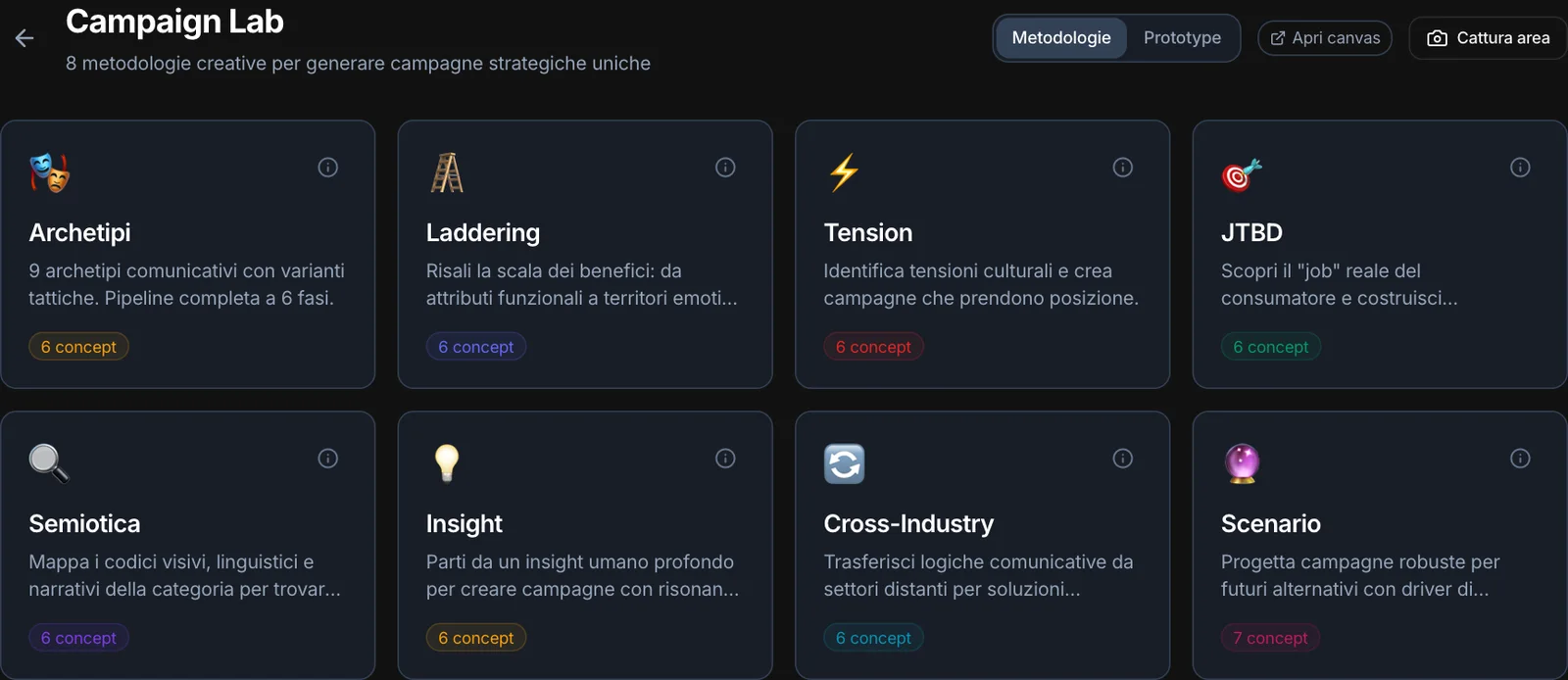
Archetypes
Nine communication archetypes, each with six tactical variants: the AI recommends a mix — primary, secondary, tertiary — and the concepts play it out.
Benefit Laddering
From the product’s attributes to functional benefits, then emotional, then identity benefits. The concepts sit on the rungs: 1 attribute, 1 tangible benefit, 2 emotional, 2 identity.
Cultural Tension
The market’s cultural tensions — clashes of values, contradictions. Concepts at three intensities: 2 Safe that name it, 2 Balanced that take a side, 2 Bold that turn it on its head.
Jobs to Be Done
The real “job”, not the product: contexts, triggers, transformations. Concepts on three dimensions: 2 Trigger, 2 Before/after transformation, 2 Emotional/Social.
Semiotics
How the category communicates — visual, verbal, narrative codes — and where there is room. The concepts: 2 Credibility, 2 Controlled differentiation, 2 White space.
Insight-Led
A human insight the audience recognizes immediately. The concepts: 2 Recognition, 2 Real-life demonstration, 2 Constructive provocation.
Cross-Industry
Three distant industries that have solved the same problem. For each, one Faithful concept and one Reinterpreted. It asks you to write down the communication problem.
Scenario
Three plausible scenarios built on the drivers of change you specify, at one, two or three years. For each, one Safe and one Bold concept, plus one Robust concept that holds up in all of them.
From brief to production.
Automatically, or one step at a time.
With Full AI, MAPS runs the analysis, the concepts and the development of the first concept on its own, in the background: you can leave and come back to the result. With step-by-step you stop at every step — you choose the focus, you choose the concepts, you develop them. Every session is saved and can be resumed.
The brief.
Already half written.
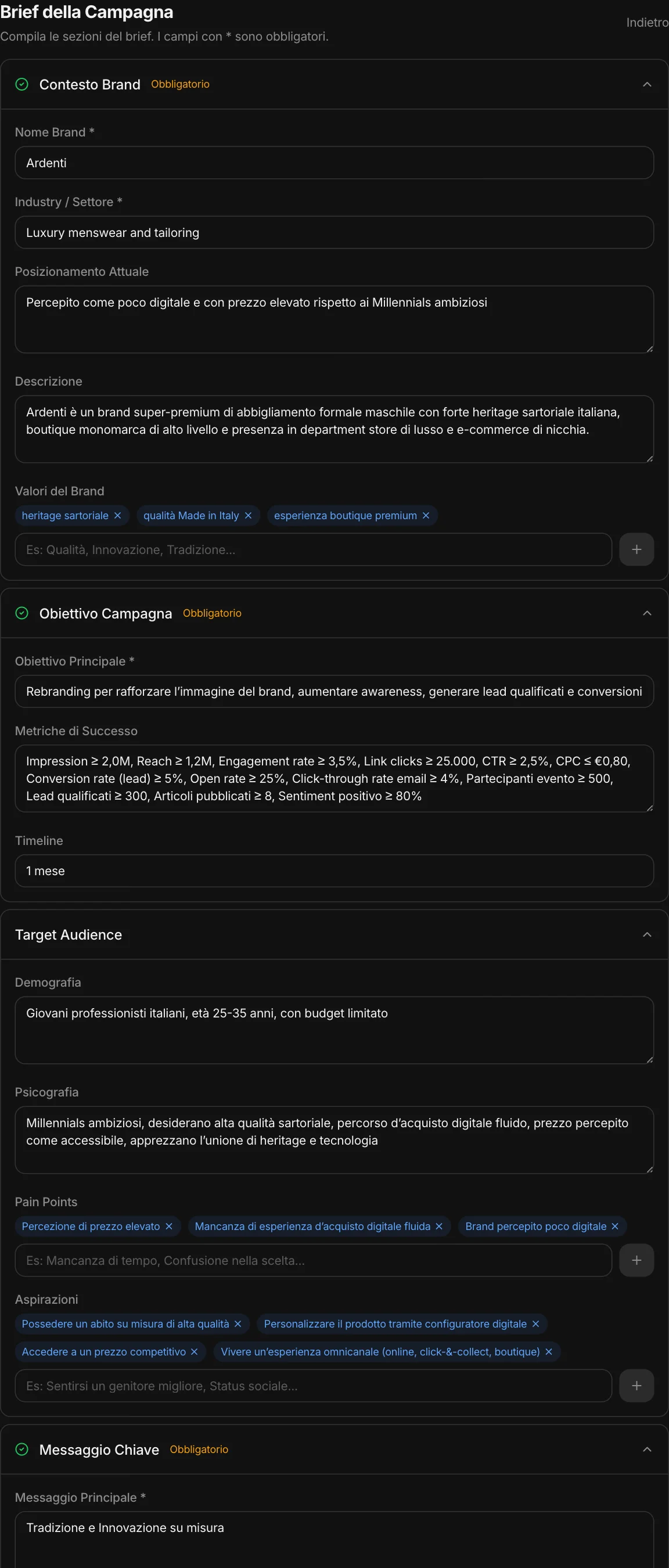
The brief starts pre-filled from the project: industry, positioning, values, target, competitors. You complete it — objective, metrics, key message, channels, budget, constraints — or you upload a PDF or a Word file, or paste the text, and the AI extracts the information.
Two methodologies ask for something more: Cross-Industry for the communication problem to solve, Scenario for the drivers of change and the time horizon. The brief can also arrive ready-made, from a campaign plan.
The analysis.
Each method looks at its own piece of reality.
This is where the methodologies really part ways. With Jobs to Be Done, MAPS identifies the main job and two alternatives — with the statement, the functional, emotional and social dimensions, the trigger, the solutions the customer uses today and the needs left unmet. It recommends a focus; you can choose another one, and the concepts follow your choice.
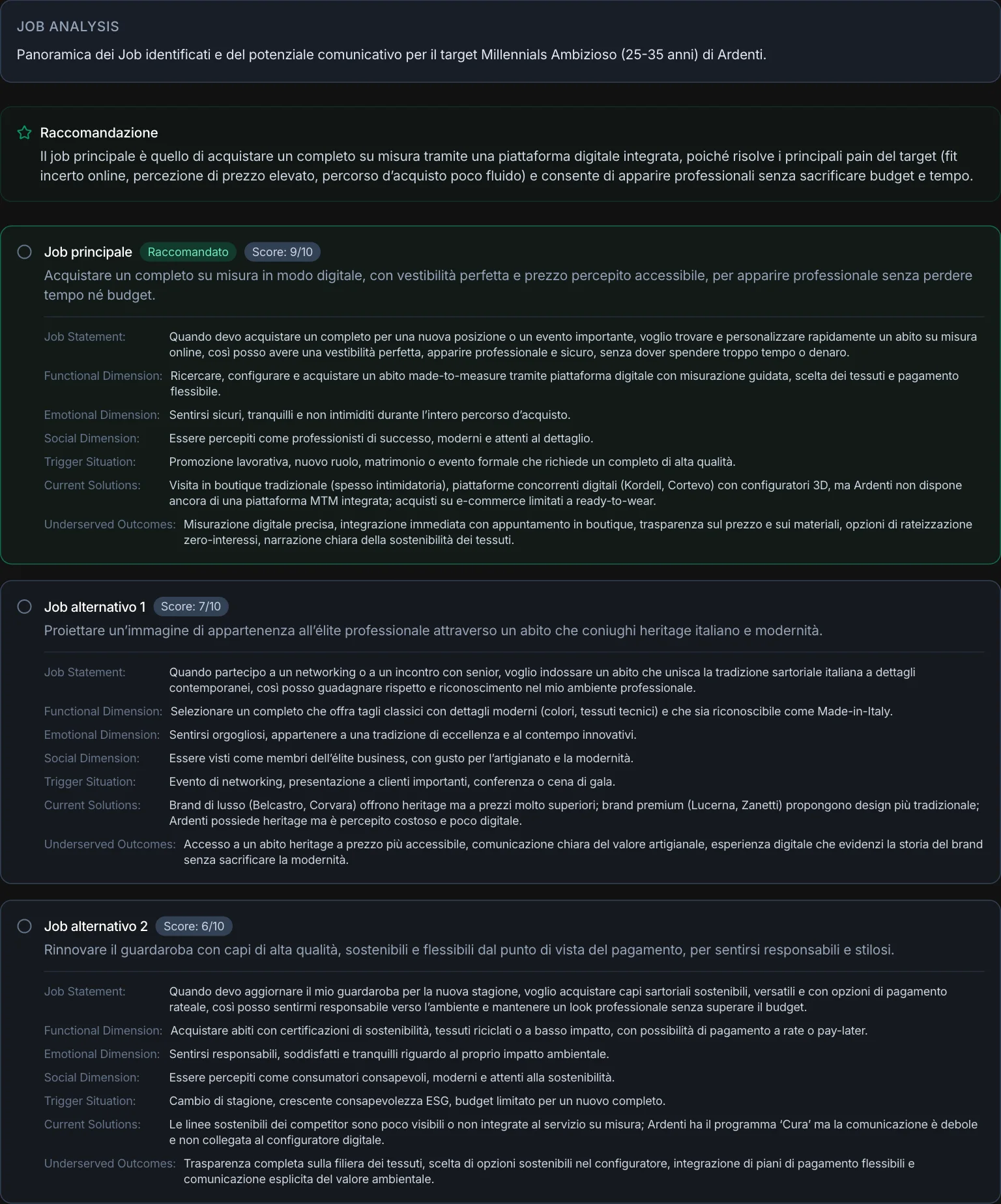
The same campaign, other lenses.
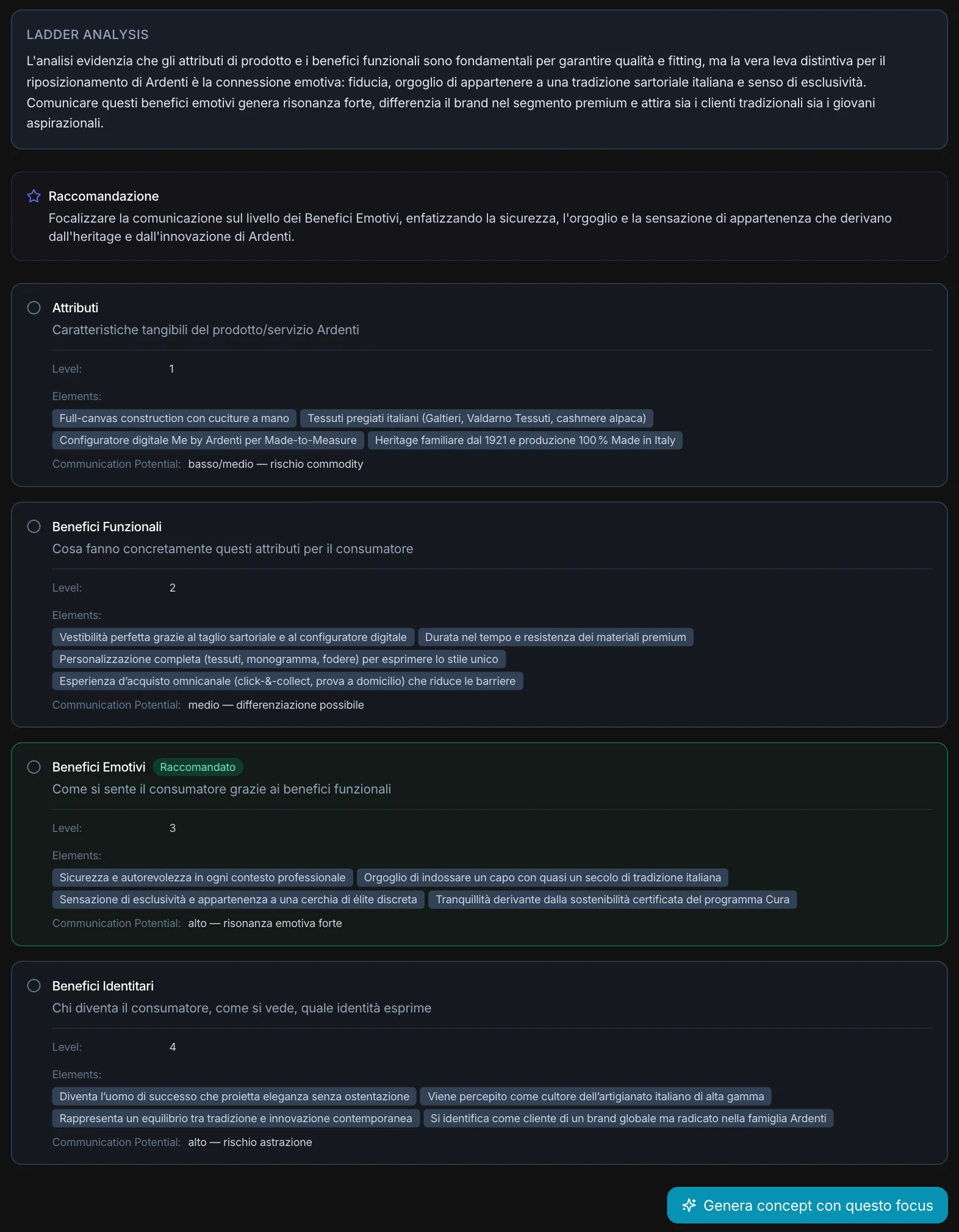
The ladder: four rungs, with the elements and communication potential of each. The recommended rung is highlighted.
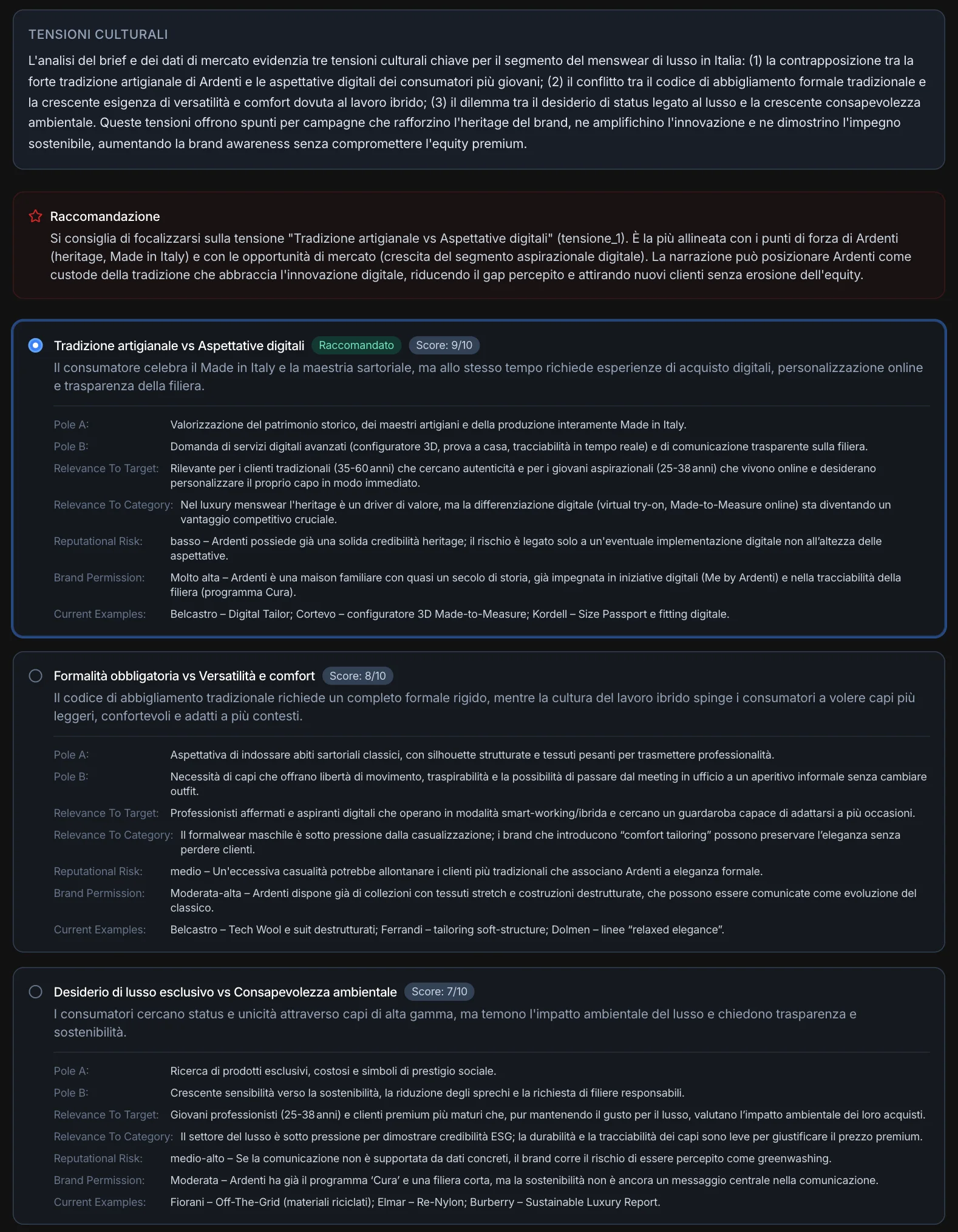
The cultural tensions, each with its two poles, its relevance to the target and the category, the reputational risk and the brand’s permission to talk about it.
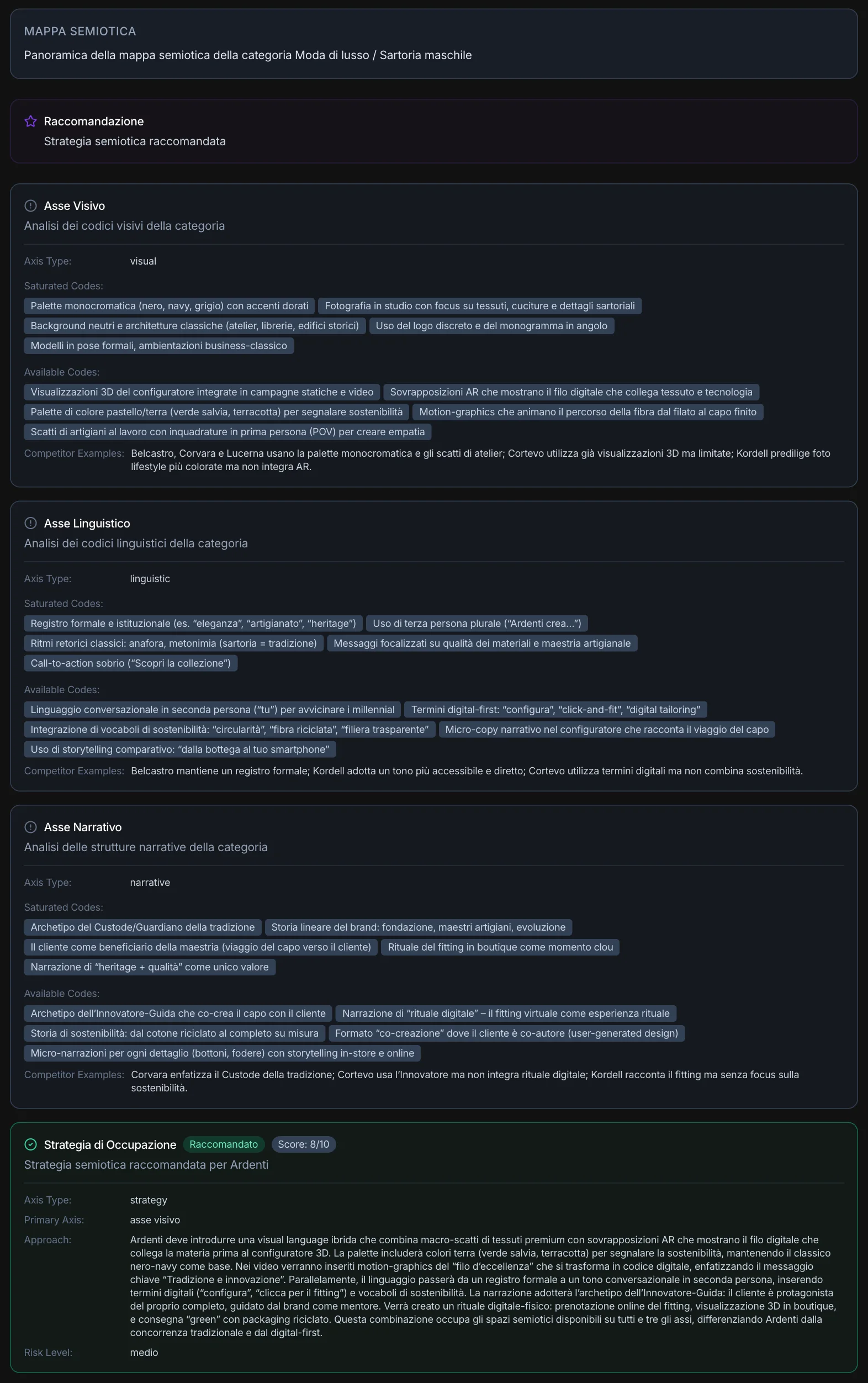
The three axes — visual, verbal, narrative: the saturated codes, the free ones, how competitors use them. And the recommended strategy for claiming them.
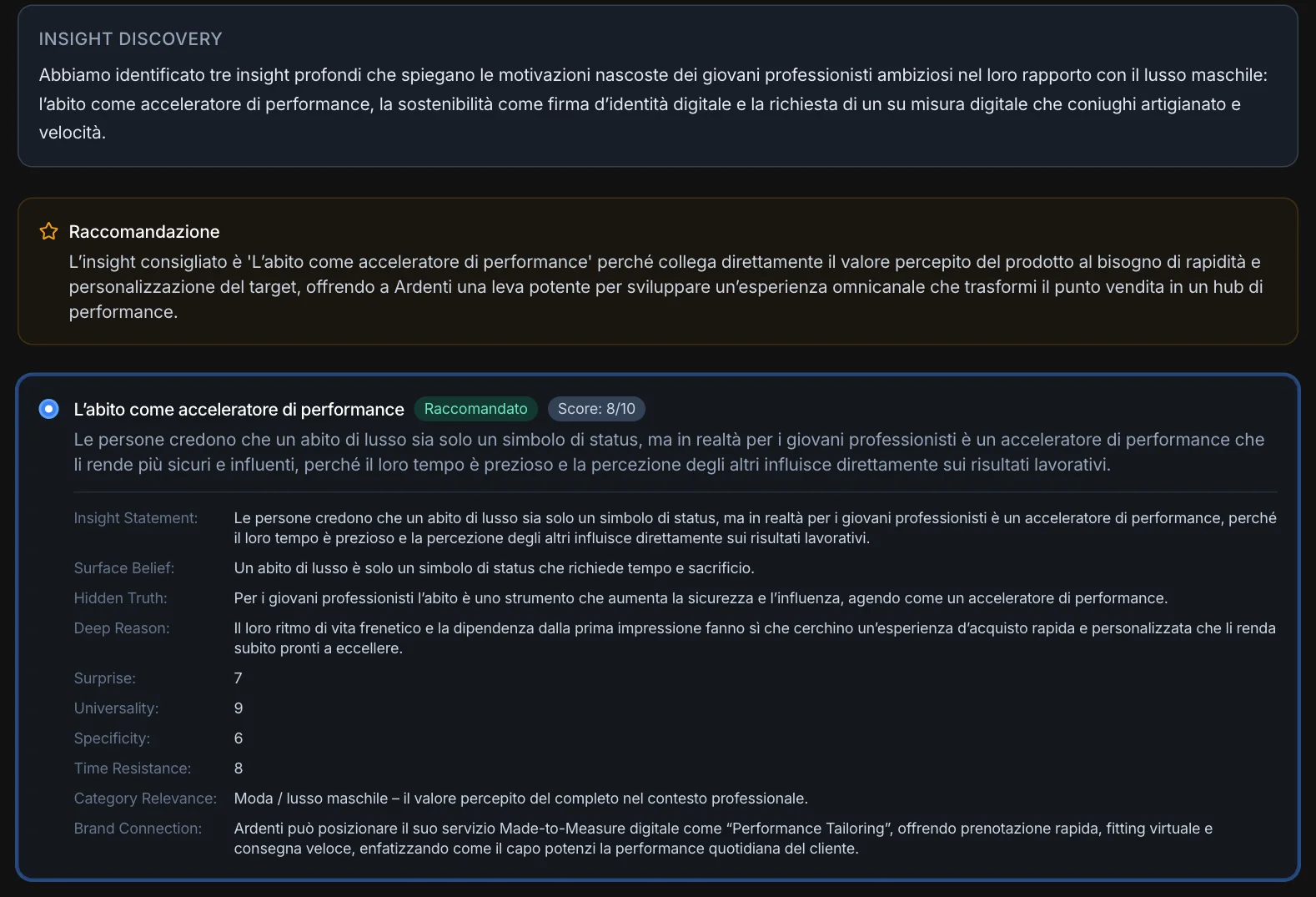
The insights with the surface belief, the hidden truth, the deeper reason — and scores for surprise, universality, specificity.
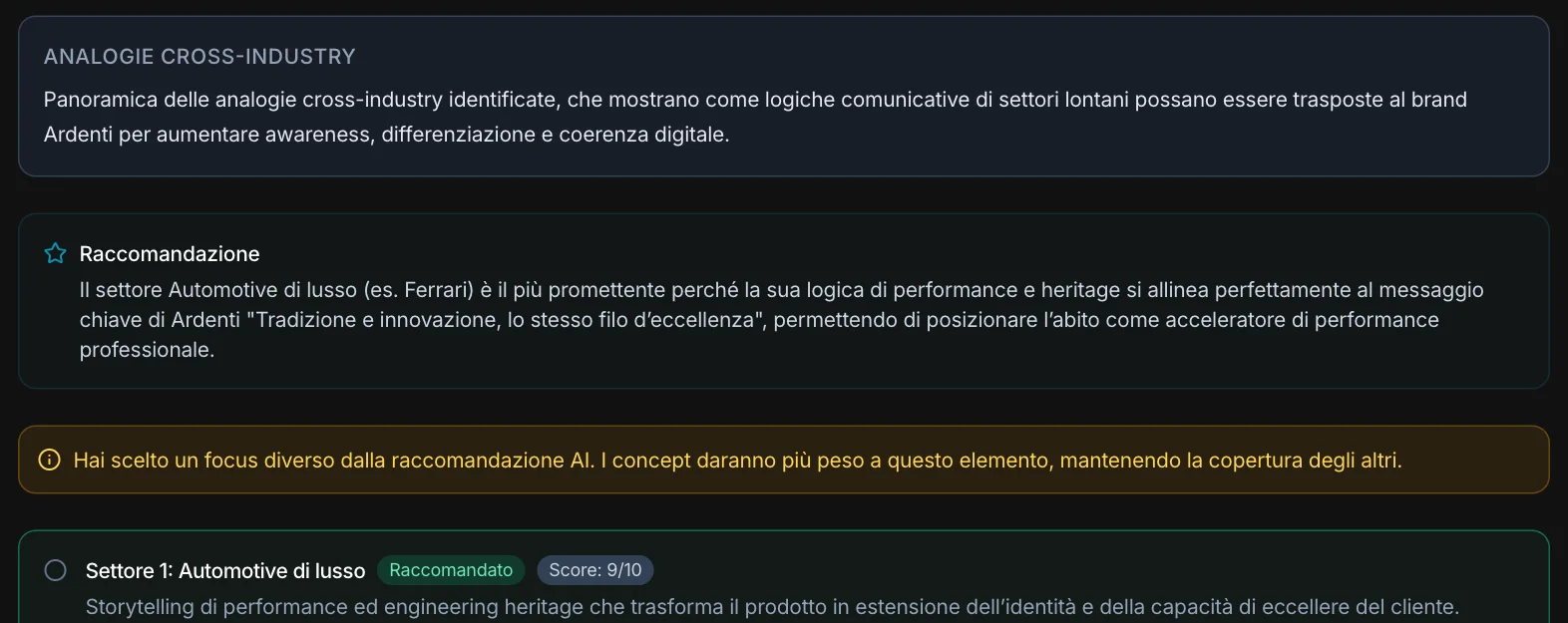
In Cross-Industry and Scenario the choice isn’t all-or-nothing: if you pick an industry or a scenario other than the recommended one, the concepts give it more weight but keep covering the others too.
The concepts.
Six directions, measured.
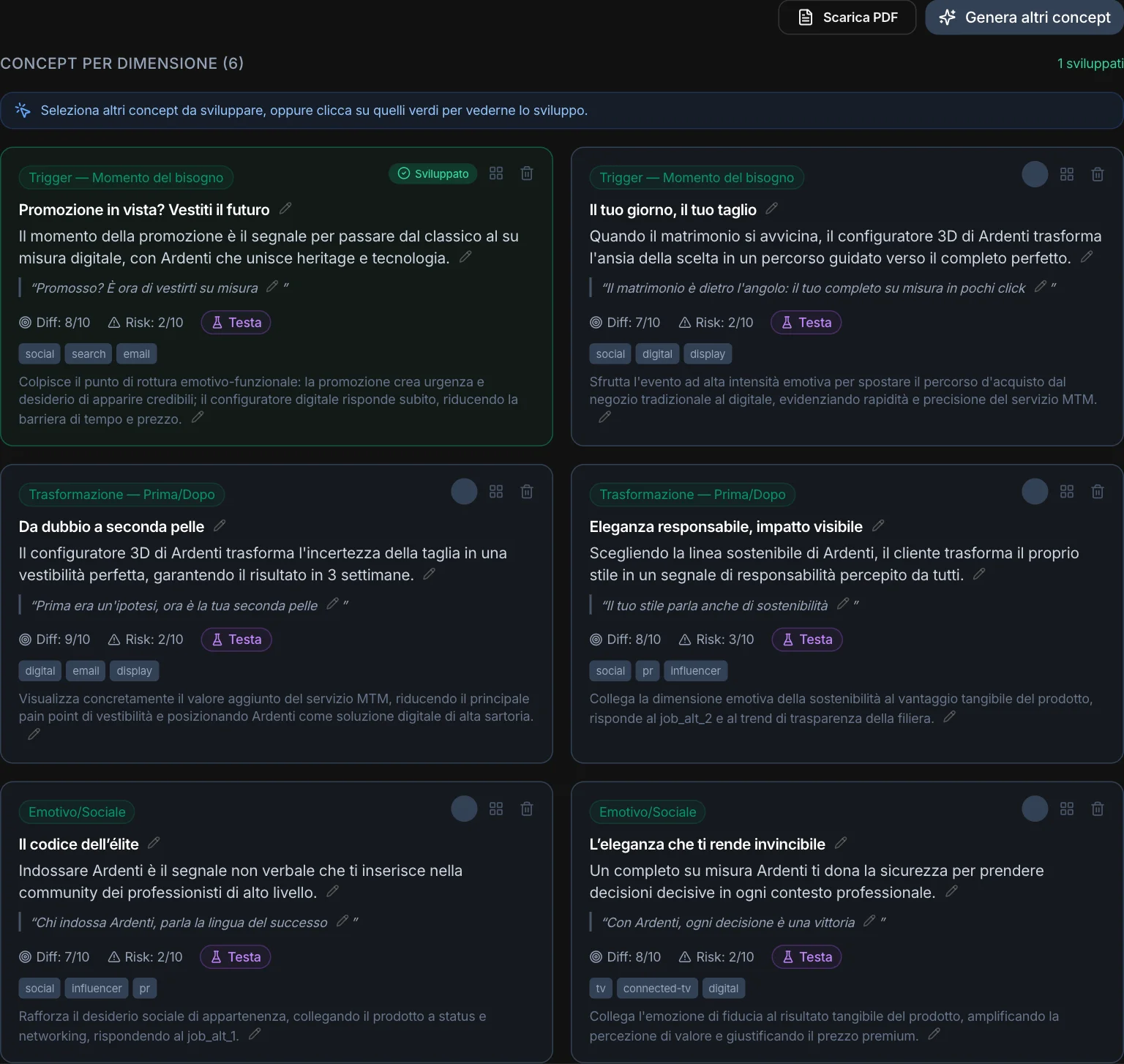
Each concept has its type — here Trigger, Transformation, Emotional/Social — a title, the idea, a headline, the channels and two scores: differentiation and risk. Everything can be edited by hand.
Want more? “Generate more concepts” automatically, avoiding duplicates, or custom: choose which types and how many, and give a direction. Every concept can be tested right away with synthetic users, or taken to the Canvas.
The development.
A concept becomes a campaign.
Choose the concept that convinces you, and MAPS develops it in full, in five tabs. Every text can be edited in place.
Master Copy
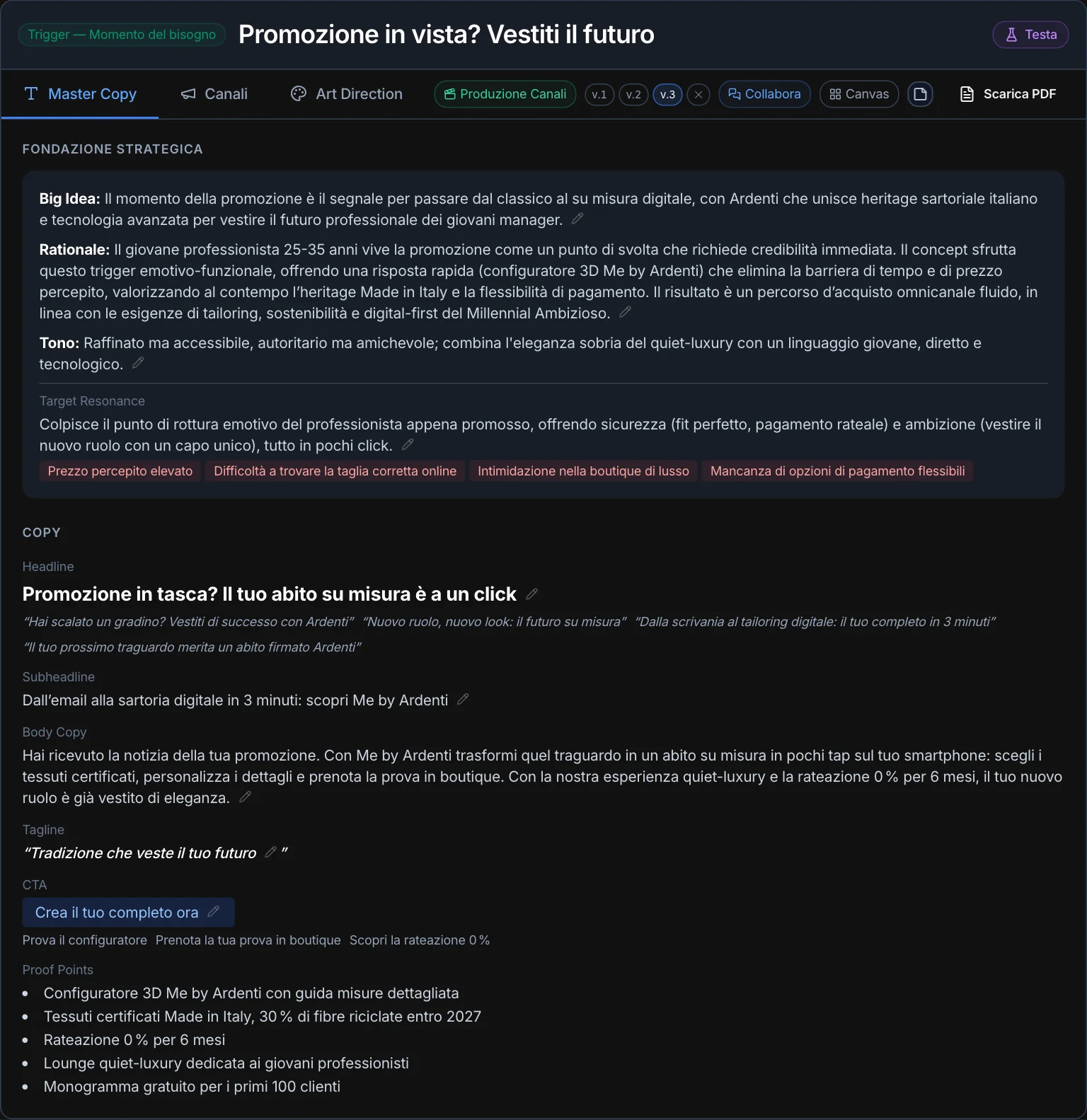
The strategic foundation — big idea, rationale, tone, who it speaks to and which barriers it removes — and the copy: headline with alternatives, subheadline, body, tagline, call to action, proof points.
Channels
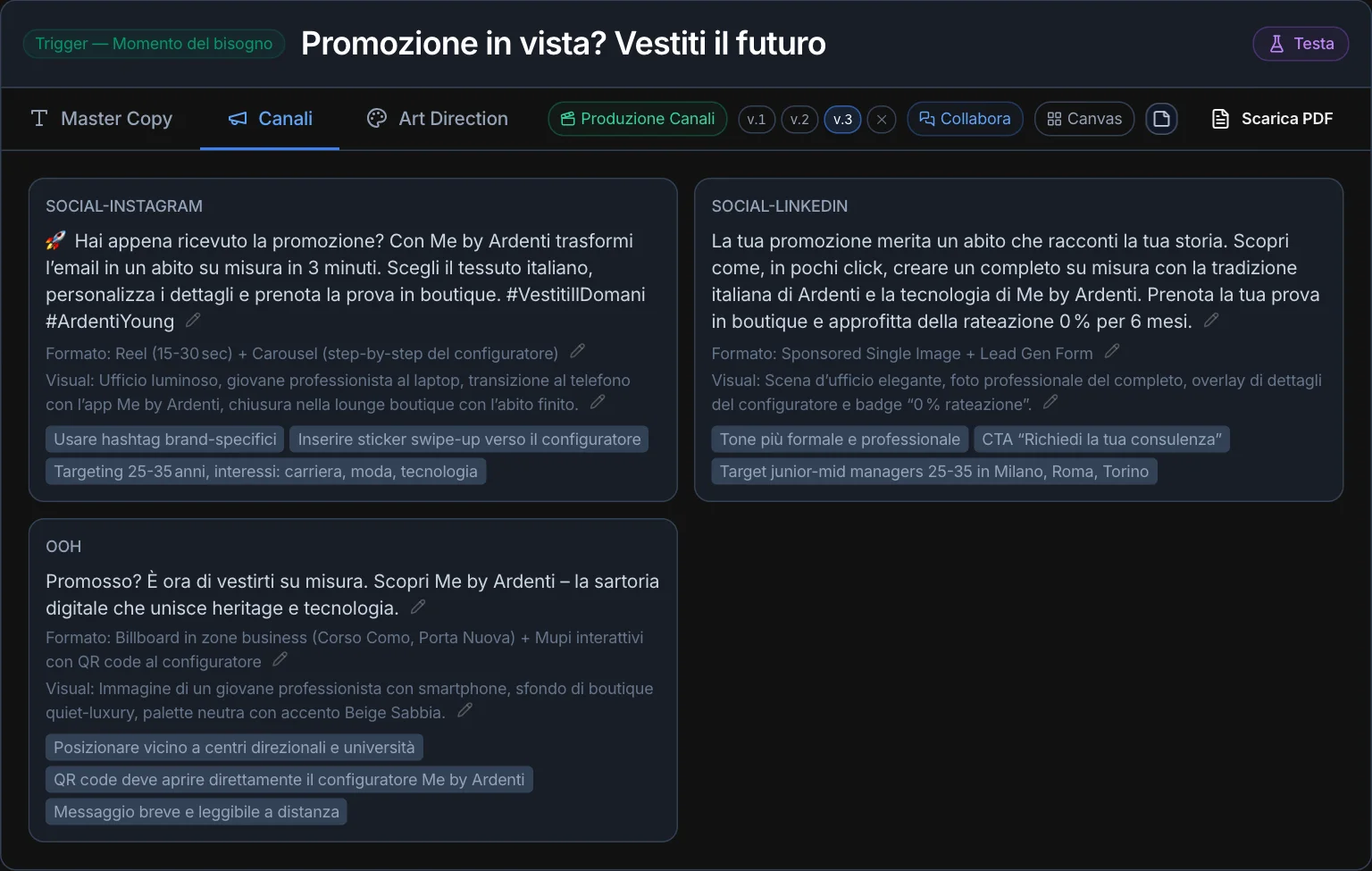
For each channel the copy, the format, the visual and the things to watch out for: Instagram, LinkedIn, out of home…
Art Direction
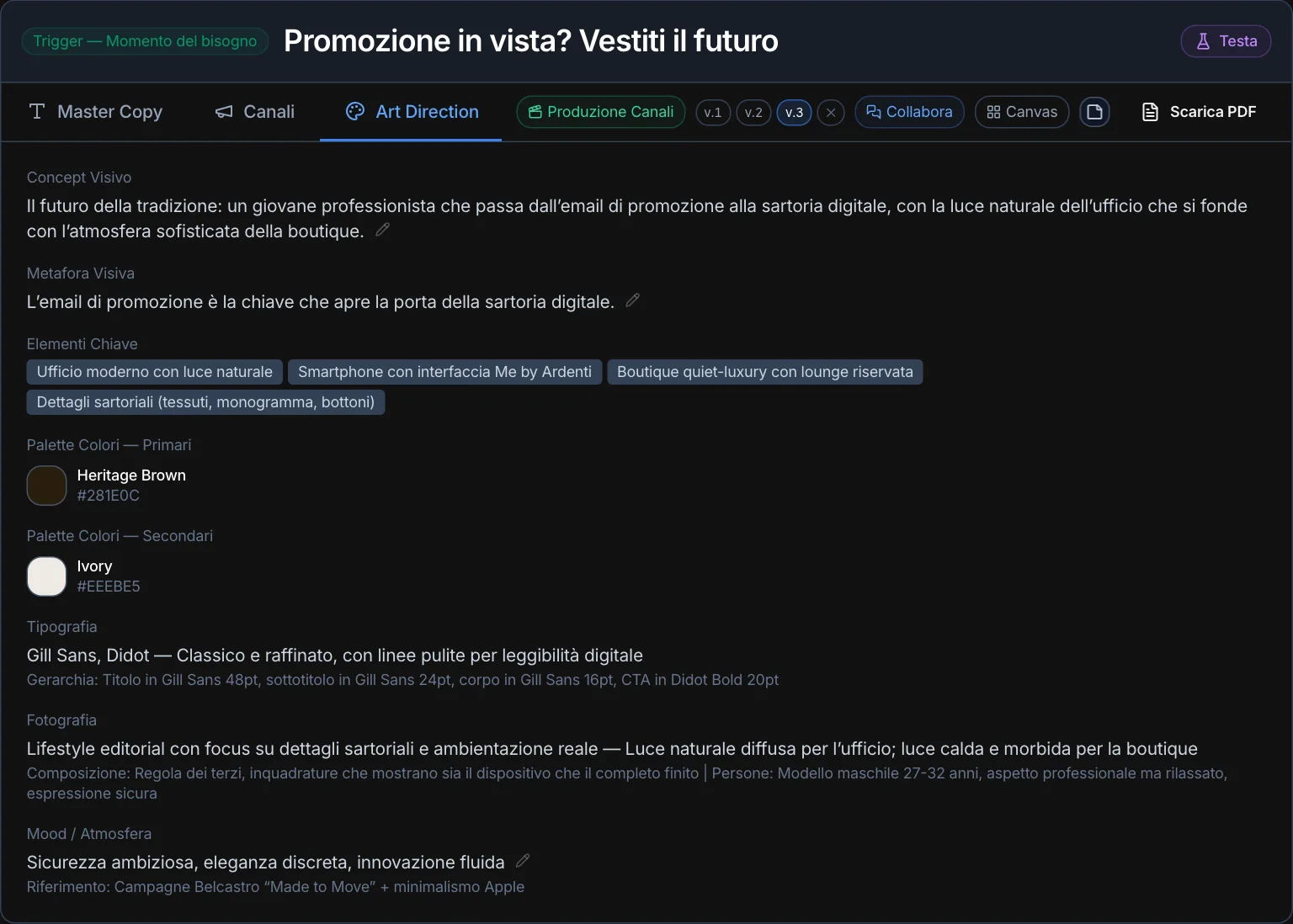
The visual concept and its metaphor, the key elements, the palette, the typography, the photography, the mood.
Methodology
The part that depends on the method: in Jobs to Be Done, the job story — situation, motivation, expected outcome.
Execution
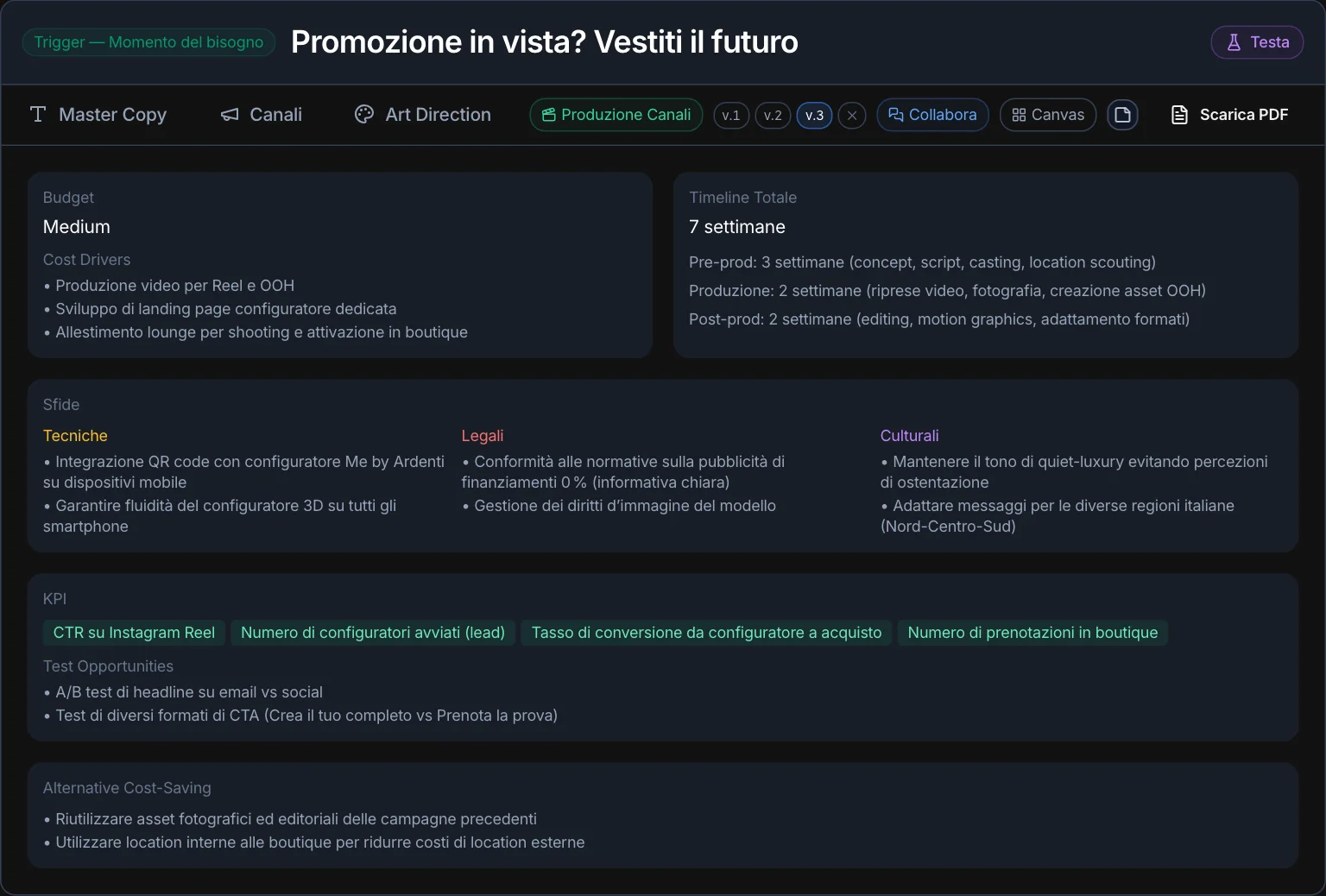
Budget and cost items, the timing of pre-production, production and post, the technical, legal and cultural challenges, the KPIs, the tests to run, how to save money.
Think it through.
As you would with a colleague.
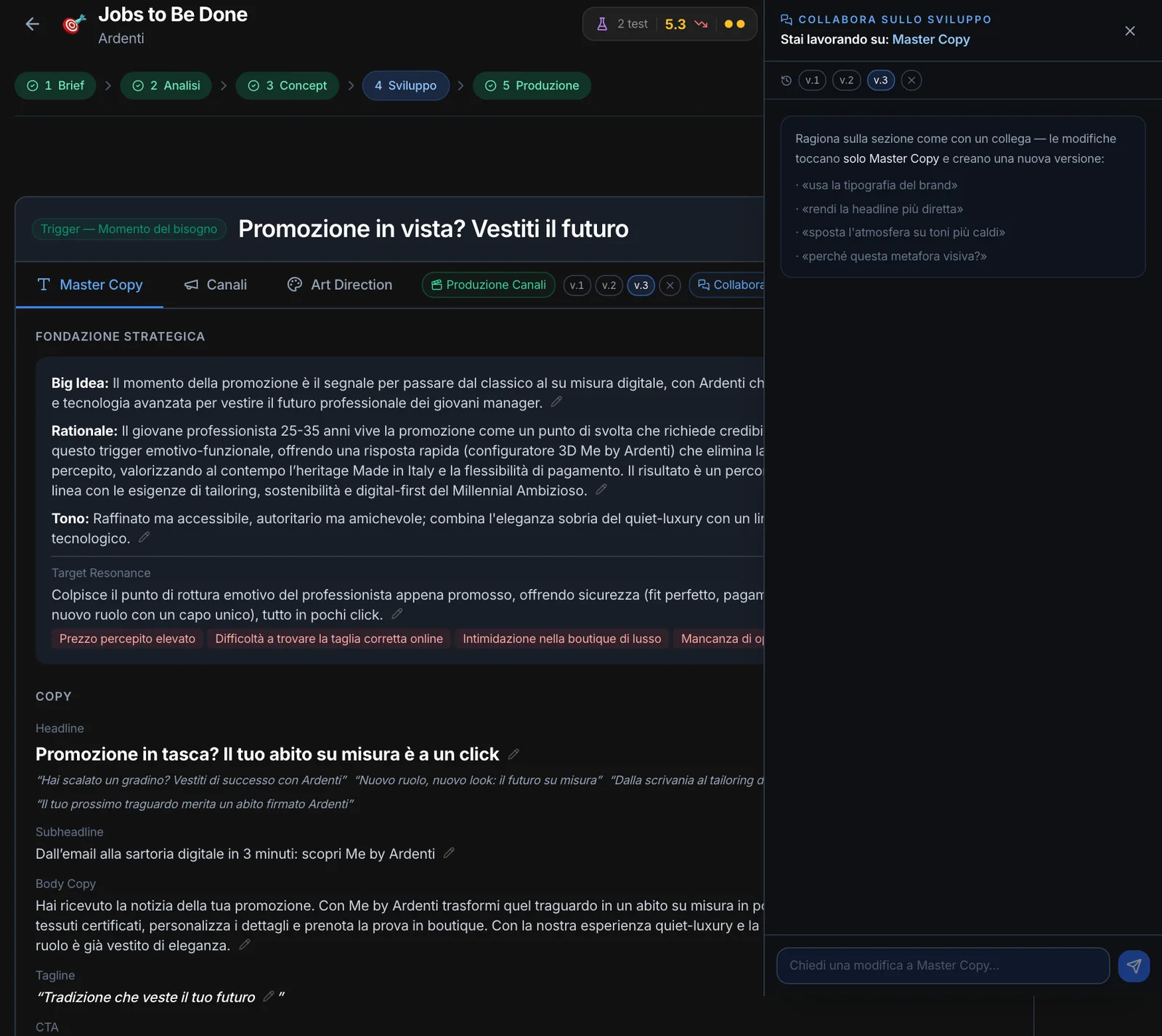
Open “Collaborate” and ask in plain words: “make the headline more direct”, “use the brand’s typography”. The change touches only the tab you’re working on, uses the Brand Kit guidelines, and creates a new version: v.1, v.2, v.3 stay there, and you can go back whenever you want.
The development can be downloaded as a PDF and taken to the Canvas.
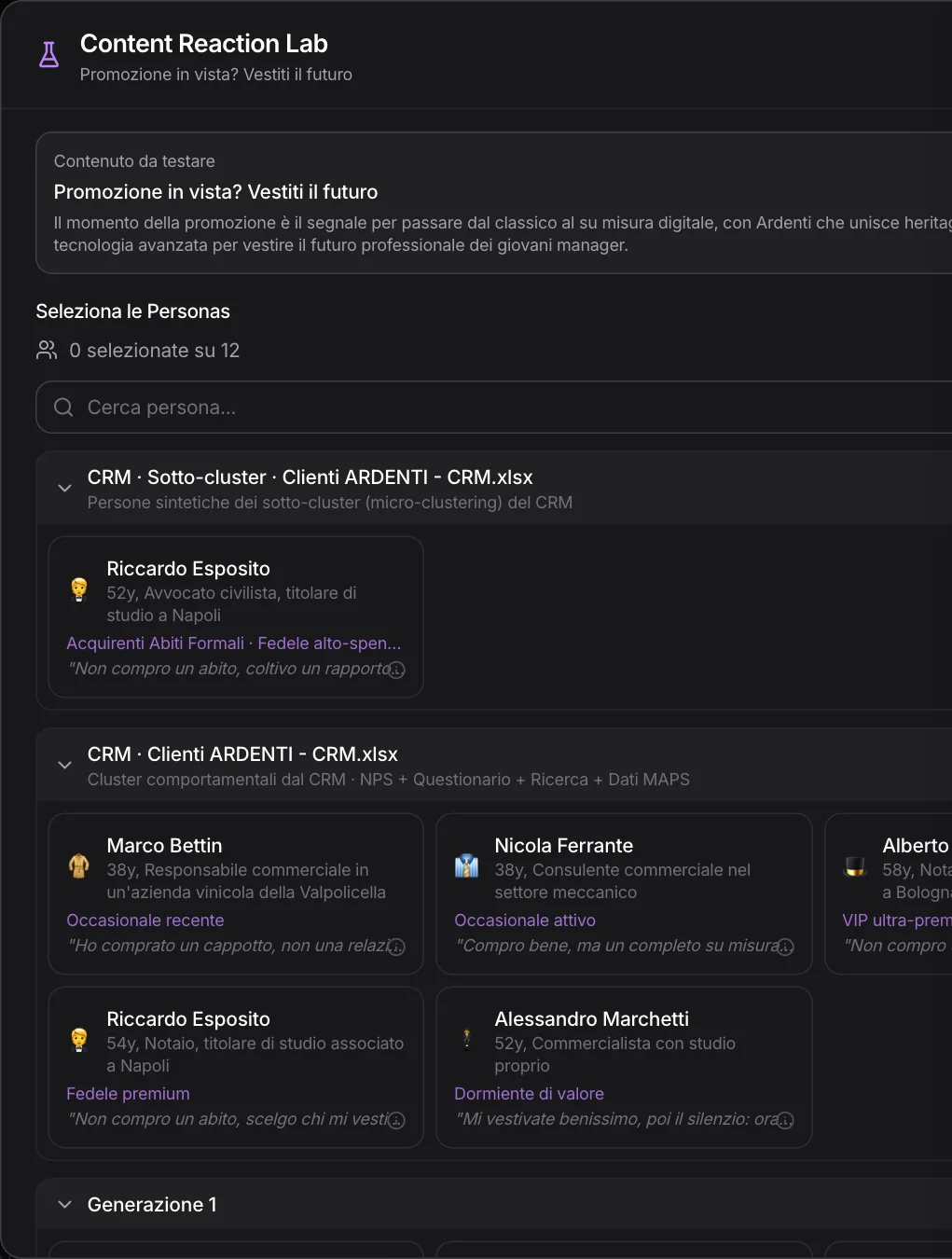
Before you decide,
ask the people who have to buy it.
From any concept or development, “Test” puts it in front of the project’s synthetic users — including those built from CRM clusters. Choose who, and read the reactions. The score stays on the session, with the test history.
Production.
Channel by channel.
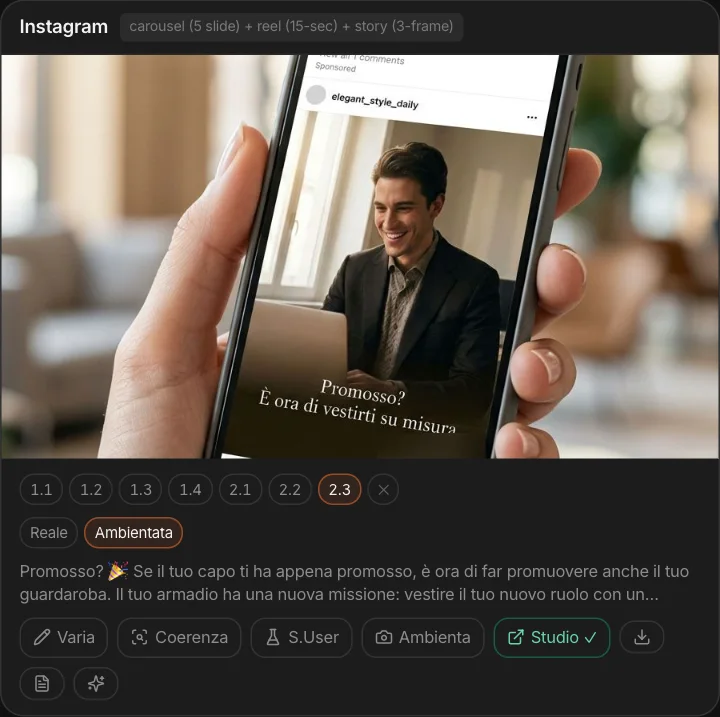
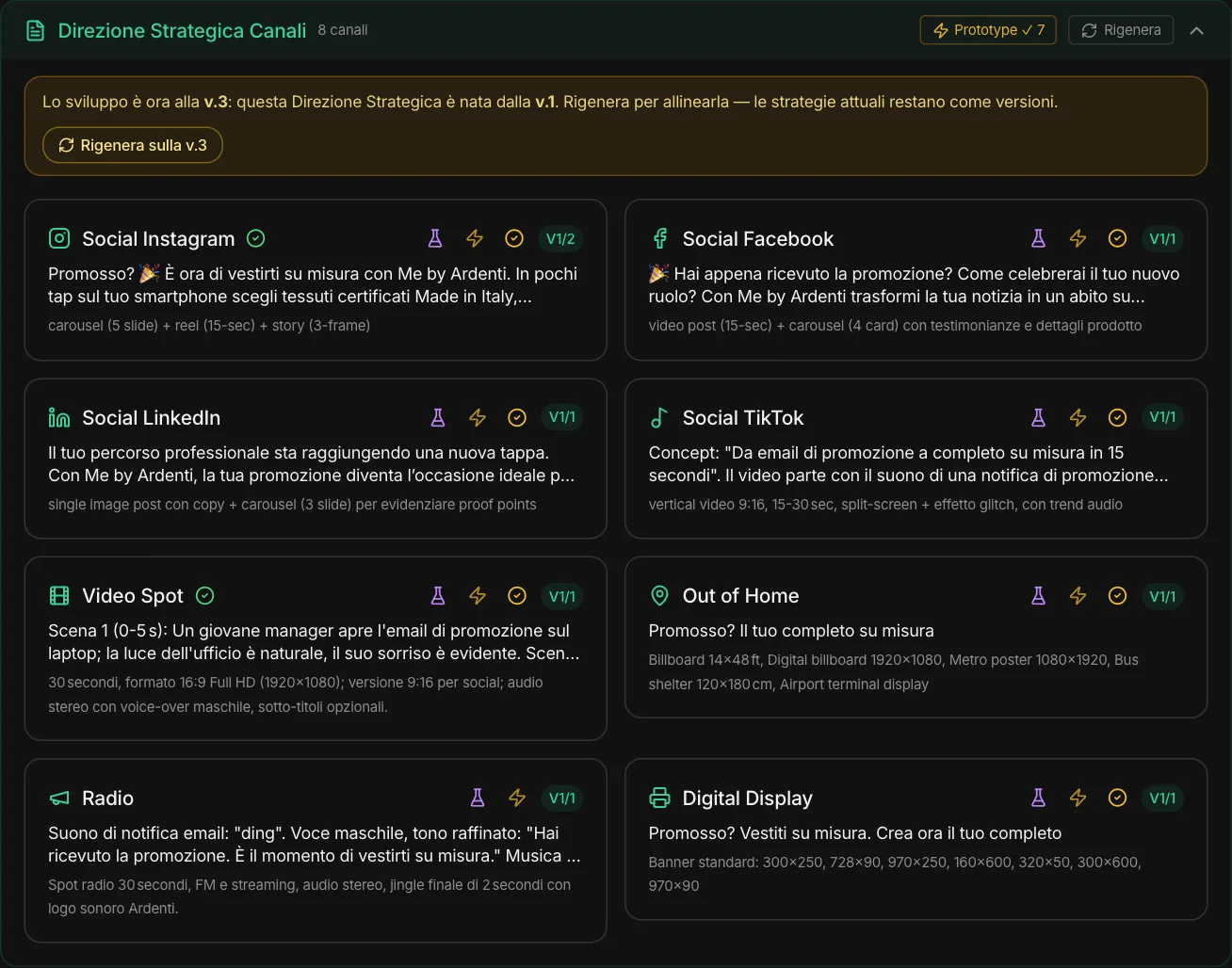
The Channel Strategic Direction translates the development for each channel: Instagram, Facebook, LinkedIn, TikTok, video, out of home, radio, display. Then you produce: the posts, the video storyboard scene by scene with images, the radio spot. Each channel has its own versions, and is tested with synthetic users.
If the development changes, MAPS tells you: the direction was created from v.1, the development is at v.3 — you regenerate it, and the earlier strategies remain as versions.
The prototype.
Before going live.
Whatever method you used, the developed concepts become mockups per channel, anchored to the Brand Kit, and a simulated campaign — phases, channels, metrics. When you decide, you take it to Campaign.