
From the project’s data.
Or from your customers.
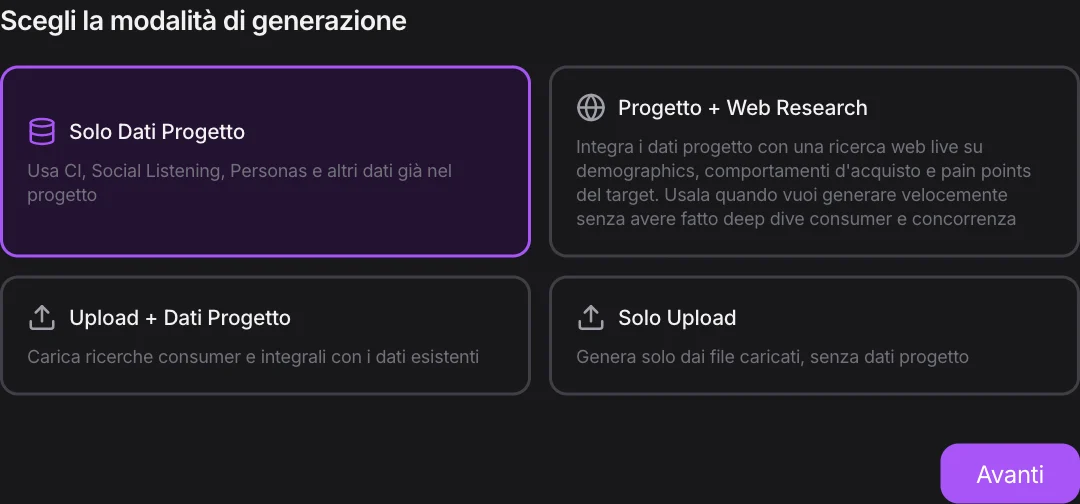
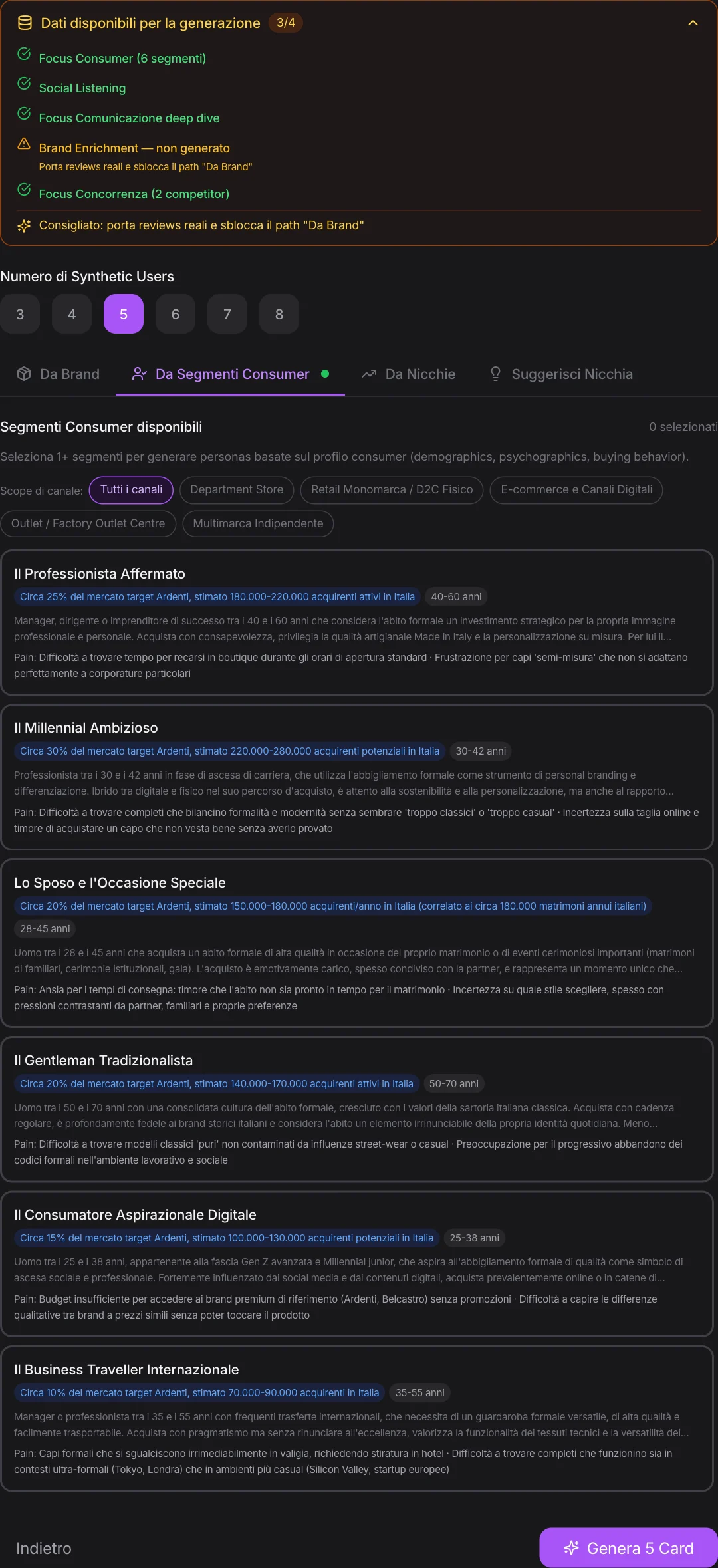
Choose the basis: the project’s data only, the data plus a web search, your own documents — consumer research, reports — with or without the data. MAPS tells you which data it already has and what’s missing. Then choose how many people, from 3 to 8, and where to start:
From Brand
The customers of your brand, a competitor or a sub-brand: with real reviews brought in by Brand Enrichment.
From Segments
The segments from Consumer Focus — or, in B2B, from business customers — including channel by channel.
From Niches
The valuable niches MAPS has found, with their potential.
Suggest a Niche
A niche of your own: you describe it, and MAPS checks it against the project’s data, your files and the web.
From the CRM
An in-depth persona for each group of real customers, enriched with NPS, surveys and research.
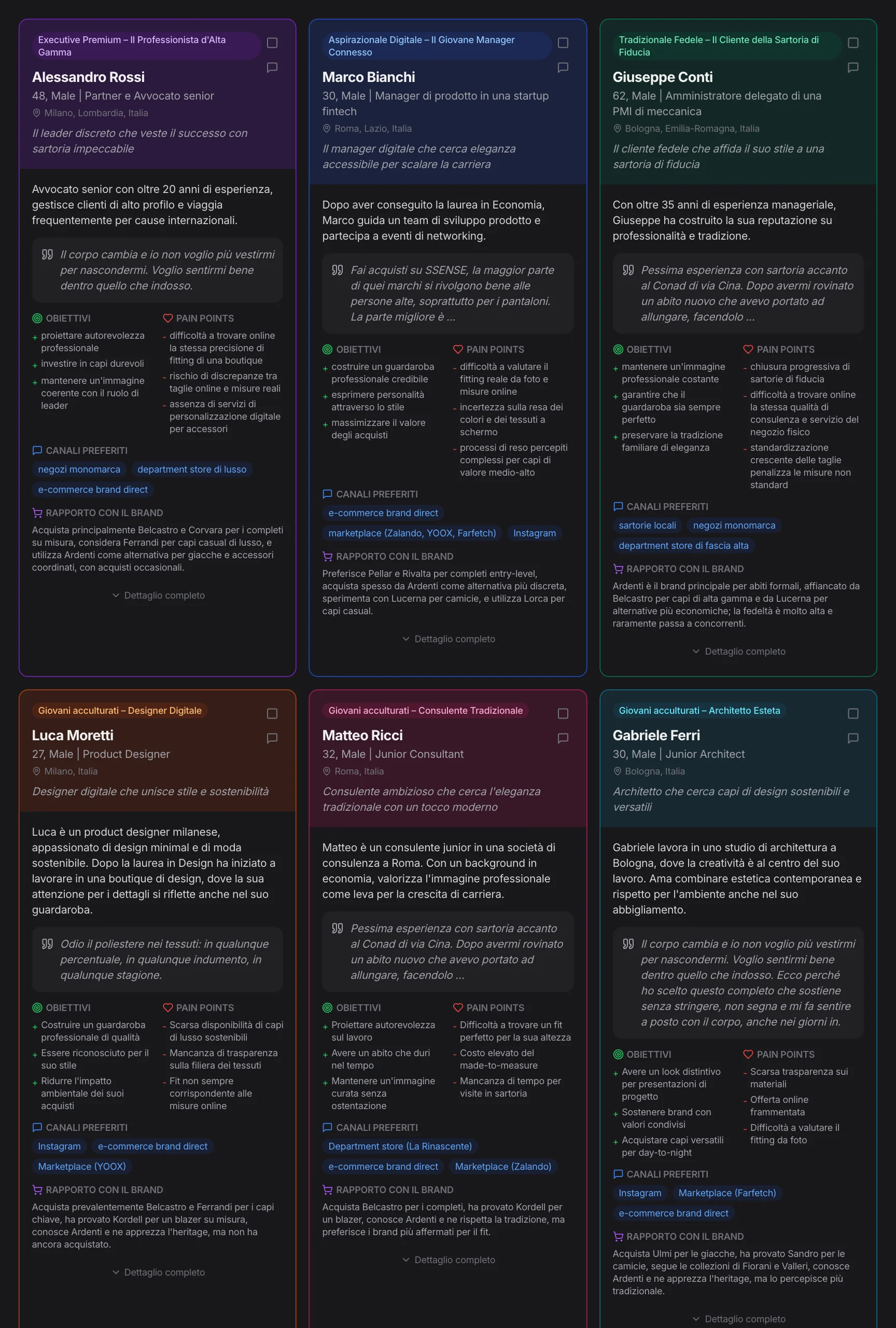
A person,
not a profile.
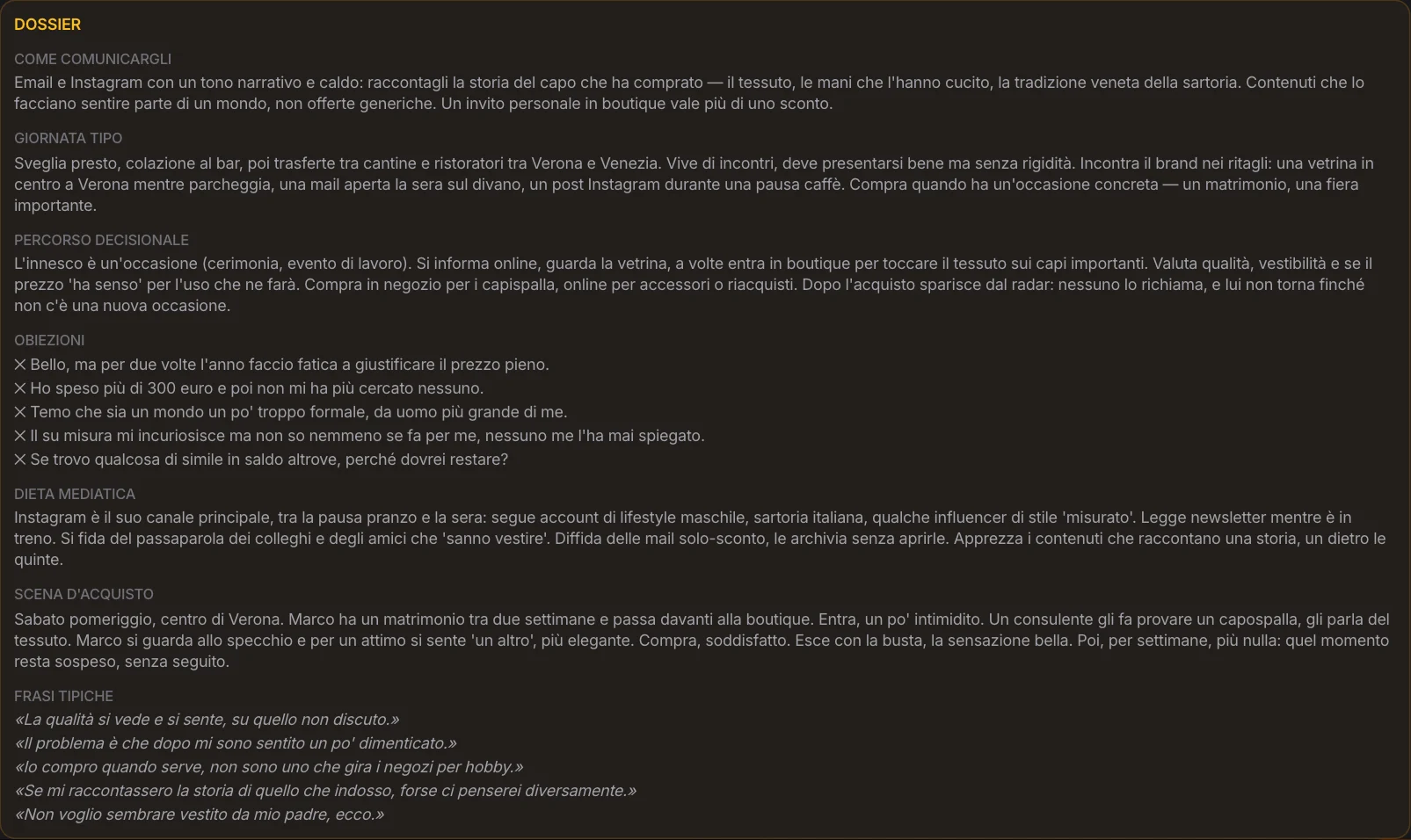
Who they are, what they want, what holds them back, where they get their information, how they relate to your brand — and one line that sums them up. Below, the dossier: how to talk to them, their typical day, how they decide, their objections, what they read and watch, the purchase scene, the things they’d say. Each card also says which data it rests on.
Ask the questions.
Show the real material.
You open a conversation with a persona and ask what you’d ask a customer. You can show them an image, a PDF — which they actually leaf through, layout included —, a link, a text, or an entire website, which they browse page by page. If you don’t know where to start, there are eleven ready-made test scenarios: concept, price, first impression, messaging, site navigation…
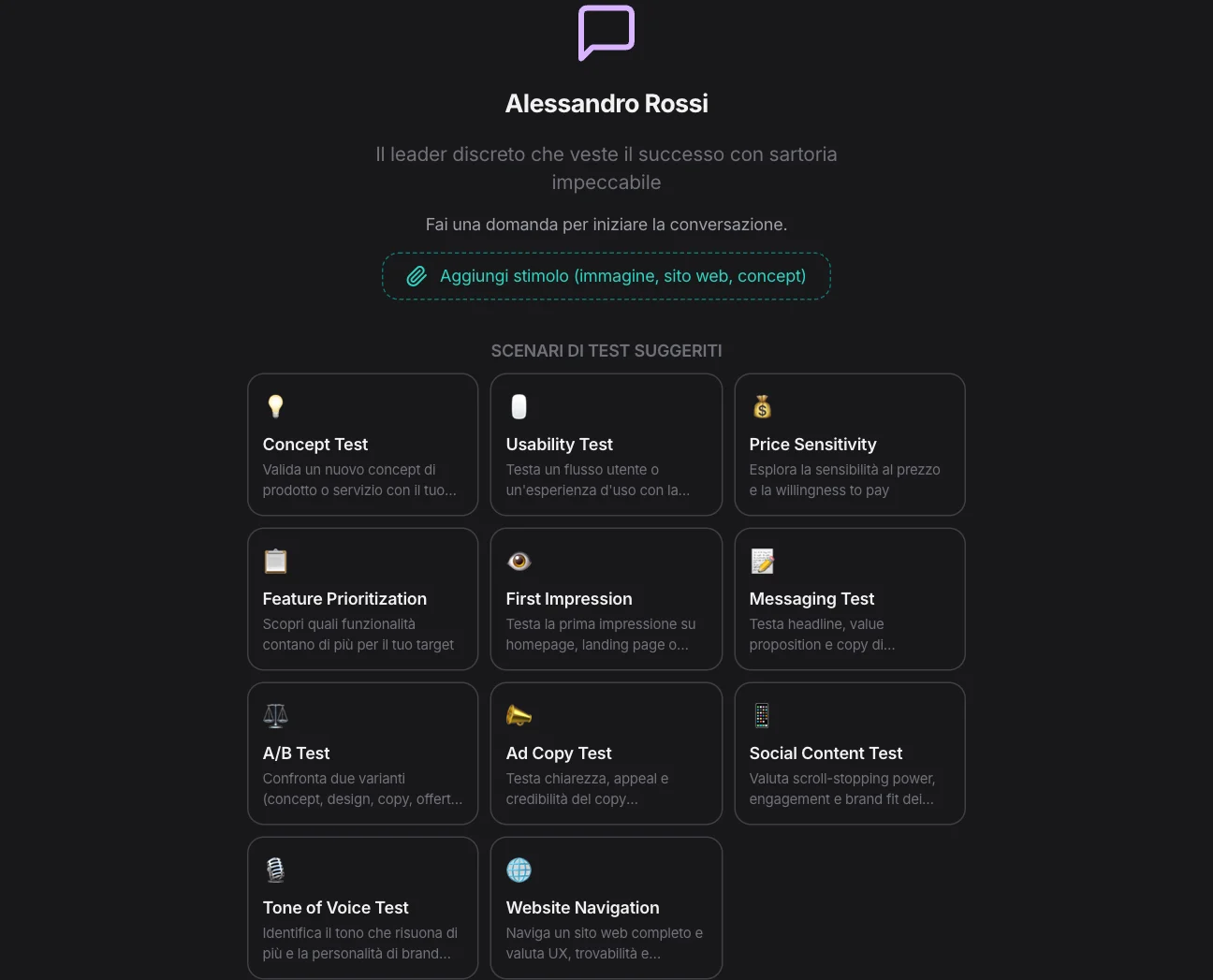
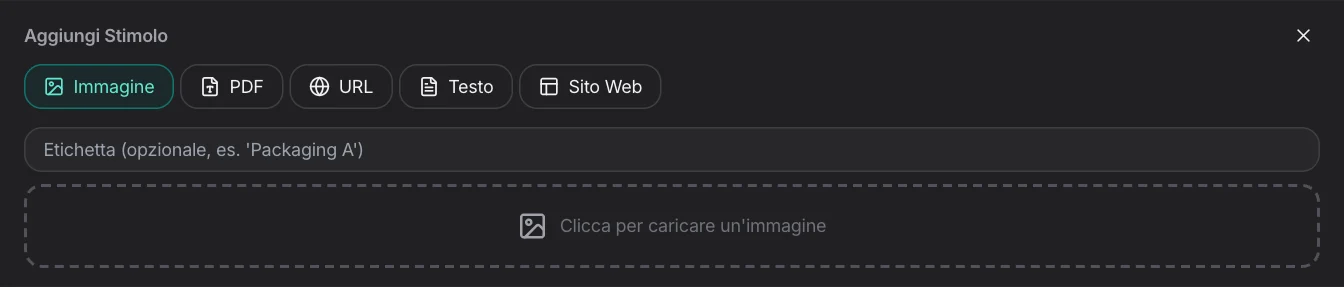
While you interview, MAPS warns you if a question is leading and suggests how to rephrase it. At the end, “Analyze Session”: the problems that came up, the opportunities, the key quotes, what to ask next.
Two to five people,
talking to each other.
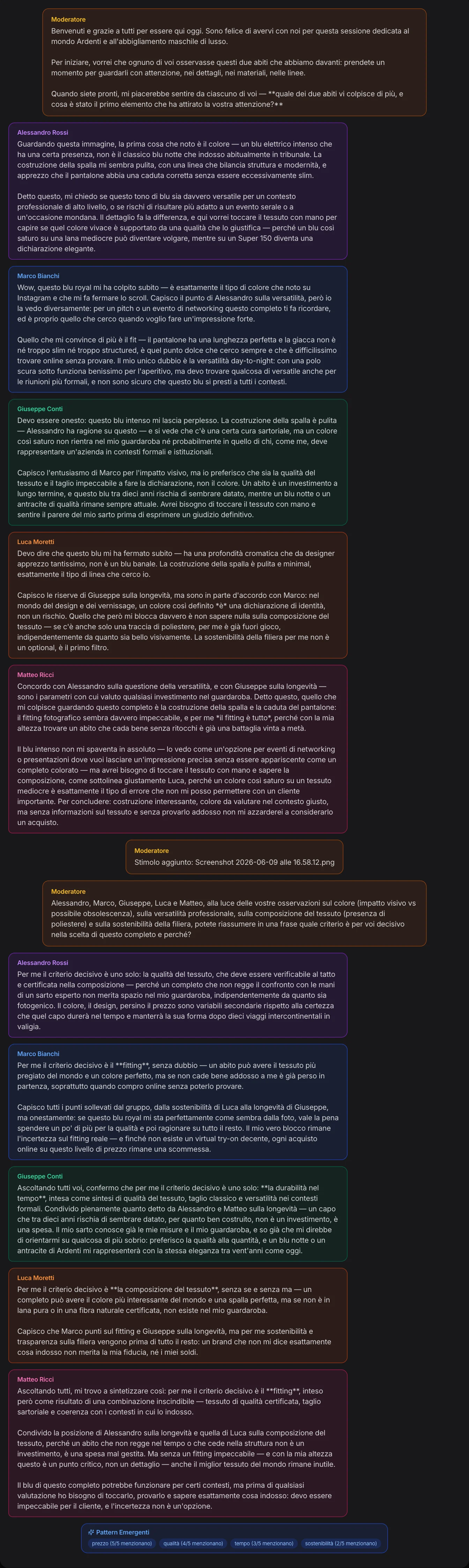
Choose the people — even from different groups —, give them a stimulus and a topic. An AI moderator leads: asks the question, lets them answer each other, follows up, sums up. These aren’t answers in a row: they quote each other, contradict each other, change their minds. At the end of the session, the patterns that emerge and the analysis.
A score.
And the reason behind every rating.
From almost any tool — a positioning, a concept, a plan, a post — “Test with Users” puts it in front of the people you choose. Each one rates it on seven or eight dimensions, depending on what you’re testing: creative content, a strategic proposition, a positioning. What comes out: the score, how much they agree, the persona-by-dimension map, strengths and weaknesses, recommended actions, and each person’s reaction in their own words.
Creative content
Relevance, emotional resonance, clarity, credibility, distinctiveness, purchase intent, shareability, brand fit.
Strategic proposition
Do they recognize the problem? Do the benefits matter? Is it credible? What value they perceive, how different it is, how much it weighs on the decision, how urgent it is.
Positioning
Does the target see themselves in it? Is it clear, credible, different, memorable, desirable, on-brand?
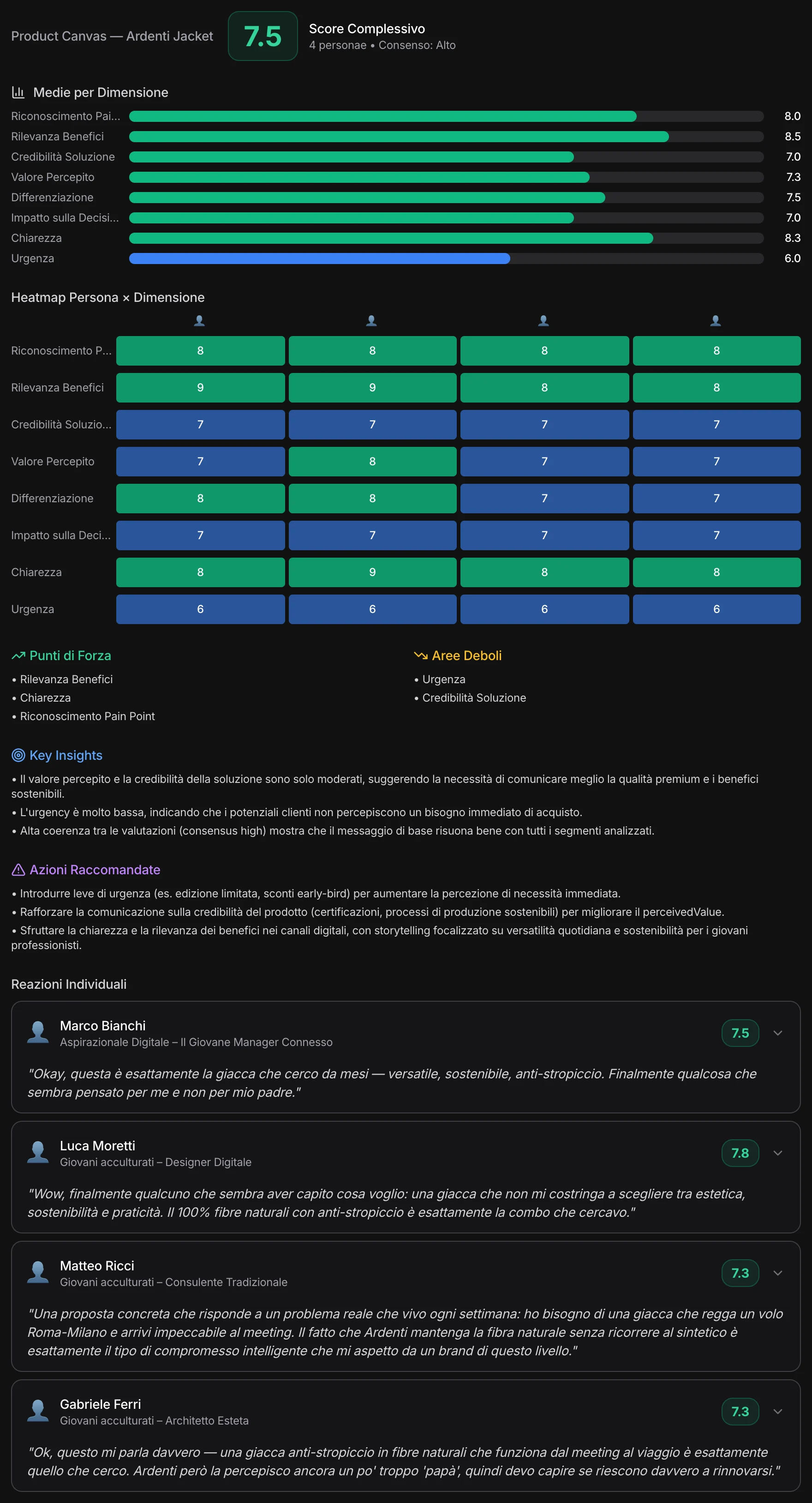
A travel jacket tested with four people: 7.5, high consensus — and one clear weak spot, urgency.