Build them
the way you work.
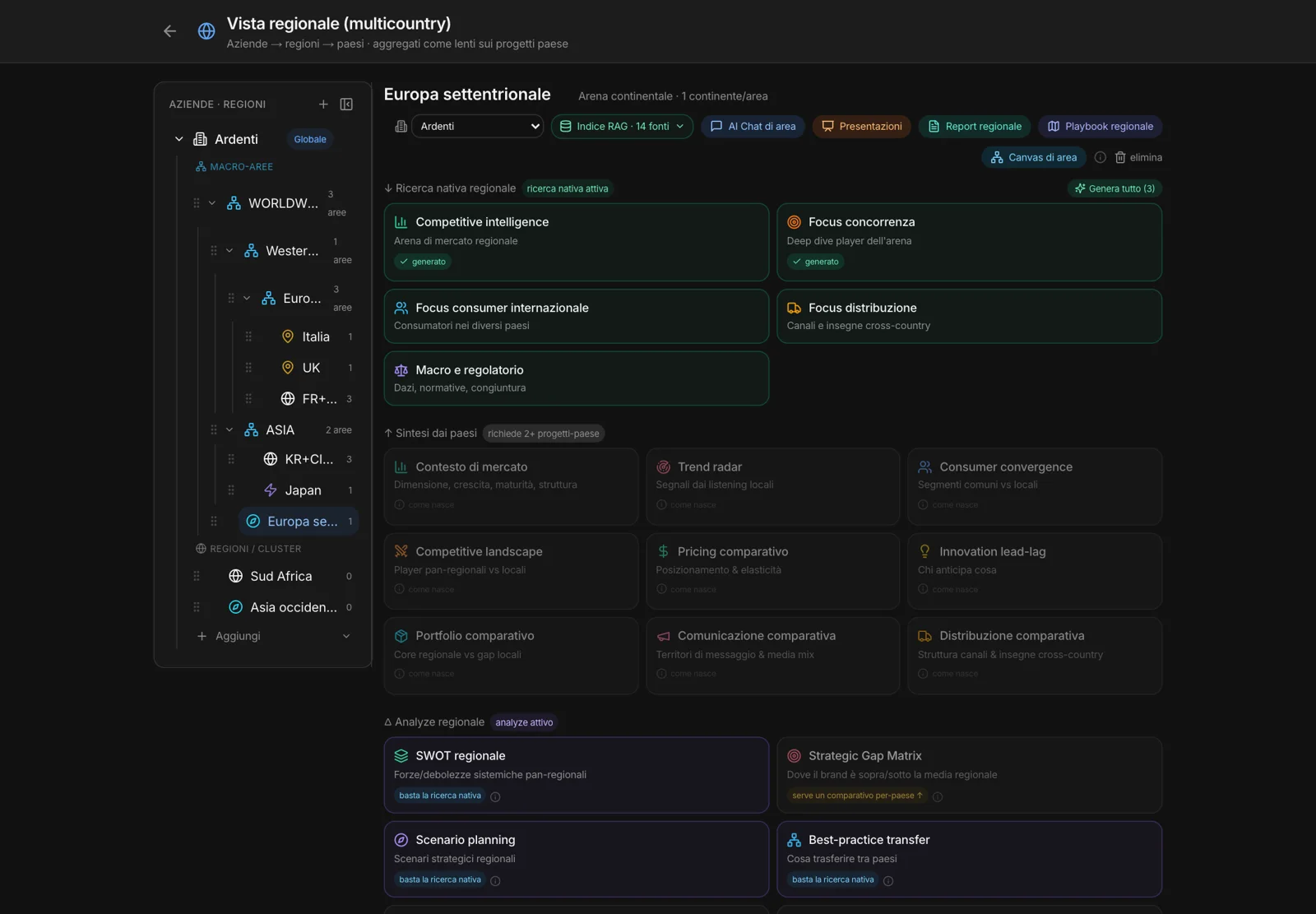
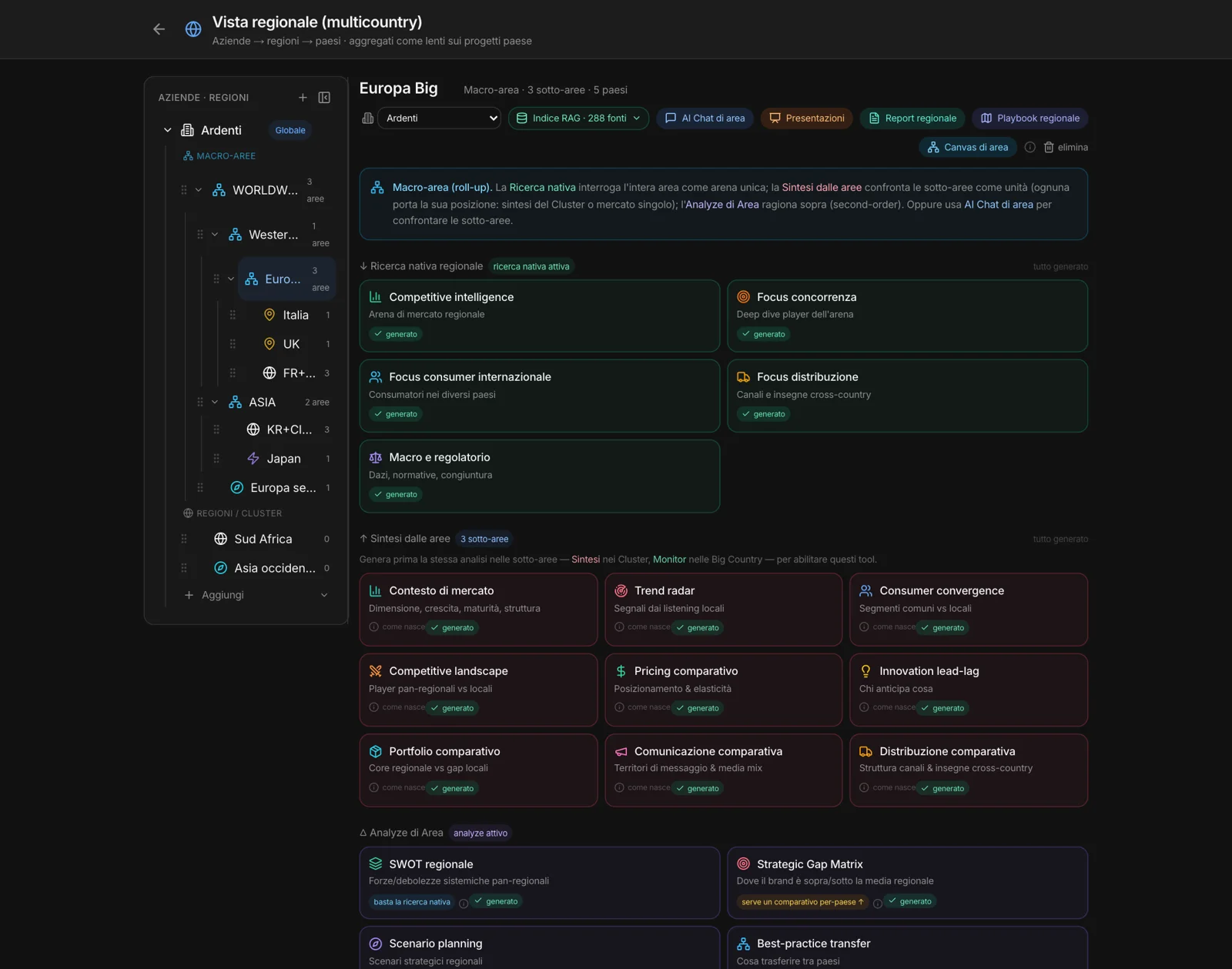
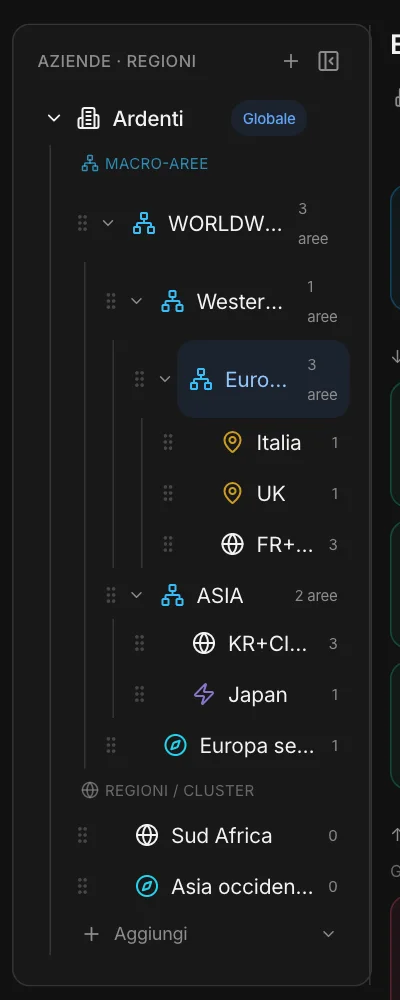
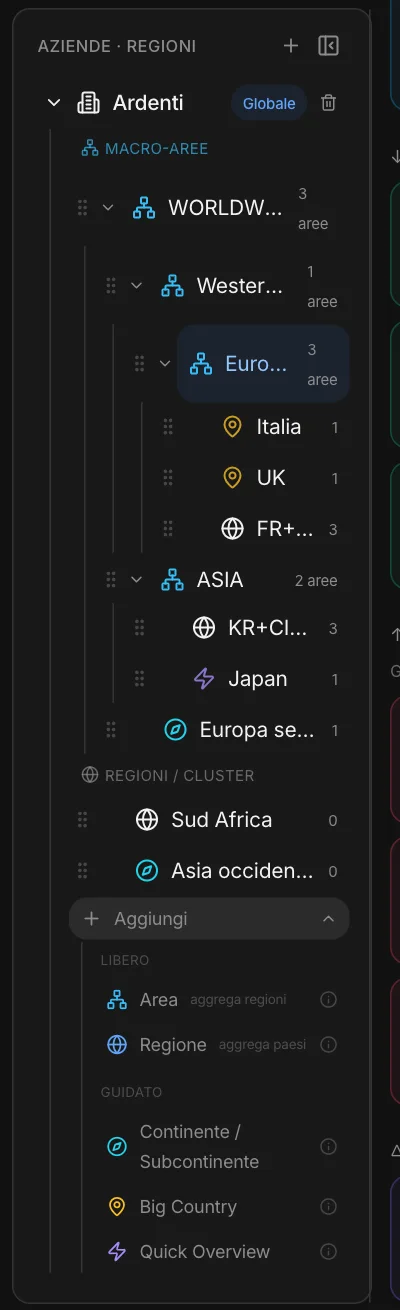
Every company has its own tree. An area groups regions, countries or other areas — WORLDWIDE made of Europe and Asia, Europe made of Italy, the United Kingdom and a cluster of three countries. A region groups countries: DACH, EMEA, whatever you need.
Areas can be dragged from one level to another, renamed with a click on the title, deleted without touching the country projects. And the same country project can sit in several areas: Italy in Europe and in a Mediterranean cluster, without copying it.
From the continent,
to a single country.
From “Add”, two open paths and three guided ones.
Area
The highest level: it groups regions, Big Countries or other areas and compares them. It starts empty; you drag in whatever you want.
Region / Cluster
It groups countries: give it a name and a reason, then add the country projects or countries from a list.
Continent
Pick a continent or a sub-region from a list: an arena to study from above, even before you have the countries.
Big Country
A real country project, treated as a market in its own right.
Quick Overview
A country from a list and, in a few minutes, its market picture — without opening a project.
B2B and B2C
don’t mix.
An area’s profile comes from its countries: if it starts from a B2B country, it only accepts B2B countries, and research uses the B2B lens. Retail and Hospitality companies think in banners and formats, venues and guests. If you try to combine different worlds, MAPS tells you and asks you to create a dedicated area.
Research, comparison,
decision.
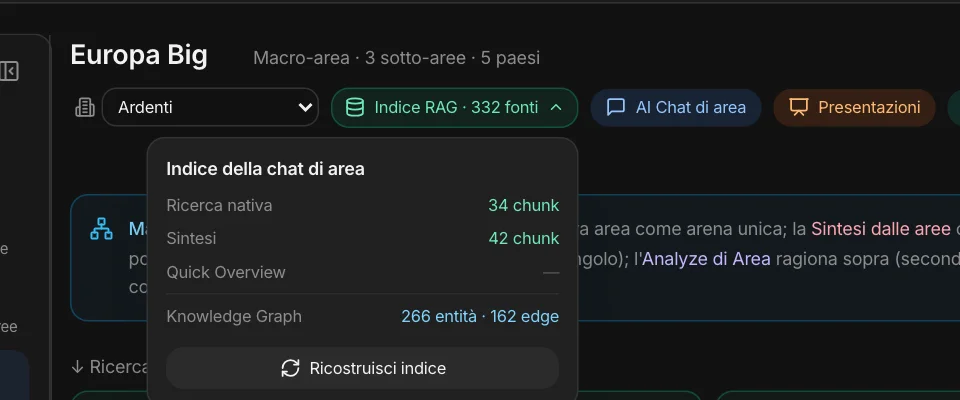
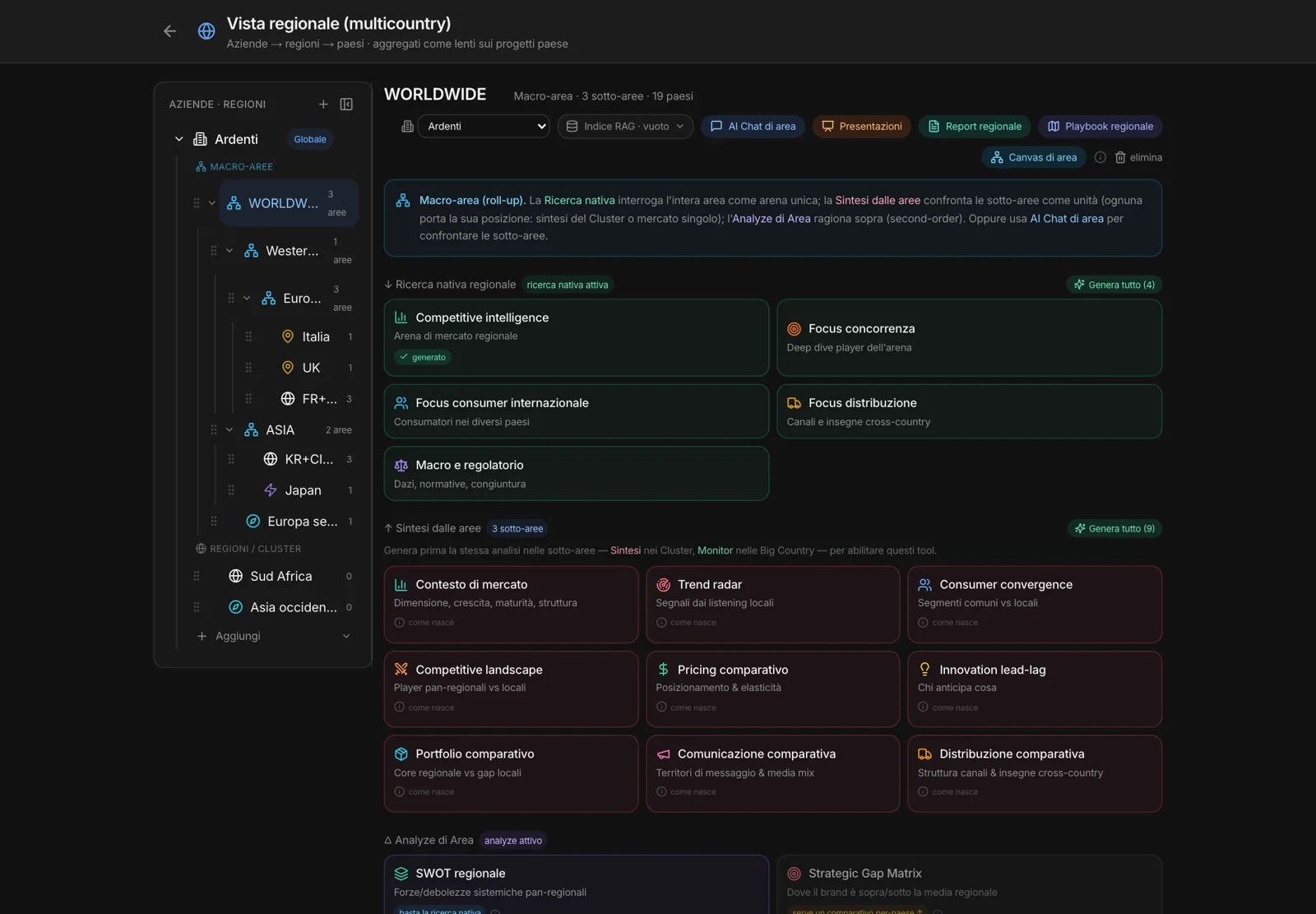
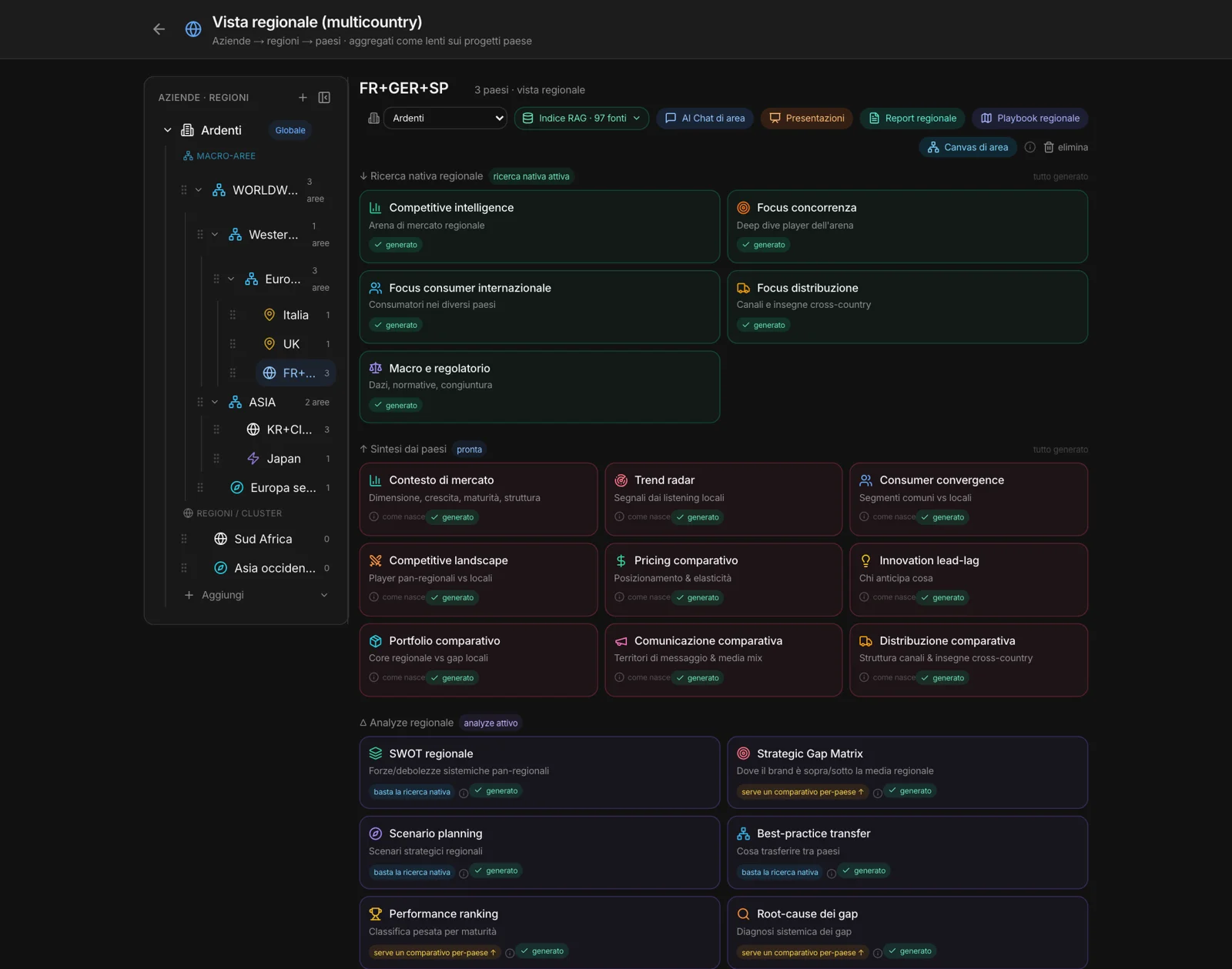
Every area has three levels of work and its own tools up top: the index of what the area chat knows, the area chat, presentations, the regional report and playbook, the Area Canvas.
↓ Native regional research
The area queried as a single arena: market, competition, consumers, distribution, macro and regulation.
↑ Synthesis from areas
The comparison between countries, or between sub-areas, built from the data each one already has.
△ Area Analyze
The second level: regional SWOT, gaps, scenarios, what to transfer, who leads whom.