From the story you want to tell
to the proof you need.
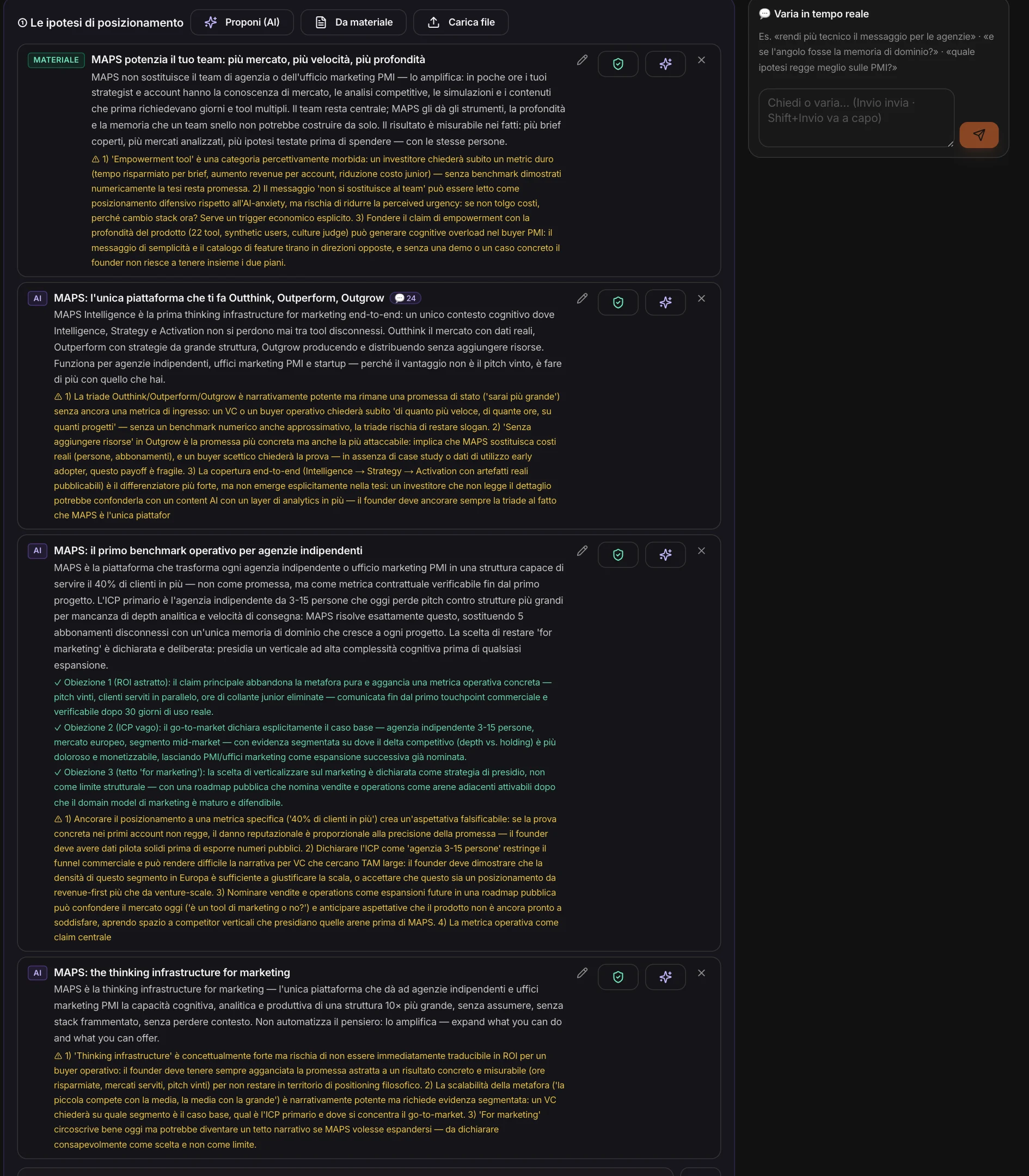
You’ve already written down what you think about the market, the customer, what makes you different. MAPS starts there and asks: what can be verified, what’s missing, who says otherwise, who will you be compared with. It reads the market around your thesis — category, competitors, alternatives, customers, prices, channels.
And when a piece of data isn’t there, it doesn’t make it up: knowing what you don’t know is part of the analysis.
You know which game
you’re getting into.
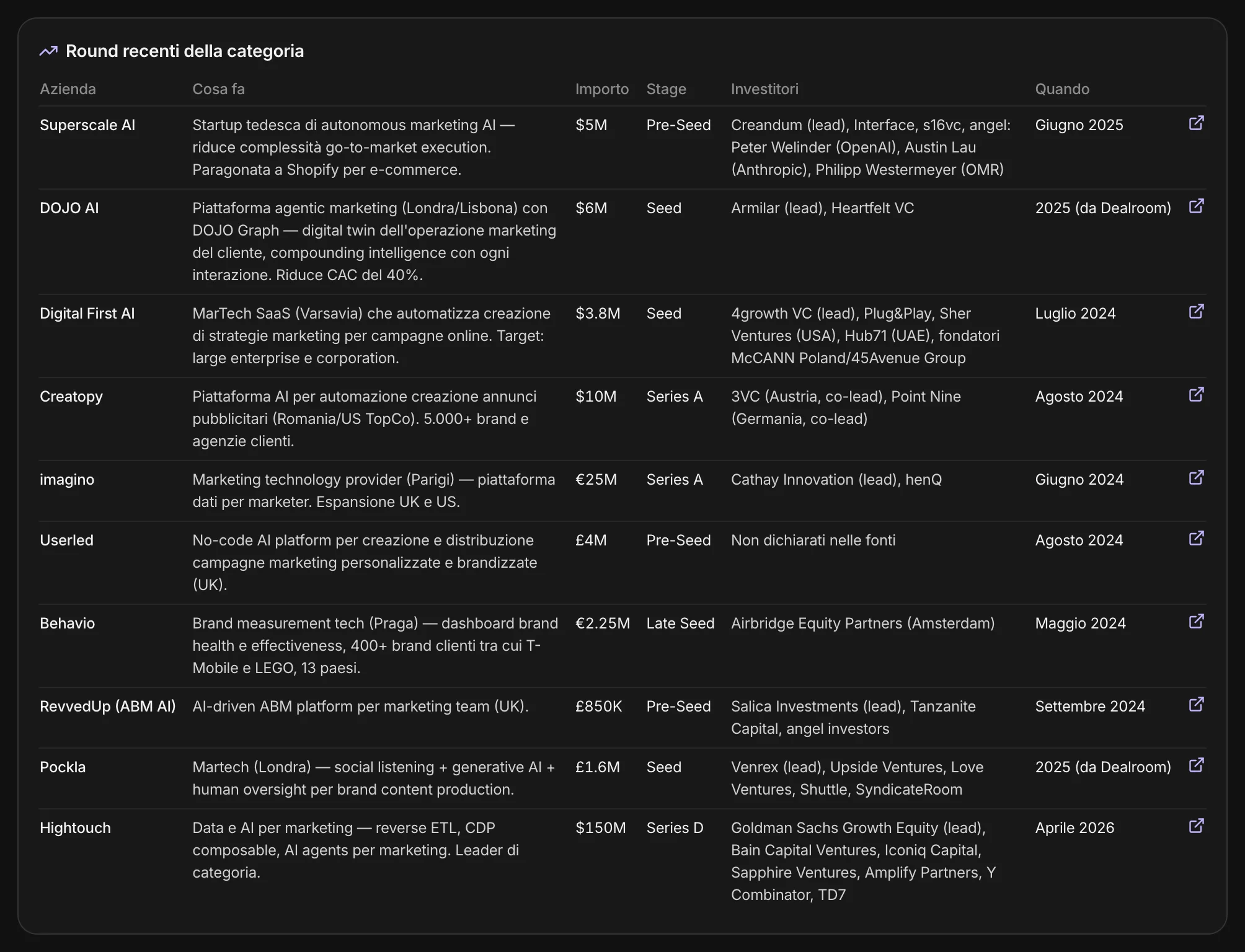
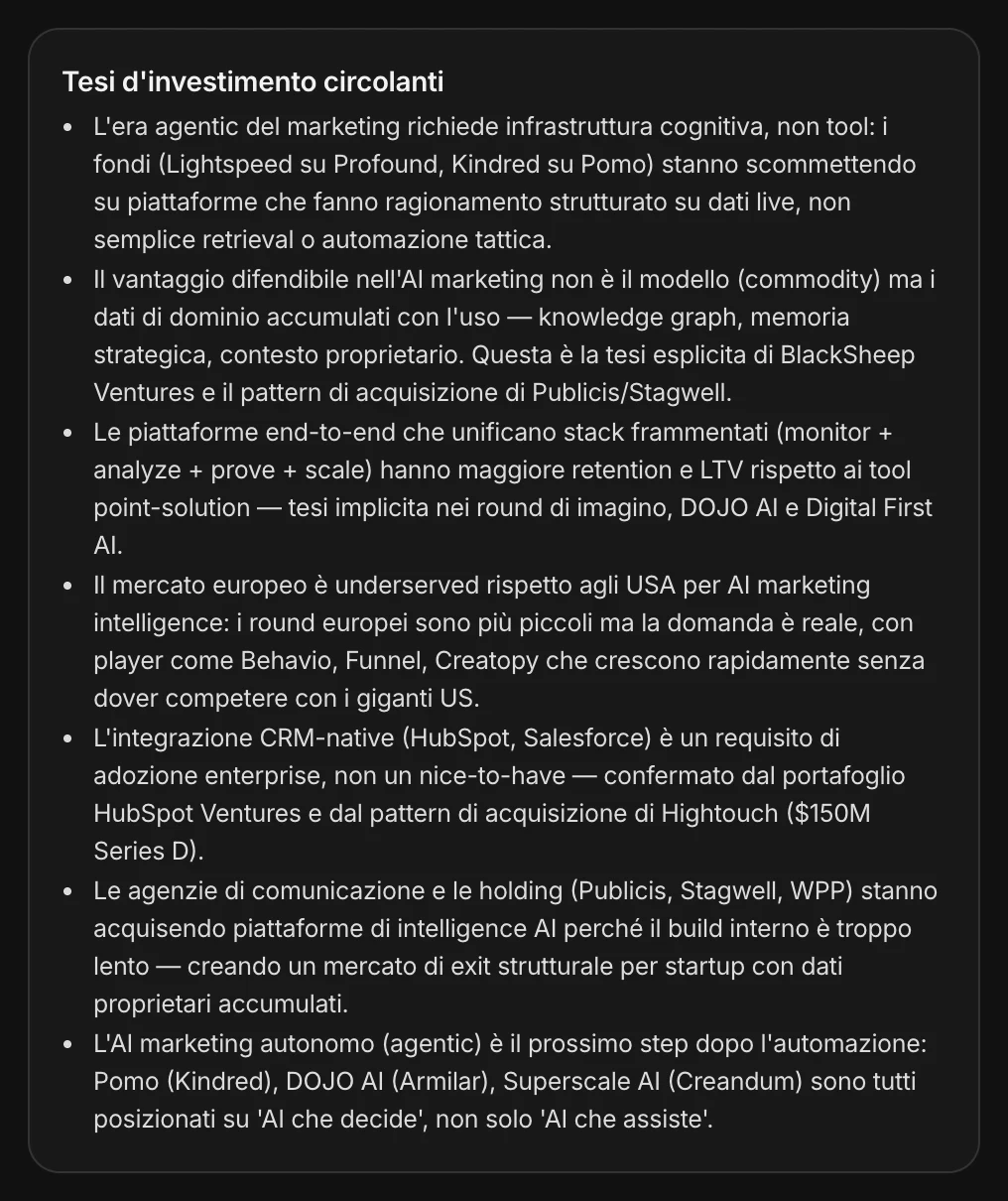
An investor puts you next to a market, to alternatives that are already funded, to other companies raising. Investor Focus reads the funds active in your space, recent rounds, investment theses; the simulated investor committee lets you hear the questions — traction, why now, market, defensible advantage, team, numbers — before the real room. Not to predict what they’ll say: to walk in prepared.
Several hypotheses,
on the same market.
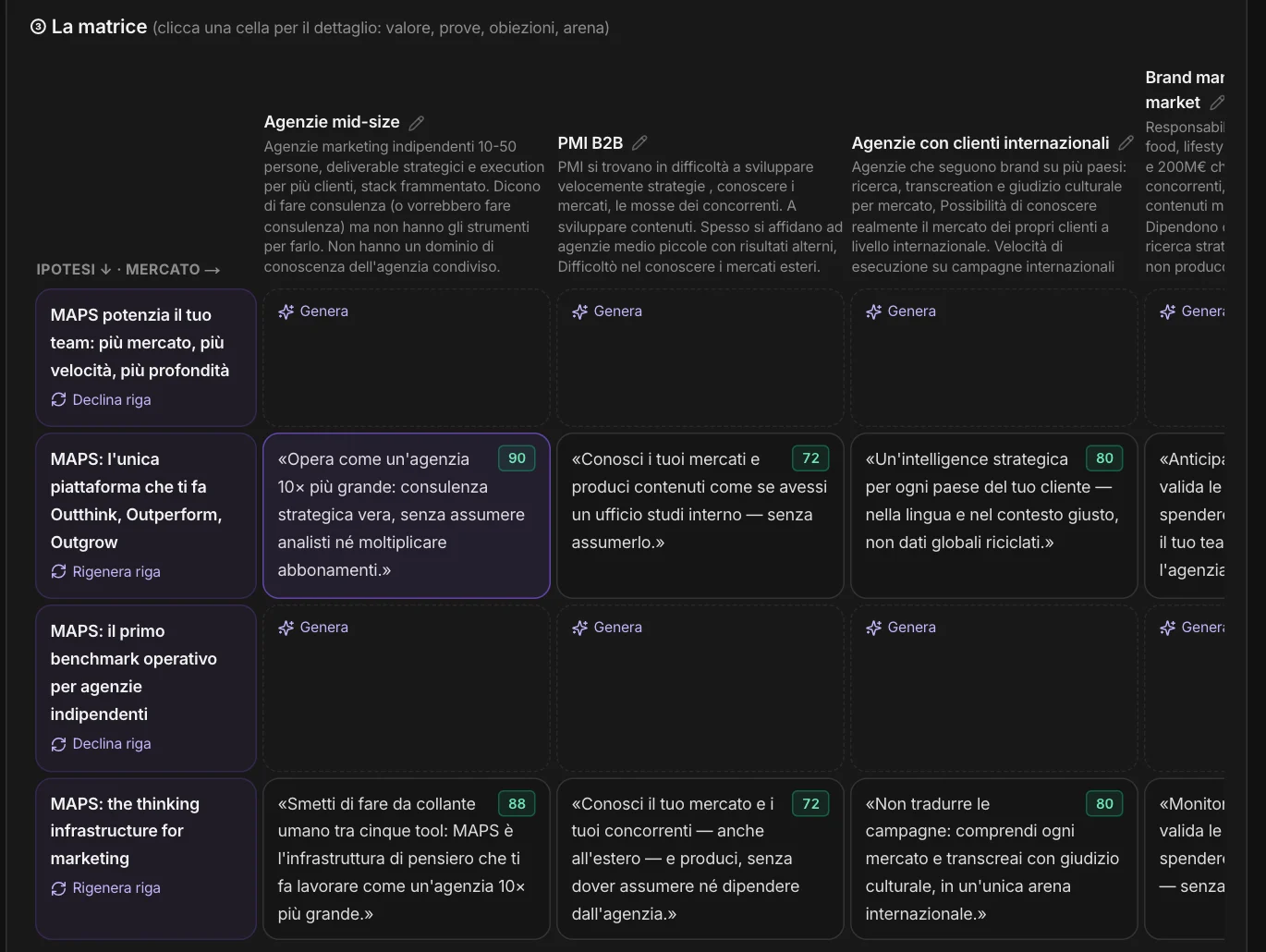
In Pivot Lab you build and compare several positioning hypotheses: for each one, the benefit for the customer, the proof required, the objections, the competitors you would collide with, how well it holds up in each market.
And if you find out you need to change, you don’t open a new project: market, competitors, sources, discarded hypotheses and proof all stay. A pivot changes the direction; it doesn’t erase the journey so far.
Your competitors
aren’t just other startups.
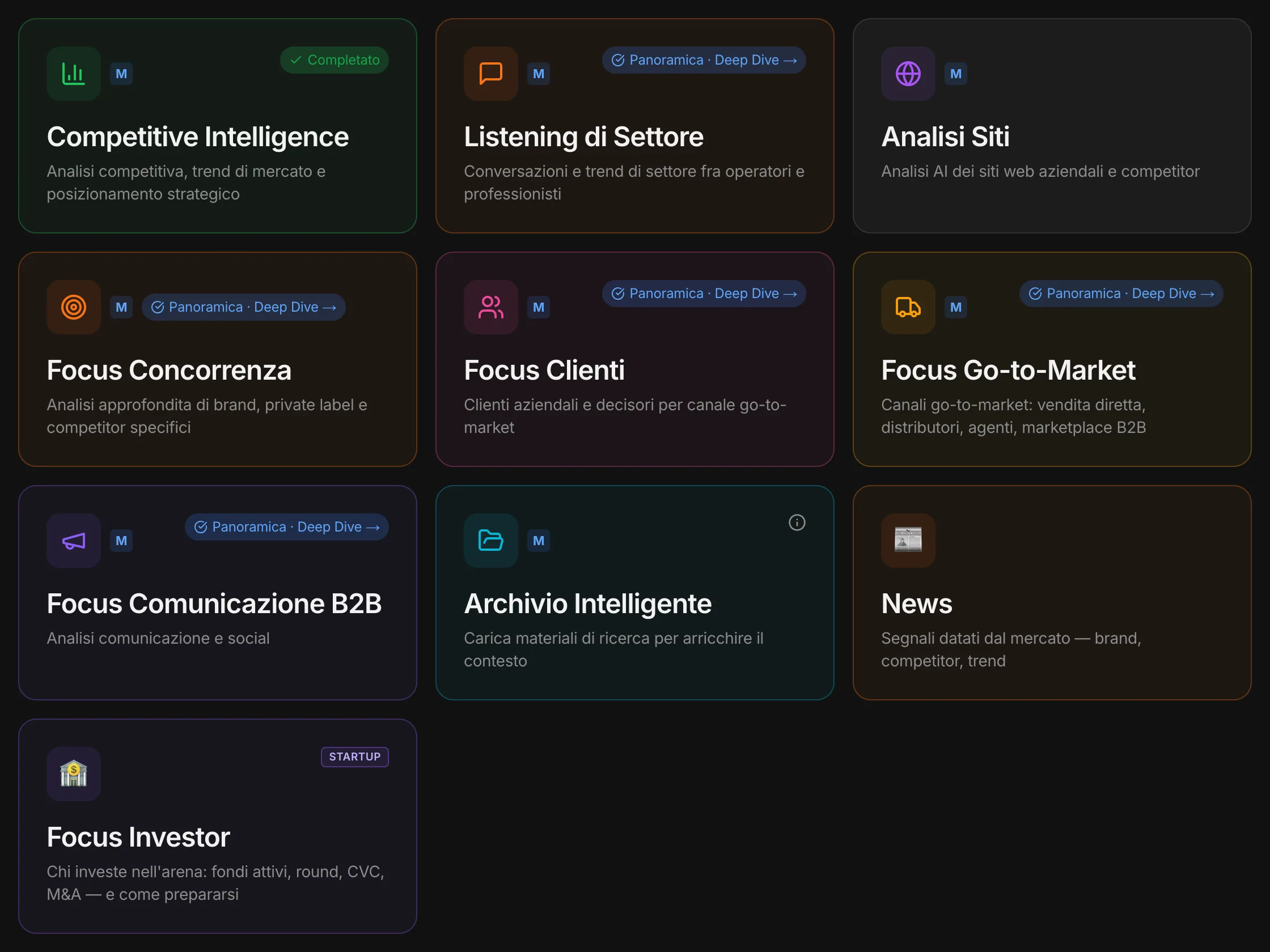
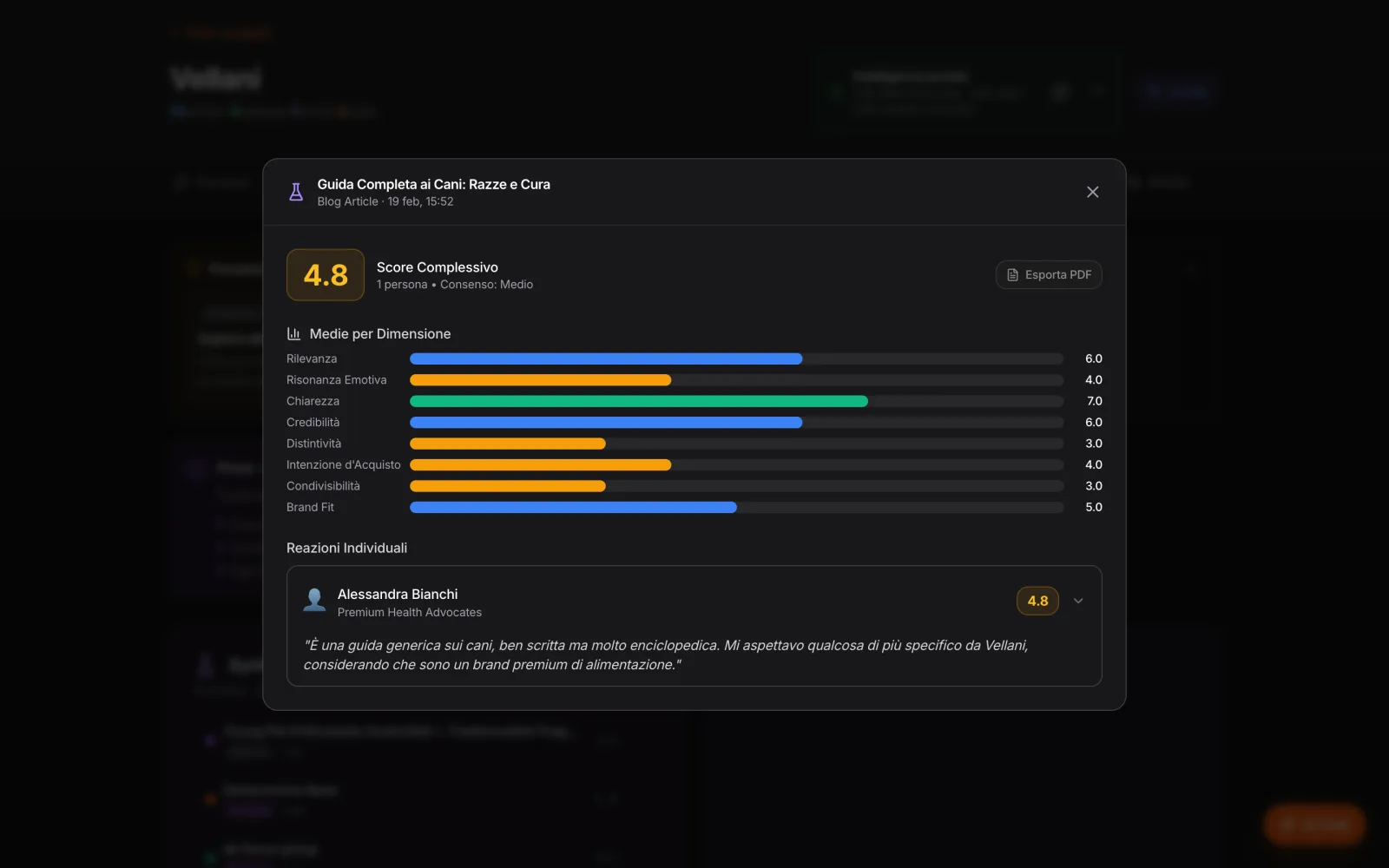
MAPS widens the arena to established players, indirect alternatives and the status quo — the way the customer solves the problem today without you. Then messages, offers, prices and landing pages are tested with synthetic users; and if you sell to businesses, on the roles of the buying committee.
From the pitch deck
to your first content.
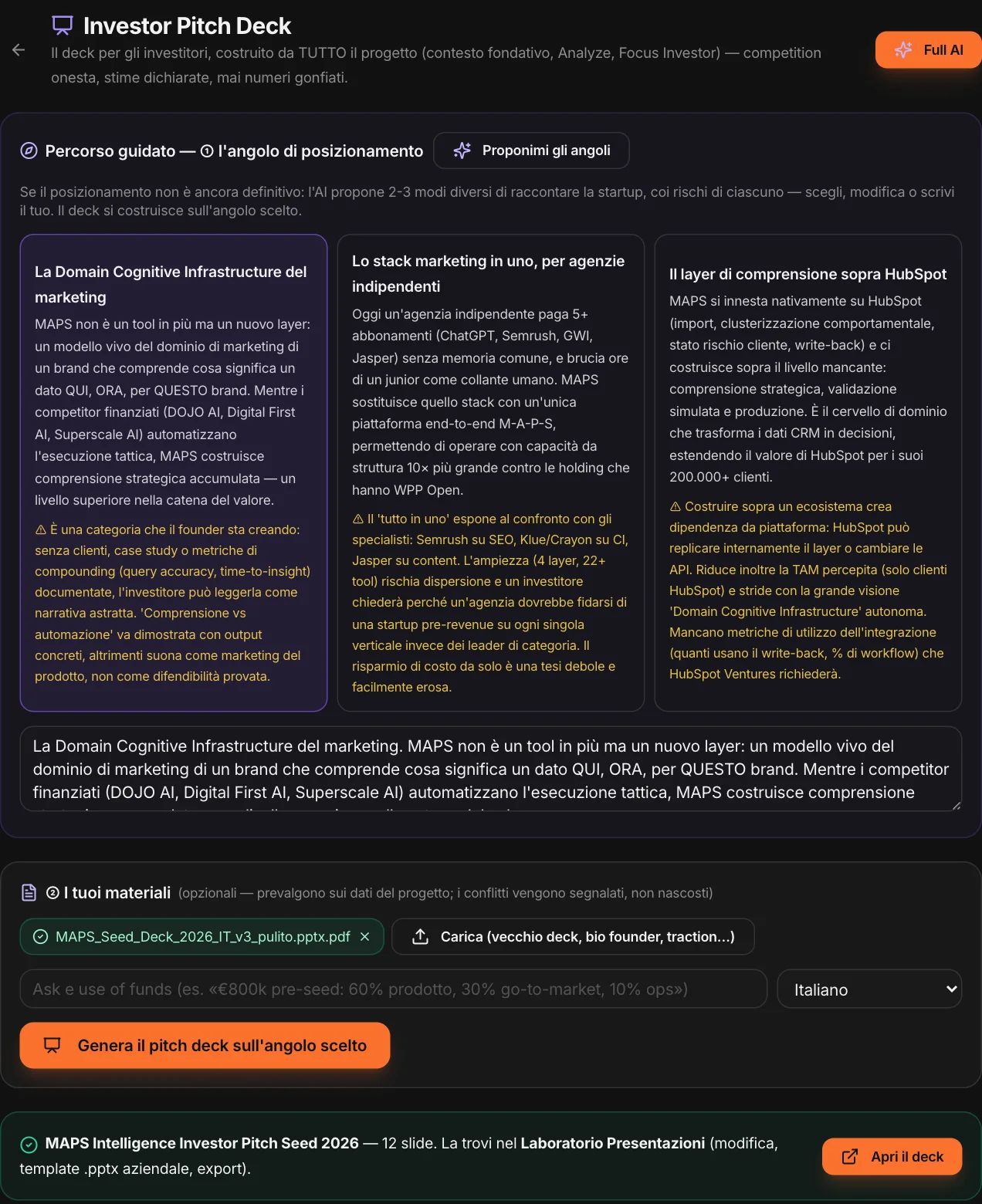
The Investor Pitch Deck comes from the same context in which you built the positioning and tested the hypotheses, and opens in the Presentation Lab. Then landing pages, emails, content, campaigns: what you produce still knows what you are trying to prove.
The startup profile combines with the market you work in: consumer or B2B.
From the pitch
to the market.
Market and competitors · Customers · Channels · Status quo
Investor Focus · Funds · Rounds · Theses
Strategy and positioning · Pivot Lab · Alternatives
Synthetic users · Investor committee · B2B Buying Committee
Investor Pitch Deck · Presentations
Content · Landing pages · Campaigns · Studios
The questions
people ask us.
Does it work if the startup has no online presence yet?
Yes: the research starts from your documents and looks at the arena and the potential customers, not at the brand’s web presence.
Can MAPS tell whether the round will close?
No: it helps you prepare — who invests, with which theses, which questions are coming. The outcome depends on much more.
Does it work for B2B startups?
Yes: the startup profile combines with B2B, with decision-makers, sales channels and the buying committee.