
Who raised, how much,
and from whom.
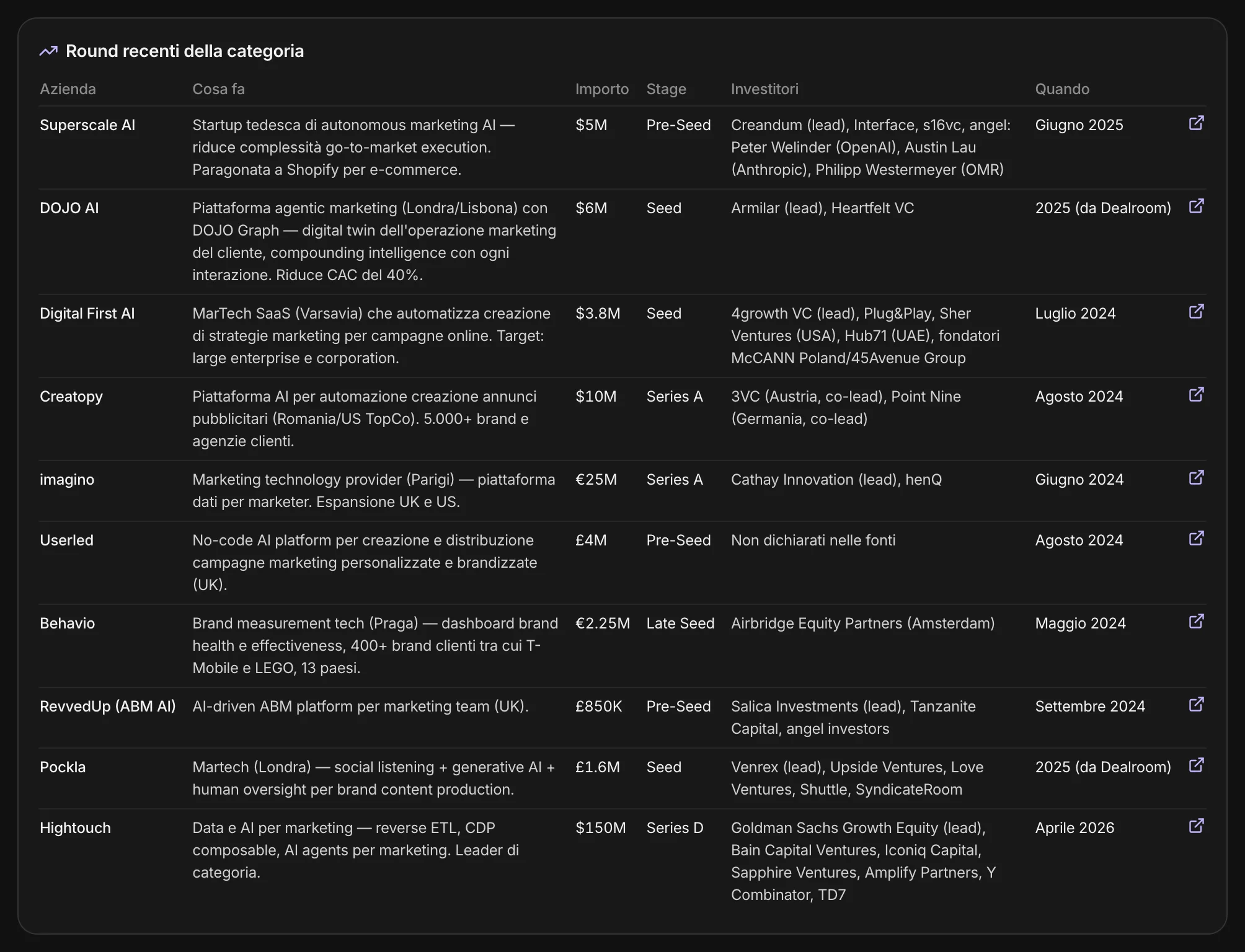
The startups in your arena that closed a round: what they do, the amount, the stage, the investors, when. With a link to the source. The example is MAPS’s own project: marketing with AI, in Europe.
Not a list of funds.
The right ones for you.
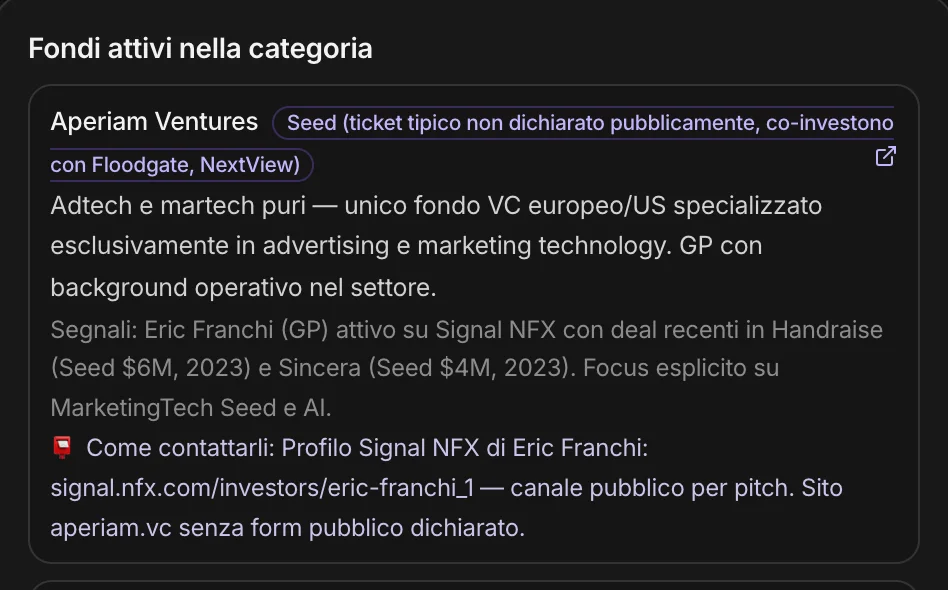
For each fund active in the category: the stage it comes in at, its investment thesis, recent signals — the latest deals —, and how to reach it.
What they believe,
the people who invest.
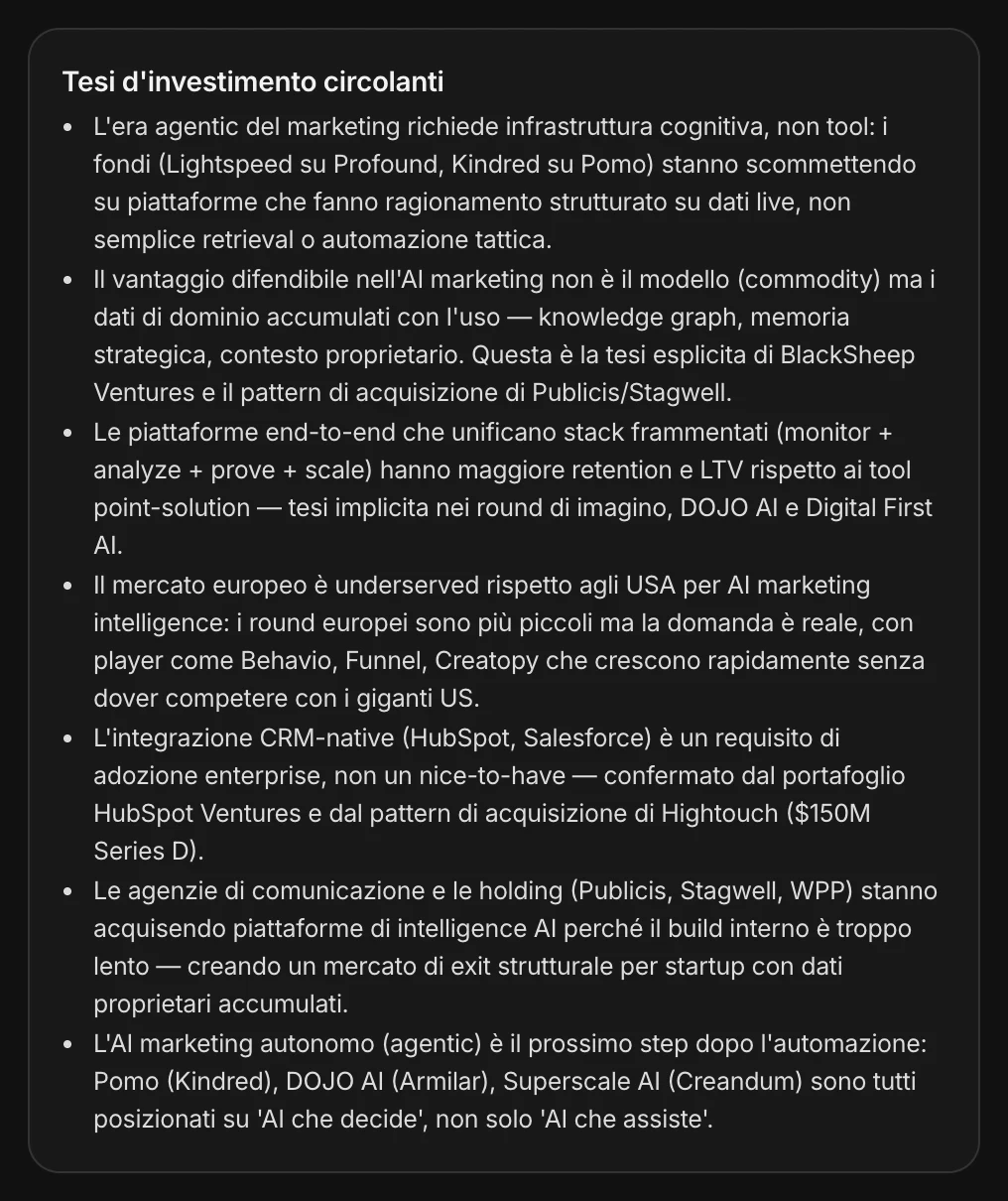
From rounds and acquisitions, MAPS draws out the investment theses circulating in the category: what funds are betting on, what they consider defensible, who is buying whom. Each thesis with the deals that support it.
It’s the language your pitch needs to speak.
And then, what to do.
Who to contact, how to prepare.
MAPS places your startup inside this picture: how investors will see you, which risks they’ll ask you to take apart, which funds are the best fit and why, how to prepare for the meeting.
From the picture to the pitch.
The investor committee
A simulation with fund partners built on this picture: you pitch, and you get the questions they’ll really ask — traction, why now, defensible advantage, numbers.
The pitch deck
In the Studio, a 10–12 slide deck that starts from the project and your material, with your template.
In the memory
Investor Focus becomes part of the project: the chat uses it when you ask “who has invested in our competitors?”.