
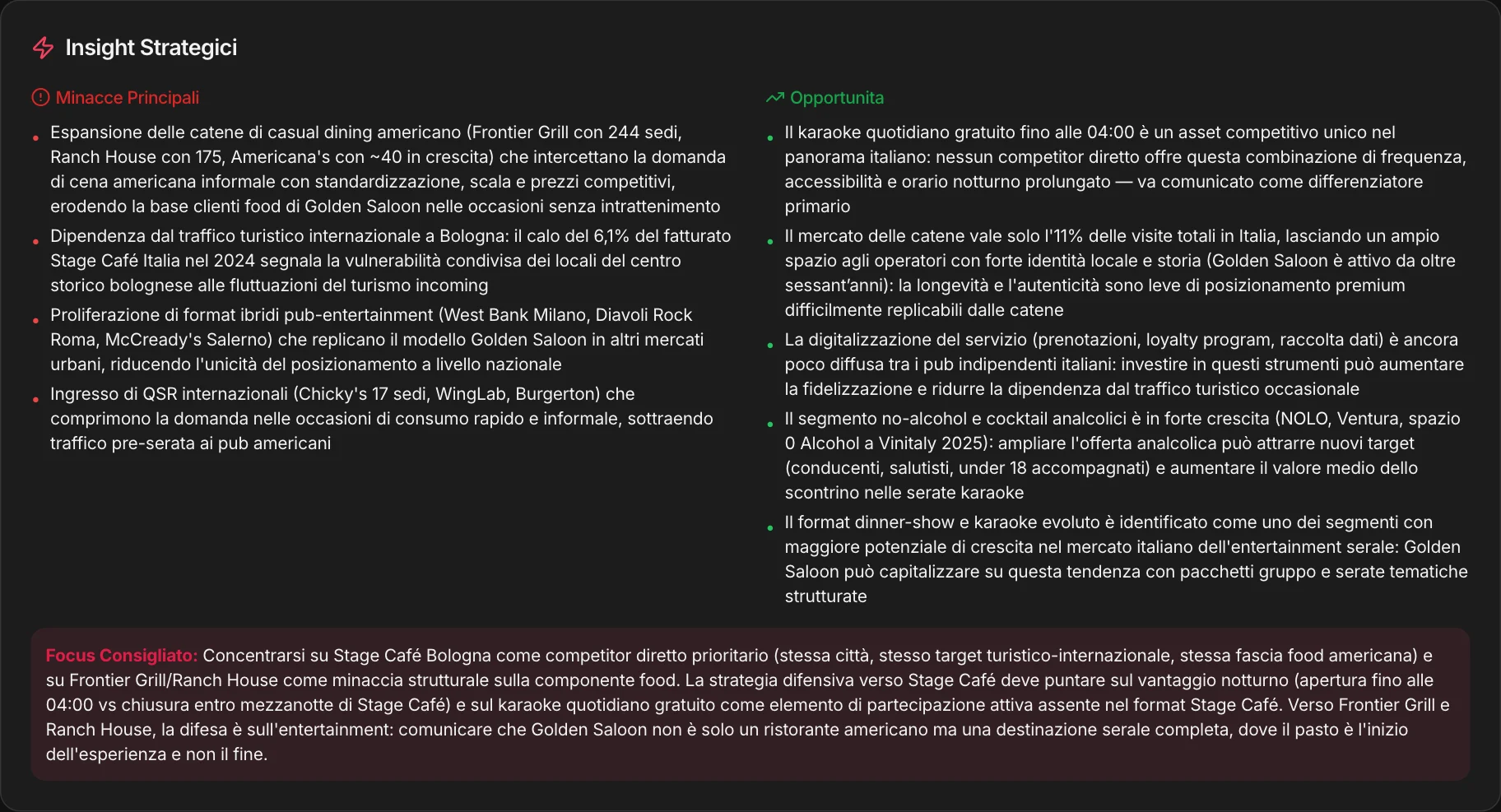
Who can win
the same night out.
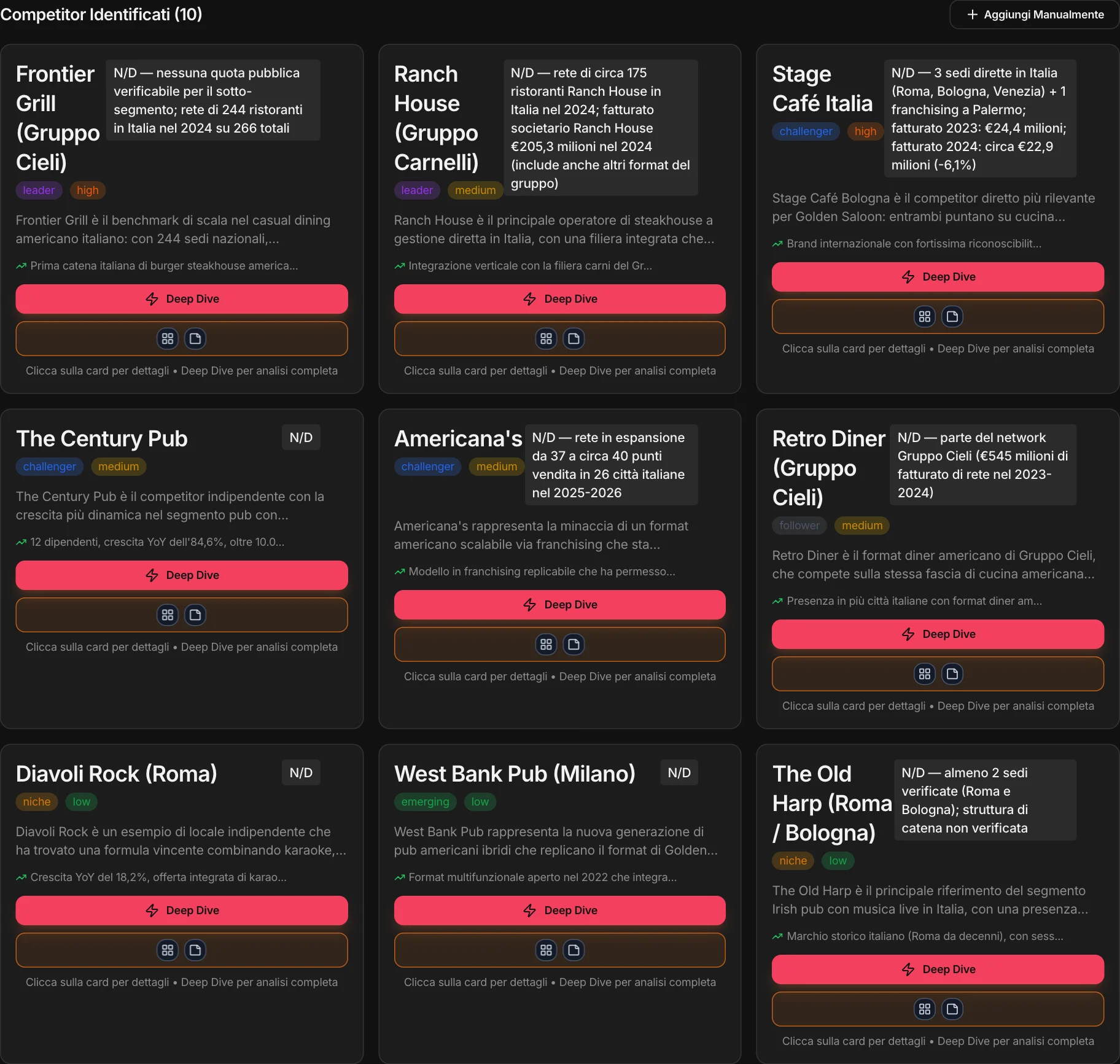
A pub can compete with a restaurant, a hotel with an apartment, a venue with a burger chain opening downtown. MAPS builds the competitive set by neighborhood and by occasion, including substitutes in a different format.
For each one: where it is, what it costs, what experience it promises, what reputation it has. Not a list of similar places: the reasons someone might choose them.
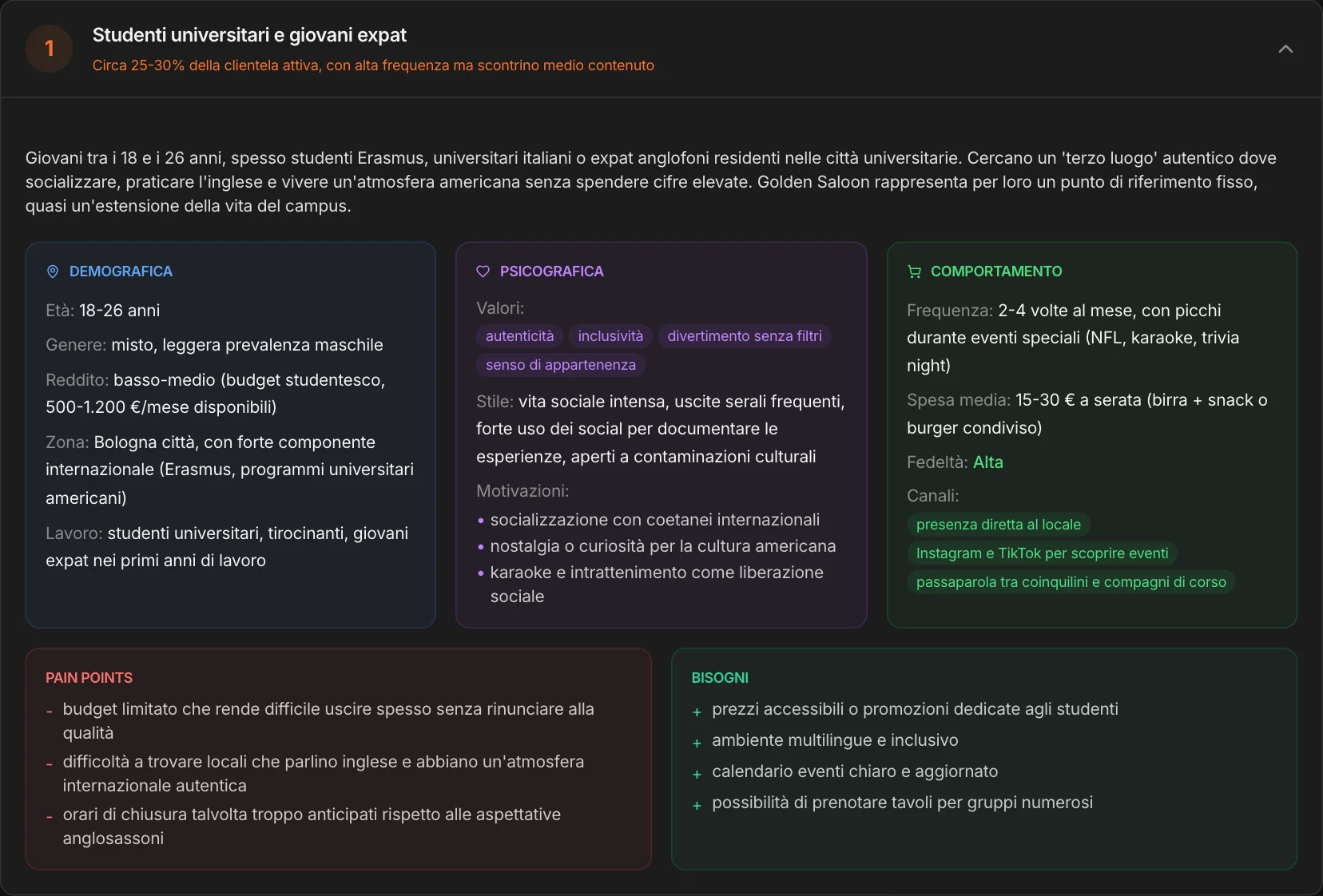
And why
to that particular place.
Residents, tourists, students, families, people coming for an event, regulars. MAPS reads the audience by origin and by occasion: for a venue, the neighborhoods that drive demand; for a destination, the countries the guests come from.
And the right metrics for the type of business: occupancy and average rate in lodging, covers and average check in restaurants, attendance per night in venues.
The experience
leaves a public trace.
A noisy room, memorable service, too long a wait, a great night. MAPS reads your reviews and your competitors’, on the sources available for that market: what gets praised, what gets criticized, how the rating changes over time.
You know why people recommend you, and why they recommend the place next door.
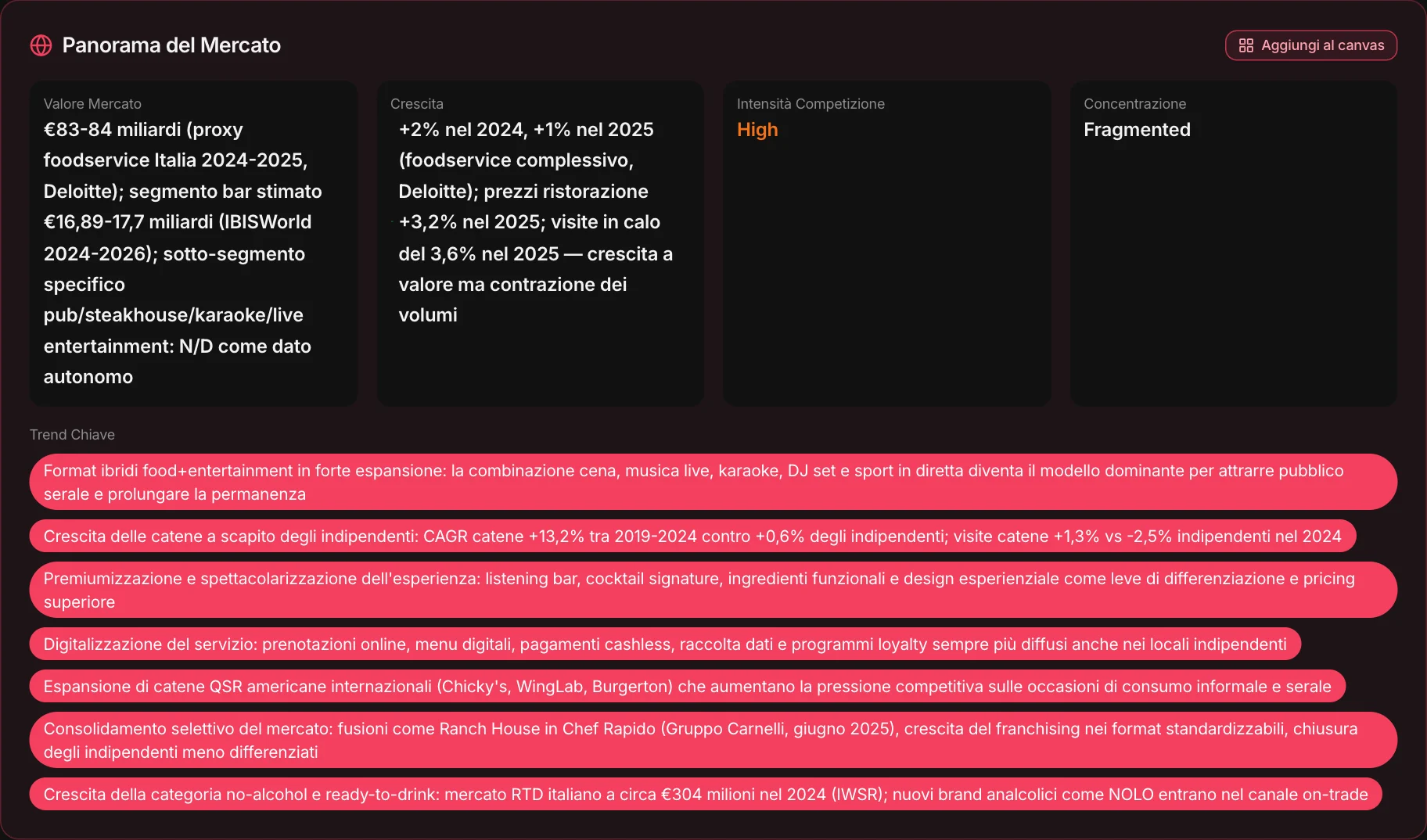
The same customer,
different paths.
For a hotel: booking portals, direct booking, agencies, groups — with the cost of commissions. For a restaurant or a venue: walk-ins, reservations, events, groups, advance sales. MAPS puts these paths in the same picture: not just how much you sell, but where the sale comes from.
Occupancy · Average rate · Revenue per room · Direct and portals
Covers · Average check · Reservations · Groups
Attendance per night · Admissions, bar, events · Calendar
The levers
of a place.
Which occasion to own, when to act, which events to build, how to defend against whoever is growing in the same area, which seasons or nights to fill. The strategy tools reason on revenue management, intermediated share and seasonality.
And with multiple venues or countries: destinations, seasons, events and guest origins, compared.
From the place
to the decision.
Competitive set by area and by occasion · Format substitutes
Occasions · Origin · Residents and tourists
Reviews · Recurring themes · Rating over time
Direct and portals · Events and groups · Seasons
Positioning · Format · Activations and events · Local campaigns
The questions
we get asked.
Does it work for a single venue?
Yes: the market is read at the scale of its neighborhood, with the nearby alternatives, the occasions it competes for and the reputation of each.
Does it apply to restaurants and venues, not just hotels?
Yes: the metrics, channels and timing are those of the type of business — lodging, restaurants, venues and entertainment.
Does MAPS know competitors’ occupancy or revenue?
Only when the figure is in the sources. If it isn’t, it’s marked N/A.
Does it connect to booking portals?
No: it reads public sources, including reviews. You can upload your own data as files.