
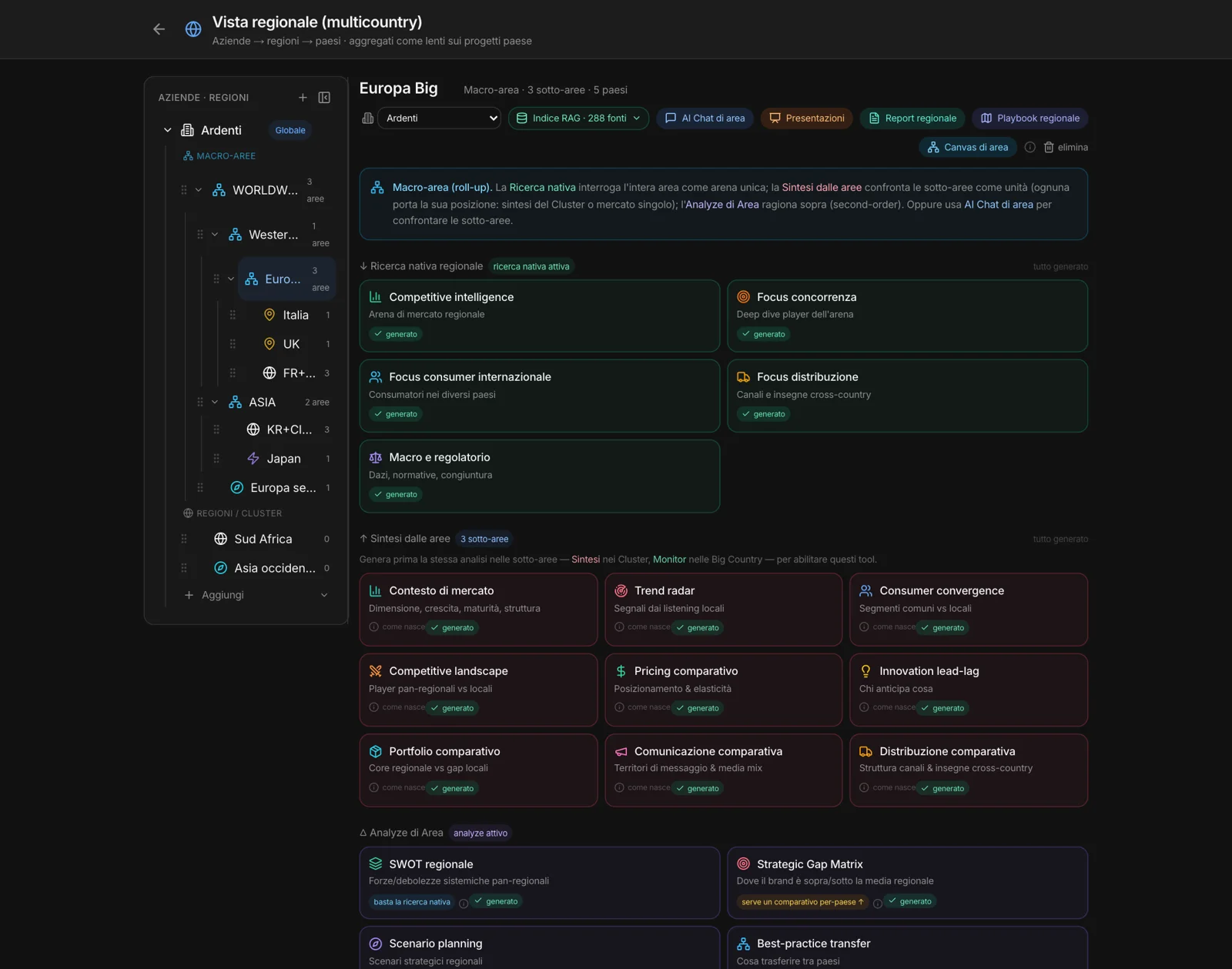
Every country,
for what it is.
When you enter a new country you don’t need a translated version of what you already know. You need to understand who really competes there, how prices move, which channels matter, how consumers buy, which rules change the game.
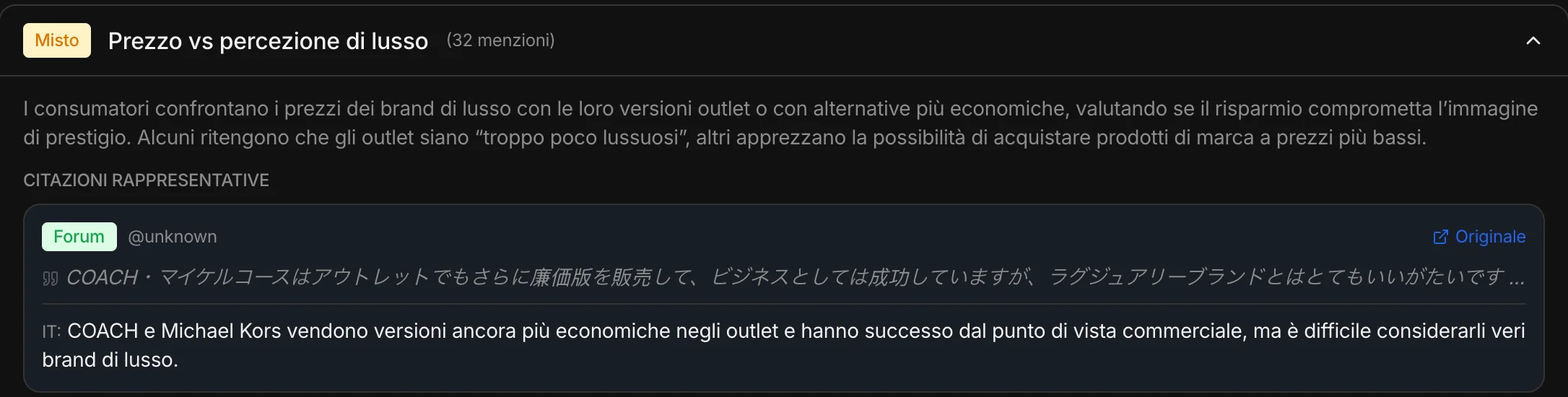
MAPS researches the country in its own language, with that market’s sources; you read in yours, and with “Translate” you open any original text without losing it. The market’s own sources, not your home sources translated.
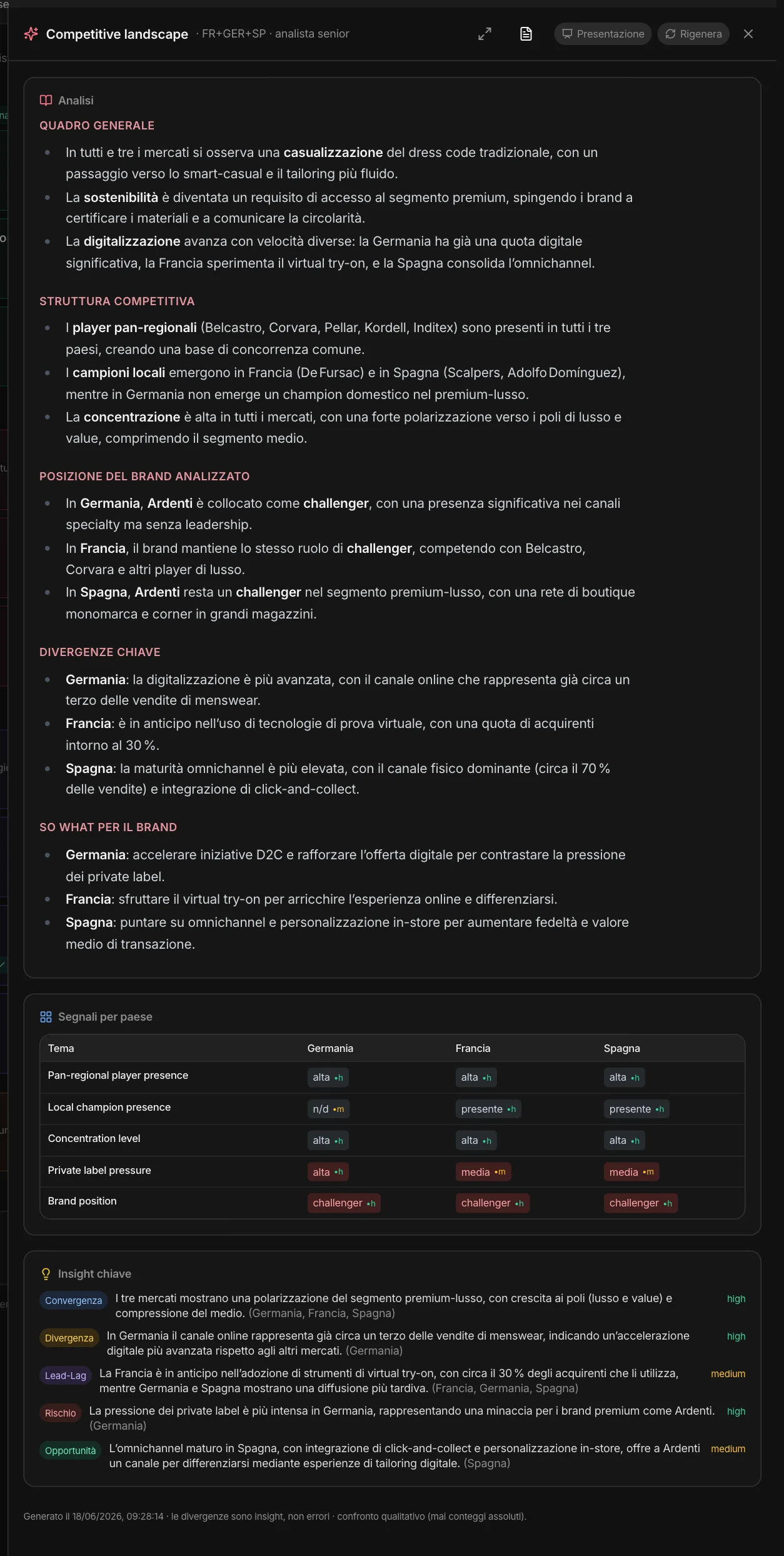
That’s where the differences
that matter show up.
One country grows, another slows down; in one, consumers react to price, in another to distribution; a competitor is strong in three markets and nearly absent in the others. With at least two countries, MAPS builds nine cross-country reads: context, trends, consumers, competitive landscape, prices, innovation, portfolio, communication, distribution.
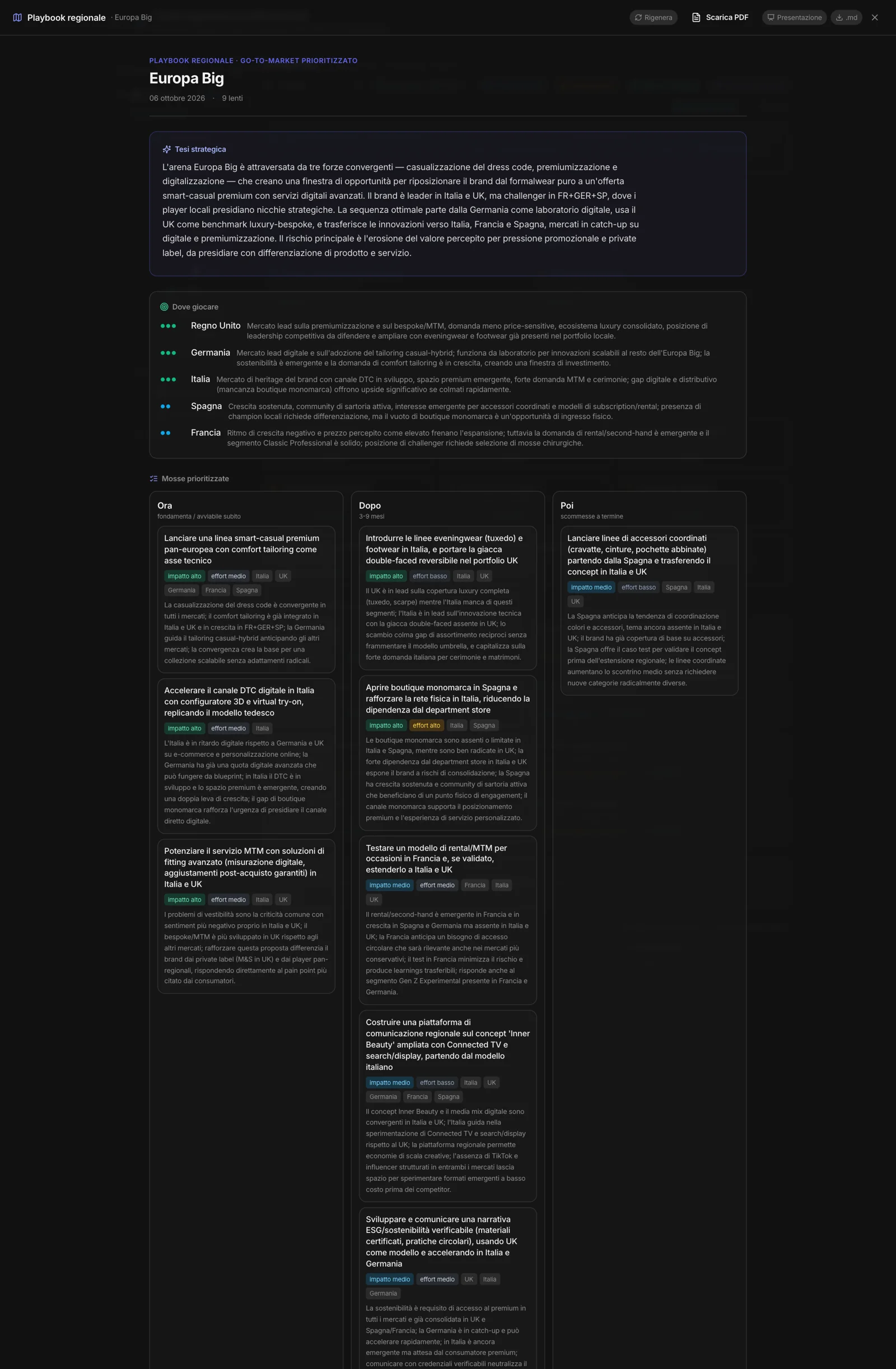
Ten markets
are not ten priorities.
Where there’s more room, where the brand starts with an advantage, which moves transfer from one country to another and which stay local, what to do now and what later. MAPS brings these reads onto the Area Canvas, with where to play, priorities, roadmap, risks, white spaces and briefs for the markets.
One area strategy, not ten local strategies side by side.
Not “is it translated well?”
“Does it work there?”
A campaign can be right in your home market and wrong in Spain; an image that’s neutral here can be a problem elsewhere. In the Studios, MAPS adapts content with the context of the country it’s meant for, and the Culture Judge rereads it against that market: tone and register, values, language and idioms, references, symbols and images.
Risks come ranked by severity, with suggested tweaks. The decision stays with people.
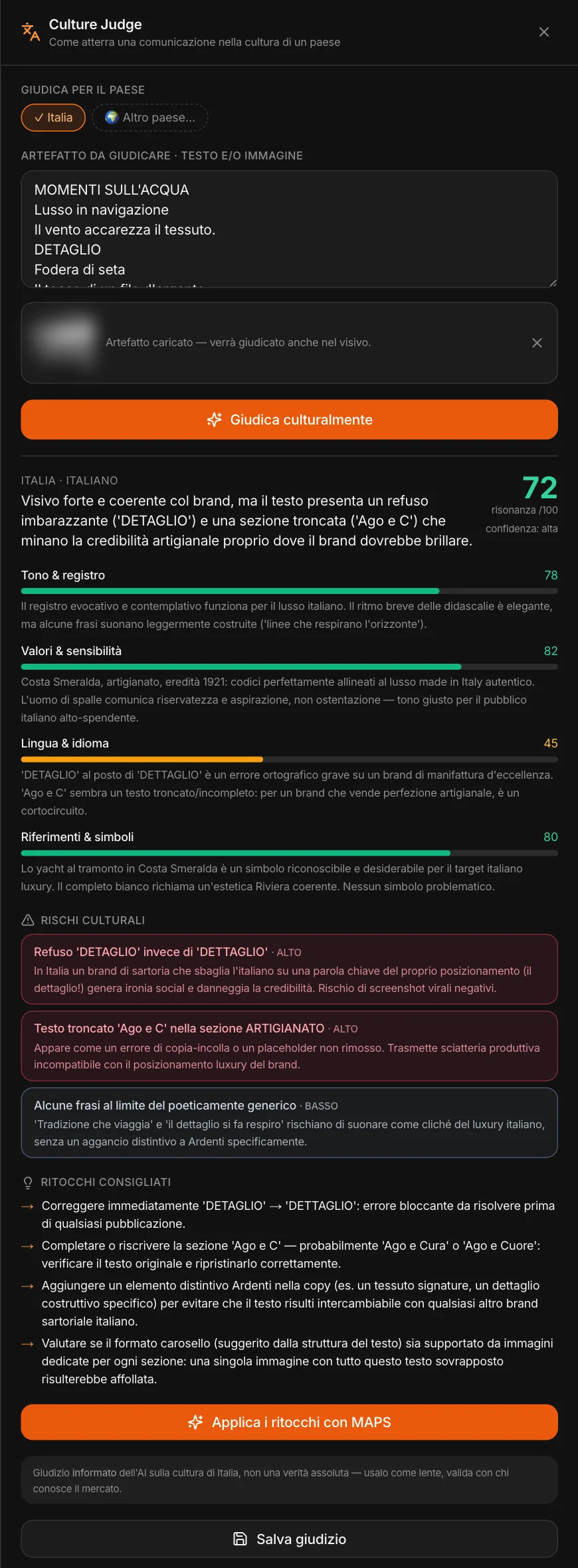
The market stays local.
Collaboration doesn’t.
The project is run in English or Italian; content for a country comes out in that country’s language; a presentation can be copied into another language without touching the original. Everyone works in the language they know, without turning every market into the same market.
Up close,
or from afar.
The country: the local read. The area: Europe, North America, Asia — or however you organize your markets, across several levels too. The company: the overall picture, what repeats and what diverges.
And if a new country interests you but you’re not ready to open a project yet, start with a quick overview. Get your bearings first; then, when needed, go deep.
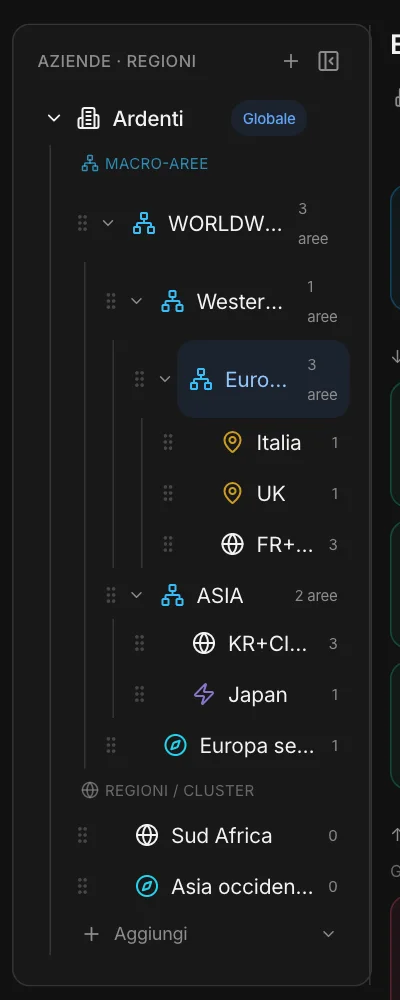
From the country
to the area.
Research in the country’s language · Quick overview · Translation of original content
Nine cross-country reads · Area synthesis · Priorities
Area Canvas · Where to play · Roadmap · Risks · Briefs for the markets
Adaptation by country · Culture Judge · Presentations in other languages
Country chat · Area chat, with the country behind every piece of information
The questions
people ask us.
Which languages does MAPS work in?
Interface and analysis in English or Italian. Country research is done in that country’s language, and content comes out in the language of the market it’s meant for.
Do I need to open a project for every country?
To study it in depth, yes. To get your bearings on a new market you can start from a quick overview, without a full project.
Does the Culture Judge replace people who really know that country?
No: it surfaces risks, ambiguities and adaptations before the final review. The decision stays with people.