
The client doesn’t see it.
They see a better-prepared agency.
Start from the client’s website, the brief and the materials: category, competitors, prices, conversations, customers and open spaces in the same project. The team starts from what it all means.
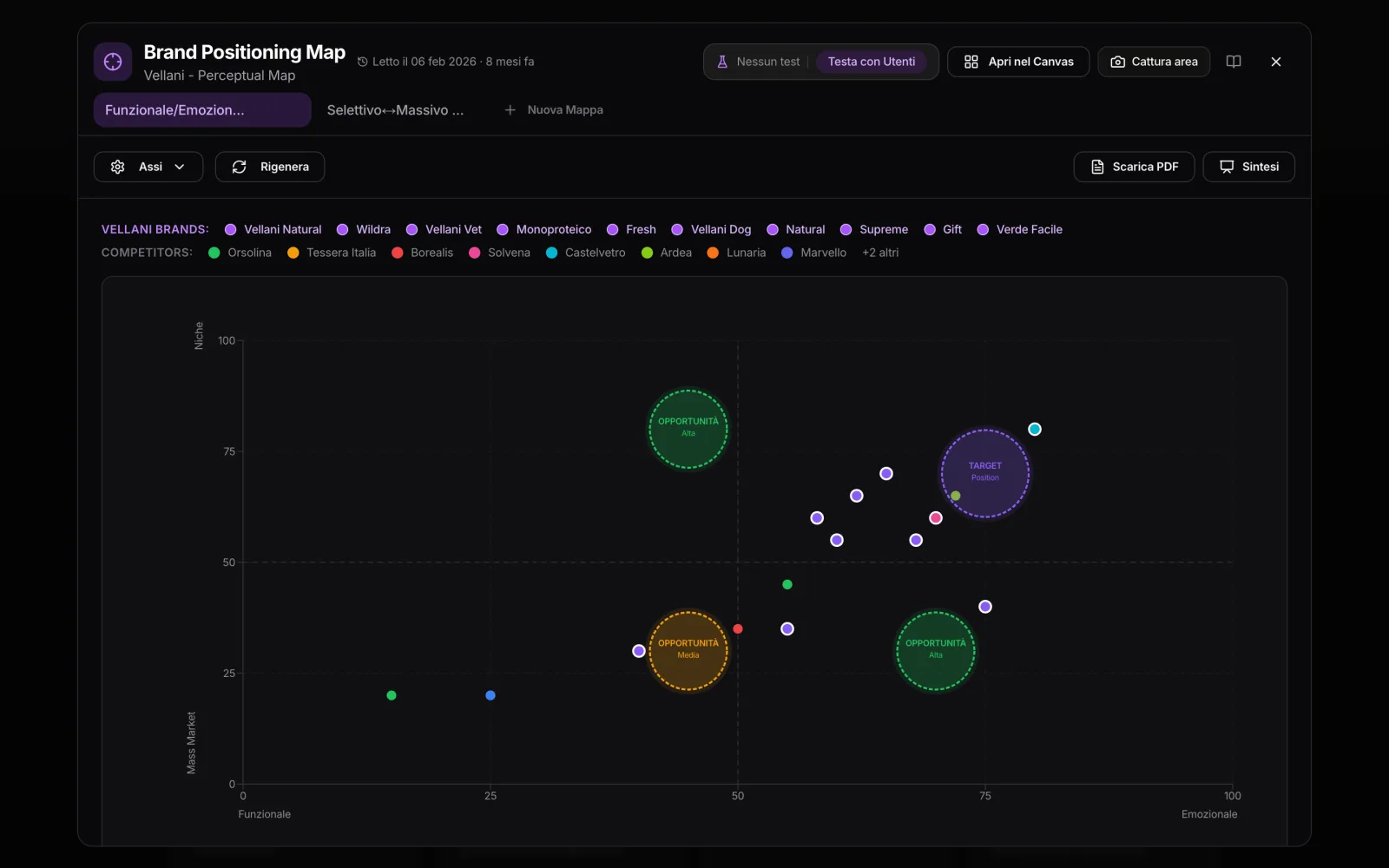
Competitive maps, personas, open spaces and scenarios on the same knowledge base, and every conclusion traces back to its sources. You arrive with a thesis, not a collection.
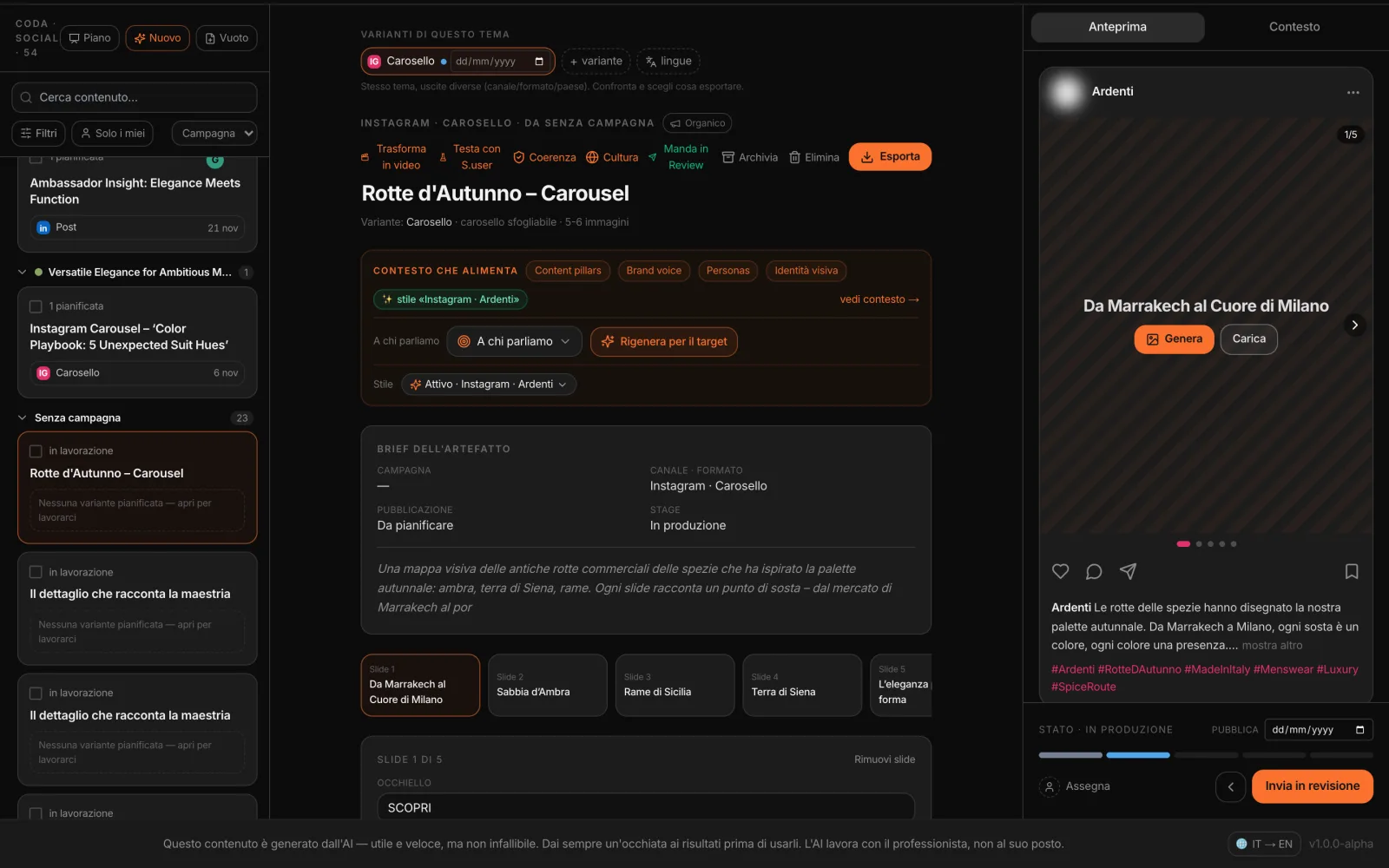
Analysis, concepts, voice, content and plan work in the same context: in October, the twentieth piece of content still knows why you chose that path in March.
Why that target, that territory, that message, now: market, sources, reasoning and tests with synthetic users stay together.
The work MAPS takes off your plate.
And what it leaves to you.
Research and analysis
Category, competitors, social listening, personas, journeys, market signals.
Strategic synthesis
MAPS proposes connections, positionings, insights and alternatives; the planner chooses, corrects, discards.
Creative idea
MAPS can open up many paths. The idea you present to the client is yours.
Direction and execution
MAPS prepares drafts and variants; art direction, final copy, production and the client relationship stay yours.
The decision
MAPS widens the alternatives and brings more evidence. Responsibility for the choice stays human.
And you don’t start over
from scratch.
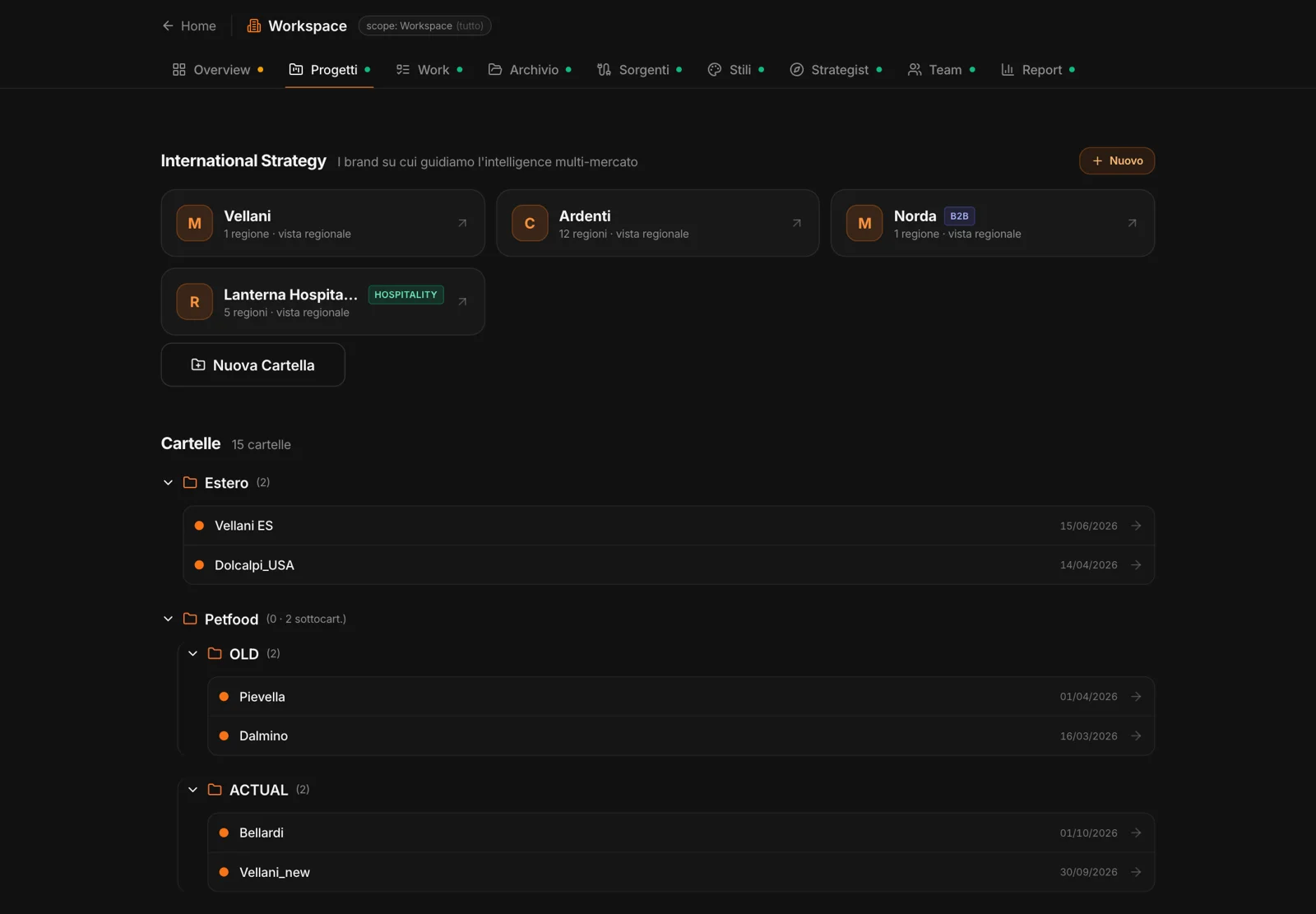
Every client has its own space: the market studied, the competitors, the documents, the decisions, the brand, the work produced, the reasons behind the choices. What you discover today is still there tomorrow.
And the pitch stops being wasted work: brand, category and market are enough for a first picture, and if the pitch doesn’t land, the project stays. Next time you don’t start again from a blank page.
A different
bottleneck.
Strategy lands on the most senior people, along with everything else. MAPS brings more research and analysis capacity, even for clients with no budget for weeks of strategy.
The planner is there, and is often the bottleneck. MAPS prepares the gathering and the first synthesis; the planner steps in to choose, cut, decide.
You know how to measure the after. MAPS adds the before — market, competitors, customers, messages — and reads investment all the way to the customer, not just the click.
The client buys continuity: concepts, voice and content stay connected to the strategy they came from. Month twelve doesn’t look like another brand.
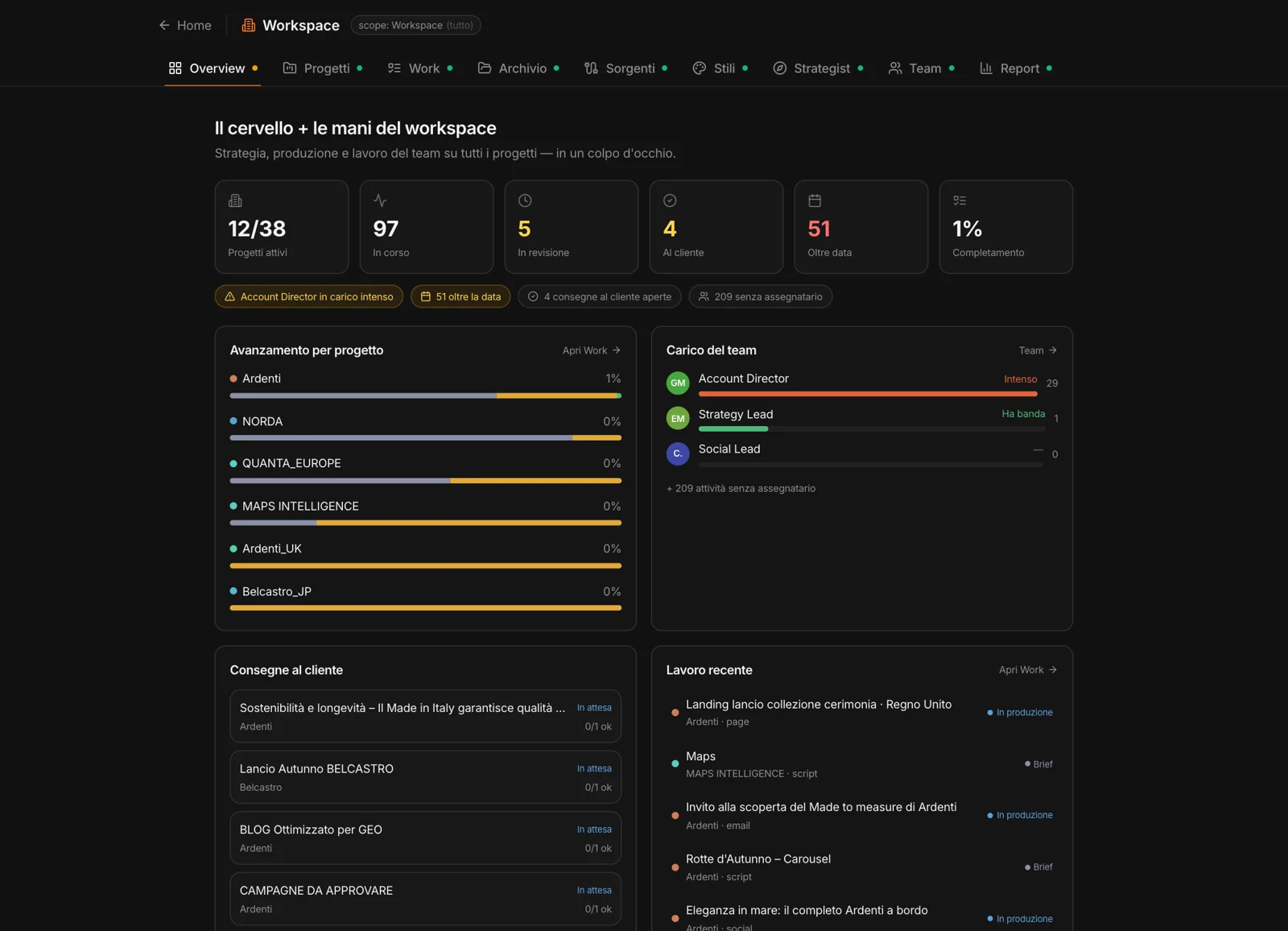
The same context,
for everyone.
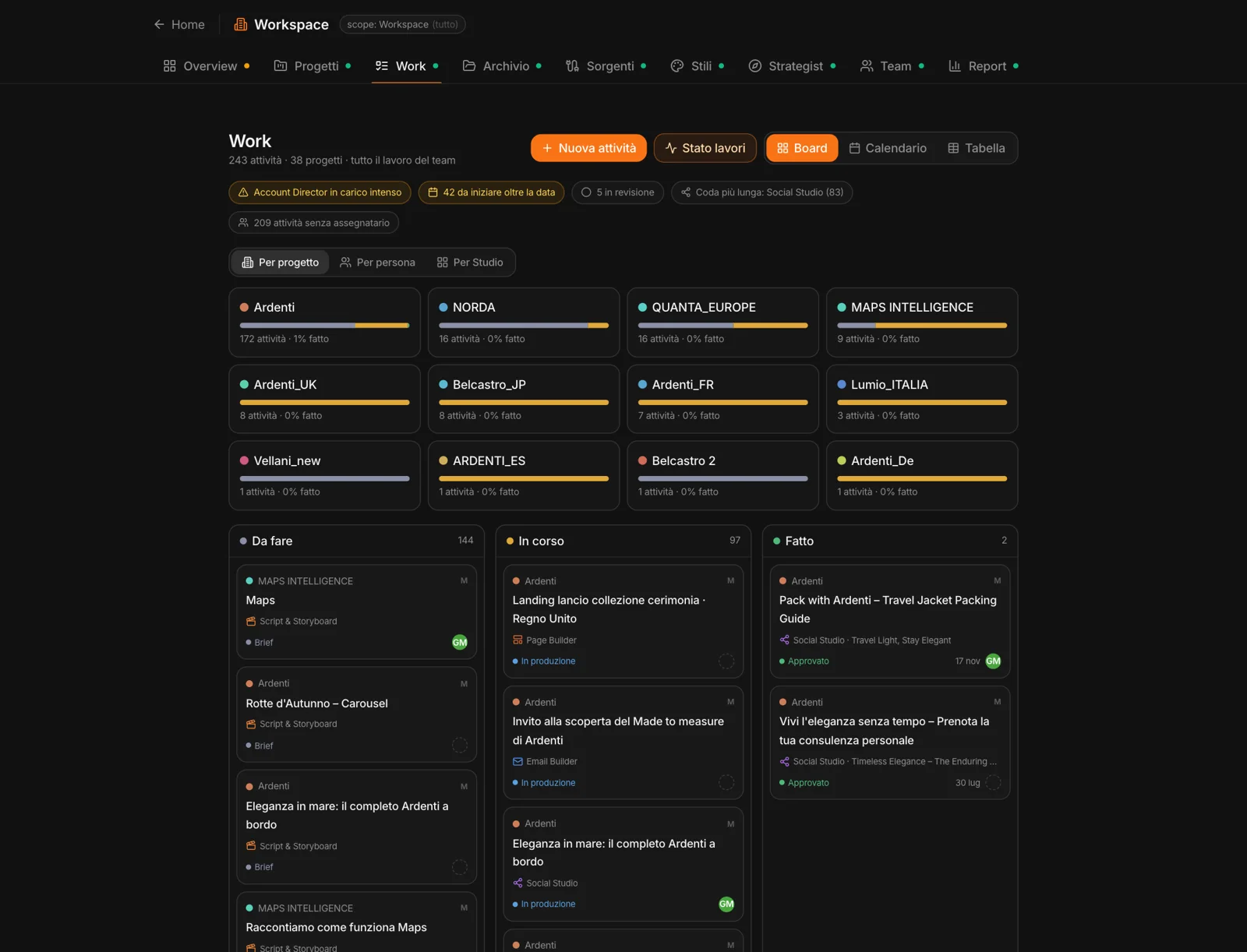
One project per client, with its own knowledge base. One workspace for the agency: the status of the work, the team’s workload, the shared memory, the shared styles, a chat that reasons across several clients without mixing them.
The client comes in when needed: reviews the materials, comments and approves item by item, without an email chain. And across several markets, each one stays separate.
From the market
to delivery.
Market and competitors · Social and conversations · News
Strategy and positioning · The Canvas
Concepts · Messages · Alternatives · Synthetic users
Campaigns · Studios · Presentations · Content
Separate projects · Workspace · Approvals
The questions
we get asked.
Can I work with very different clients?
Yes: every project starts from the client’s market — B2B, consumer, retail, hospitality, one or more countries.
Does one client’s data mix with another’s?
No: every client has its own project and its own knowledge base, even when you work with competing brands.
Does MAPS publish content directly?
No: approved work is exported and moves into the tools the agency already uses for publishing, sending and buying.
Does it replace planners, strategists or creatives?
No: it does the high-volume work — gathering, monitoring, first synthesis. Judgement, the idea and whatever goes out under the agency’s name stay with people.