
The same Monitor.
Different projects.
When you create the project, you tell MAPS what market you’re tackling. It’s not just the tab names that change: the research changes.
A menswear tailoring brand: who buys, where, what people say about the category.
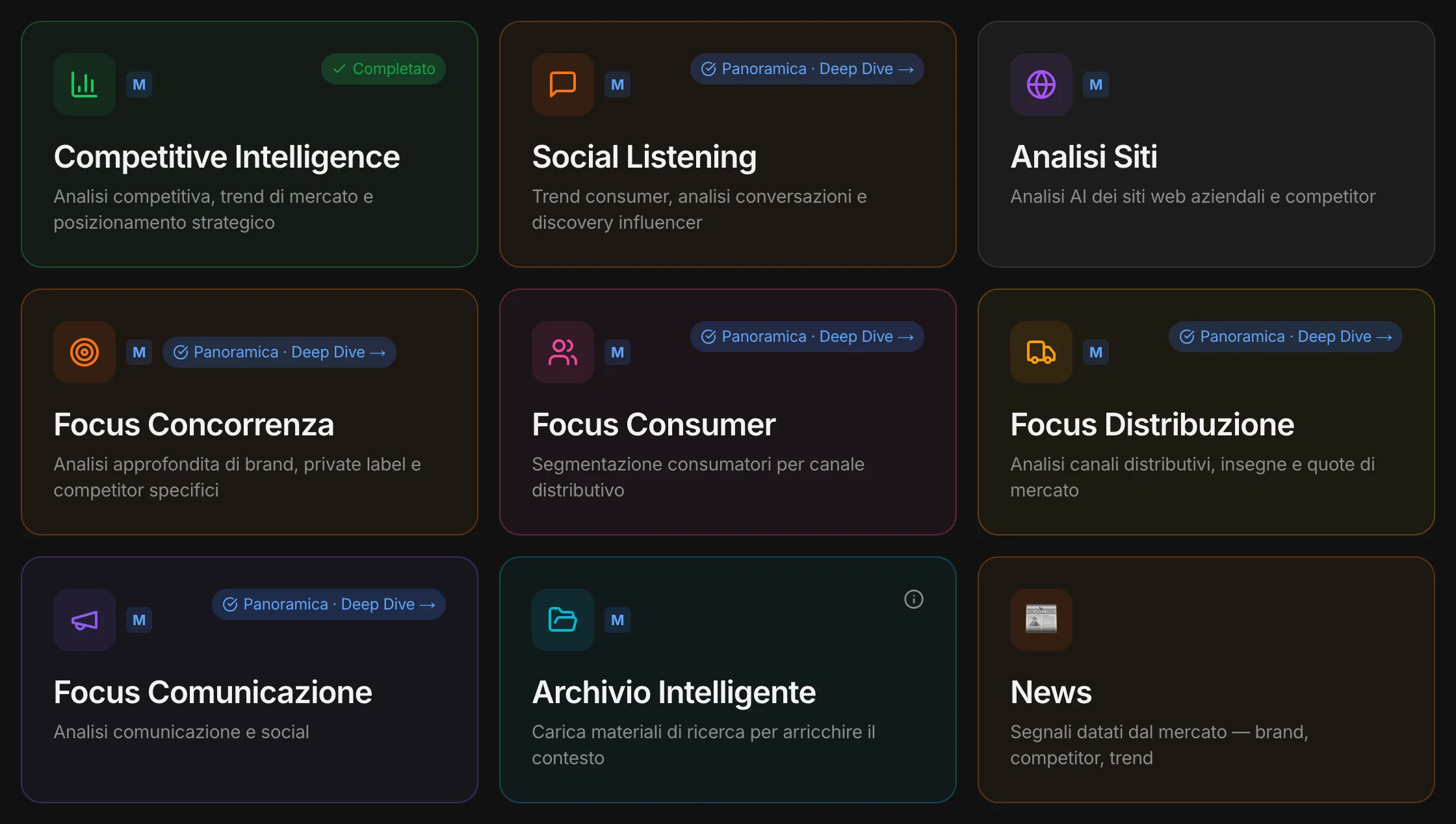
A module for every question about the market.
Competitive Intelligence
The profile of the brand and the market, customers, channels, competitors, pricing, advertising, portfolio, innovations. Every analysis has a quality indicator, and previous versions stay in the history.
It’s the picture everything else starts from.
Inside the module →Social Listening
What worries people, what they like, what they ask, who gets mentioned — in people’s own words, down to the single post. Plus Google searches and the influencers who fit the brand.
To hear the market in its own voice, not yours.
In B2B · Industry Listening: the conversations among practitioners and professionals
Inside the module →Site Analysis
MAPS reads several pages of the brand’s website and its competitors’: products and services, positioning, strengths, customers, messages, tone of voice, social and international presence.
To compare how each one tells its story, in its own words.
Inside the module →Competition Focus
The competitive landscape — market value and growth, concentration, trends, threats and opportunities — and a complete analysis of each competitor, with strengths and weaknesses and the response MAPS recommends.
To answer “and what are they doing?”.
Inside the module →Consumer Focus
The buyer segments — who they are, what they think, how they buy — the purchase journey, what holds them back and what builds loyalty, the opportunities by segment. Channel by channel.
To know who you’re working for, and where to find them.
In B2B · Customer Focus: business customers and decision-makers
Inside the module →Distribution Focus
The category’s channels and, for each channel, the players, the dynamics, the requirements to get in, the commercial terms. Down to the single retailer: how to become its supplier.
To choose where to sell, and how to get in.
In B2B · Go-to-Market Focus: direct sales, distributors, agents, marketplaces
Inside the module →Communication Focus
How the category communicates and, brand by brand, the tone of voice, the perceived positioning, the messages, the campaigns over time, an estimate of media investment labeled as an estimate. And, platform by platform, the competitors’ posts and how much the audience engages.
To find the space nobody is using.
In B2B · B2B Communication Focus
Inside the module →News
A dated reading of the market: what competitors are doing, what’s moving, what it means for the brand, and what has changed since the previous readings. Every fact has a source and a date.
To know what’s happening this week, without reading a hundred articles.
Inside the module →Smart Archive
Your research, reports, presentations and briefs go into the project’s memory: for each one, a profile with summary, insights, implications and the links to the rest of the project.
To make what you know and what MAPS finds outside work together.
Inside the module →Investor Focus
StartupWho invests in your category: active funds, rounds, corporate investors, acquisitions.
To know whom to pitch, and how to prepare.
Inside the module →You don’t have to open them all.
When you have the data,
reasoning is easy.
Ask the project a question. The chat works on everything the Monitor has gathered — research, news, decisions already made — and for every piece of information it tells you where it comes from and how recent it is.
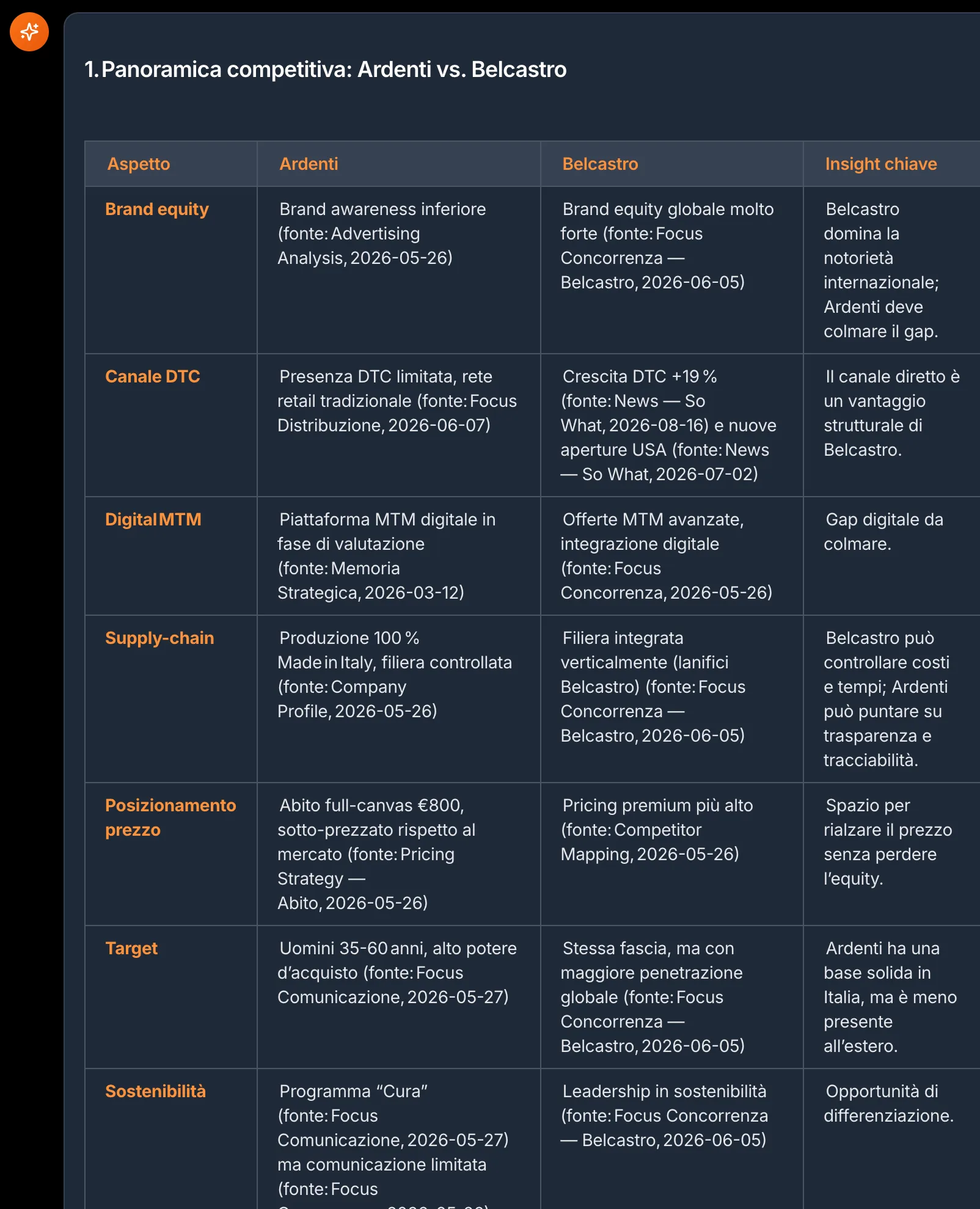
Choose the answer’s point of view, the sources to reason on, whether to compare today’s reading with the previous one. Or put several experts to debate the same problem.
