
The market’s publications,
in its own language.
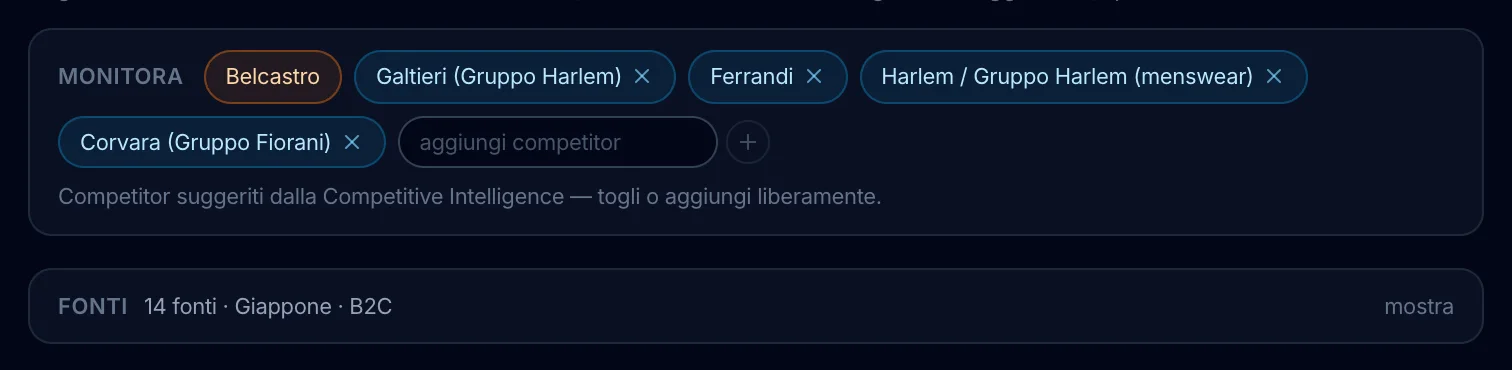
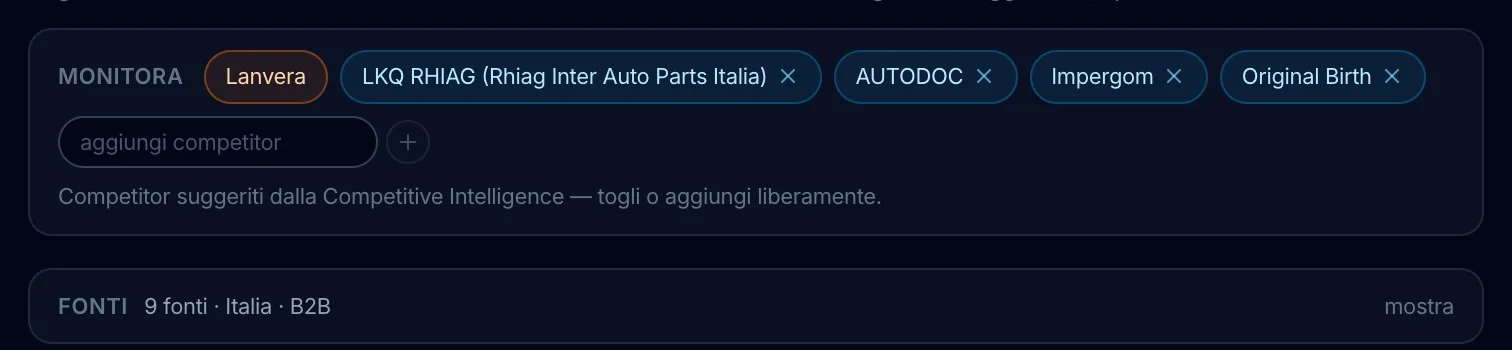
Choose the competitors to follow — MAPS suggests them from Competitive Intelligence — and MAPS builds the list of sources: trade, business and consumer publications, associations and trade shows. It keeps only the ones that have actually published recently, and you can add your own. The example is Japan.

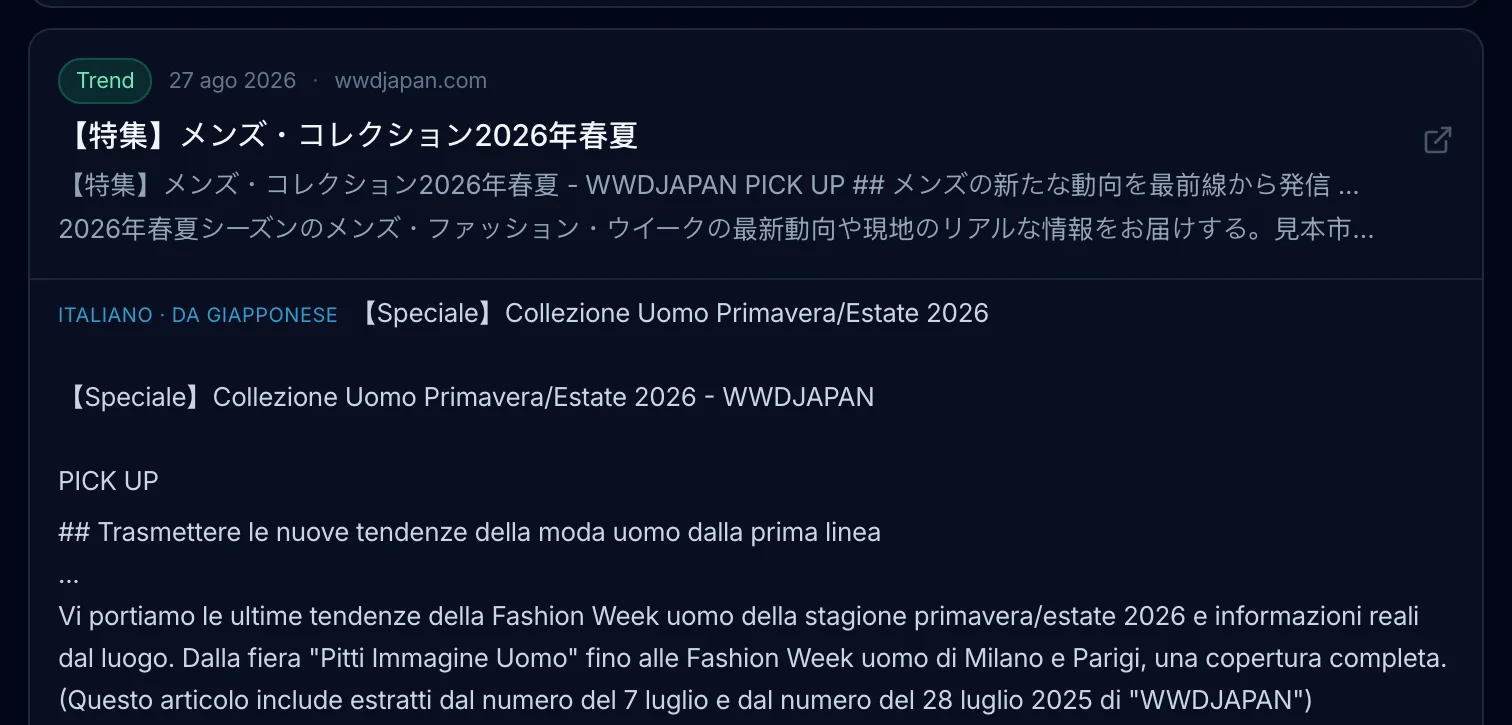
Not a list of news.
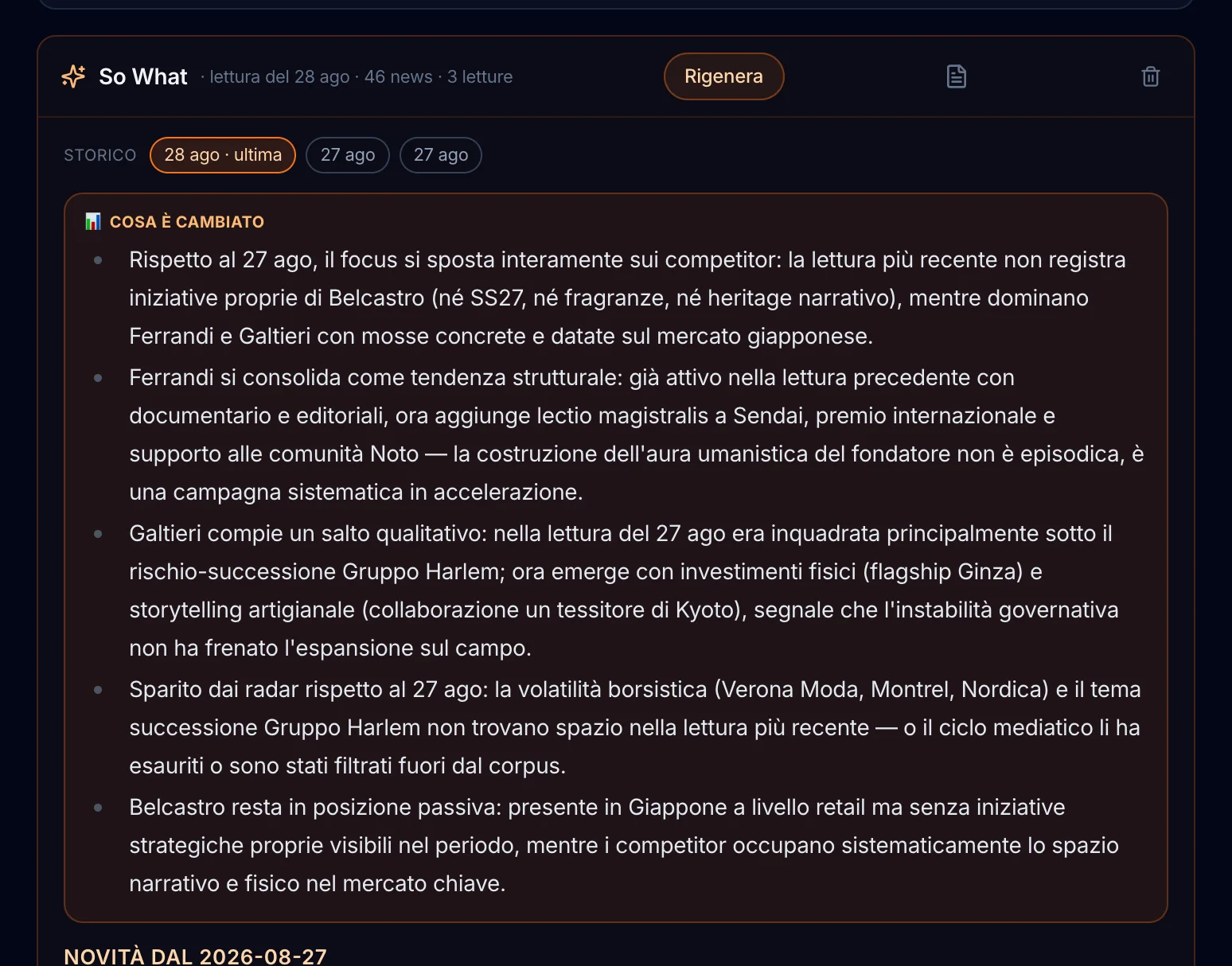
A reading.
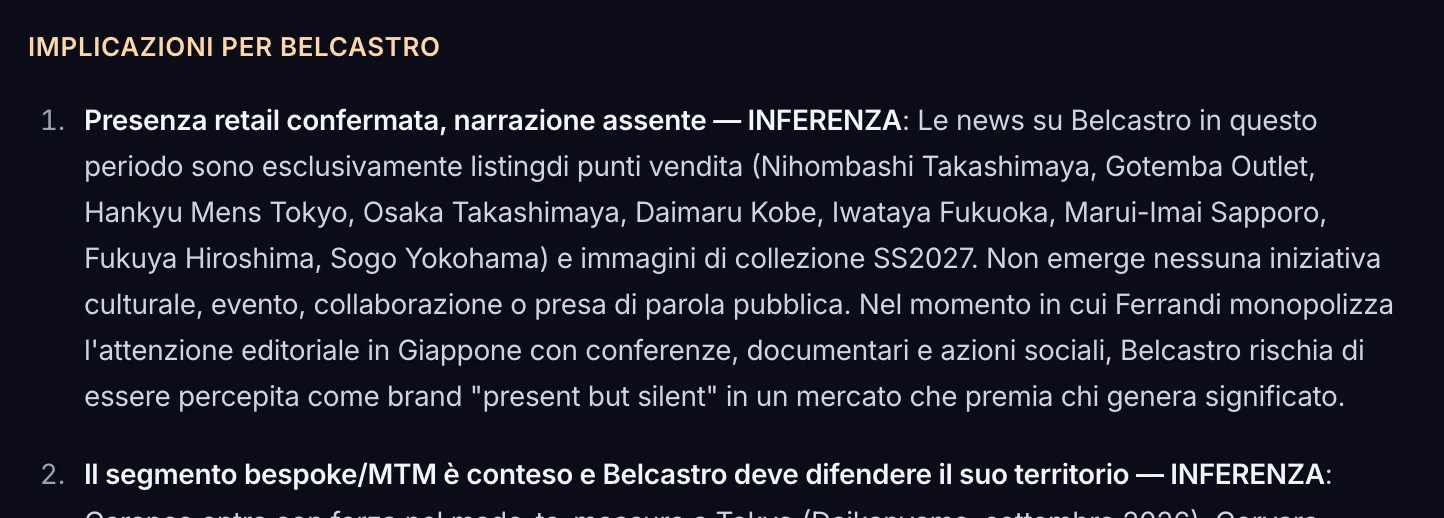
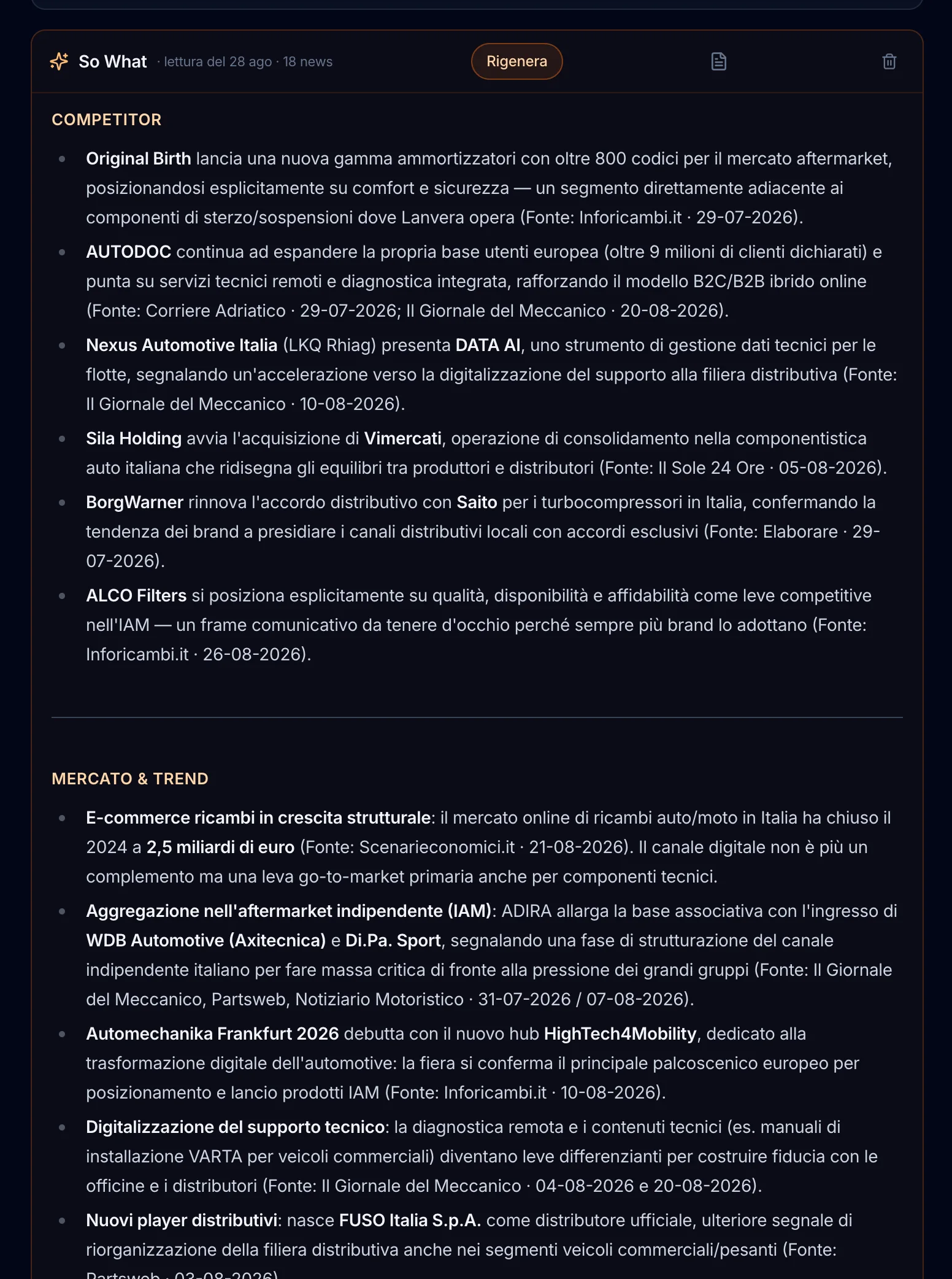
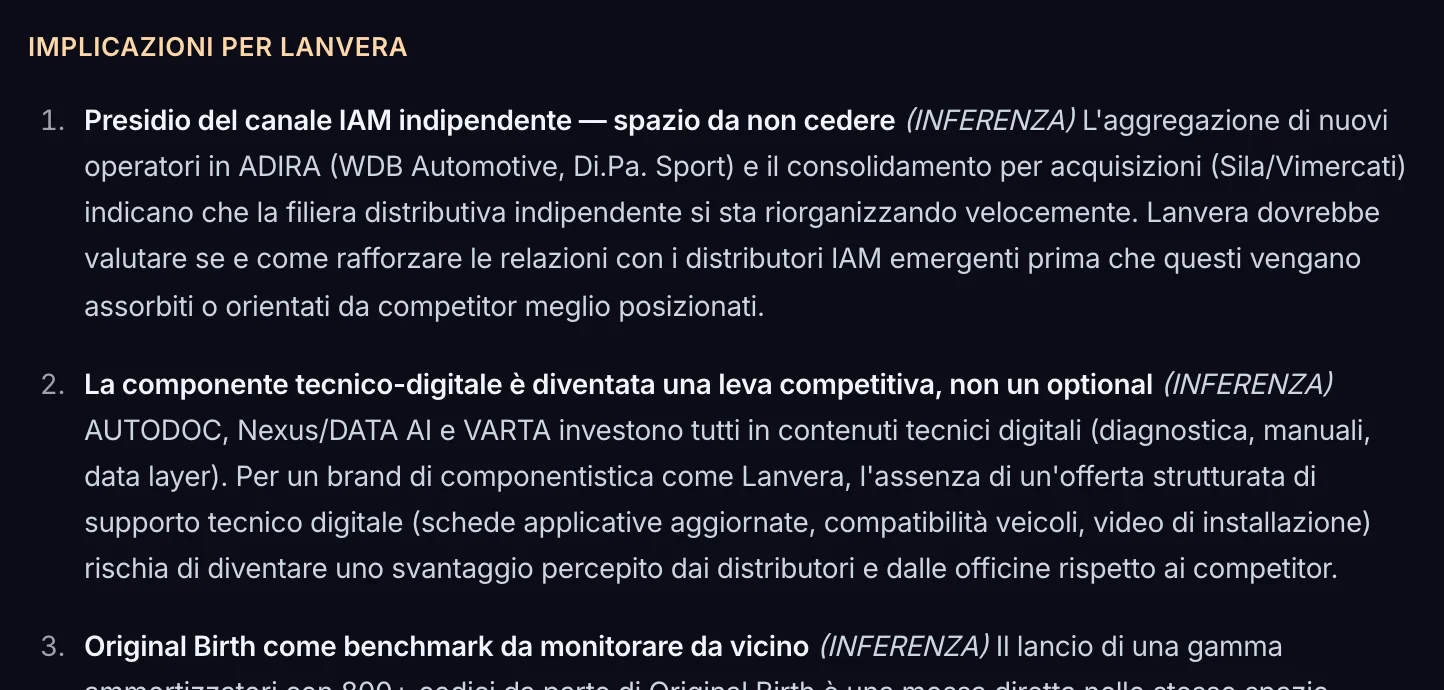
What competitors are doing, what is moving in the market, the implications for the brand. Every fact has its source and its date; inferences are declared as such. And from the second reading on, what has changed compared with the previous ones.
A different press,
the same method.
In B2B the sources are the technical and supply-chain press, and the news is about new product ranges, distribution agreements, acquisitions, trade shows. The example: a manufacturer of automotive aftermarket components.
It stays in the project.
And lands in your inbox.
In memory, with its date
Every reading goes into the project’s memory and stays there, dated: the chat and the tools use it, and you can ask “what had changed in March?”.
The history
All readings stay in the history, each with its PDF: you see how the market has moved over time.
By email
You turn on automatic sending — daily, weekly or monthly — and choose the recipients. Or you send the latest reading right away.
What goes into memory is the curated reading, not the raw press: the news stays news.