
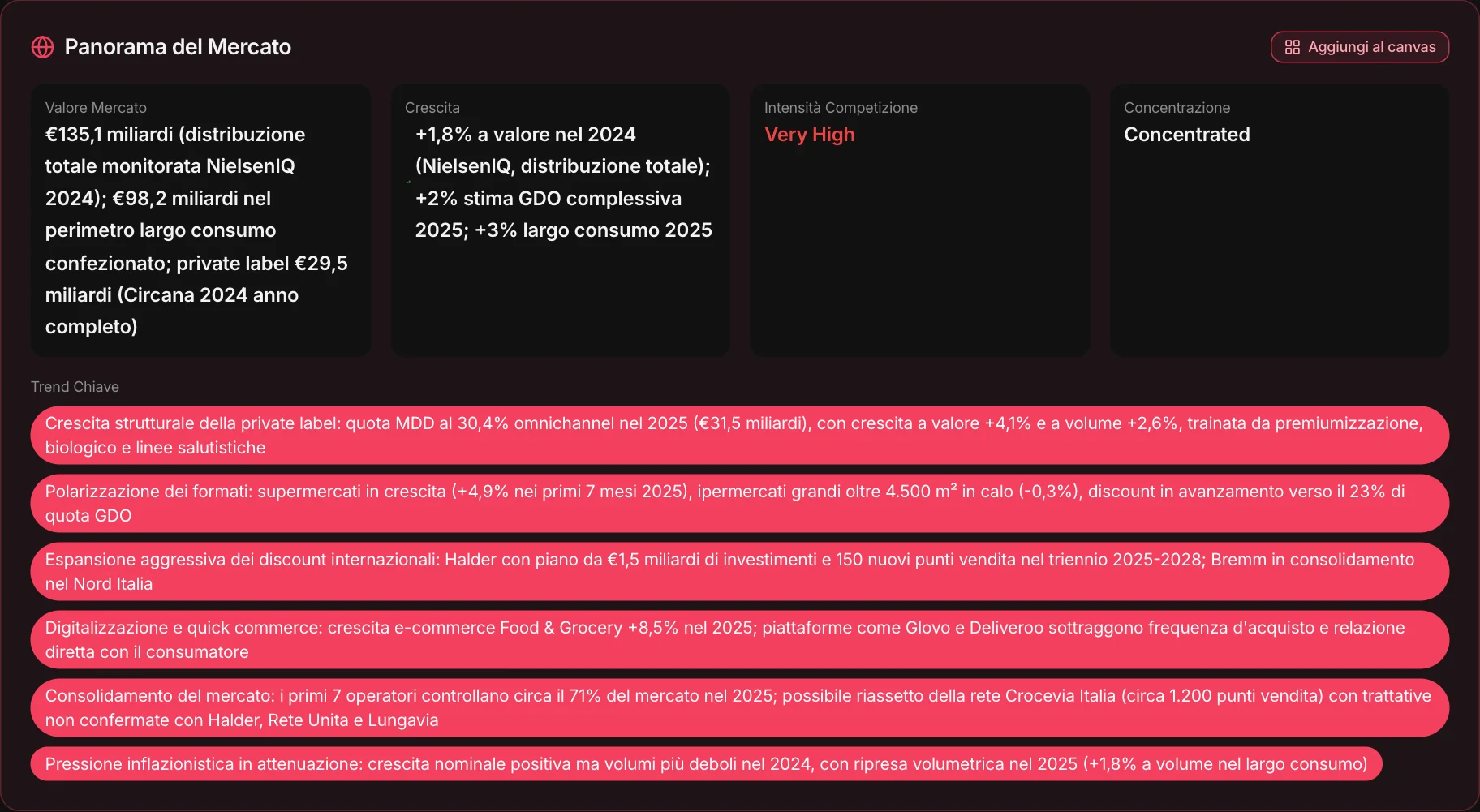
The other retailers
in your catchment area.
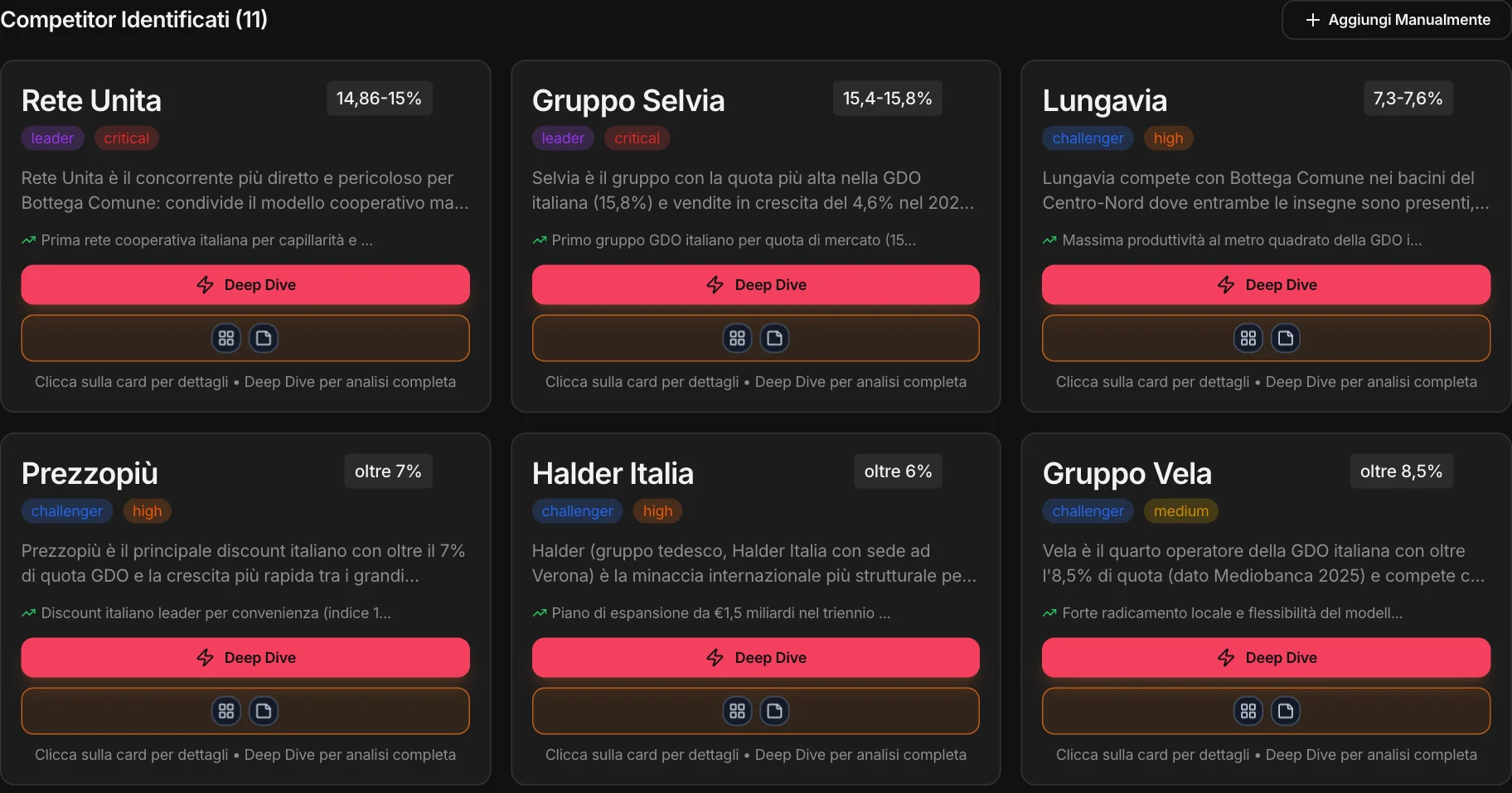
A retailer doesn’t compete with whoever looks like it, but with whoever can win the same shopping trip: the other retailers in the same catchment area, different formats serving the same occasion, online-only stores. A supplier that also sells to you is not a competitor.
MAPS builds the competitive set this way, and for each competitor it reads the store network, the assortment, the pricing, the private label — down to how it takes spend away.
The people
who could come to you.
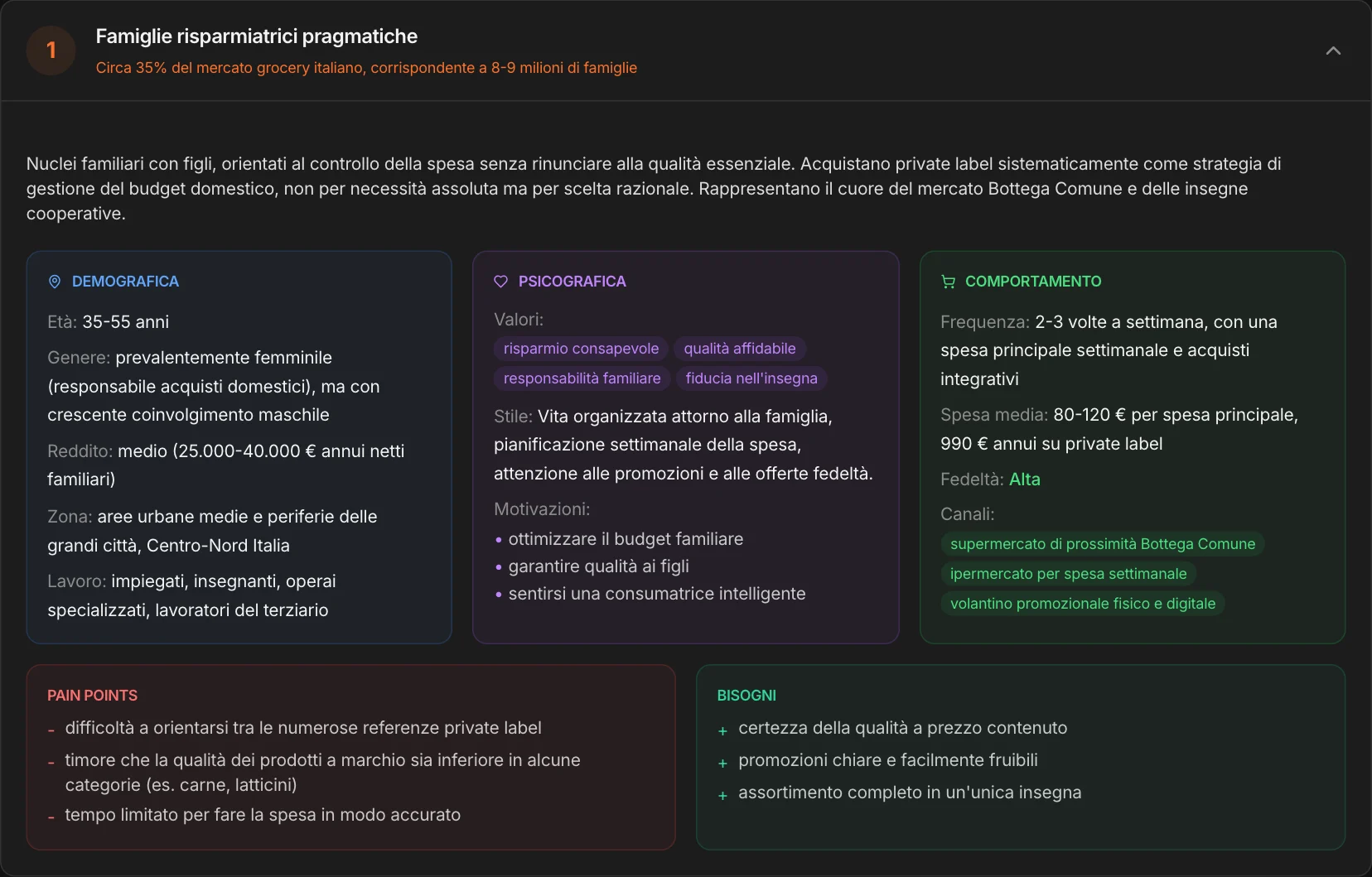
Not the category’s average consumer: the groups who actually shop in your stores, with their frequency, spend, loyalty and occasions — the big weekly shop, the quick trip around the corner, the online order.
And what holds them back: finding their way through the range, trusting the store brand, time.
A retailer’s
levers.
Retail can’t be read with a manufacturer’s metrics. What counts is footfall, conversion, basket size, frequency, turnover, sales per store. And retail isn’t just grocery: formats, seasons and promotions are read in your chain’s own merchandise category.
Formats, company-owned and franchised stores, openings and closures, overlaps with other networks.
Breadth and depth, the retailer’s own brand and suppliers’ brands.
The products customers use to judge value, everyday low prices or promotions.
In-store pickup, app, loyalty card, local marketing.
What happens
in front of the shelf.
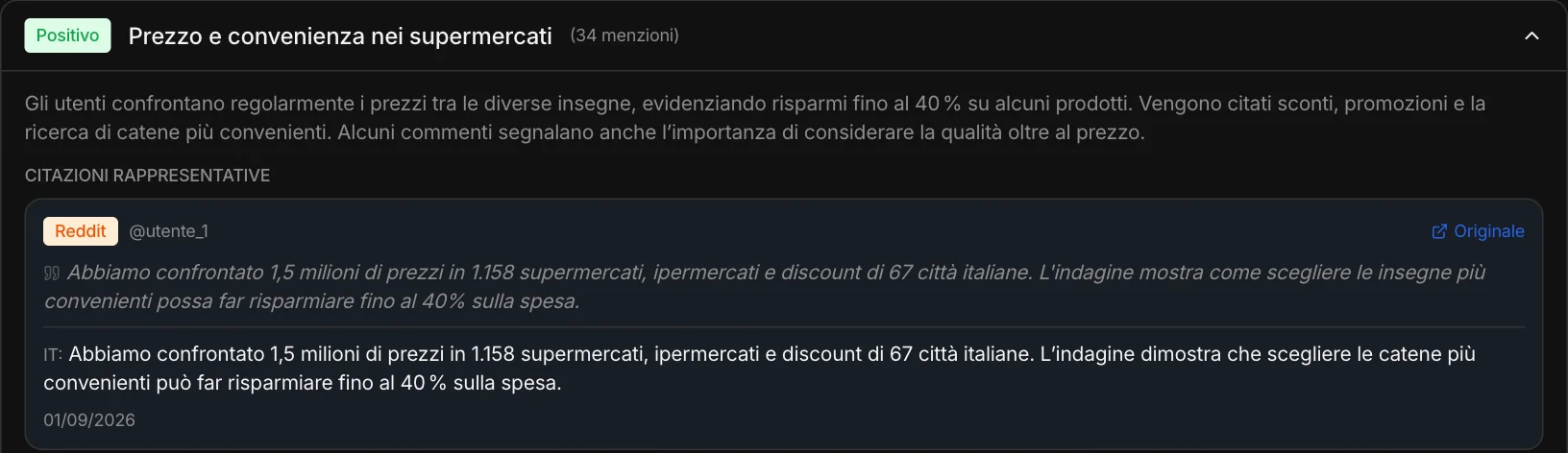
Conversations about prices, promotions, the quality of the store brand; store reviews, read by catchment area: waiting times, availability, service, staff.
You know why people choose you, and why they choose the store next door.
Where to open,
what to put on the shelf.
Strategy tools become retailer tools: the shopper journey from website to store and back, pricing with the retailer’s price perception, the marketing mix where the network is the product, go-to-market with drive-to-store. The dashboard looks for white spaces across catchment areas and formats.
And with many stores the scale changes, not the method: area by area, and — across several countries — retailers and formats country by country.
From catchment area
to decision.
Retailers in the catchment area · Pure players · Deep dive on network and assortment
Customer segments · Shopping occasions · Loyalty
Store reviews · Conversations on price and quality
Shopper journey · Pricing · Marketing mix · Go-to-market · White spaces
The questions
people ask us.
Is a food brand sold in supermarkets “retail”?
No: the Retail profile is for the retailer itself. A brand sold through supermarket chains stays consumer, and the retailers are its channels.
Does MAPS know competitors’ revenue?
Only when the figure is in the sources. If it isn’t, it’s marked N/A, never turned into a hard number.
Does it work for a chain with many stores?
Yes: it reads the network as a whole and then area by area; across several countries, with each country’s retailers and formats.