
The same question.
Two ways of answering.
Both read the same data. Fast explores: it tells you what’s there, quickly, with sources. Advanced reasons like a strategist: it structures the problem, sets priorities and closes with the next steps.
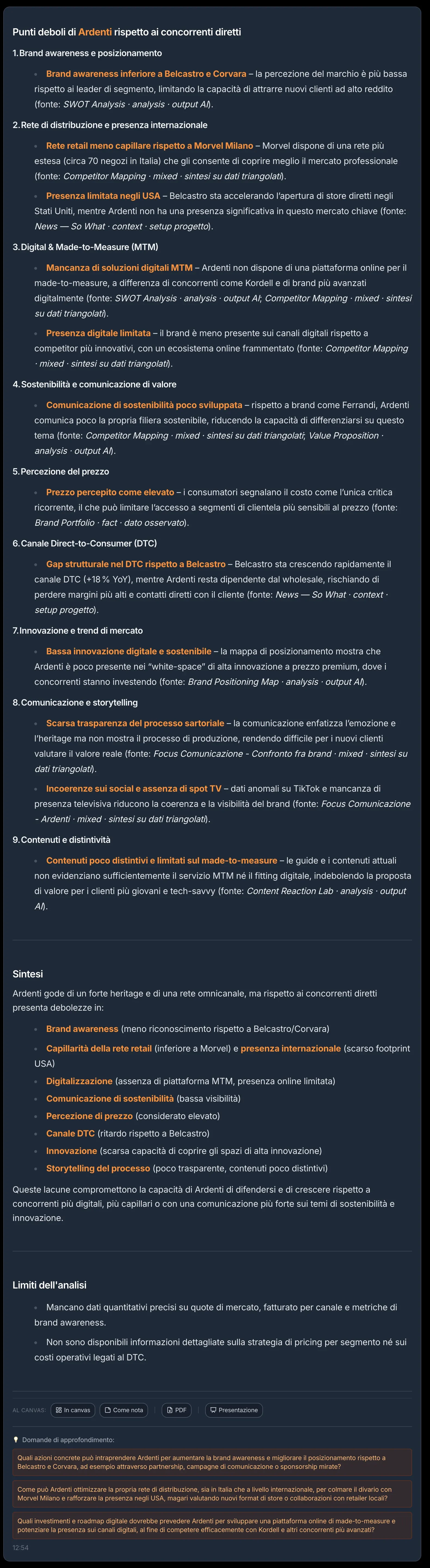

Real answers on the demo project. Names are fictional.
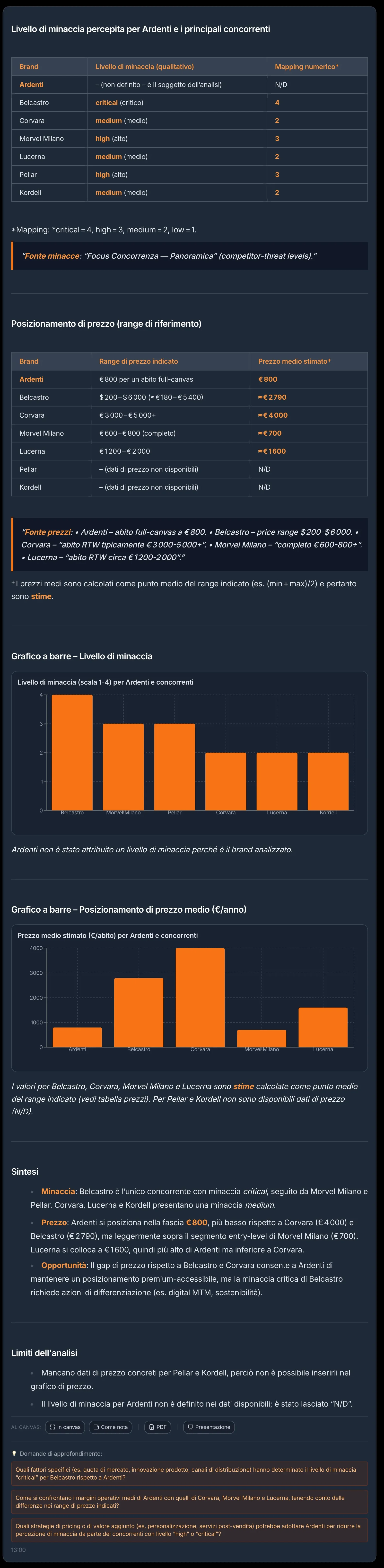
Ask for a chart.
It draws it.
The chat answers with tables, bar, pie and line charts, diagrams and maps. And it tells you when a number is an estimate, or when a data point is missing.
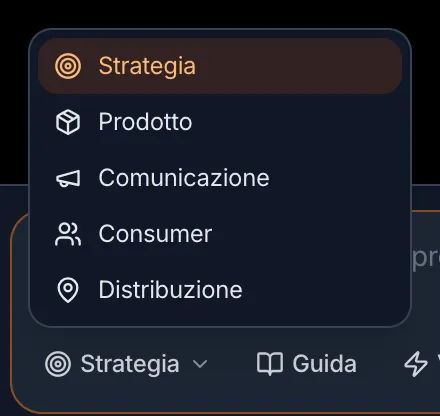
Choose the lens.
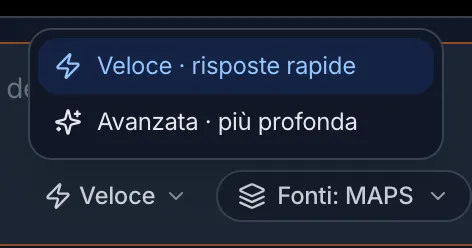
And the sources.
The lens changes who answers you: an expert in strategy, product, communication, consumers, distribution. The sources change what it reasons on: the whole project, only the data observed in Monitor, up to a given phase, only some modules — or your work in the Canvas.
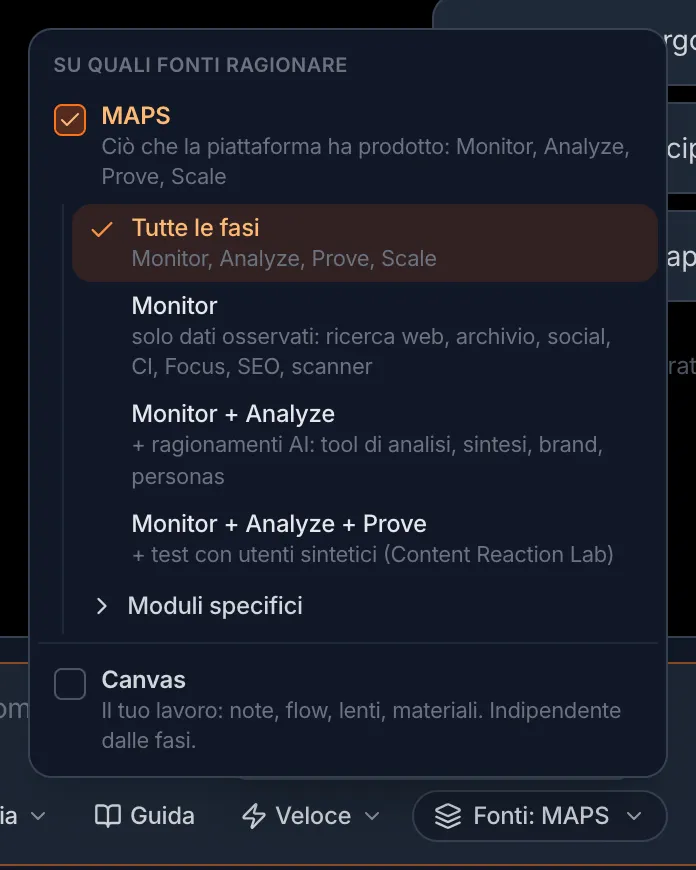
Not just similar fragments.
Fragments and structure.
An ordinary chat looks for the pieces of text most similar to the question. MAPS also does something else: it recognizes the companies, markets and topics you’re talking about, and pulls from the project’s knowledge graph the relationships that connect them.
A good answer doesn’t stay in the chat.
It becomes a presentation.
Under every answer, four ways forward. The one you need most on Monday morning: Presentation. MAPS turns the answer into a deck — cover, one slide per point with its key insight, next steps, conclusions — and the diagrams become slides.
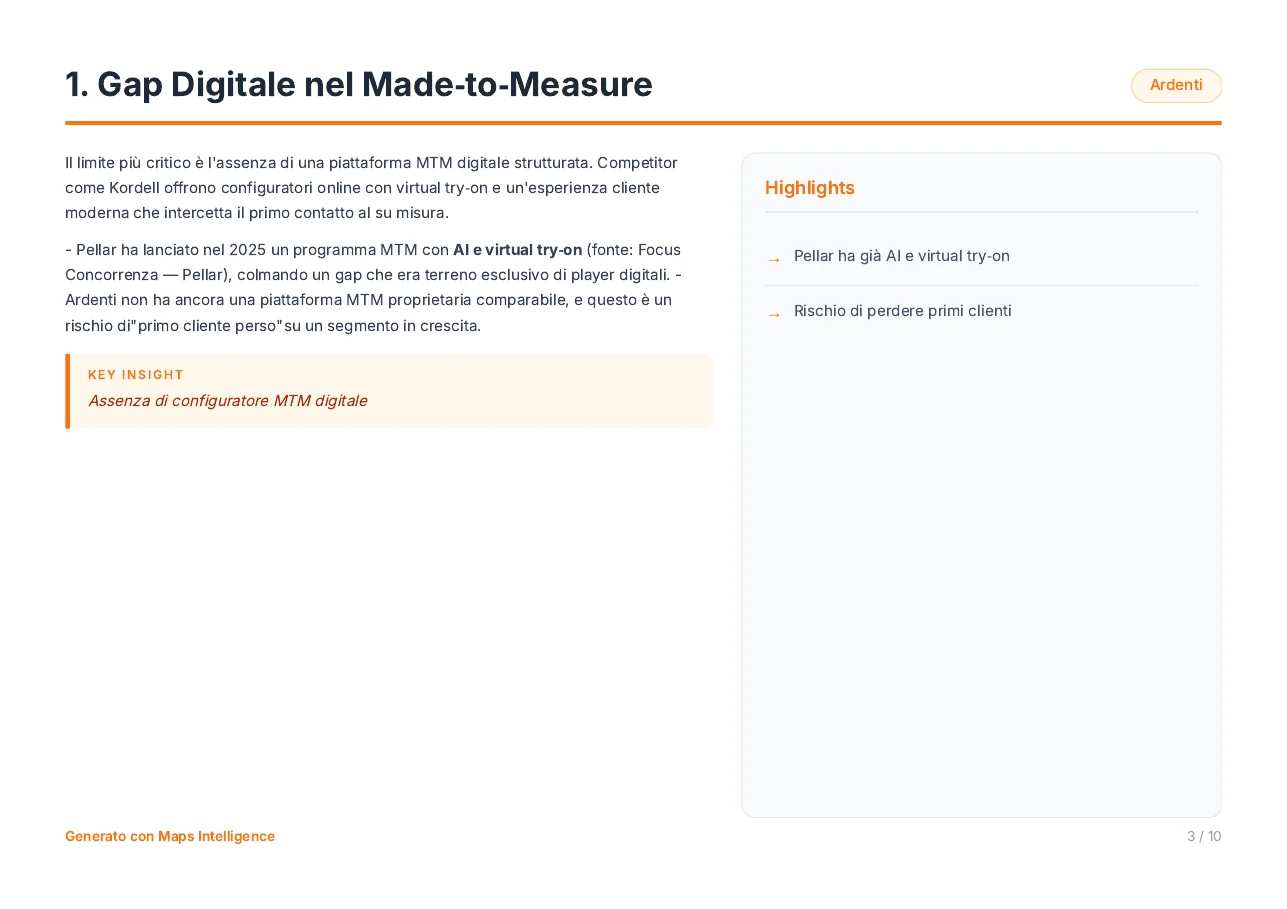
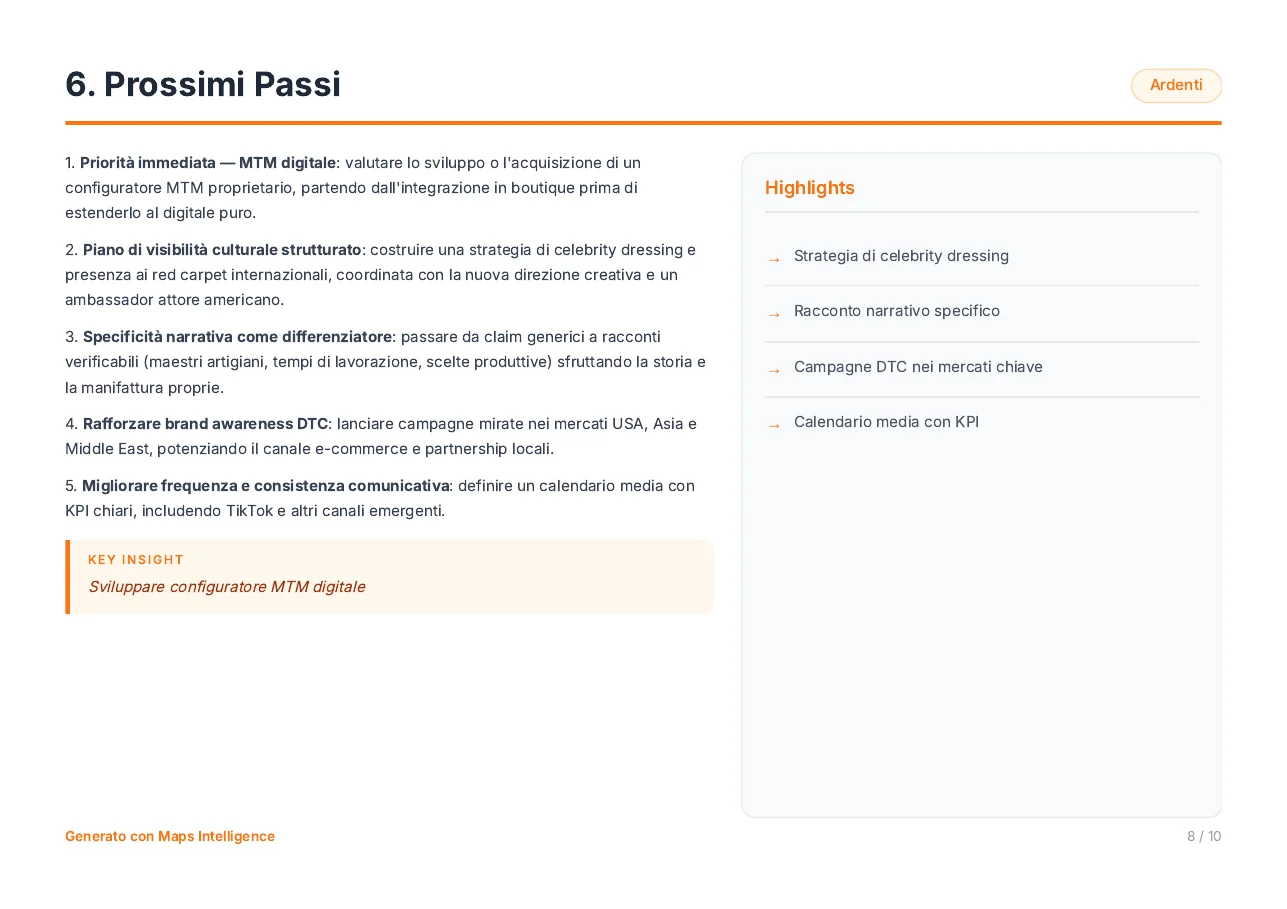
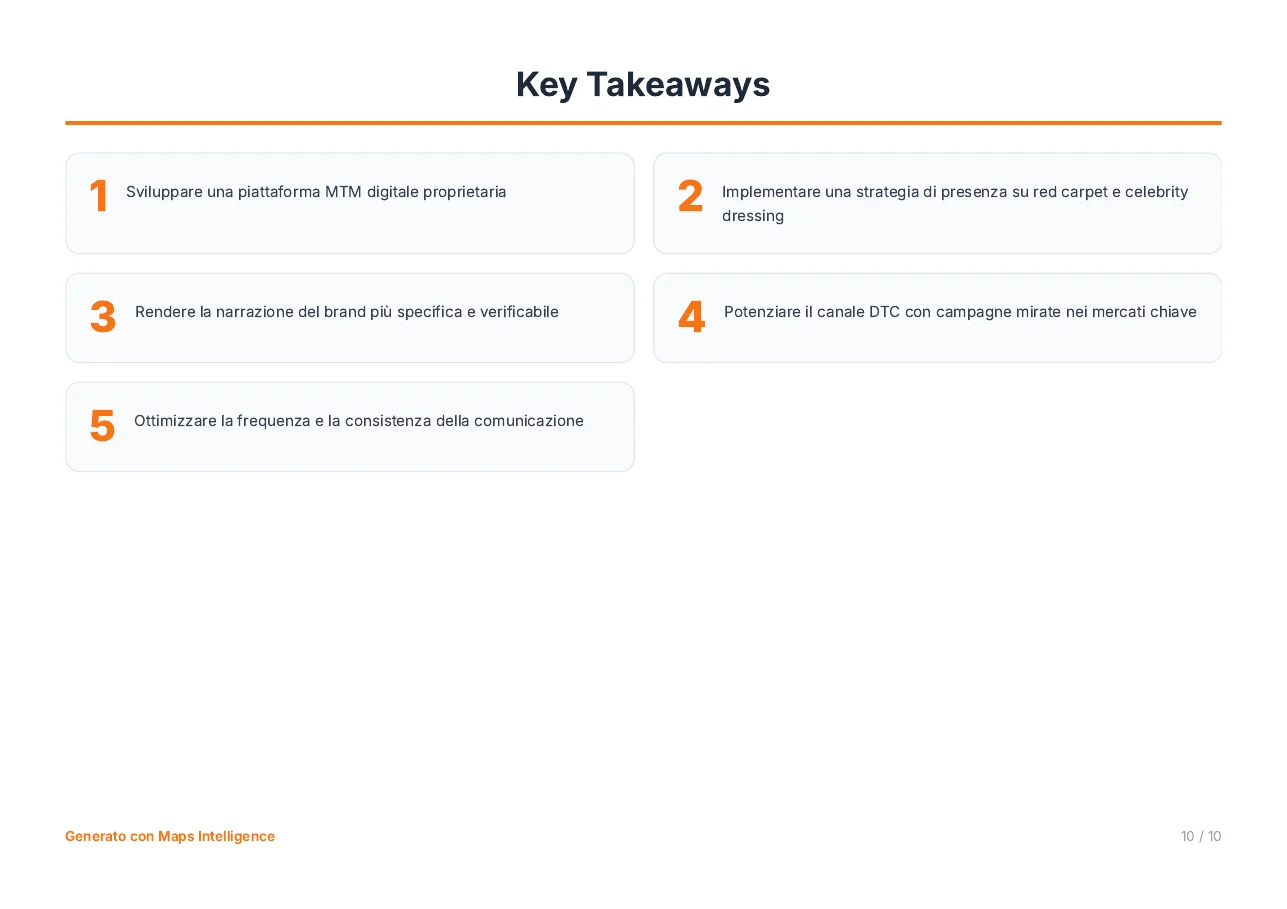
Four of the ten slides generated from the Advanced answer above. Names are fictional.
A conversation that does the work.
Compare with the past
Next to today’s reading, the previous one for each report: the answer tells you what has changed.
More experts at the table
Two to five experts discuss the same question, with a moderator or guided by you, for three, five or seven rounds.
Everywhere in the project
The project chat, and a chat for each module: Competitive Intelligence, Social Listening, the websites, the Focus modules.
The answers are generated by AI: useful and fast, to be checked before you use them. Every piece of information has its source, for exactly that reason.