
MAPS Intelligence

Site Analysis

How each brand tells its story, in its own words.

MAPS reads several pages of the brand’s website and of its competitors’ websites, and puts them side by side: what they sell, what they bet on, who they speak to, in what tone. The example on this page is a dog and cat food maker, with three competitors.

The brand and its three competitors, with the number of pages read for each
The brand and its competitors, with the pages read for each website. Fictional names.
For each website

One profile.
Everything the website says, in order.

The positioning in one line, the description, the headquarters. Then the rest, section by section.
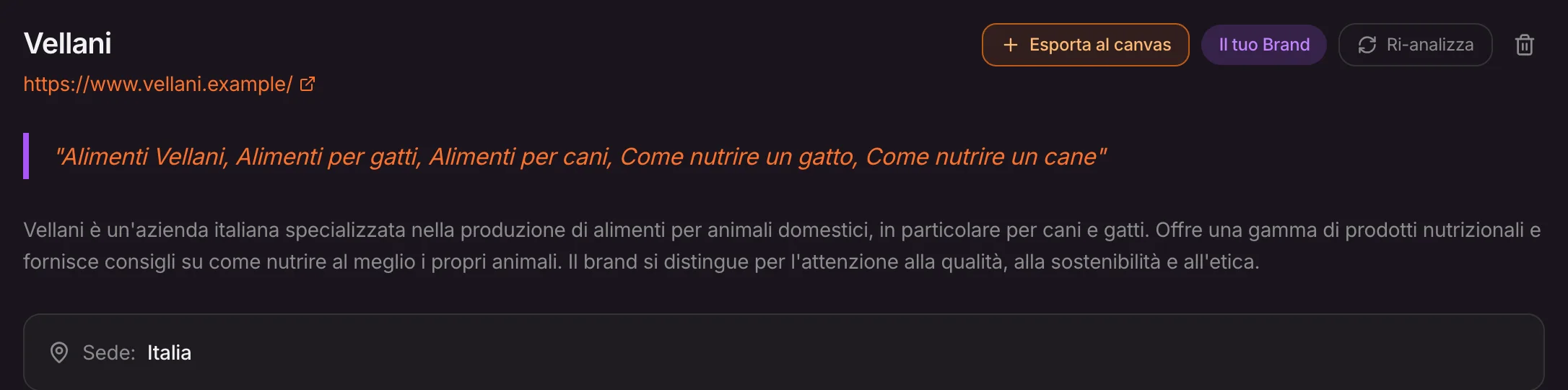
The header of the brand’s profile

What it sells, and to whom

Products and services, each with its description and its audience: including initiatives that aren’t products — an educational program, a sustainability commitment.
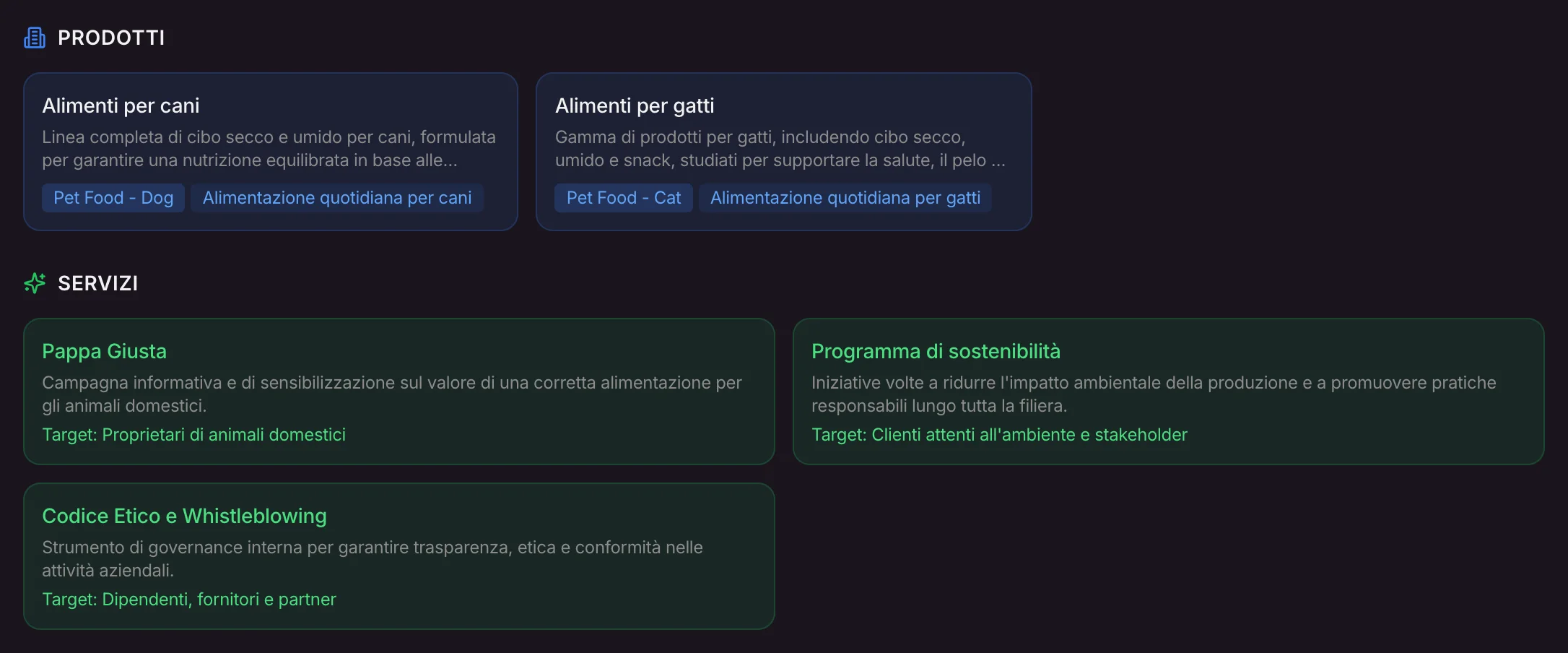
Products and services read from the website

What it bets on

The strengths the website claims and the competitive advantages it implies.

Strengths and competitive advantages

Who it speaks to

The audience and the customer segments, with their needs.
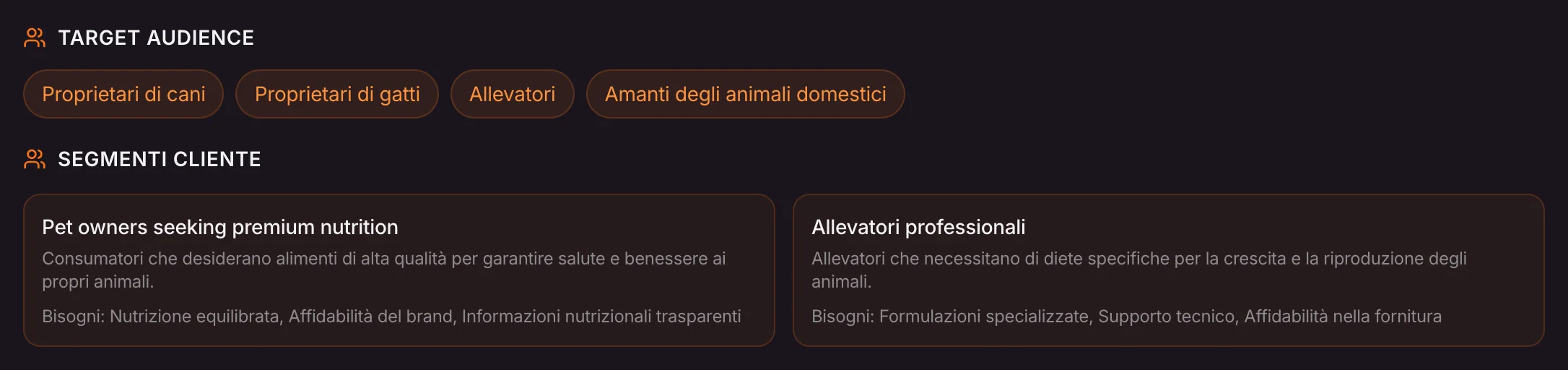
Target and customer segments

How it speaks

The key messages, the tone of voice, the brand personality.

Key messages, tone of voice, personality

Where it’s going

The content strategy and the international presence: the website’s languages and markets.

Content strategy and international presence

The same profile for every competitor. Switch tabs and compare.

Ask the Expert

Four websites, one question.
And where there’s room to stand out.

The Expert knows the profiles of all the websites. Ask it for a comparison and it answers with a table — every row with its source — and with ways to differentiate.
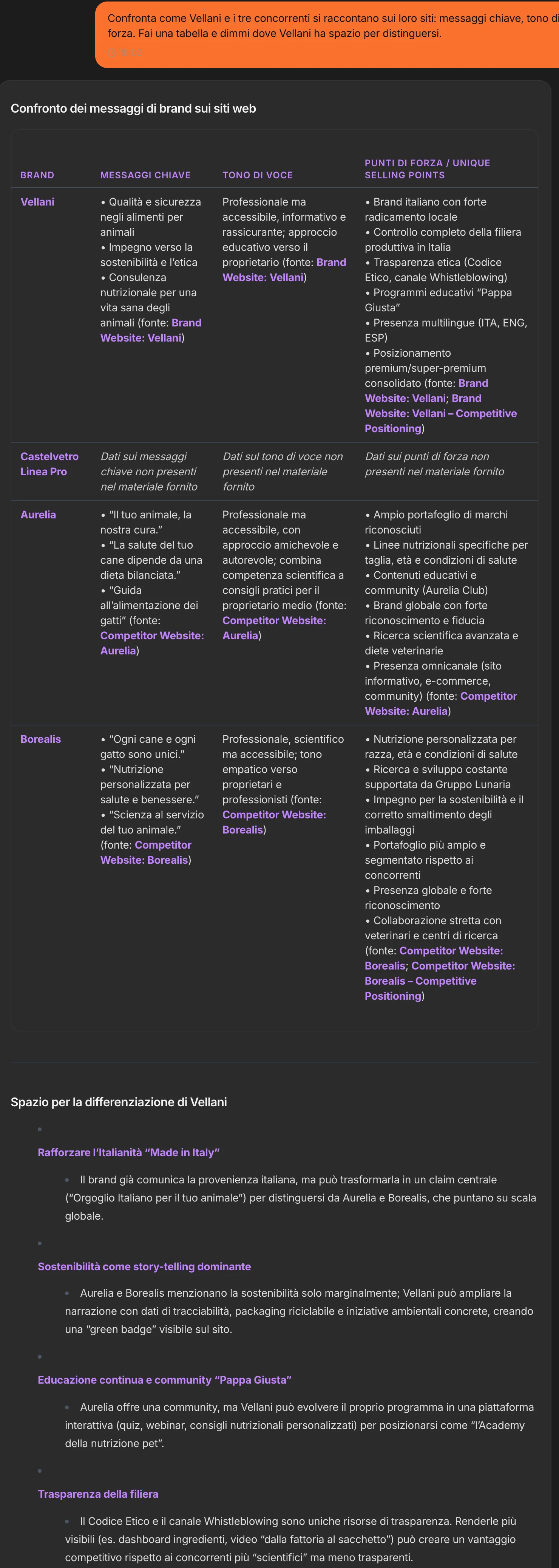
“Compare how the brand and its three competitors present themselves on their websites: key messages, tone of voice, strengths. Make a table and tell me where the brand has room to stand out.”
scroll ↓
The answer: a comparison table with sources and ways to differentiate

The real answer, in full up to the first suggested directions. Fictional names.
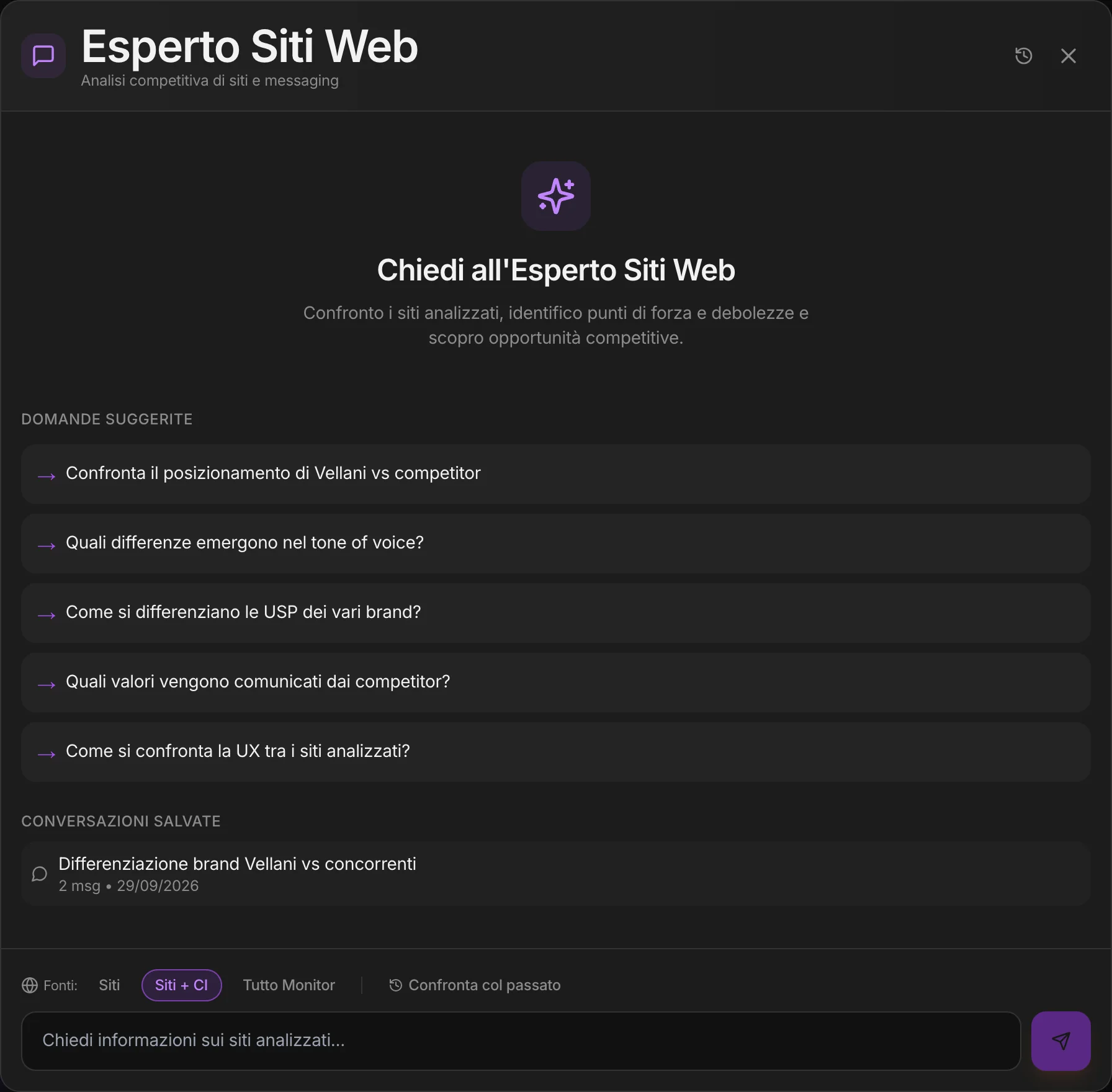
The Expert with suggested questions and the sources to reason on
Ready-made questions; and you choose what it reasons on: the websites only, the websites plus Competitive Intelligence, or the whole Monitor.
Synthesis

And then a deck.
One click, in PowerPoint.

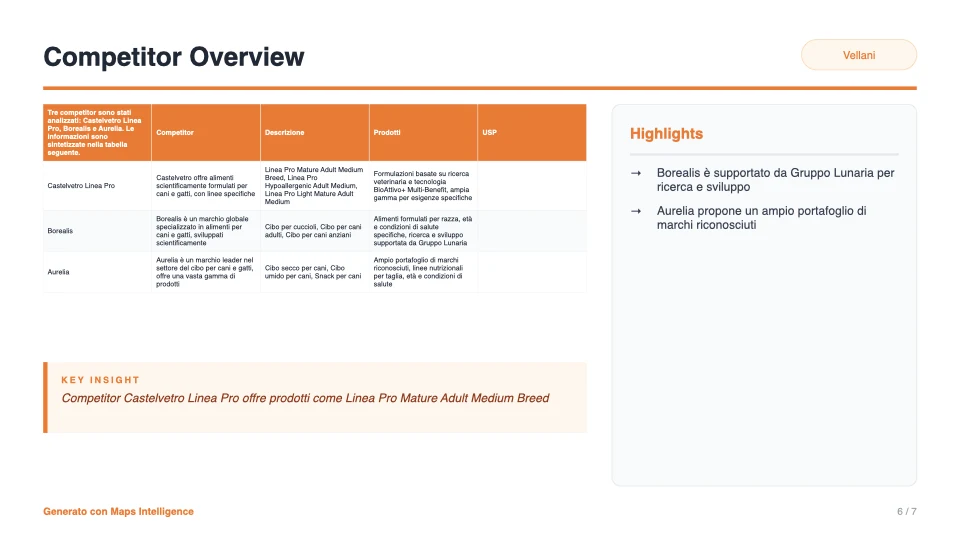
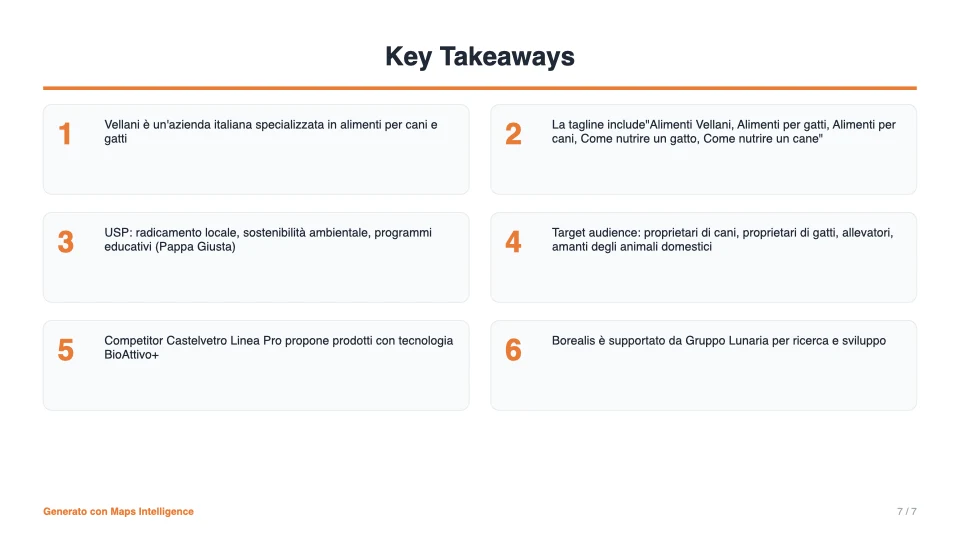
The Synthesis button turns the analysis into a presentation: overview, the brand, products and services, strengths and audience, the competitors, the key takeaways. As a PDF or in PowerPoint, with editable text.
The synthesis cover
The real PowerPoint exported by MAPS: seven slides. Fictional names.
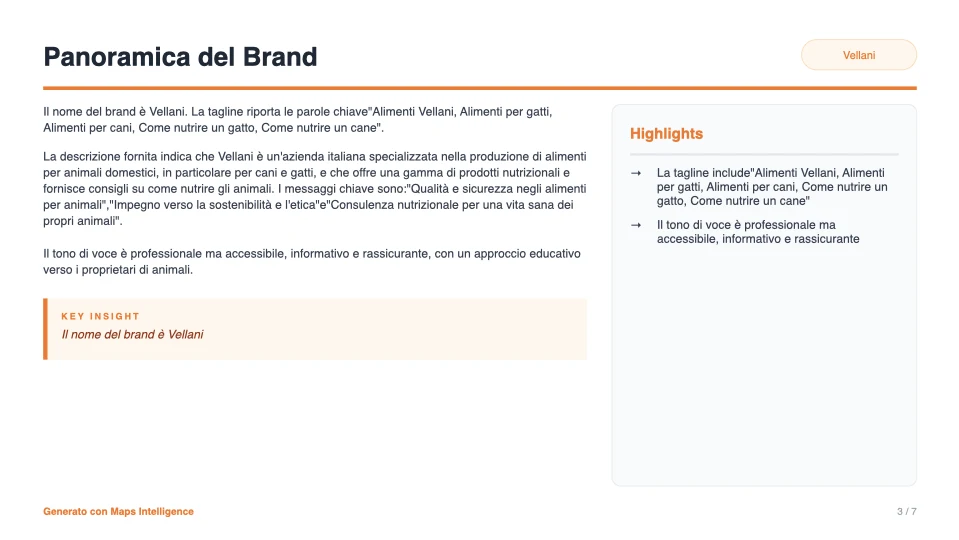
A slide on the brand: text, key insight, highlights
The slide on the competitors
The key takeaways

Your website and theirs.
Side by side.