

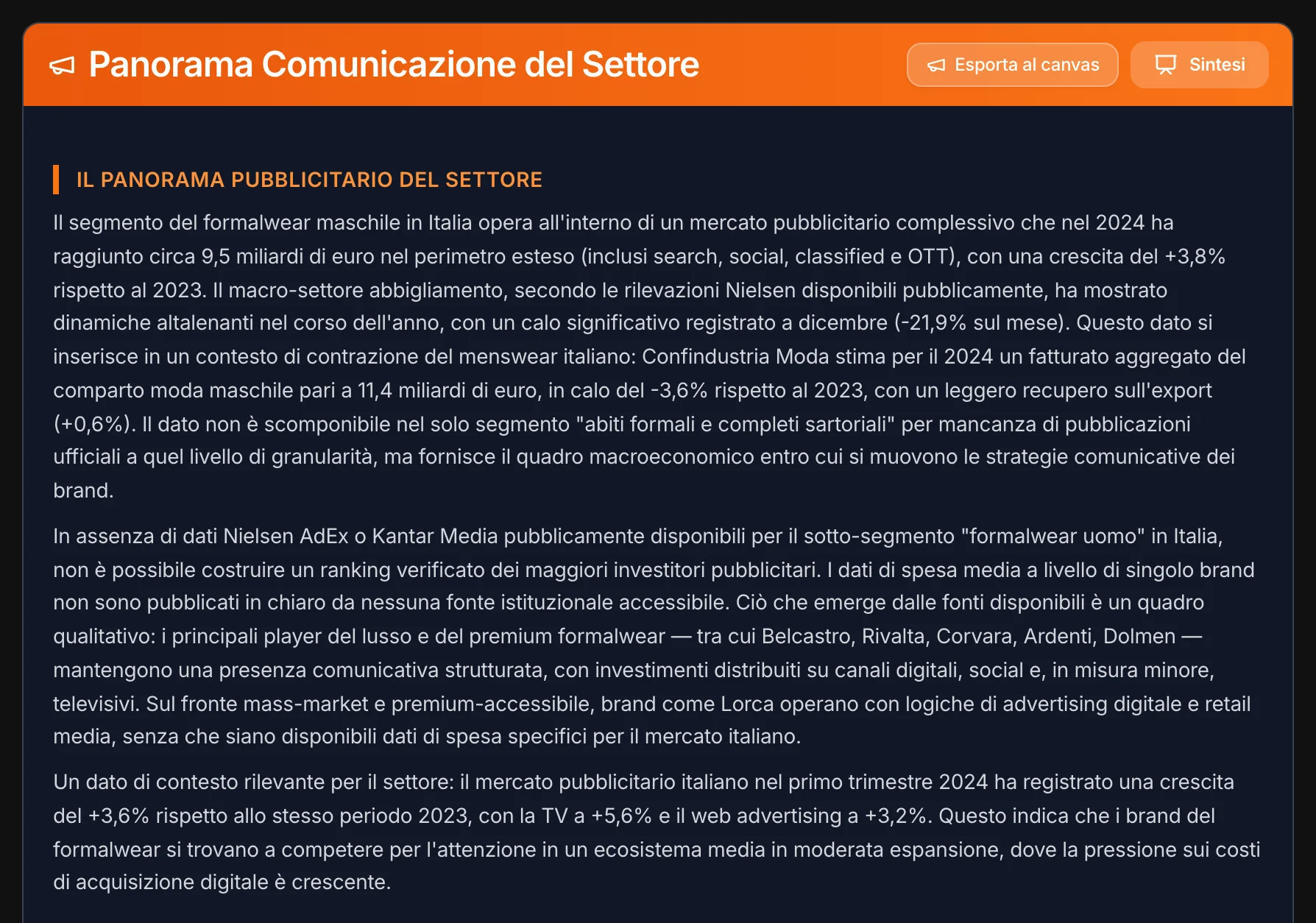
The category’s advertising market.
How much is invested, in which media, who makes themselves heard. And when spending data isn’t public, MAPS says so and reasons on what is available.
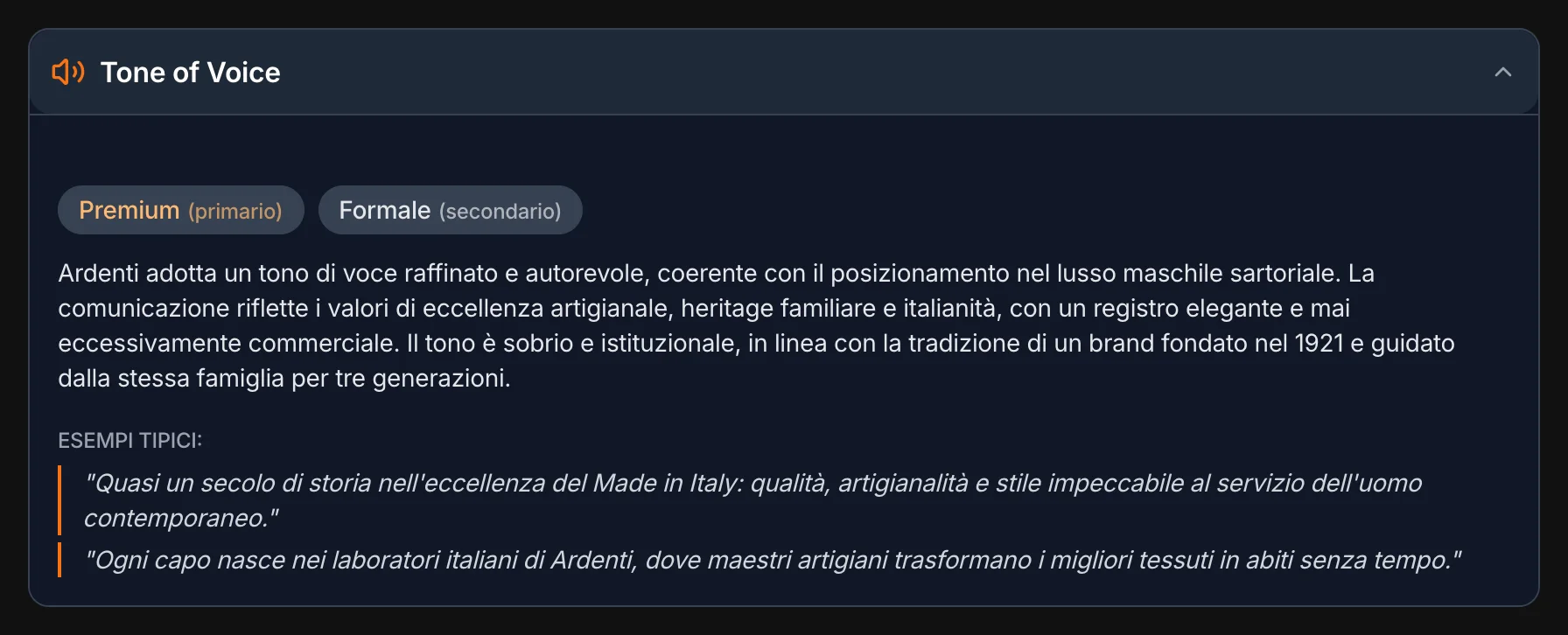
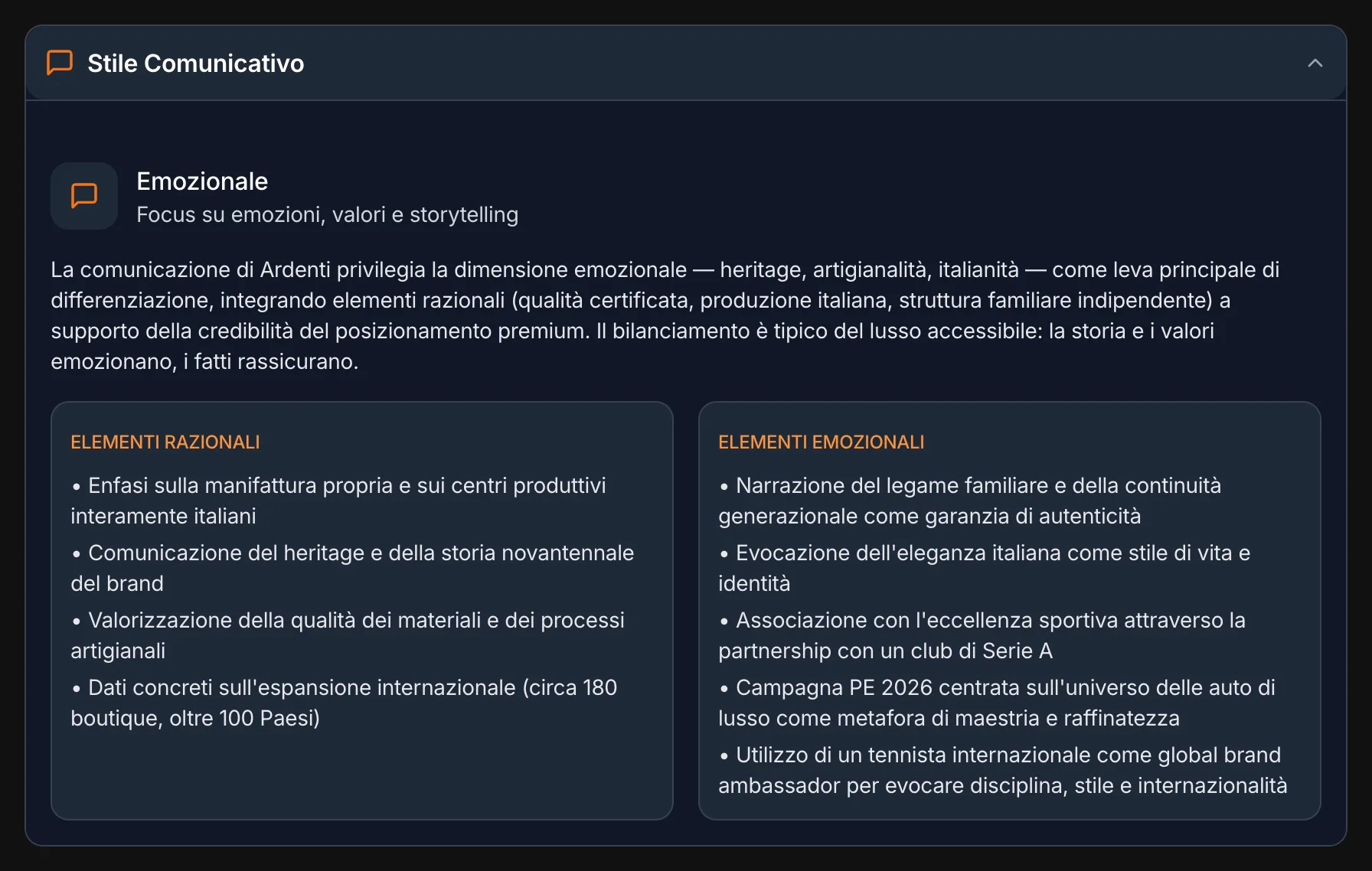
How it speaks,
and why it works.
Choose a brand — yours or a competitor’s — and MAPS reconstructs its communication: the tone of voice with examples, the style between rational and emotional, and then messages, campaigns, testimonials, an estimate of spend clearly labeled as an estimate.
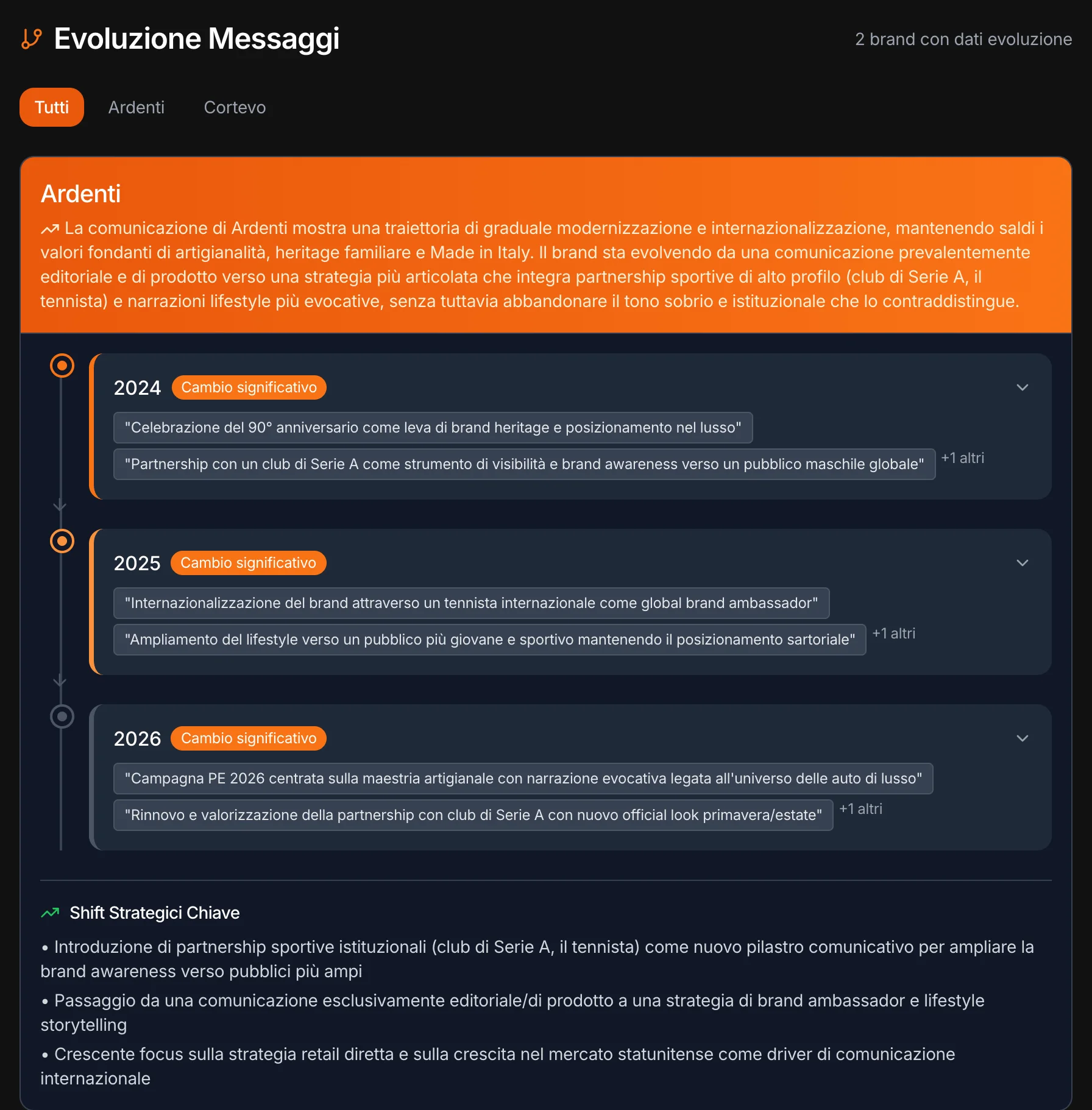
How the communication has changed.
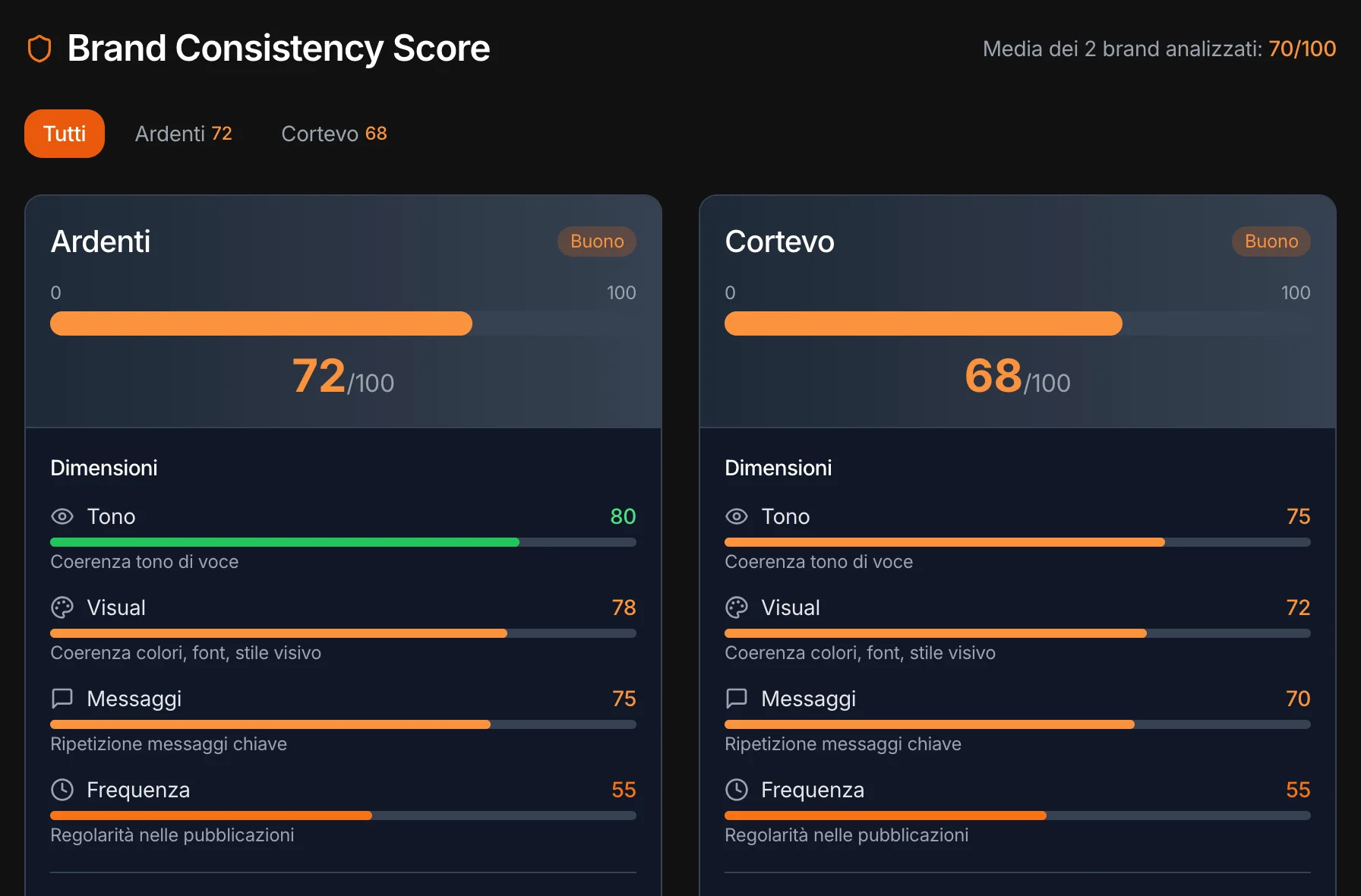
And how consistent it is.
Year by year, the changes of course and the strategic shifts. Then a consistency score — tone, visuals, messages, frequency — with the areas to improve and the recommendations.
Where they overlap.
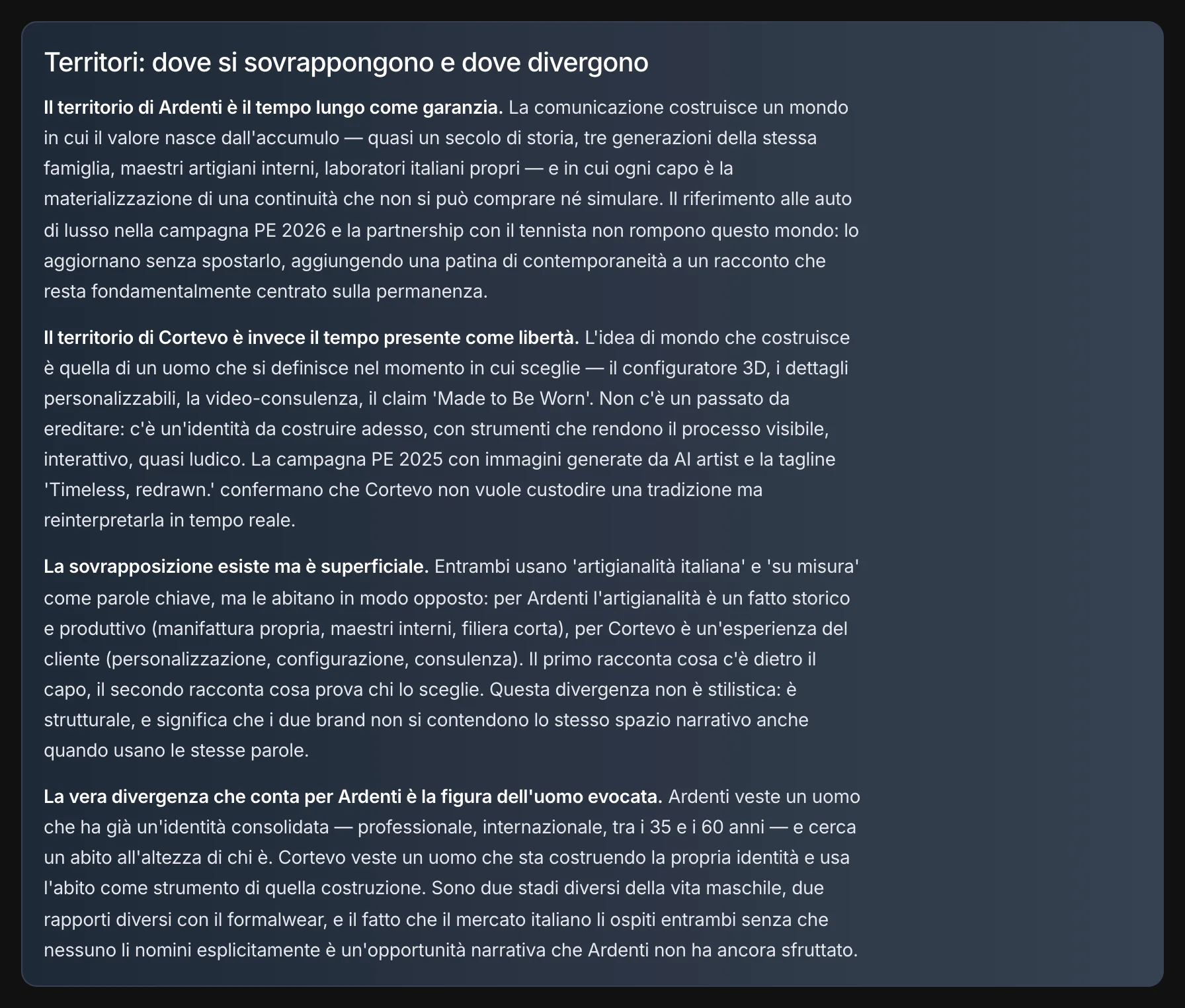
And where they really diverge.
Not a table of differences: a reading. Two brands use the same words — “craftsmanship”, “made to measure” — but inhabit them in opposite ways. MAPS says so, and shows where the space is that no one is using.
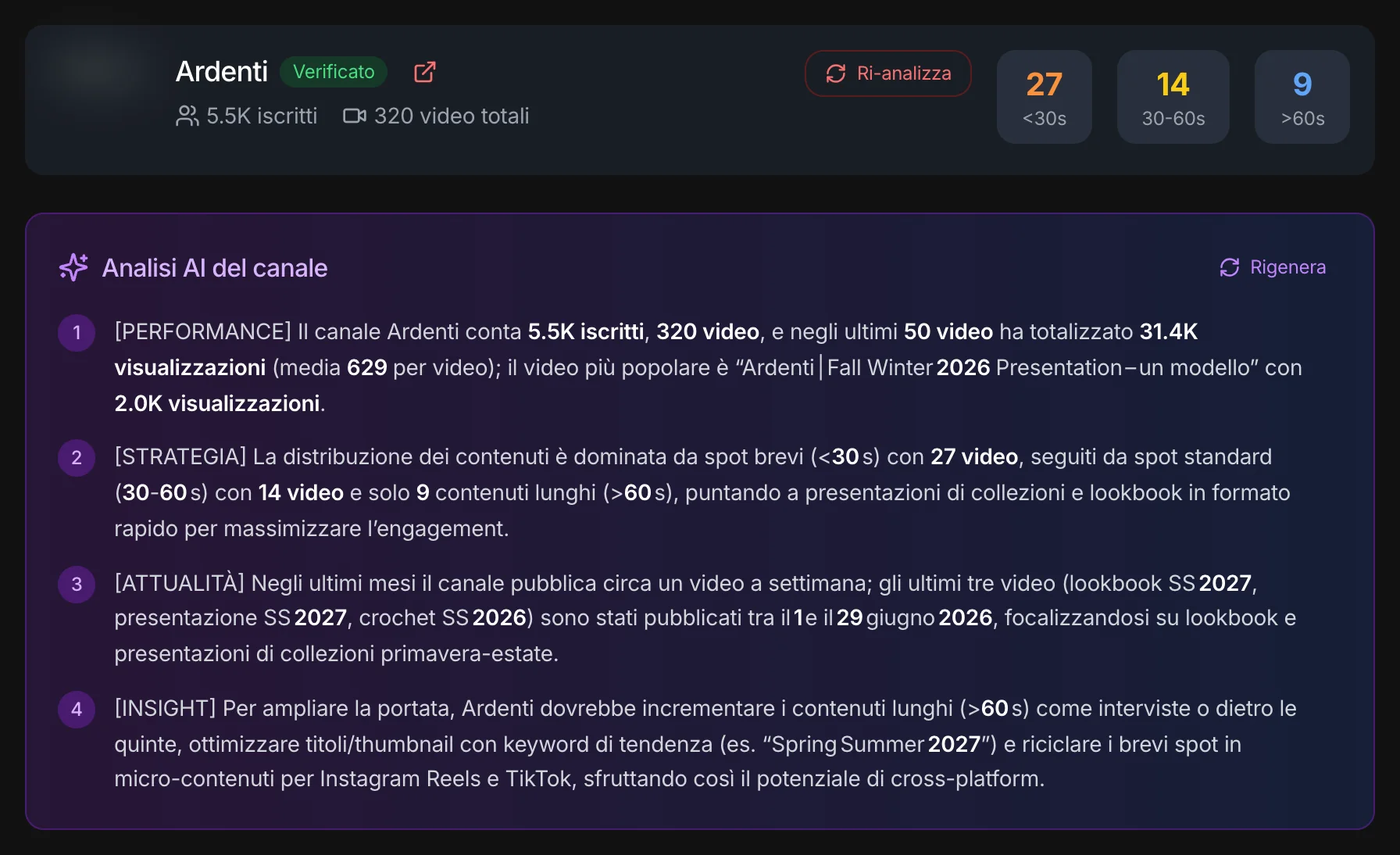
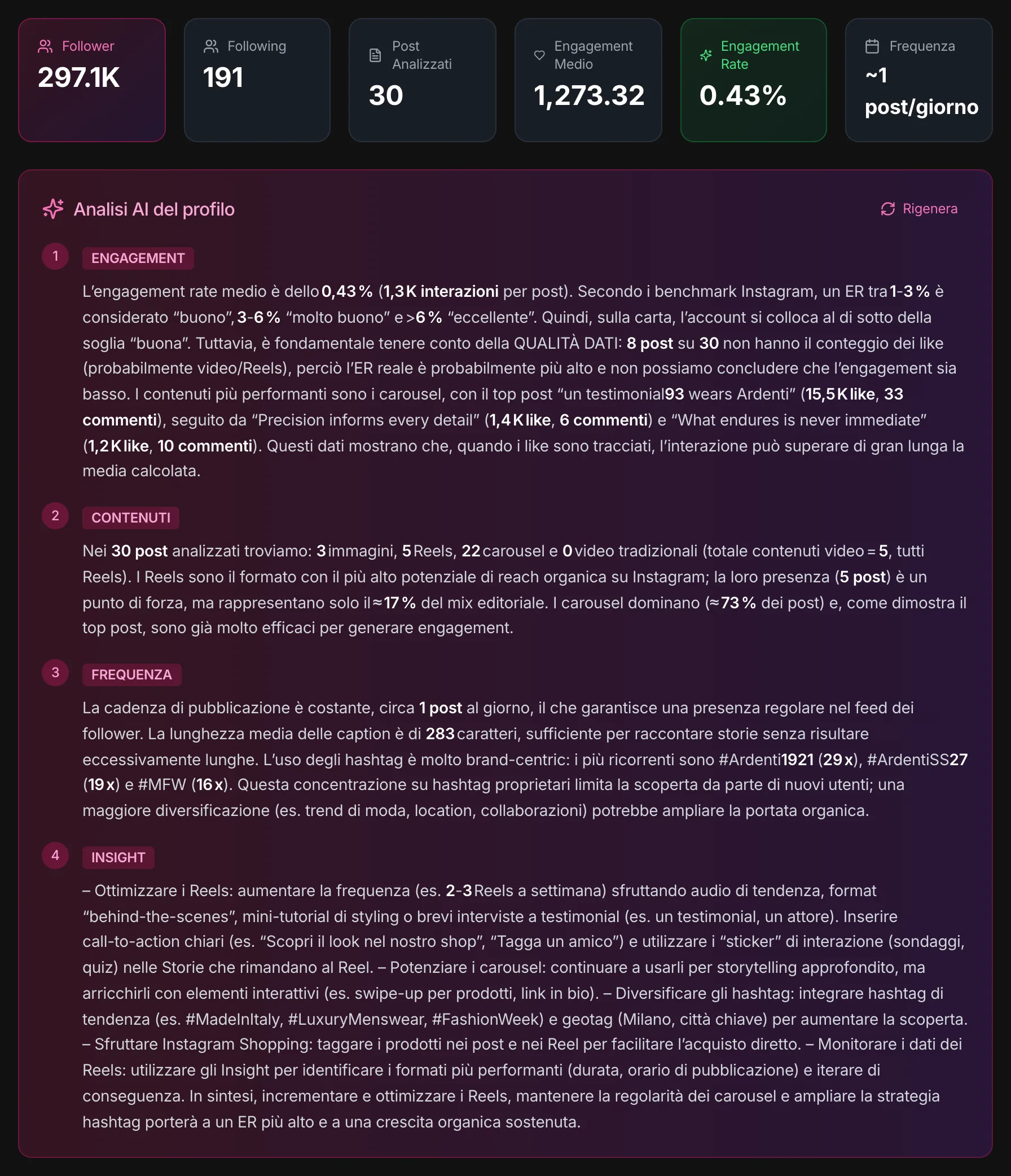
YouTube, Facebook, Instagram, TikTok, LinkedIn.
For each profile — yours and your competitors’ — MAPS reads the published content: how much, in what format, how often, how much the audience engages. Then an analysis that tells you what works and what to do, with the numbers.
Post by post.
Why one worked.
The published content, filterable by format, with likes, comments and date. Open a post and MAPS analyzes it: how it did against the benchmark and the profile’s average, what worked, what’s missing, what to do in the next one.
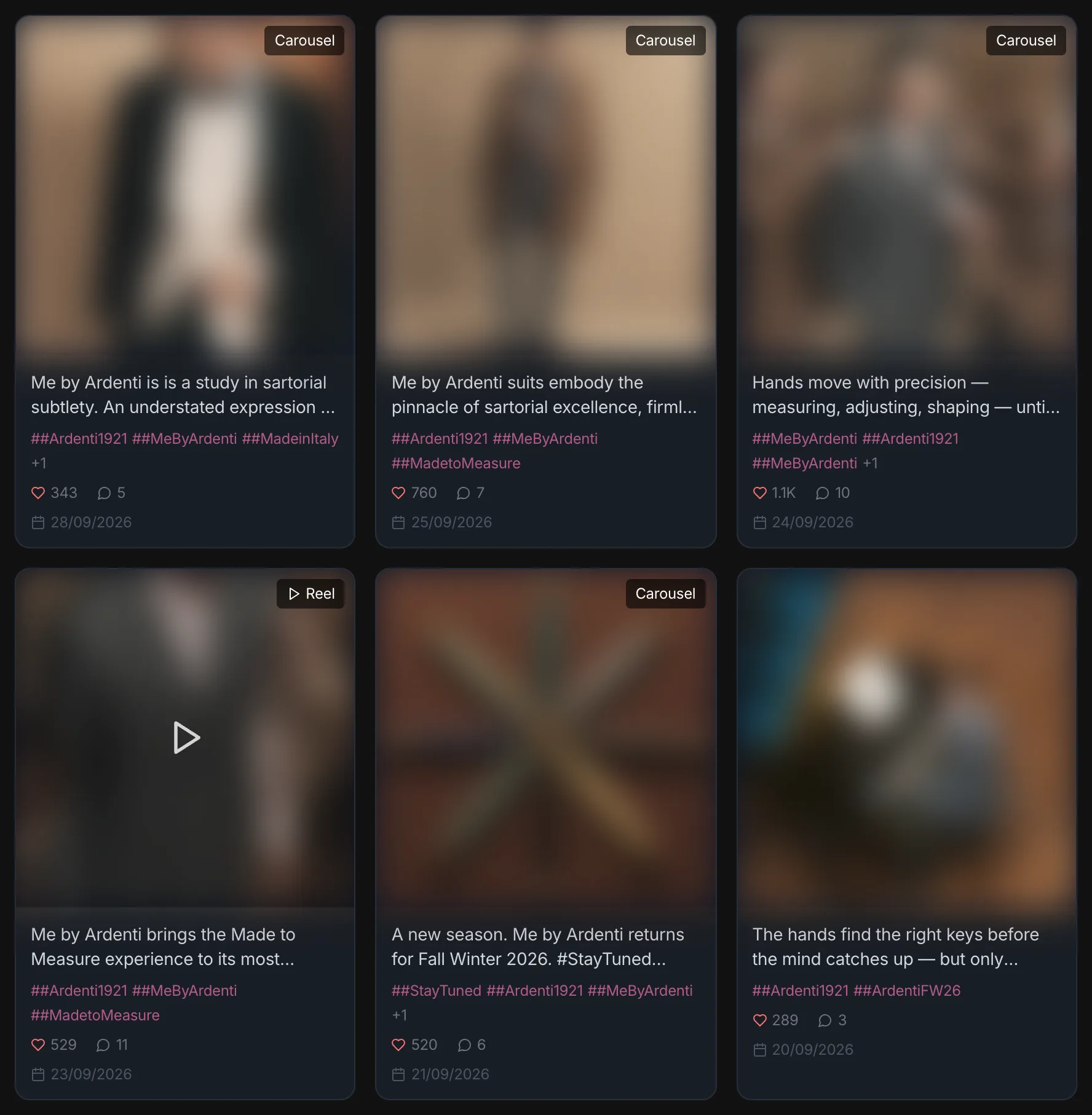
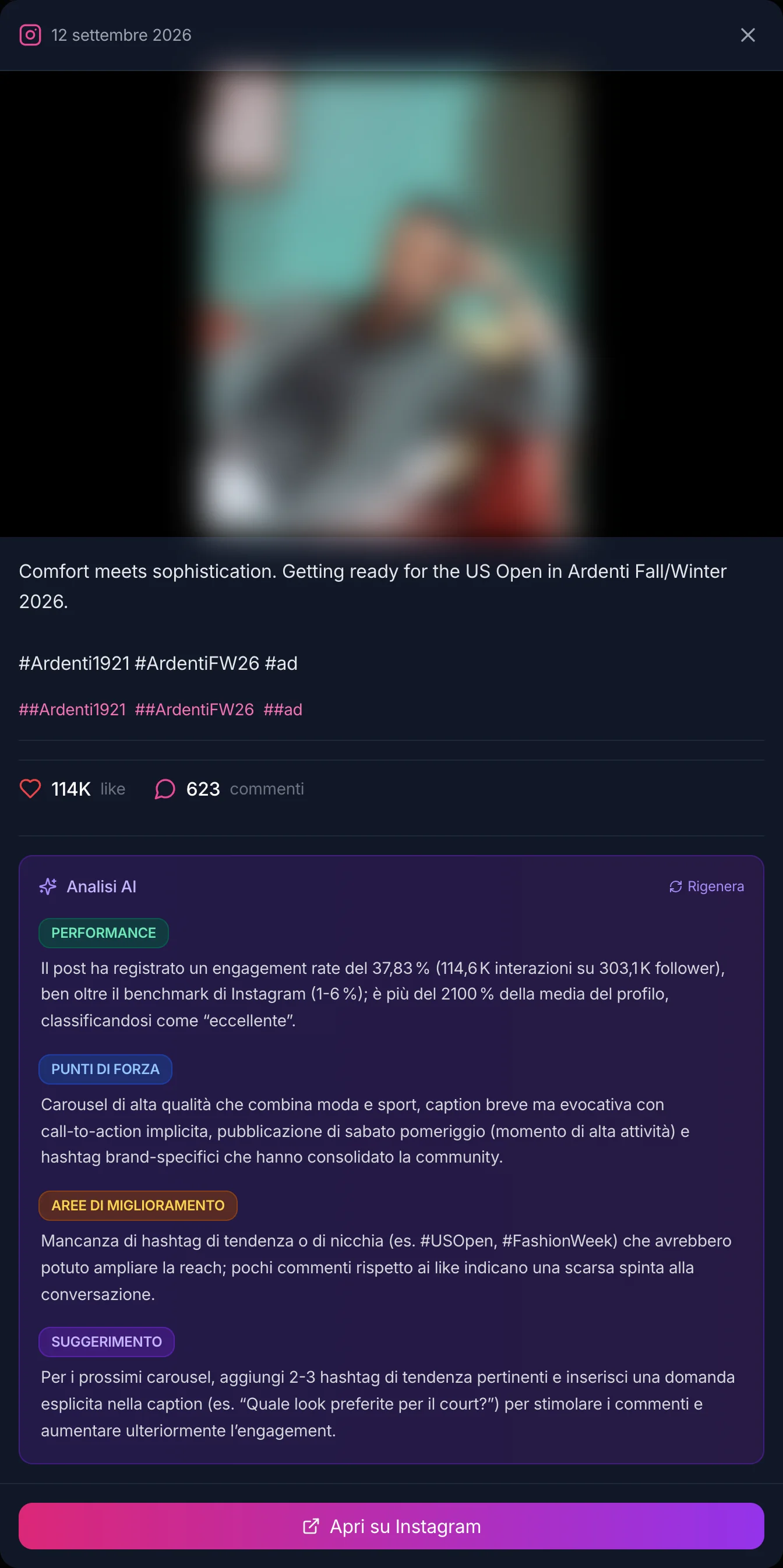
Here too there’s an Expert you can ask, and the Synthesis ready in PDF or PowerPoint.
When you sell to companies,
communication takes other routes.
In B2B, traditional advertising carries little weight. What counts are trade shows, the trade press, technical training, distributor programs, LinkedIn. MAPS knows this: in B2B projects, Communication Focus searches exactly there — which trade shows matter, who exhibits and in what role, which publications the supply chain reads, how lead generation toward decision-makers is done.
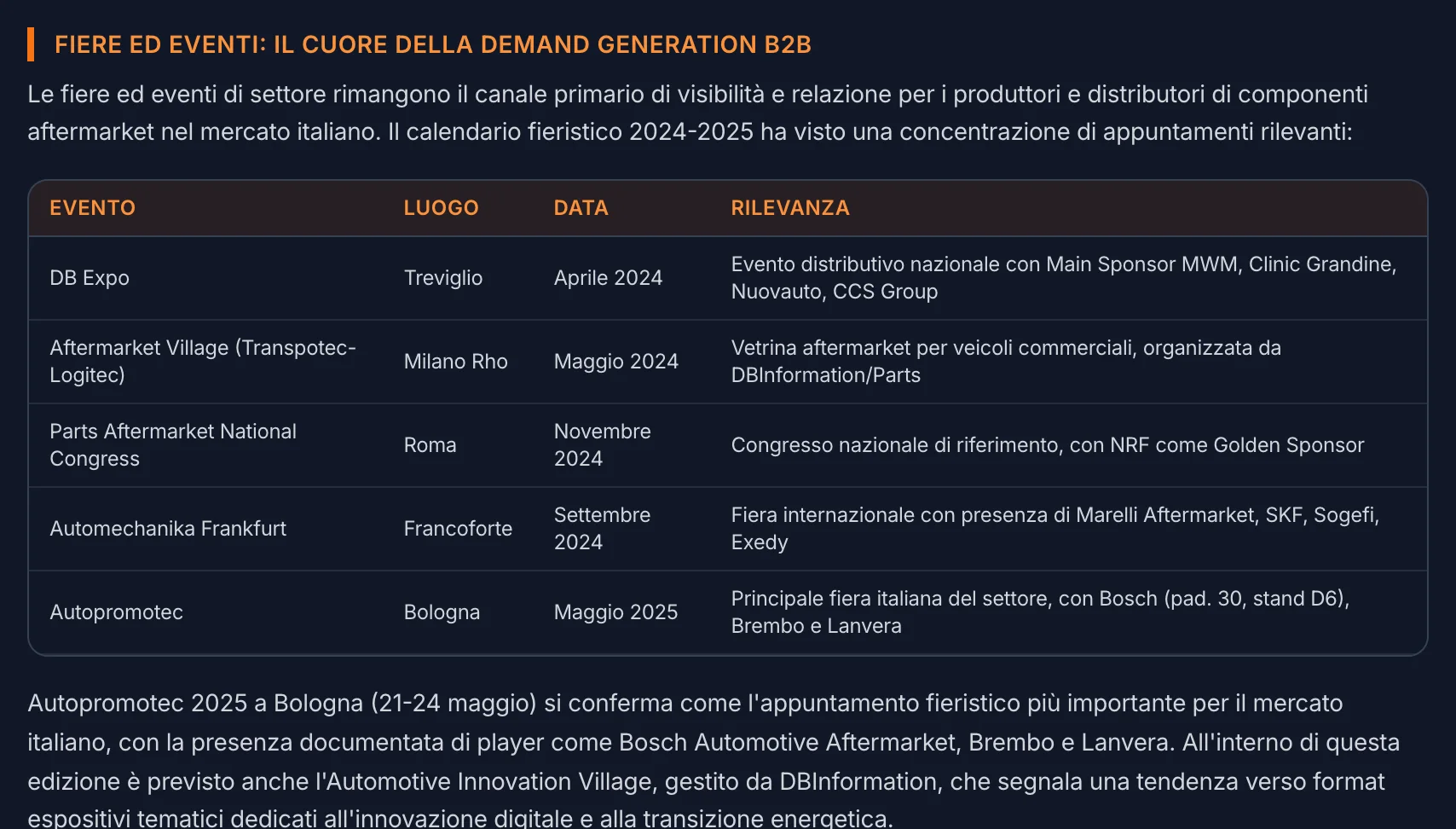
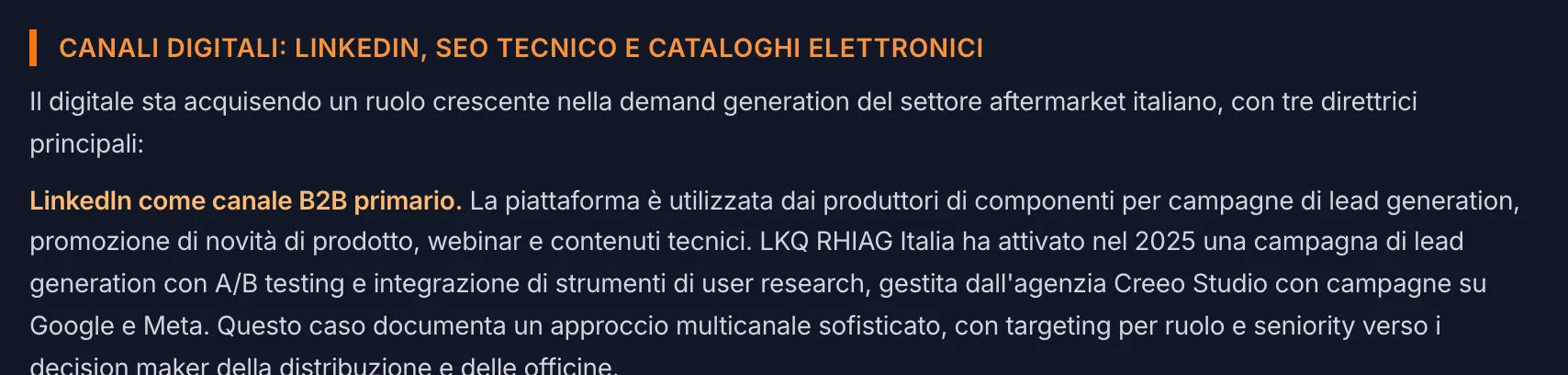
Same module, a different map: the one your B2B customer actually moves through.