
The map of channels.
And who the gatekeepers are.
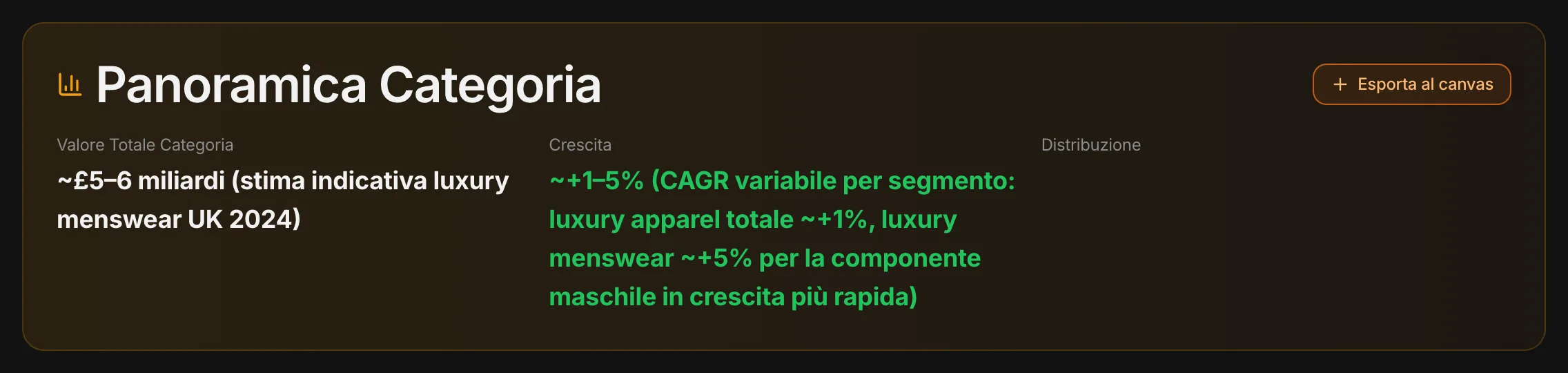
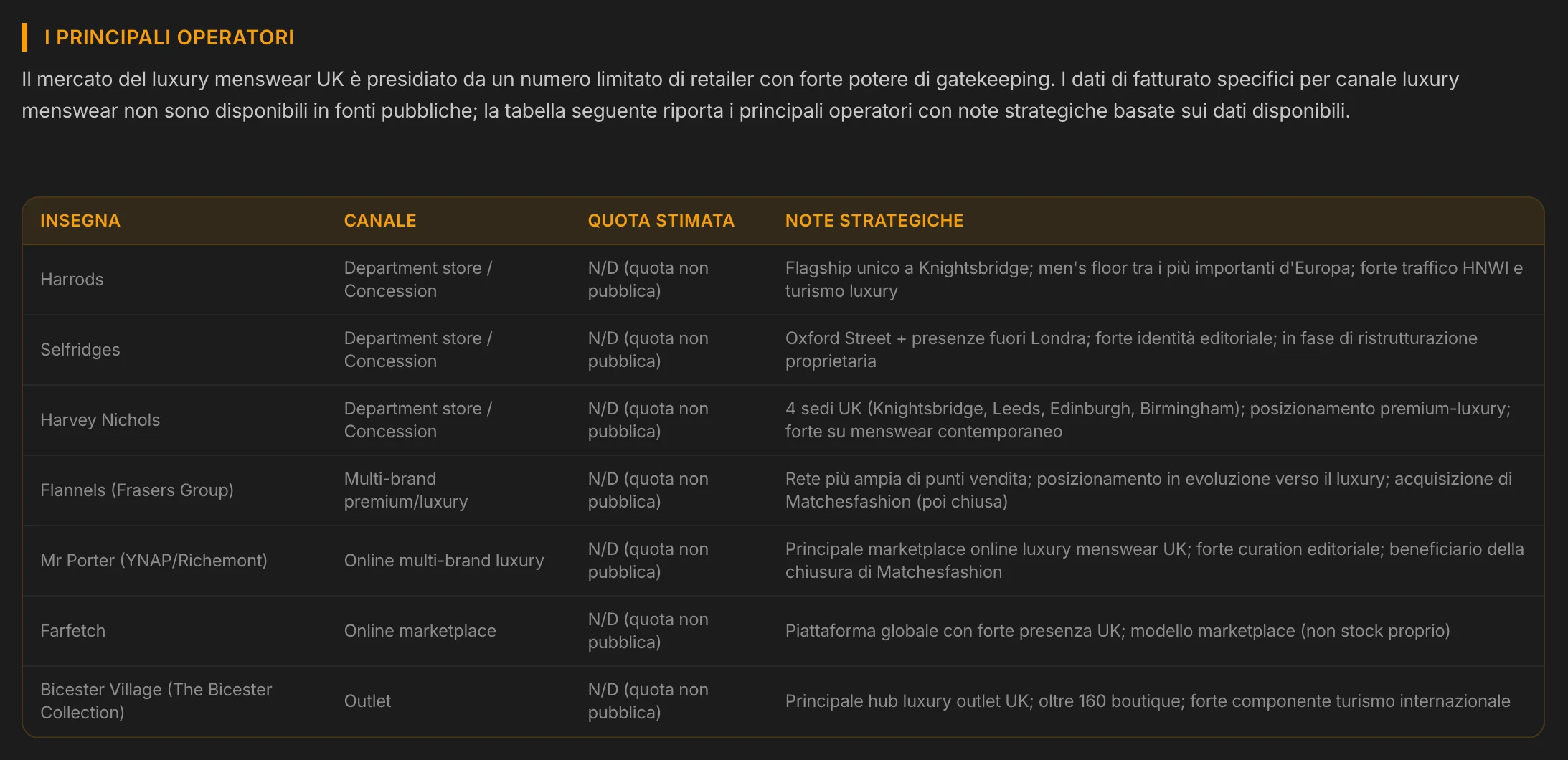
What the category is worth, how it splits across channels, which players you have to reckon with. The example is men’s luxury in the United Kingdom: department stores, multi-brand stores, online, outlets.
Distributors, networks, wholesalers.
And their own brands.
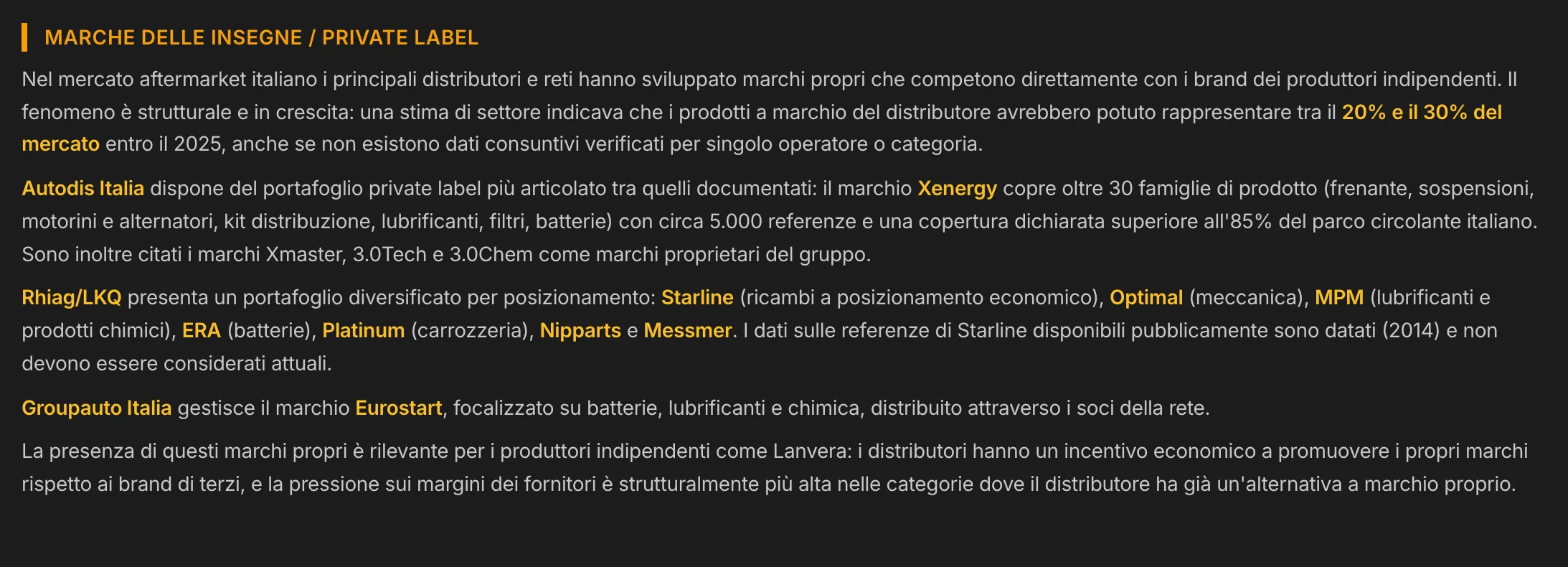
In B2B projects the module is called Go-to-Market Focus and reads the supply chain: distributors, networks, wholesalers, agents. Including something that weighs on manufacturers’ margins: which distributors have their own brand, and in which categories.
One channel,
seen from the inside.
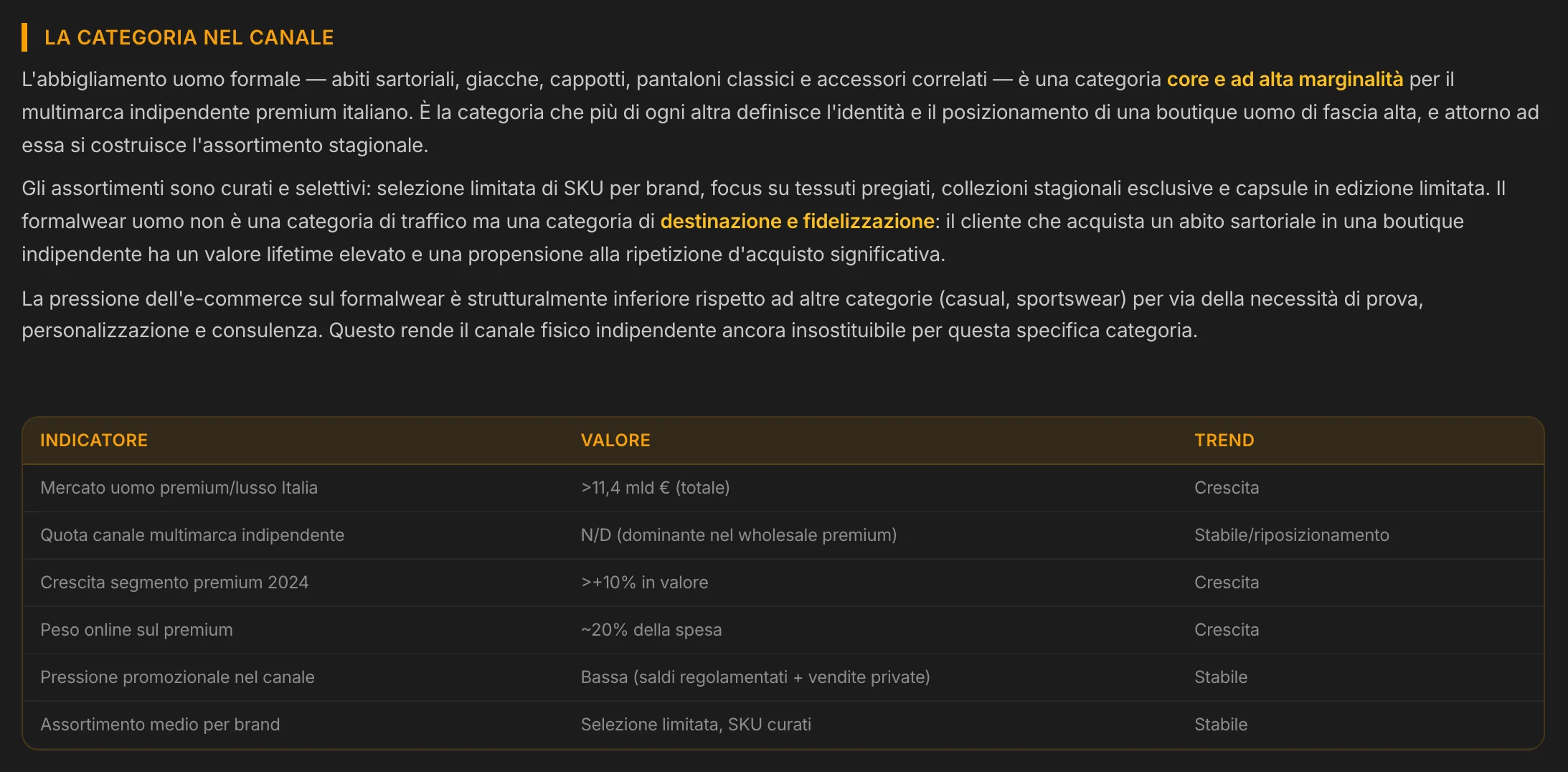
Choose a channel — or write your own — and MAPS analyzes it: how it’s structured, what role the category plays, who the players are, the trade dynamics — barriers to entry, margins, payment terms, promotional pressure — and the opportunities for the brand. The example: independent multi-brand boutiques for men’s tailoring in Italy.
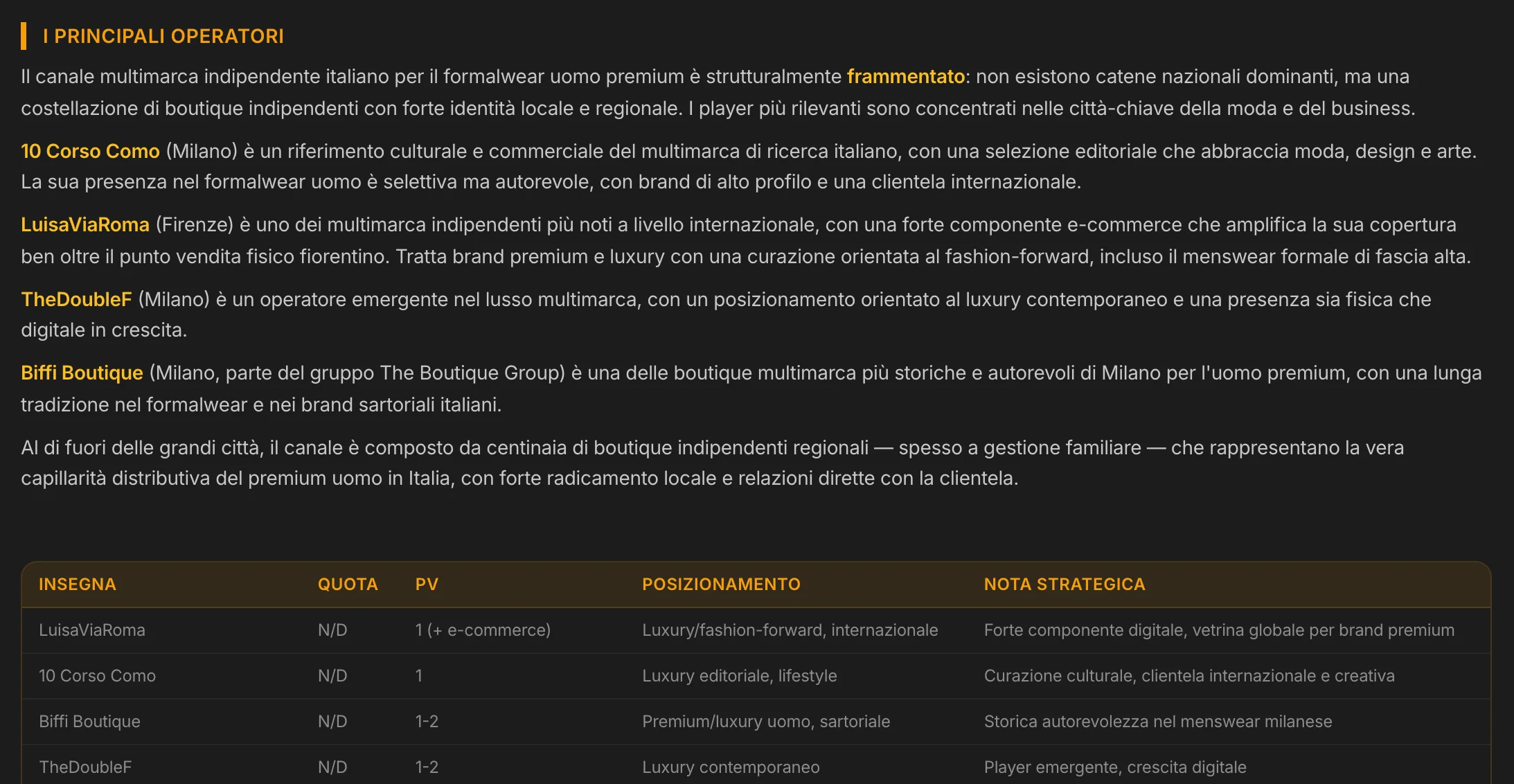
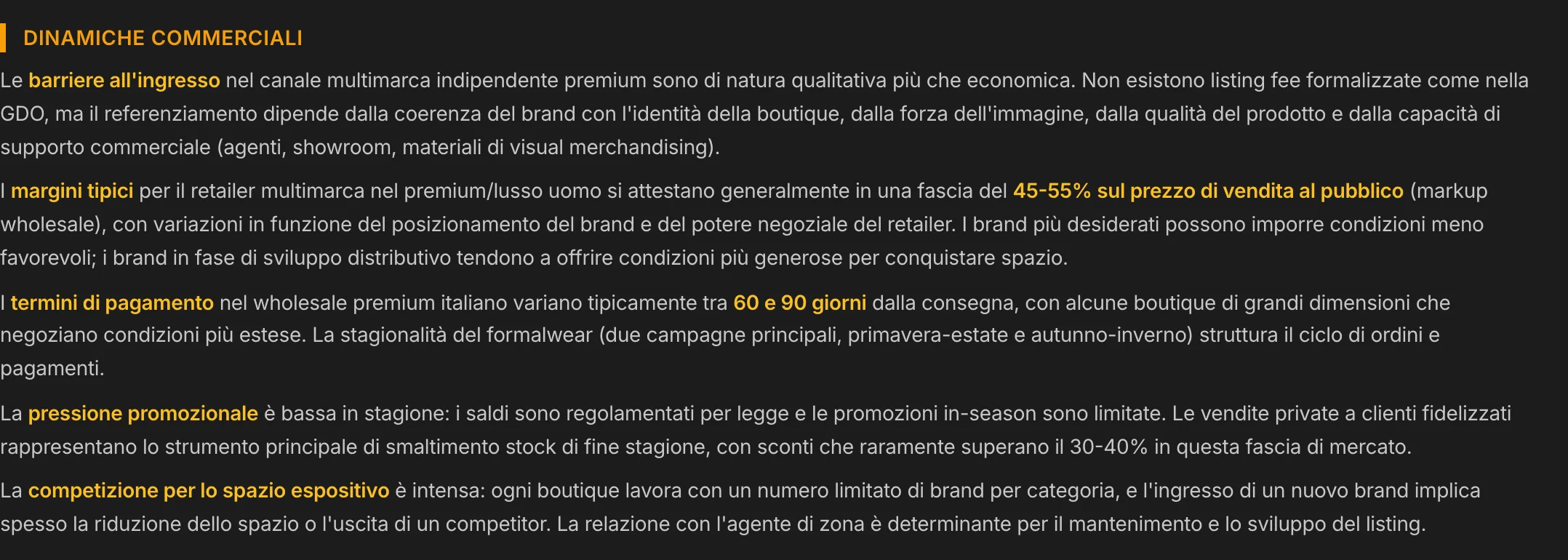
And then, one retailer at a time.
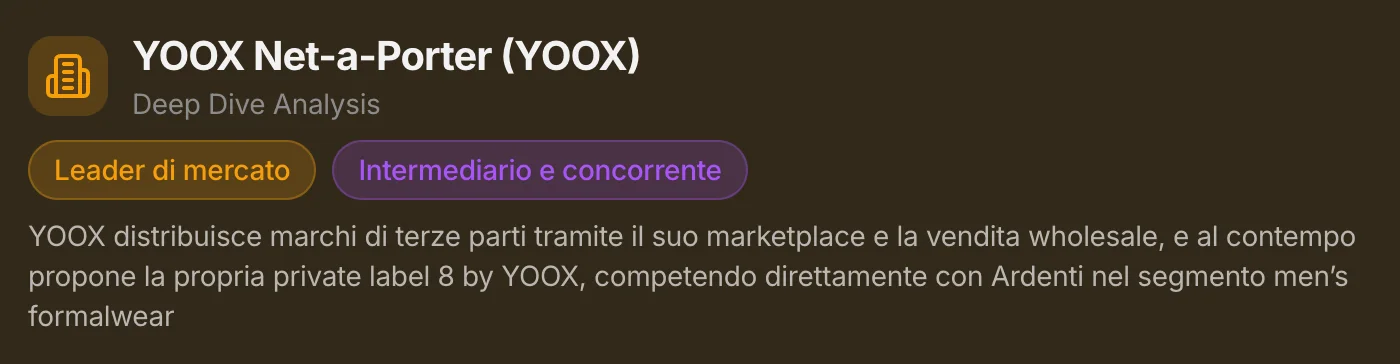
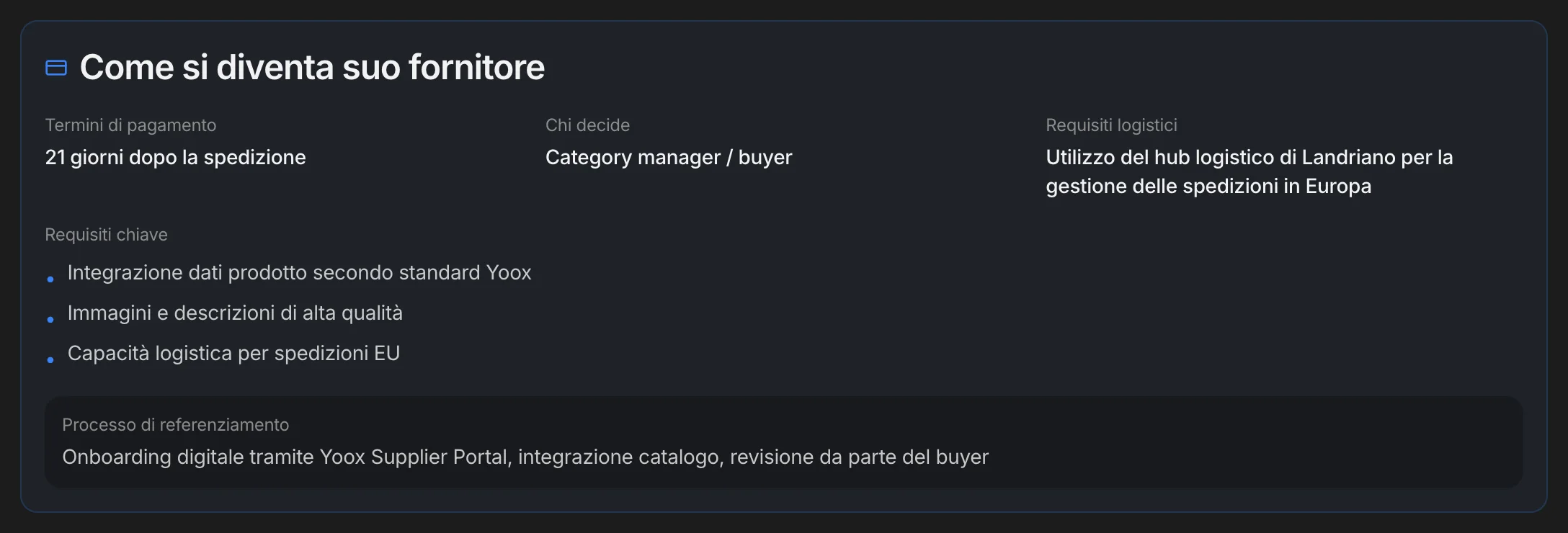
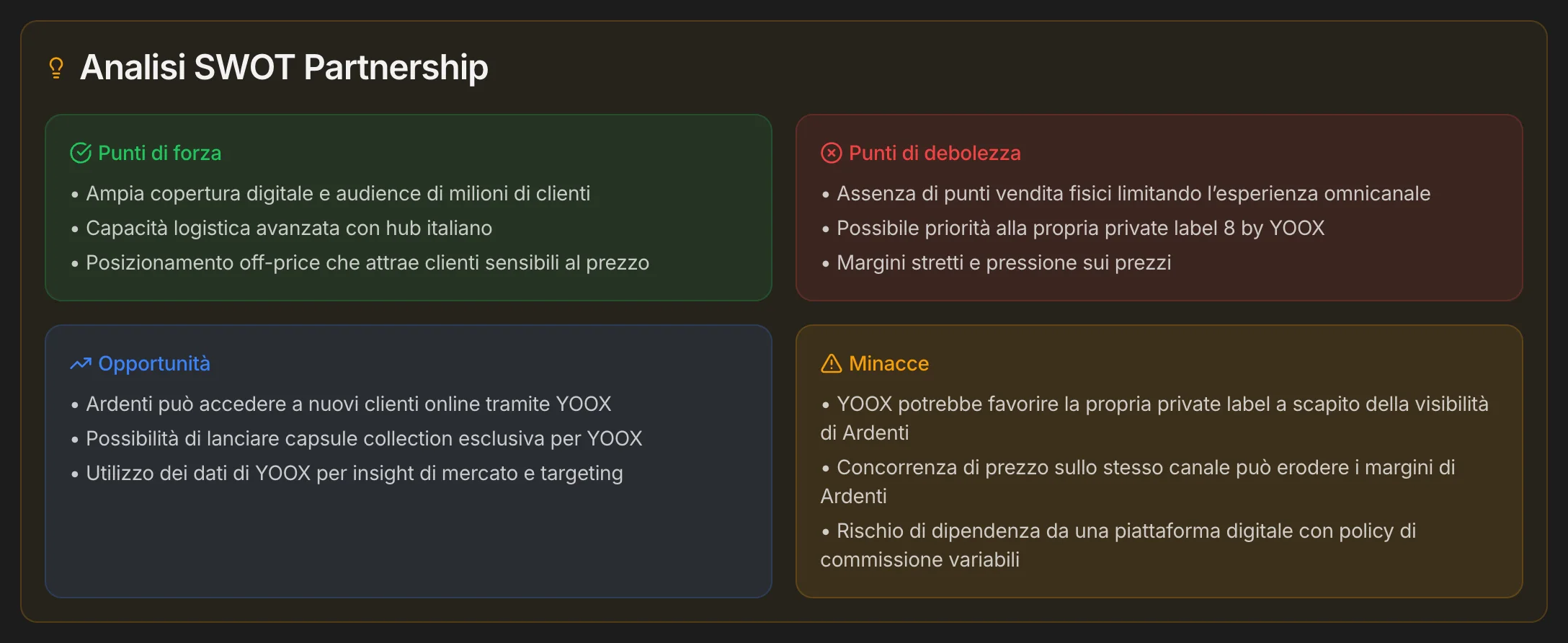
A deep dive on each player: profile, market position, private label, how to become its supplier, digital presence, and the partnership SWOT — whether it’s a potential partner, a competitor, or both. The example: a large luxury e-commerce player, seen from a tailoring brand.
Here too, a chat to query, the Synthesis and the PDF.