
The whole area,
in one document.
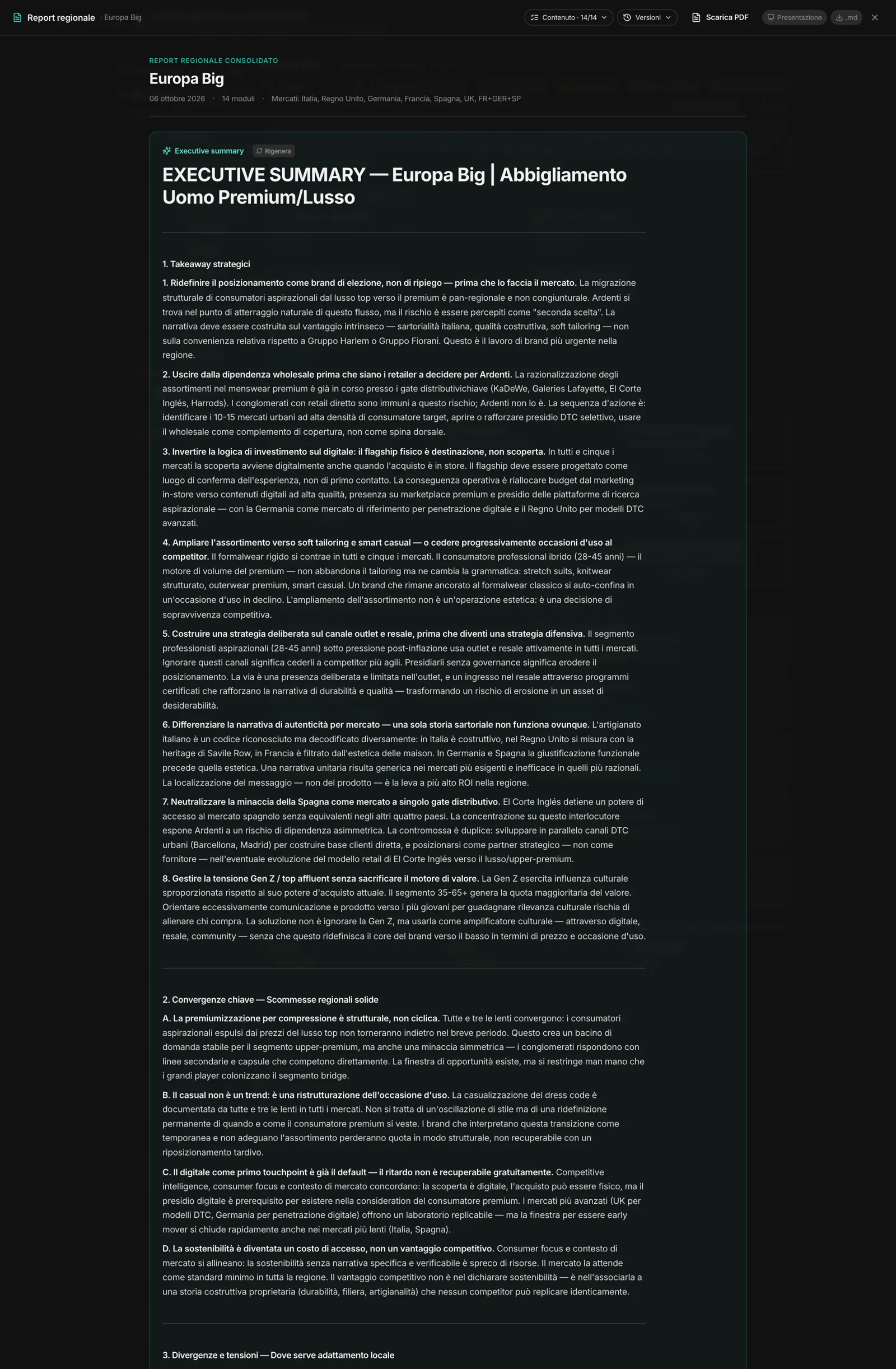
The regional report brings together the native research and the syntheses already generated: cover, executive summary — the takeaways, the convergences, the divergences and tensions —, the table of contents and one chapter per module. You choose what to include.
Each chapter can be regenerated; the report is saved in named versions and reopens read-only. It downloads as a PDF, as a PDF presentation or as Markdown.
Where to play,
and in what order.
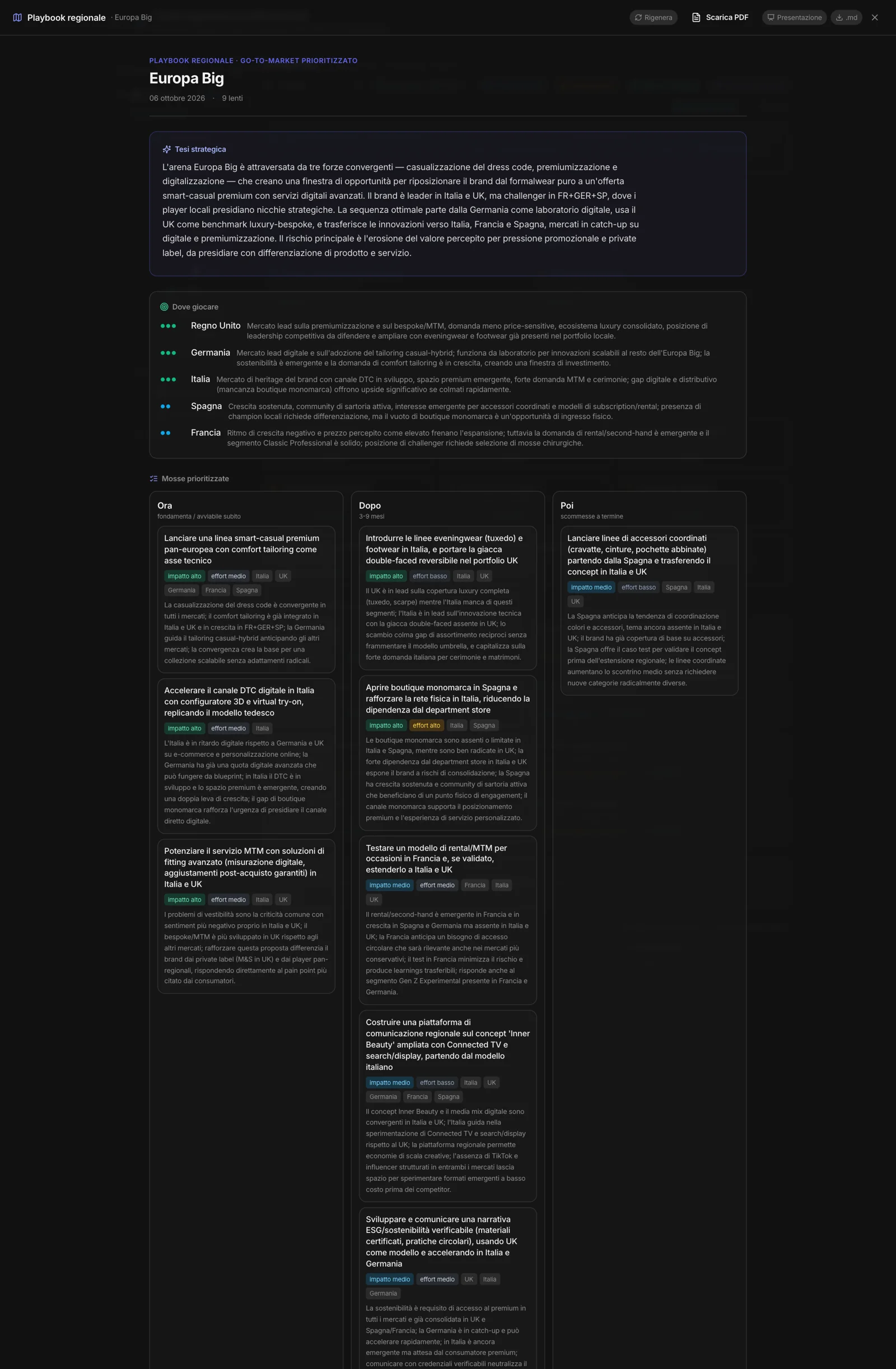
The playbook turns the syntheses into a plan: the strategic thesis, where to play with each market’s priority, the moves in three stages — now, next, later — with impact, effort and markets, what to transfer from one market to another, the risks to watch.
It’s a prioritized qualitative plan, not a forecast. It regenerates when the syntheses change, and exports like the report.
The area’s
deck.
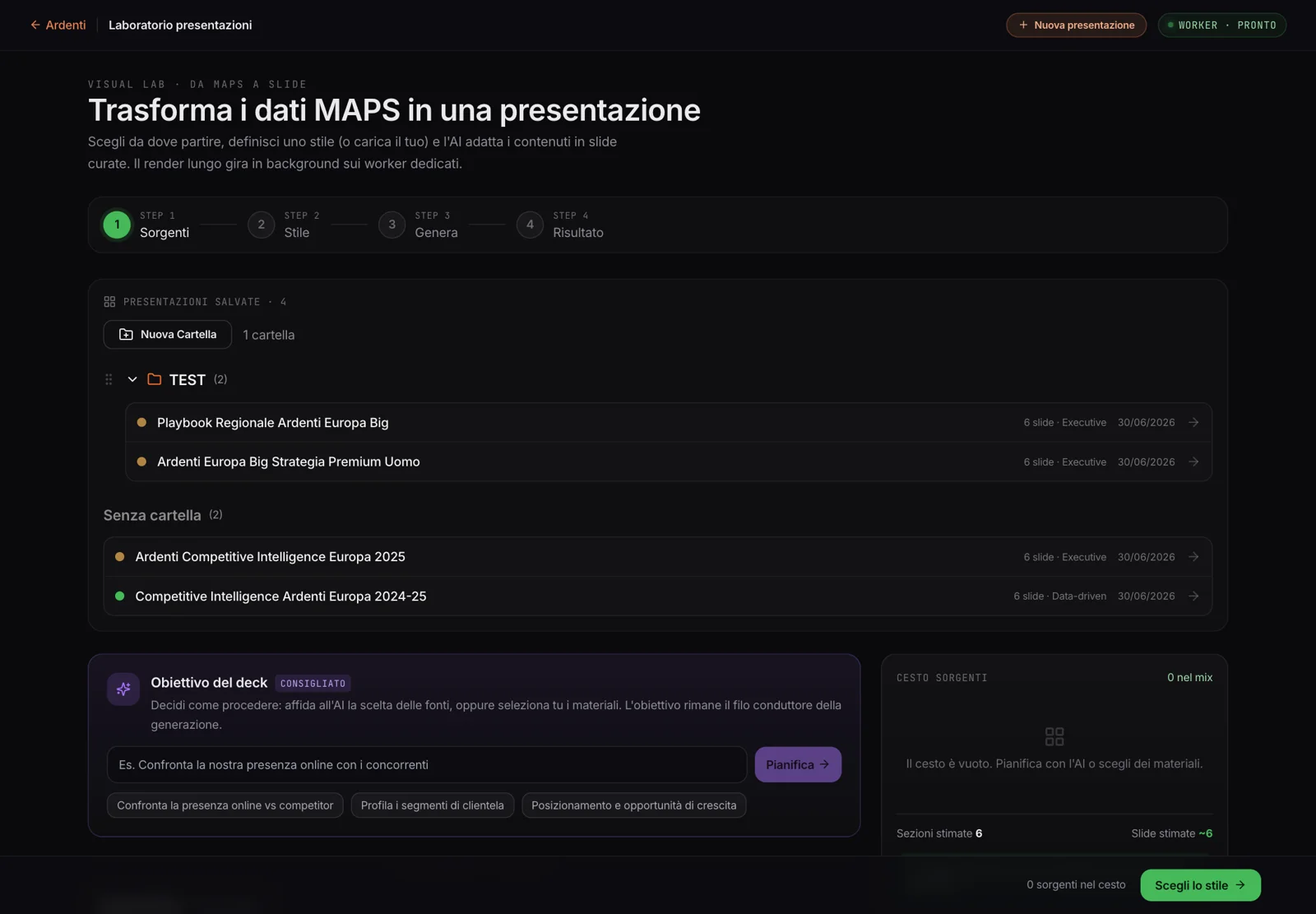
The presentation lab works on the area too: the sources are the native research, the syntheses and the Quick Overviews, plus the report and the playbook if they exist, and the documents you upload. Choose the style — executive, data-driven, narrative — and download as PDF or PowerPoint.
The area’s presentations stay in the area, with their folders, and can be translated for another market.
Ask
the whole area.
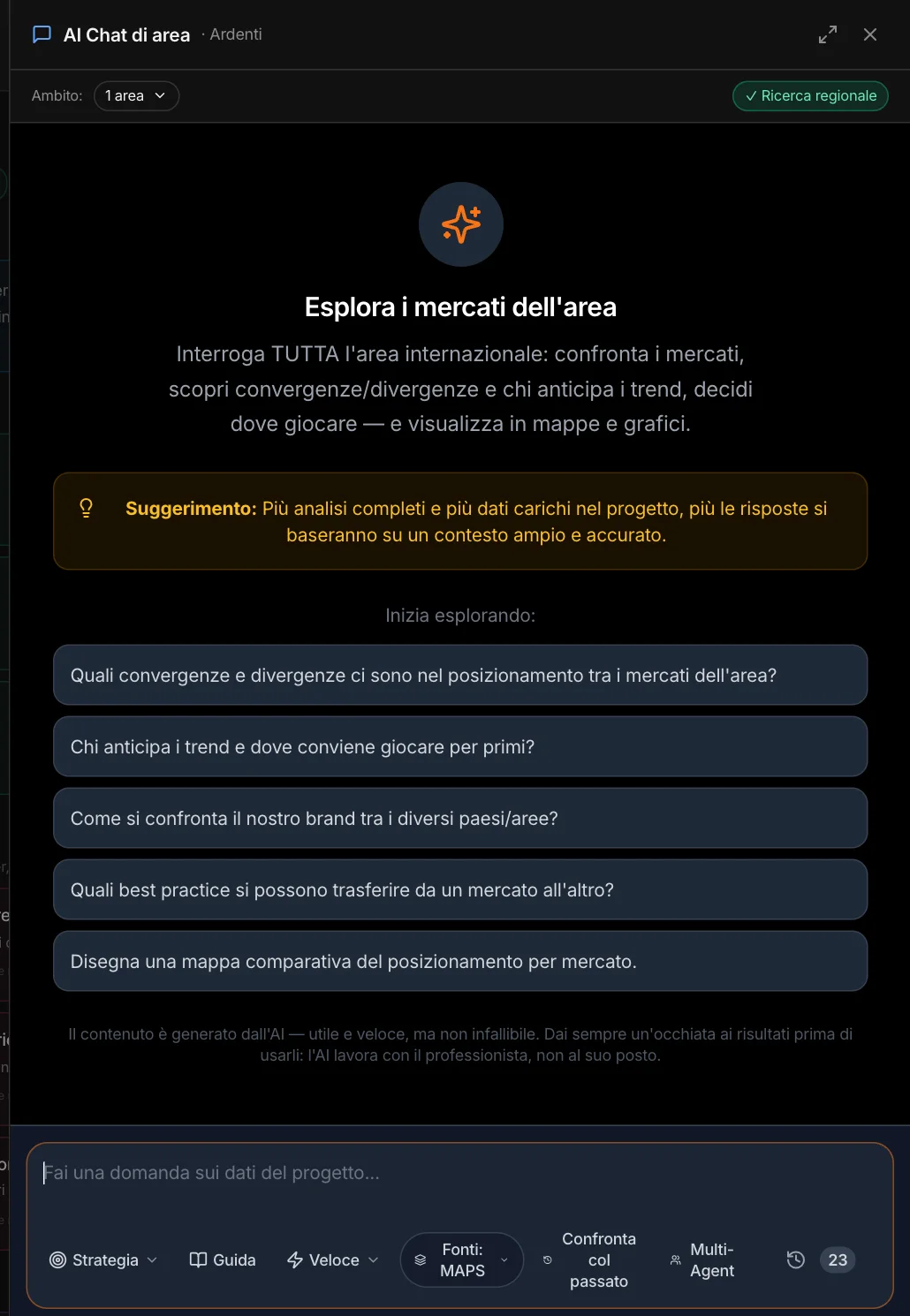
The area chat answers from the area’s countries and from the regional research. Choose the scope — one or more areas of the same company; a macro-area brings its sub-areas along — and compare markets, clusters, Big Countries.
Every data point stays with its country: the chat doesn’t carry one market’s numbers over to another. With three or more countries it prepares a brief for each and then compares them. The same lenses as the project chat, Fast or Advanced, and the answer as a PDF or a presentation.
At the top of the area, the index shows what the chat knows: how many fragments from the native research, the syntheses, the Quick Overviews, and the entity graph. “Rebuild index” realigns it without regenerating anything.