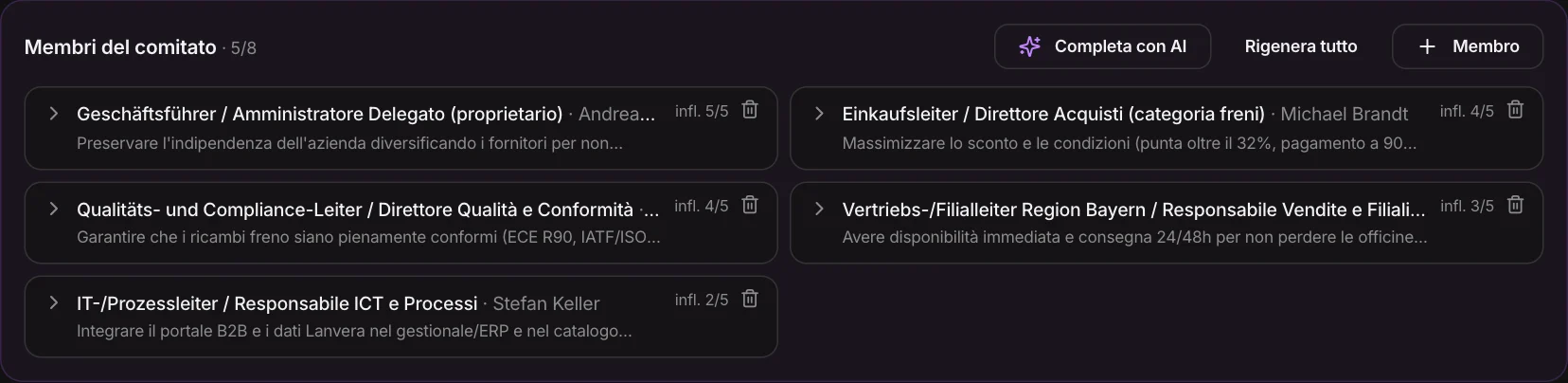
Who’s in the room.
And what they really want.
The committee starts from wherever you have data: from a CRM account — with its history, pipeline, loss reasons, decision-makers —, from a group of customers, from the Customer Focus segments, from the project data, from an ABM Studio account, or by hand. “Suggest with AI” proposes the makeup: roles, conflicting goals, personality, influence, relationships, each member’s country.
What they don’t say.
Before every meeting, MAPS gives each member a starting position, information they know and won’t share unless you draw it out of them, their red lines, what would convince them, a constraint they can’t get past. You don’t see any of it. You find it out — or not — by talking.
And your team.
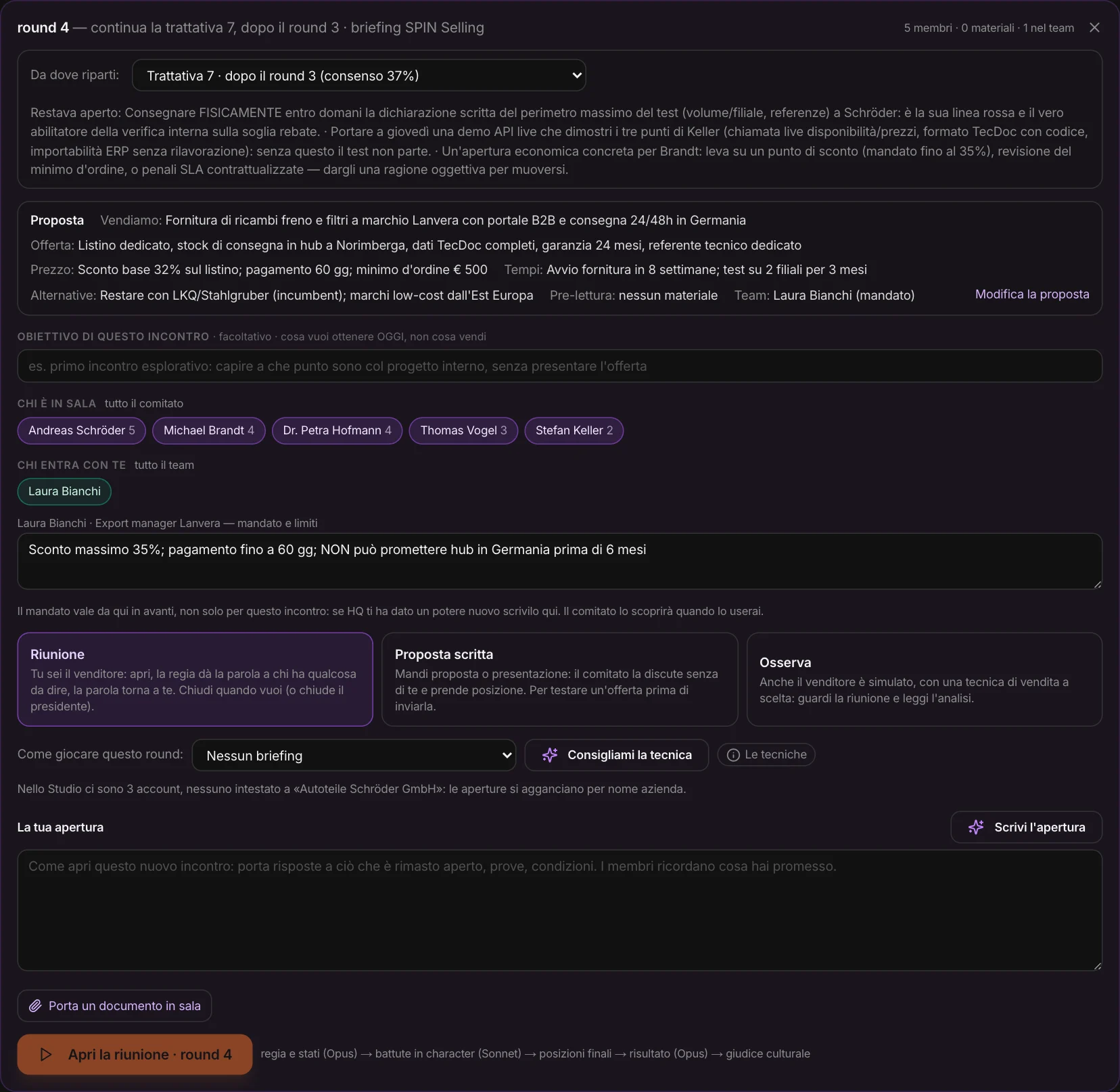
Who goes into the meeting on your side, and with what mandate: the maximum discount, the timelines, what they can’t promise. The proposal on the table, and the materials the committee reads beforehand.

Go into the meeting.
Or send a proposal. Or watch.
For each meeting you choose who’s in the room, who comes in with you, today’s goal, and the mode.
Meeting
You are the salesperson. You open, and the director gives the floor to whoever has something to say: one, two, three people react — not all of them, not in turn —, they answer each other, those with little weight don’t contradict the boss. The floor comes back to you. You close, or the chair does.
Written proposal
You send an email with the proposal and the attachments, to the whole committee or to some of its members. The committee discusses it without you — and you read what they said to each other.
Observe
The salesperson is simulated too, with a sales method of your choice. You watch how it goes, before you do it yourself.
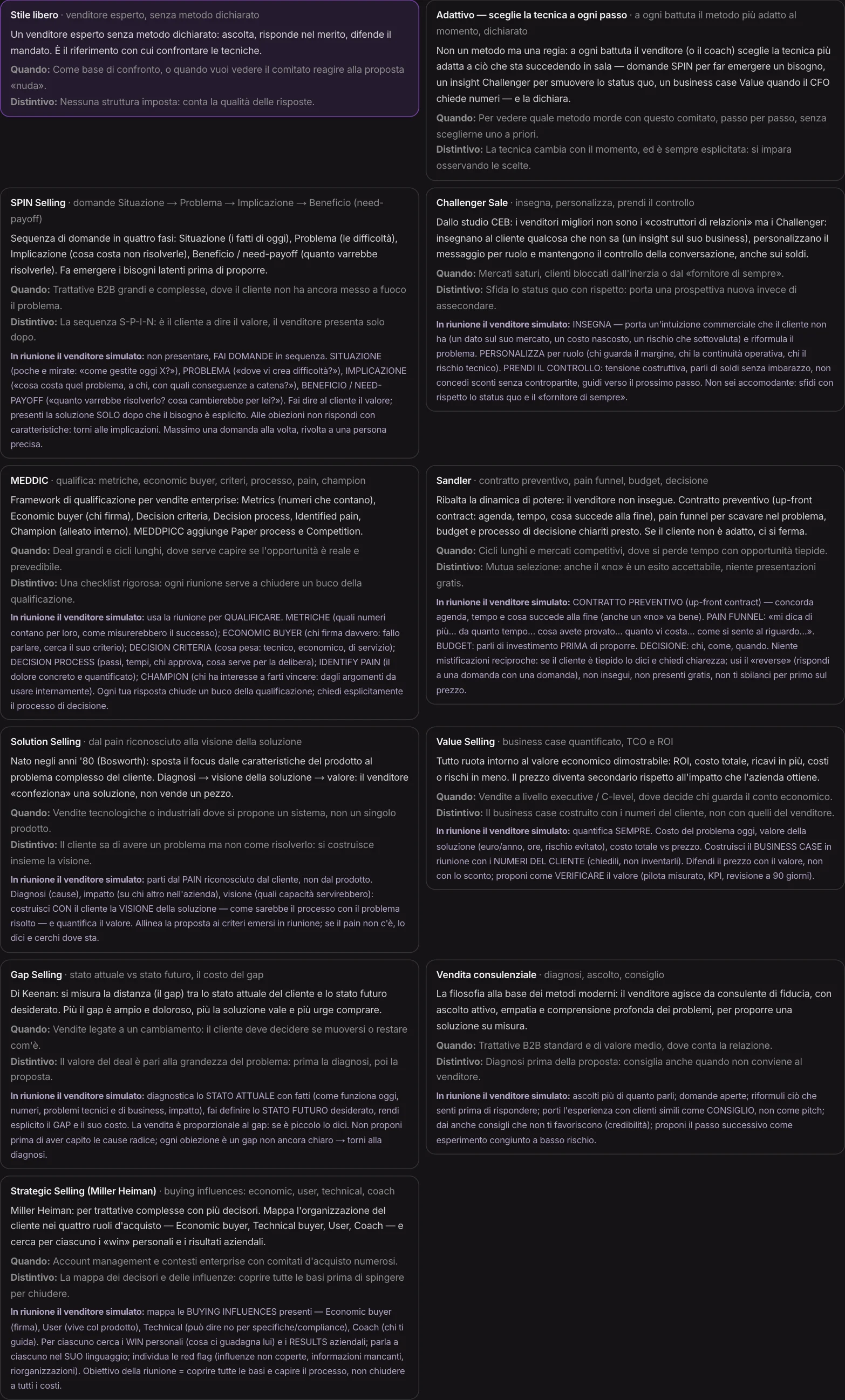
SPIN, Challenger, MEDDIC.
And a coach in the room.
Nine B2B sales methods — SPIN, Challenger, MEDDIC, Sandler, Solution, Value, Gap, consultative, Strategic Selling — plus Adaptive, which picks the technique at every step. Not sure which one to use? “Recommend a technique” reads the committee and the proposal and gives you a first and a second choice, with the moves. In the meeting, “Which method now?”.
The coach sees the room.
When it’s your turn to speak: “Hint” tells you the move, the questions left unanswered, who you haven’t brought in yet. “Write the beat” drafts your line for you, ready to edit. The coach only sees what happens in the room — never the members’ thoughts.
Documents matter.
The committee actually reads your materials: before the meeting, in the room, or handed over mid-discussion.
They talk.
To each other, too.
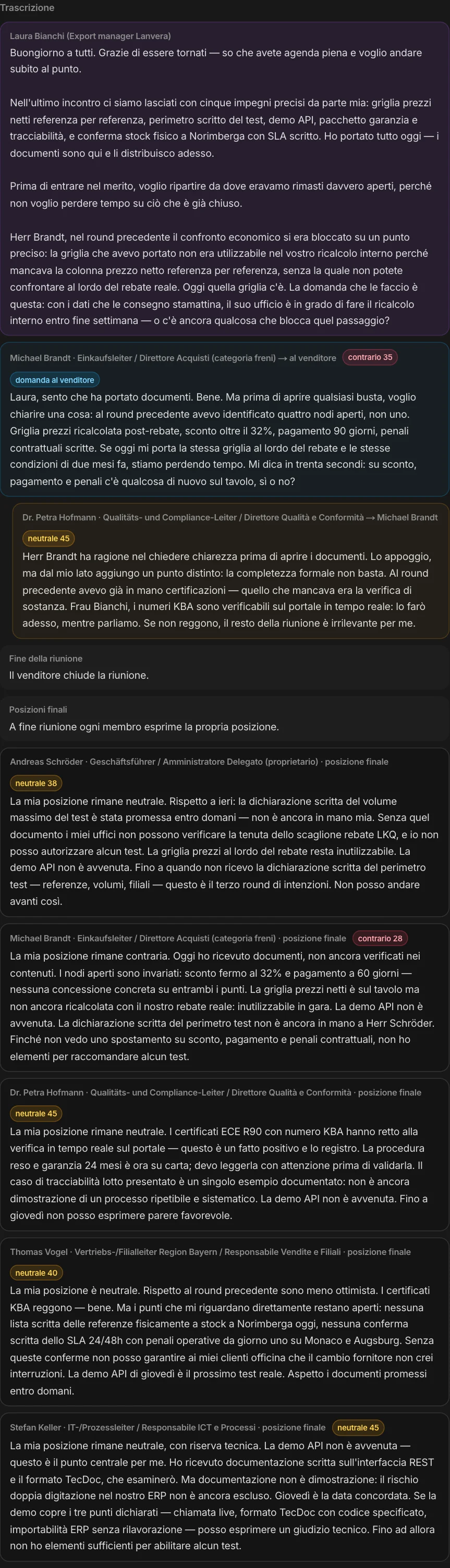
The third meeting with the German distributor, using the SPIN method. The procurement director presses, the head of quality backs him up and adds her own point. At the end, everyone says where they stand — and why.

How you played.
And what you missed.
The committee’s consensus, weighted by influence, and how far the negotiation has moved. Then the scorecard: discovery, listening, evidence provided, objections, committee coverage, mandate, progress, and how closely you followed the method — with the evidence.
No sugarcoating
In the example: 35/100. “Documents announced but nothing delivered, the chair never worked on, the key question dropped.” SPIN: 1/5.
Who blocks, who pushes
Member by member: the position, the open objections, what would move them. Who changed their mind, and why.
What it takes to close
And coaching for the next meeting: what to bring, who to work on, which question to ask.
The cultural reading
The Italian salesperson in front of a German committee: what worked, what might come across as out of place.
The debrief
At the end, the hidden states: what each member knew and didn’t say, their red lines, what you could have uncovered.
The minutes
As a PDF, with transcript, positions and result. The debrief only if you want it — for internal use.
Round after round.
And the roads you didn’t take.
Every meeting picks up where the previous one left off: the members remember. From any point you can also open an alternative path — the same round played differently — and compare. You change the proposal and see how they react. And the trend in consensus, member by member.
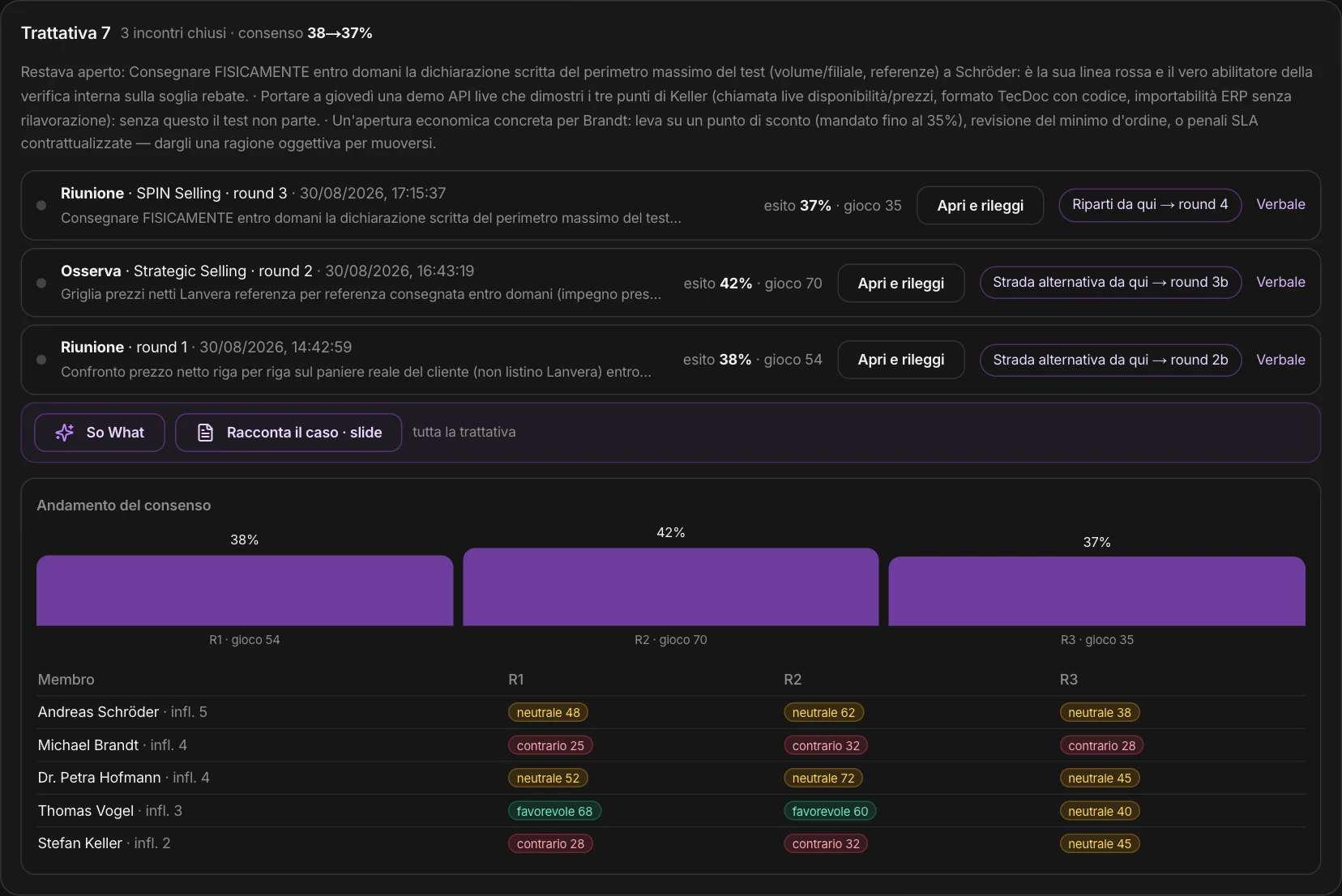
The So What.
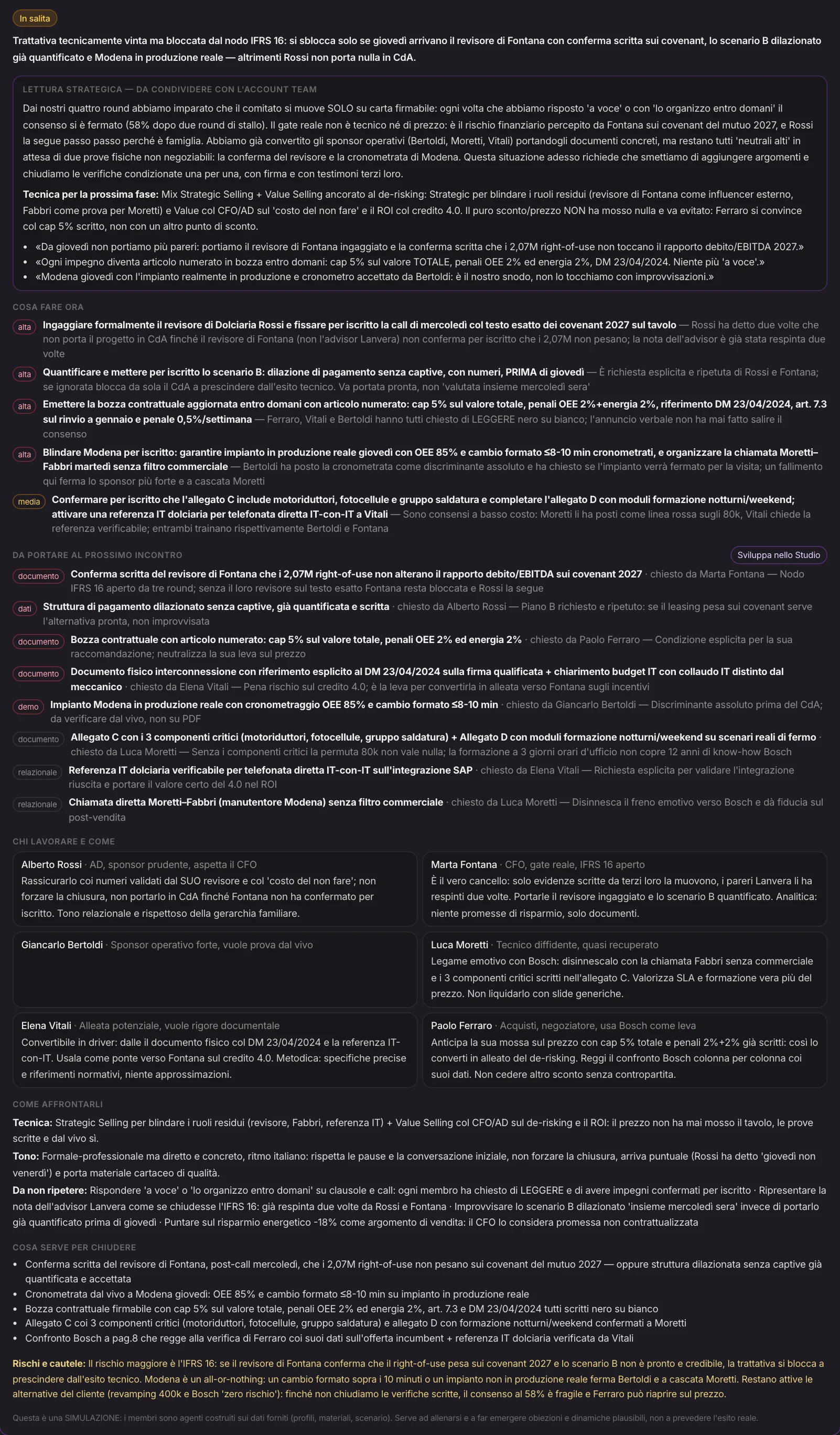
The summary for the account team: where we are, what to do now, what to bring to the next meeting and who asked for it, who to work on and how, how to handle them, the risks. From there, “Develop in the Studio” takes the account into the ABM & Sales Studio; “Tell the case” turns it into a deck.
In the example, a different committee: a confectionery company and its new line.
The same table.
But with investors.
For startups the committee becomes an investor table: fund partners built on Investor Focus — thesis, stage, ticket size —, the founder in place of the salesperson, the round in place of the proposal. You pitch, or you send the deck and read what they say to each other. The questions are the real ones: traction, why now, what protects you, the numbers. The So What tells you what to fix in the deck before the meeting.