Seven concepts,
three futures and one for all.
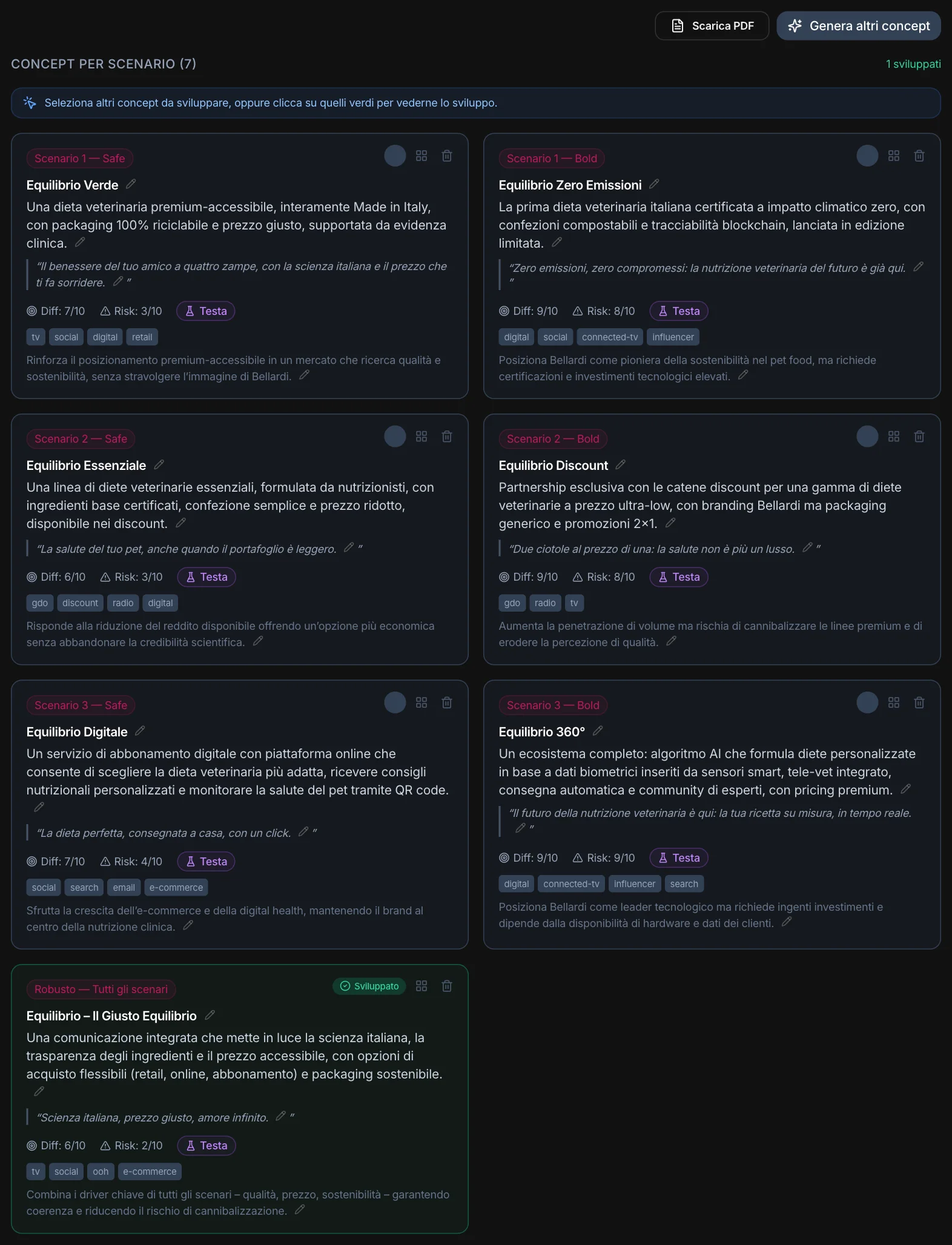
For each scenario, a cautious concept and a bold one. The seventh is robust: it works whichever future arrives. You choose whether to bet or to hedge — seeing both side by side.
Safe
The cautious approach in each scenario: “Your pet’s health, even when your wallet is light.”
Bold
The bold approach in each scenario: the first climate-neutral veterinary diet.
Robust
The concept that holds up in all three: “Italian science, fair price, endless love.”
When to use it
- When the market is uncertain and a campaign has to last more than one season.
- When you want a strategy that is ready to change, with the signals that tell you when.
- On horizons of one to three years, with drivers of change you can name.
The drivers
and the horizon.
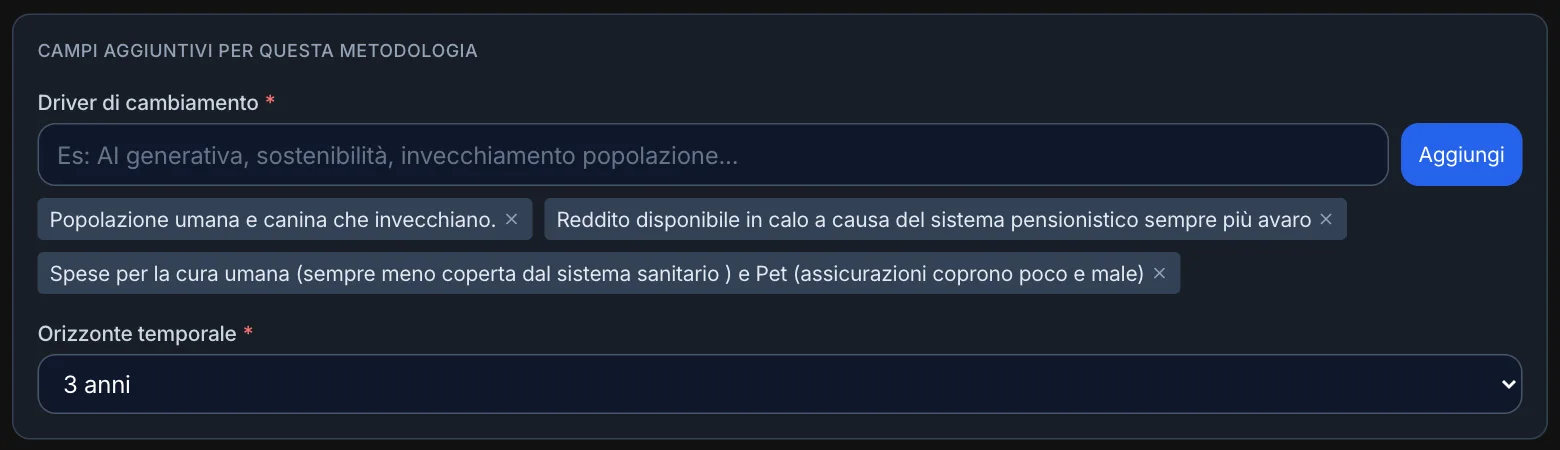
On top of the brief, Scenario asks for the drivers of change — here the aging of people and pets, retirees’ income, health coverage — and the horizon: one, two or three years.
Three futures,
described and put to the test.
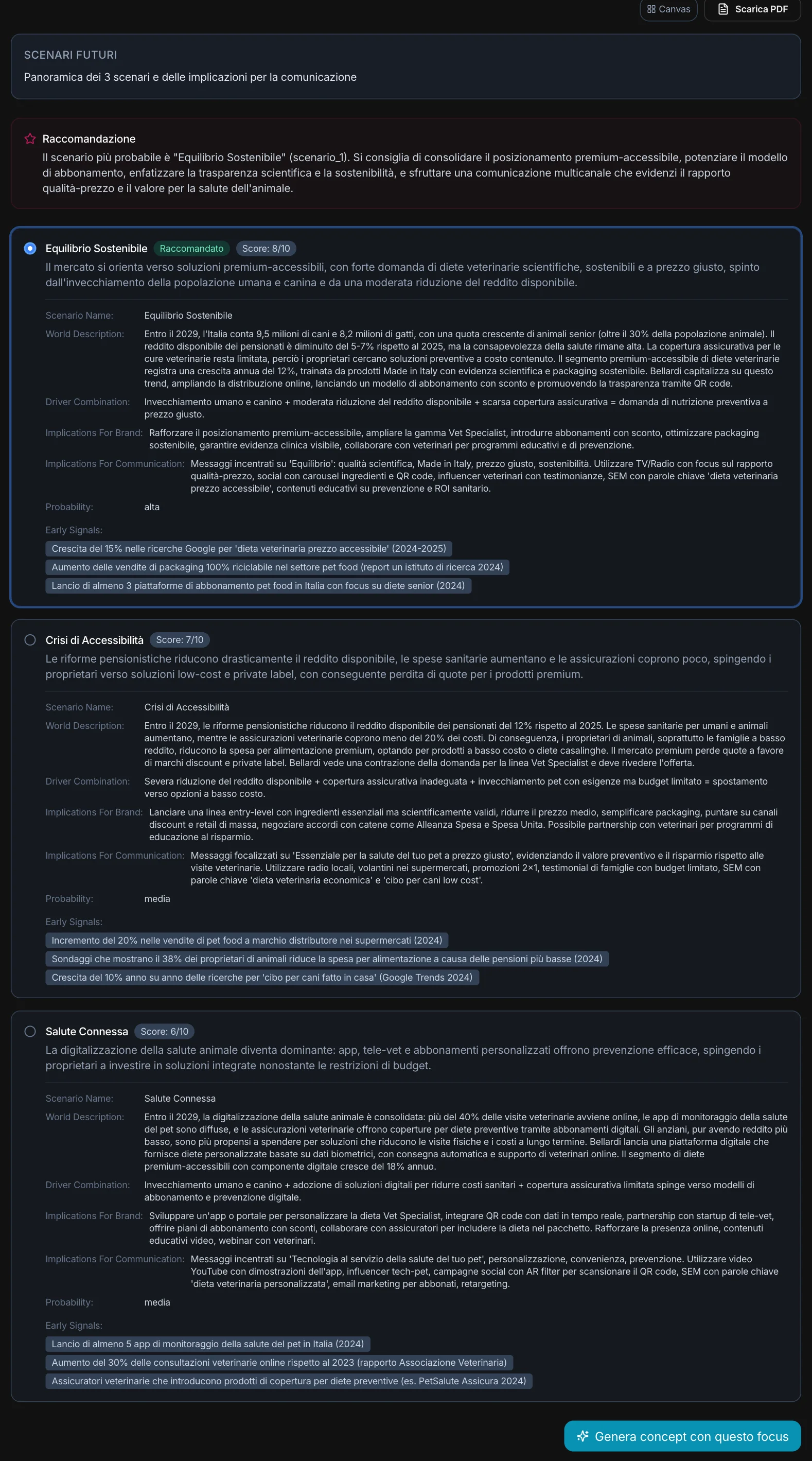
For each scenario: what the world looks like, which combination of drivers produces it, what it means for the brand and its communication, how likely it is, and the weak signals that announce it. Here: Sustainable Balance, Affordability Crisis, Connected Health. If you pick one other than the recommended one, the concepts give it more weight without dropping the others.
Cautious or bold,
in every future.
In the sustainable scenario, a fairly priced diet or the first climate-neutral one; in the affordability crisis, an essentials line or a partnership with discount stores; in connected health, a digital subscription or an AI-powered ecosystem. And the robust concept, which brings science, transparency and price together.
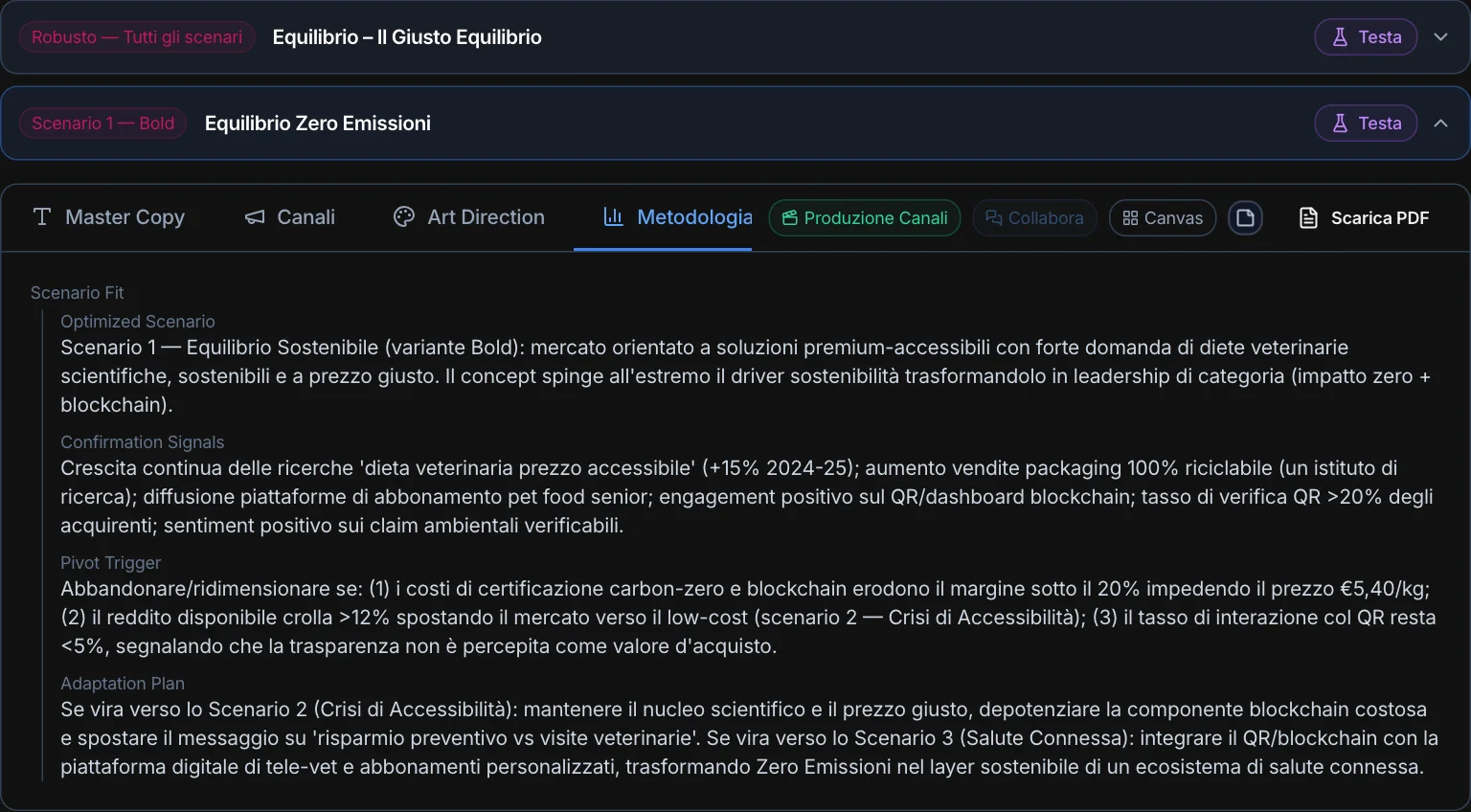
When to change course,
in the Methodology tab.
The development states which scenario it is built for, the signals that confirm the direction, the moment to drop it — margins, income, engagement — and how to adapt it if the future veers toward another scenario.
Alongside, the other tabs of every development: Master Copy, Channels, Art Direction, Execution.
The worst future,
you face it together.
On “Zero Emission Balance”, the bold concept of the first scenario: first you ask where it would perform worst, then you add a warning signal to the KPIs — in the Execution tab.
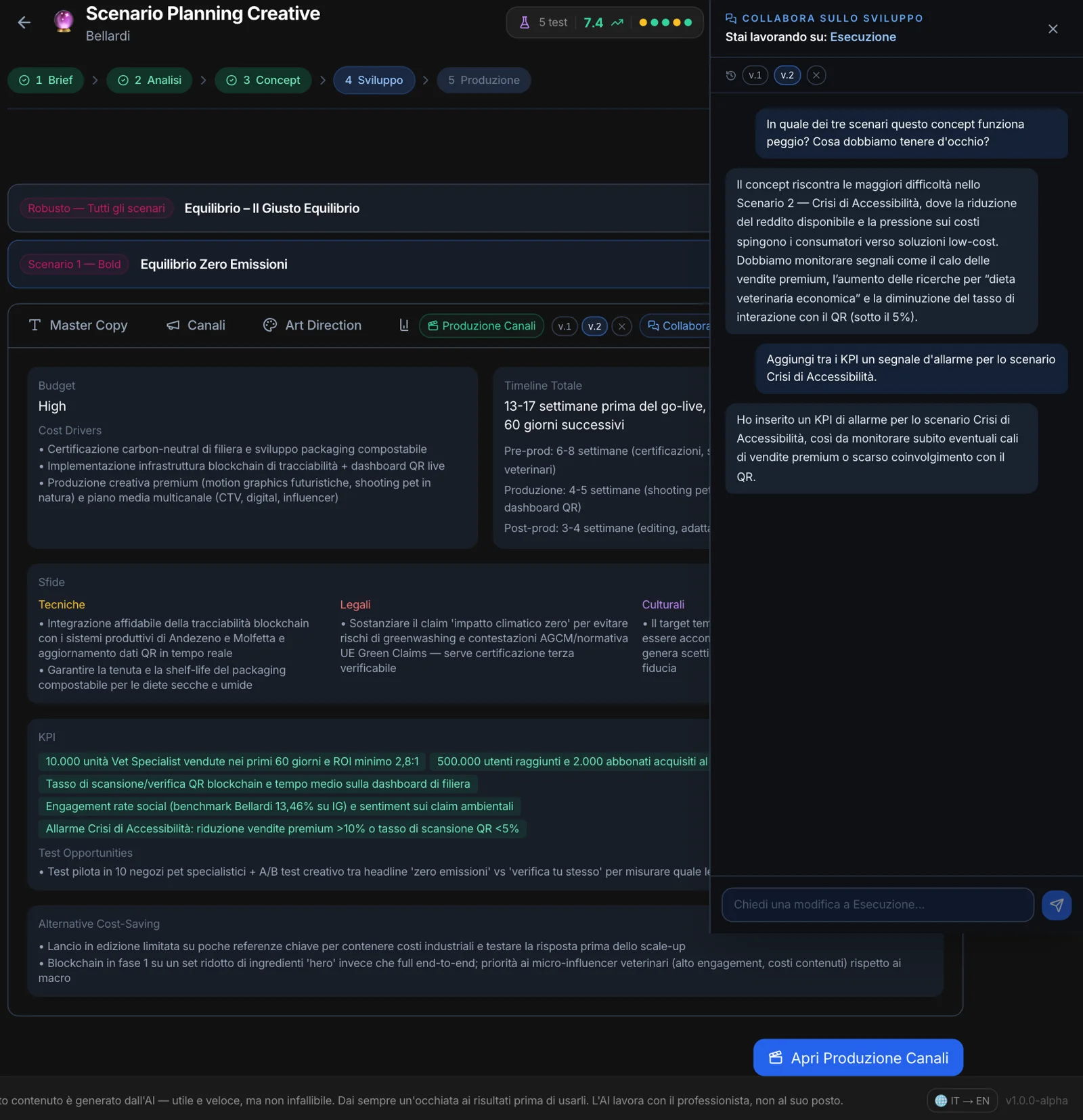
A question gets an answer and the document stays as it is. A change request touches only the open tab and creates a new version: the earlier ones stay, and you can go back with one click.
Test, production, prototype.
As with every method.
Test →
Every concept and every development in front of the project’s synthetic users, with the test history.
Channel Production →
The Strategic Direction by channel and the content: posts, storyboards, radio spots, out of home.
Prototype →
Mockups by channel on the Brand Kit and the simulated campaign, before you decide.