Six concepts,
three levels of courage.
The same tension, taken at three different intensities. So the client doesn’t pick “bold” or “cautious” sight unseen: they see them side by side.
Safe
They name the tension without taking sides: “Science and price: the dilemma of our four-legged friends”.
Balanced
They take a stand on one side, with balance: “Science at home, with no price surprises”.
Bold
They flip the tension forcefully: “Veterinary science? Free.”
When to use it
- When the brand wants to be relevant in the cultural debate and build a recognizable voice.
- When the whole category communicates the same way and a point of view is needed.
- When there is a clash of values the audience genuinely feels — and the brand has the right to speak about it.
The tensions,
weighed one by one.
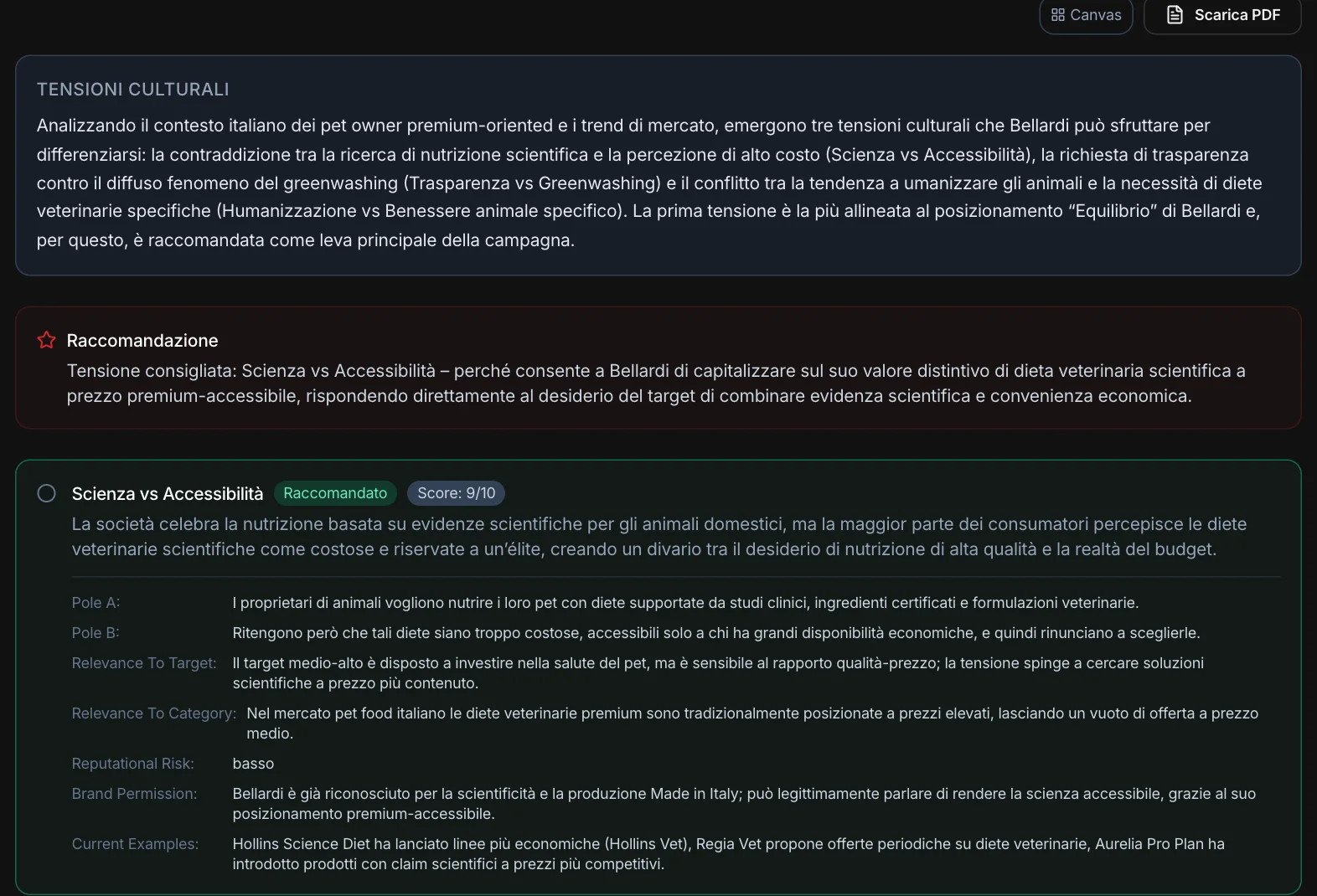
For each tension MAPS lines up the two poles — “I want science-based nutrition” versus “science costs too much” —, how much it matters to the target and the category, the reputational risk, the brand’s permission to speak about it and who is already using it. It recommends one, and you can choose another.
From dilemma
to revolution.
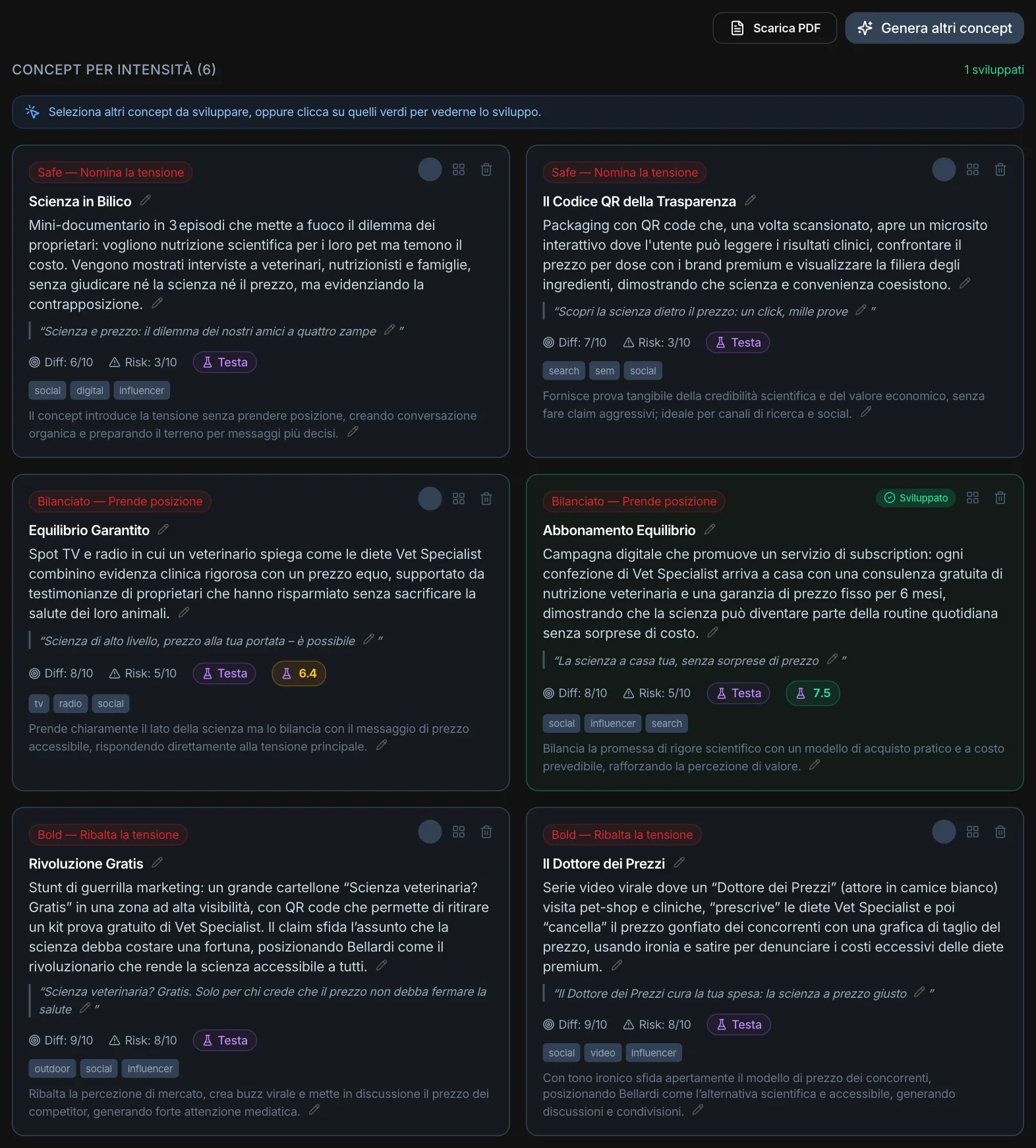
On the “Science vs Affordability” tension: two Safe concepts that tell it, two Balanced ones that promise science at a fair price, two Bold ones that flip it — all the way to “Free Revolution”. Differentiation and risk rise together, and you can see it.
The cultural context,
in the Methodology tab.
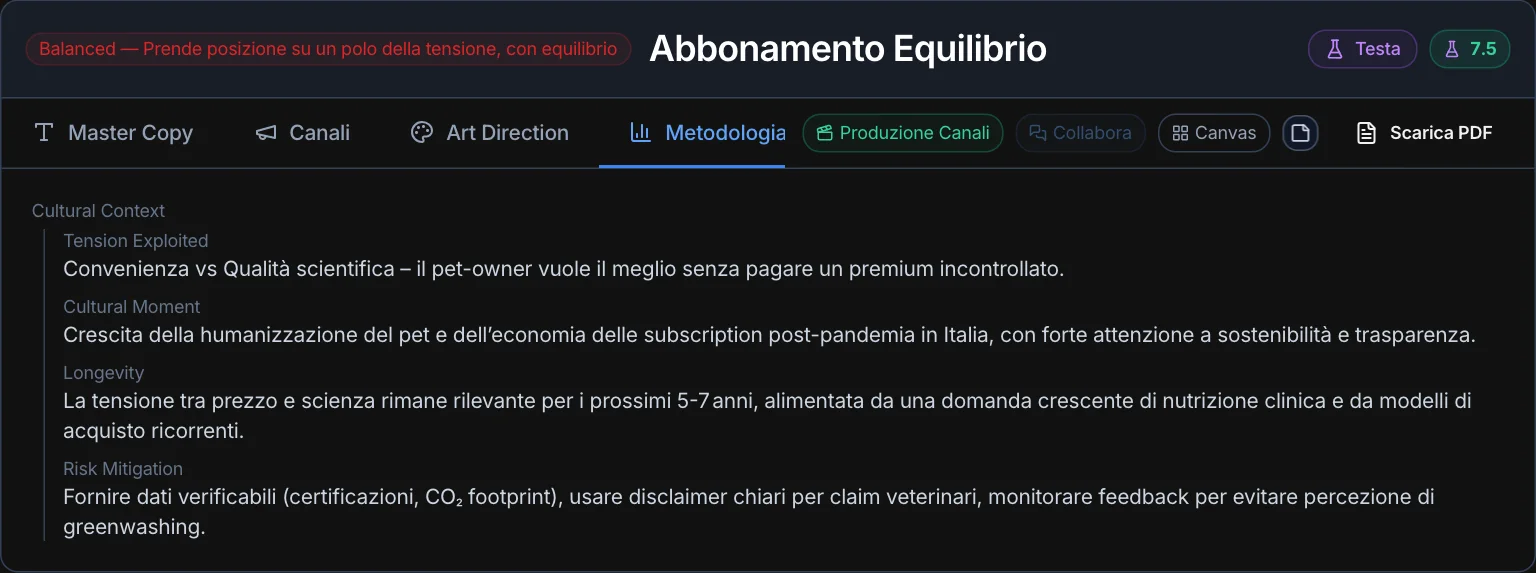
The development of a Tension concept states which tension it uses, the cultural moment it lands in, how long it will stay relevant and how to mitigate the risk: verifiable data, clear disclaimers, listening to feedback.
Alongside, the other tabs of every development: Master Copy, Channels, Art Direction, Execution.
How far to go,
you decide by talking it through.
Taking a stand is a choice to discuss, not to put up with. On “Balance Subscription”, a Balanced concept, first you ask who might feel judged; then you turn down the intensity of the copy.
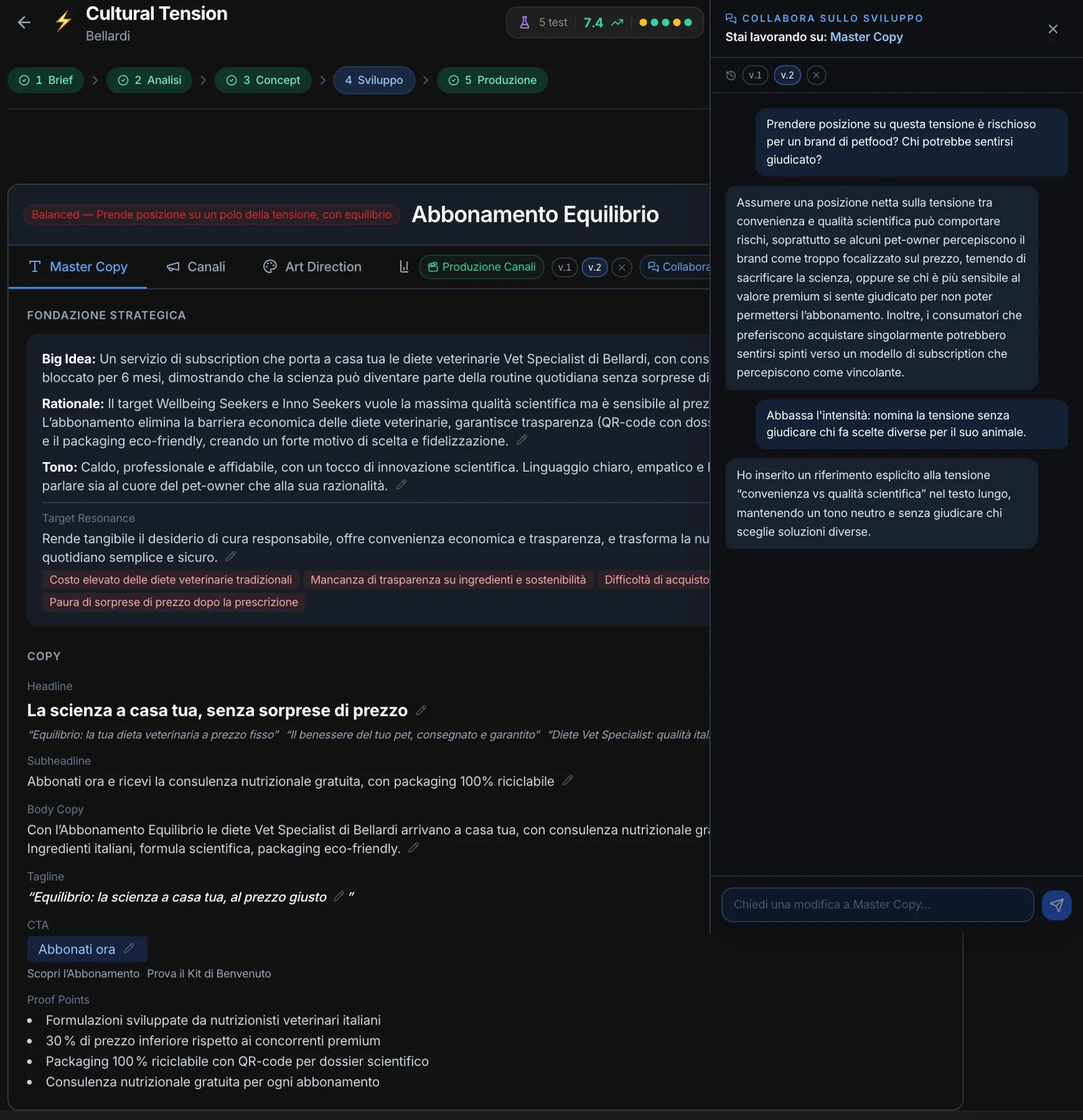
A question gets an answer and the document stays as it is. A change request touches only the open tab and creates a new version: the earlier ones stay, and you can go back with one click.
Test, production, prototype.
As with every method.
Test →
Every concept and every development in front of the project’s synthetic users, with the test history.
Channel Production →
The Strategic Direction by channel and the content: posts, storyboards, radio spots, out of home.
Prototype →
Mockups by channel on the Brand Kit and the simulated campaign, before you decide.