Six concepts,
four rungs.
A deliberate split: one concept on the product, one on the benefit, two on emotion, two on identity. That way you can compare what climbing is worth: brands that only talk attributes are replaceable, brands that own identity build barriers.
Attribute
The tangible feature: the full-canvas construction, the hand stitching.
Functional benefit
What it does for the wearer: the perfect fit, digital made-to-measure.
Emotional
How it makes you feel: the pride of wearing a story, quiet authority.
Identity
Who you become: the modern gentleman, the ambassador of Italian elegance.
When to use it
- When you want to take your communication beyond product features.
- When competitors are stuck on attributes and the next rung up is open.
- In B2B the ladder runs from technical attributes to benefits for the client’s business.
The ladder,
rung by rung.
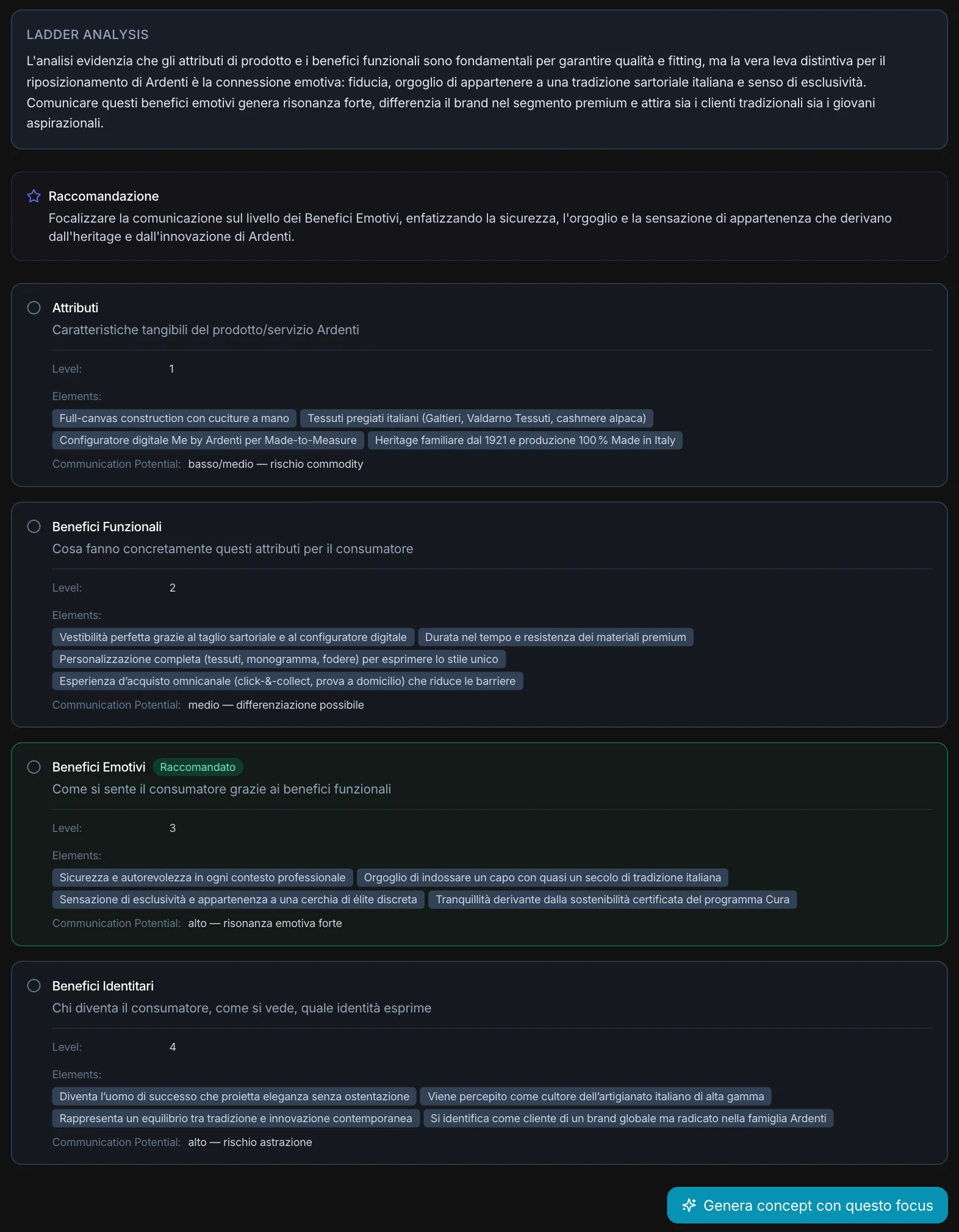
For each rung, the brand’s concrete elements — from the full-canvas construction to the digital configurator, from the fit to the pride in a tradition — and their communication potential: low on attributes (“commodity risk”), high on emotions. One rung is recommended; you choose the focus.
From the canvas
to the modern gentleman.
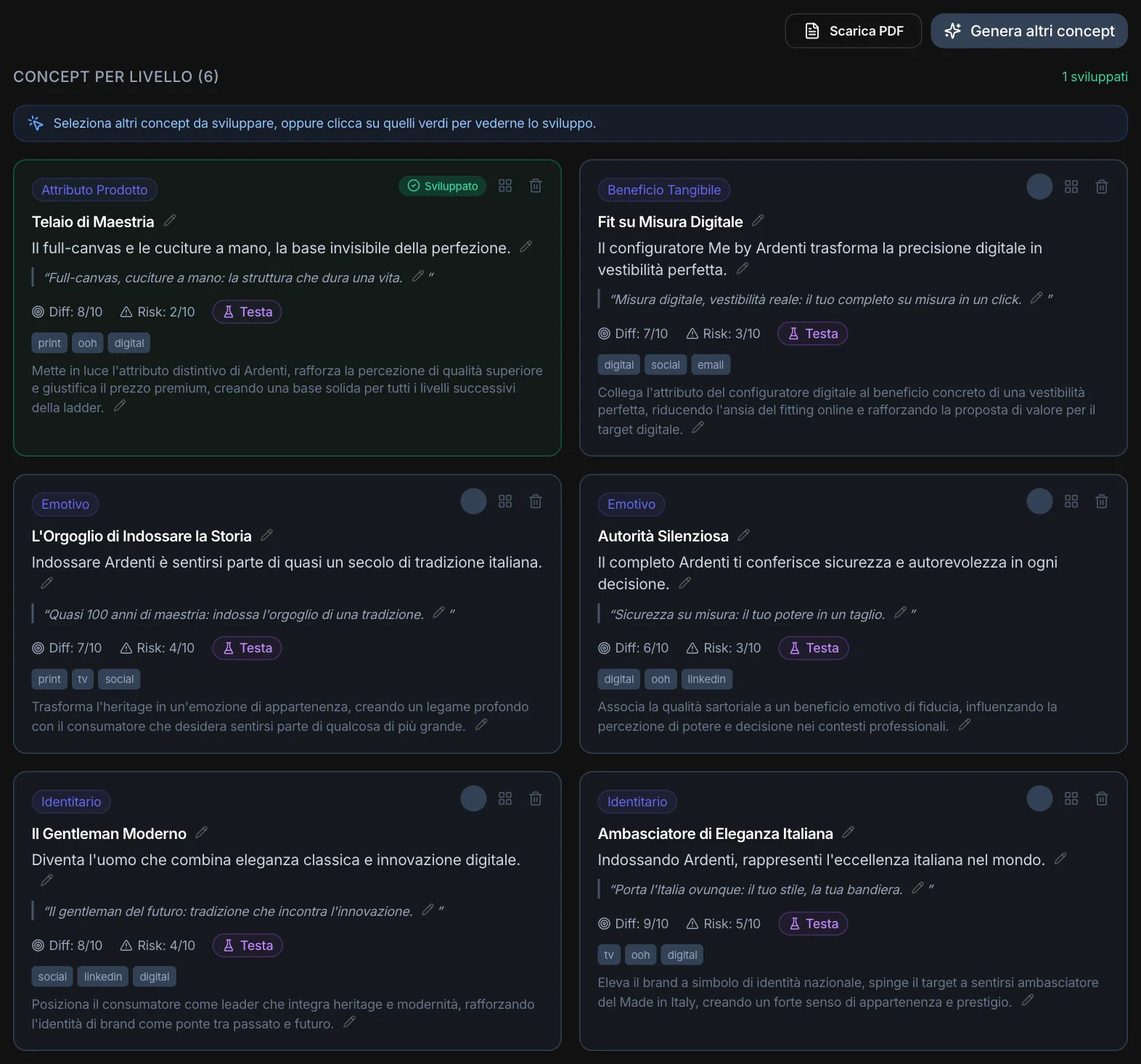
“Canvas of Mastery” sits on the attribute, “Digital Made-to-Measure Fit” on the benefit, “The Pride of Wearing History” on emotion, “The Modern Gentleman” on identity. The higher you climb, the more differentiation grows — and so does the risk of abstraction.
The climb,
in the Methodology tab.
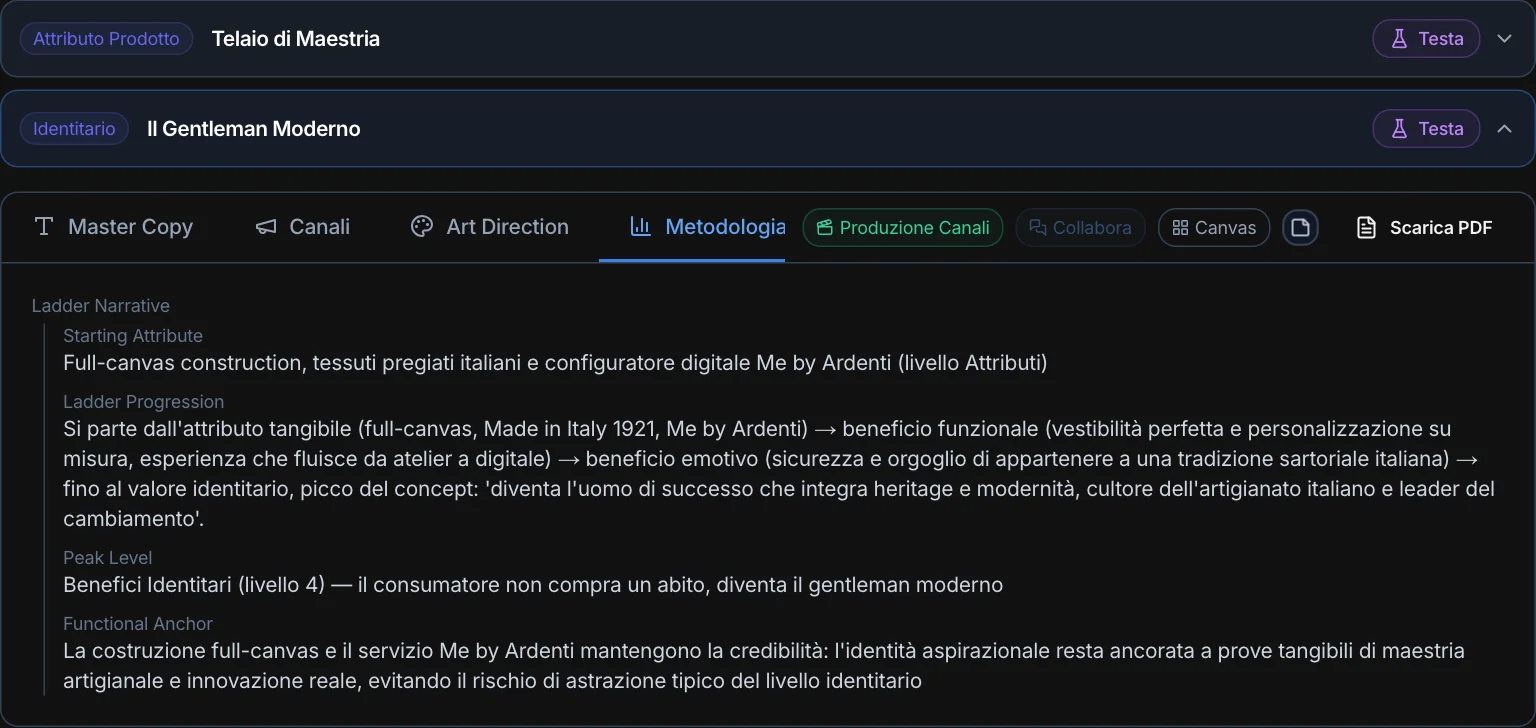
The development tells its own climb: the starting attribute, the rungs it crosses, the point where the message peaks — and the functional anchor that keeps the identity credible, so it doesn’t turn into a slogan.
Alongside, the other tabs of every development: Master Copy, Channels, Art Direction, Execution.
Which rung,
you decide together.
On “The Modern Gentleman”, an identity concept: first you ask where it sits on the ladder and why, then you ask it to step down one rung — keep the identity, but tie the headline to a concrete emotion.
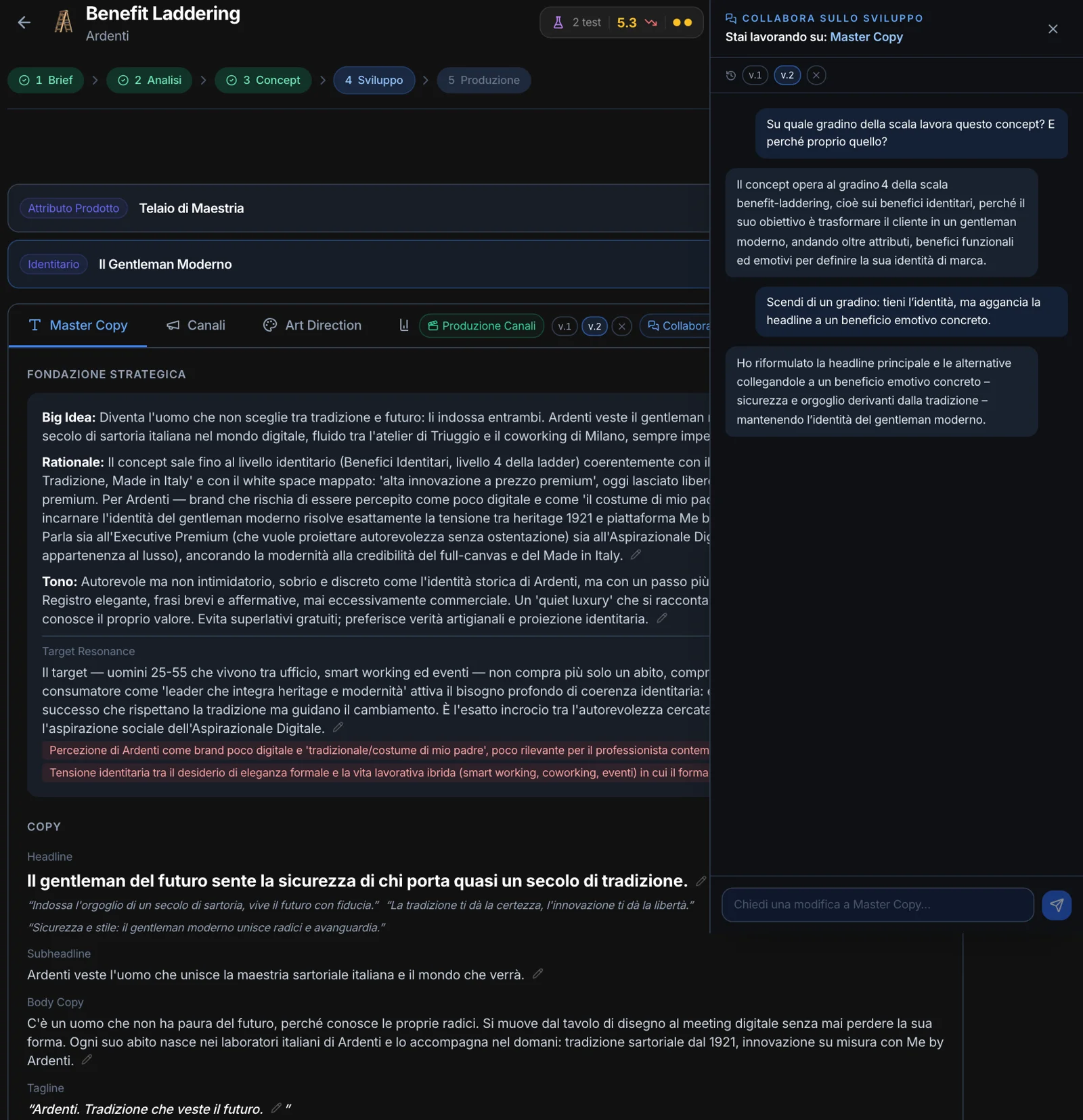
A question gets an answer and the document stays as it is. A change request touches only the open tab and creates a new version: the earlier ones stay, and you can go back with one click.
Test, production, prototype.
As with every method.
Test →
Every concept and every development in front of the project’s synthetic users, with the test history.
Channel Production →
The Strategic Direction by channel and the content: posts, storyboards, radio spots, out of home.
Prototype →
Mockups by channel on the Brand Kit and the simulated campaign, before you decide.