
Six concepts,
three dimensions of the job.
The concepts aren’t six variations of the same message: they cover three different ways of telling the job. So, even before developing, you see which door works.
Trigger
The moment of need: the promotion, the wedding, the new season. The campaign shows up when the job kicks in.
Transformation
The before and after: from guessing your size online to the perfect suit in three weeks.
Emotional / Social
How the person doing the job wants to feel and be seen: confident, recognized, part of something.
When to use it
- When you want to communicate the value buyers perceive, not a list of features.
- When there are specific moments that trigger the purchase, and you want to be there.
- In B2B the job belongs to the decision-maker: securing supply, fulfilling orders, protecting margin.
The main job,
and two alternatives.
For each job MAPS writes the statement (“when… I want… so I can…”), the functional, emotional and social dimensions, the situation that triggers it, the solutions the customer uses today and the needs still unmet. Each job has a score; one is recommended, but you choose the focus, and the concepts follow it.
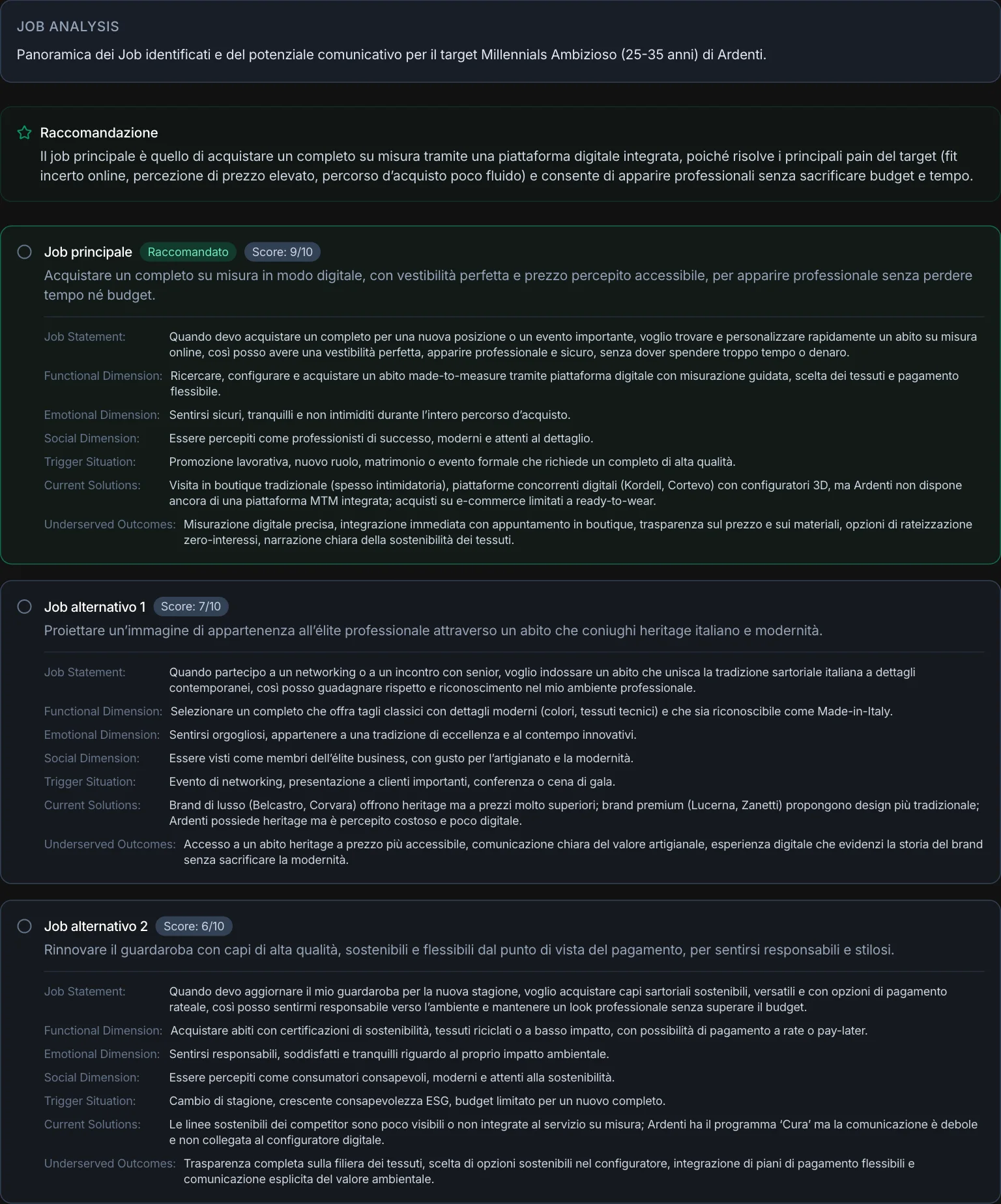
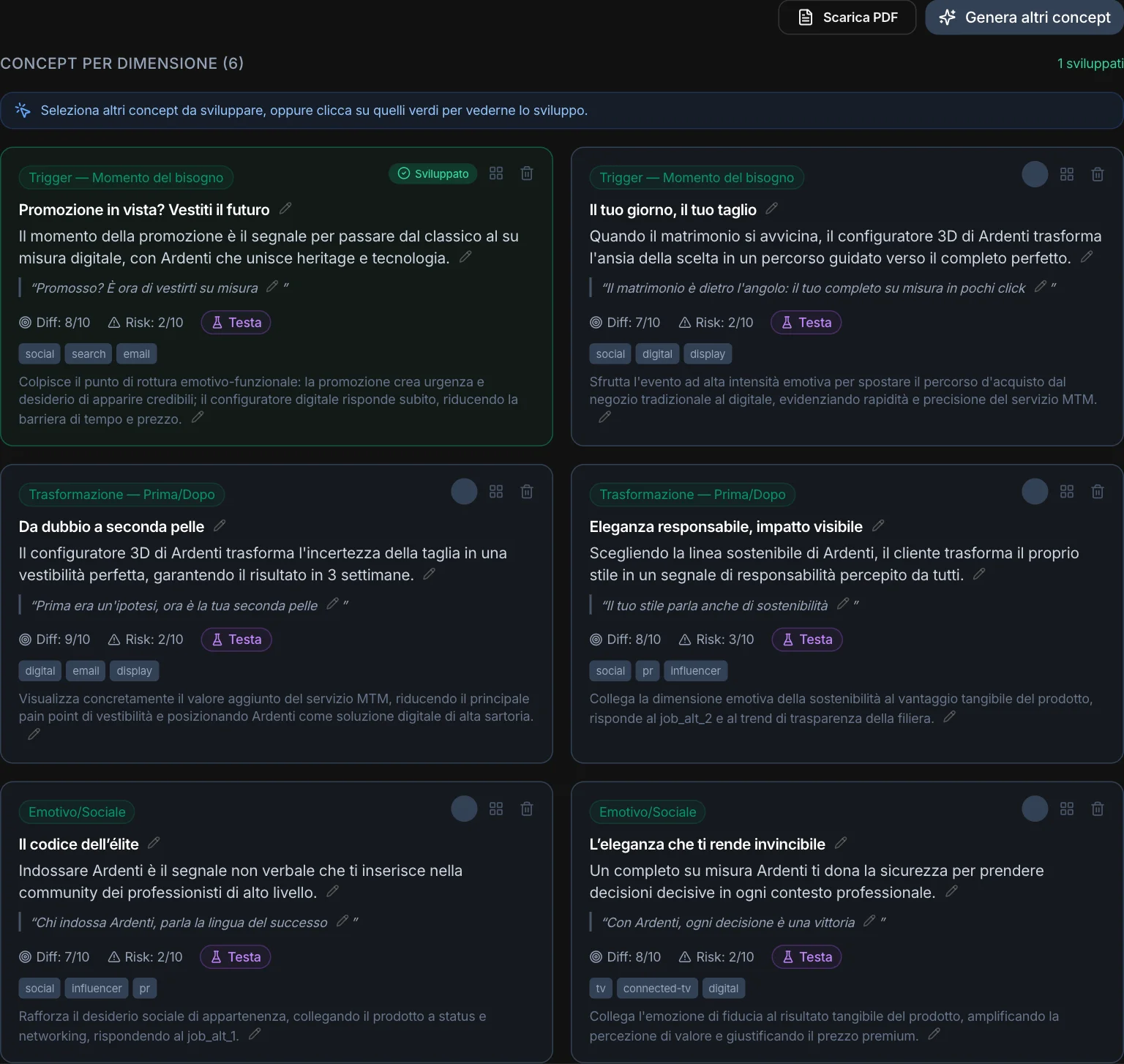
Two triggers, two transformations,
two emotional.
“Promotion ahead? Dress for the future” hooks into the moment of promotion; “From doubt to second skin” tells the before and after; “The code of the elite” works on belonging. Each with headline, channels, differentiation and risk — and the button to test it with synthetic users.
The job story,
in the Methodology tab.
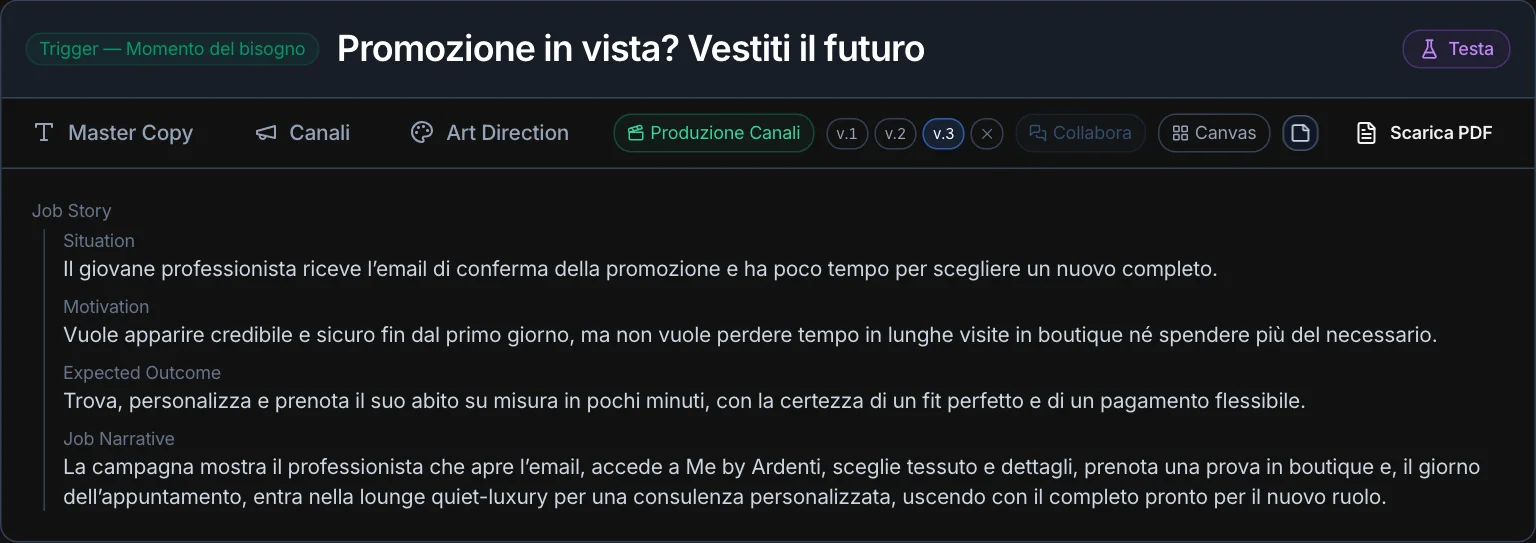
The development of a JTBD concept carries its job story: the situation, the motivation, the expected outcome — and the campaign narrative that stages them, from the promotion email to the fitting in the boutique.
Alongside, the other tabs of every development: Master Copy, Channels, Art Direction, Execution.
The first draft,
you write it together.
The development is a draft to work on, not a verdict. Open Collaborate and reason with it as you would with a colleague: ask why, ask for changes. Here, on the concept “The ritual of the thread”, first a question about the visual metaphor, then a request about the headline.
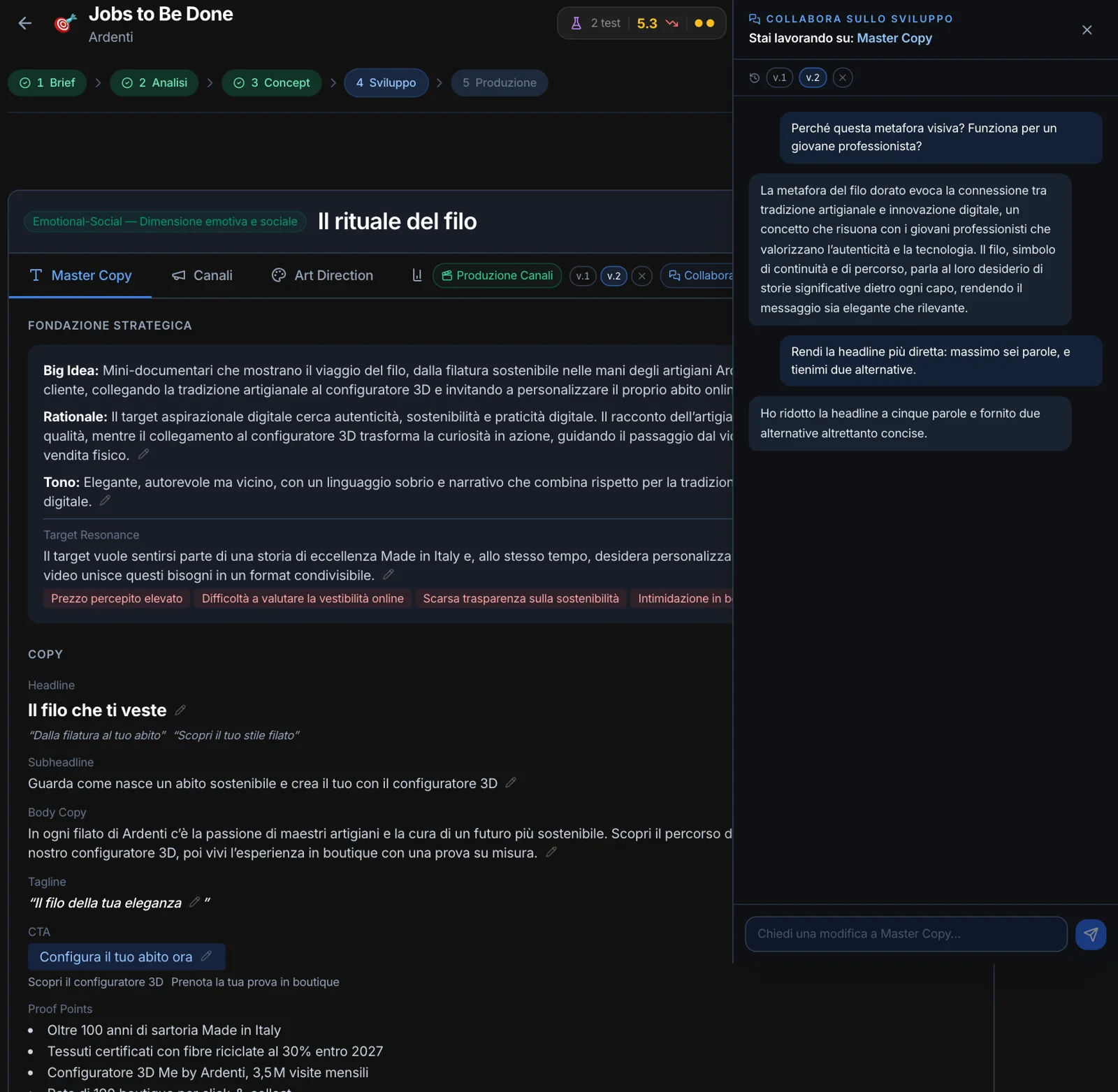
A question gets an answer and the document stays as it is. A change request touches only the open tab and creates a new version: the earlier ones stay, and you can go back with one click.
Test, production, prototype.
As with every method.
Test →
Every concept and every development in front of the project’s synthetic users, with the test history.
Channel Production →
The Strategic Direction by channel and the content: posts, storyboards, radio spots, out of home.
Prototype →
Mockups by channel on the Brand Kit and the simulated campaign, before you decide.