The method, in five steps
1. Write down the assumptions
Every strategy rests on statements taken to be true: “customers would pay more for made-to-measure online”, “the buyer would accept a new assortment”. Writing them down explicitly is already half the work.
2. Find the riskiest ones
Rank the assumptions by importance (if it’s false, does the strategy collapse?) and by available evidence (how much do we actually know?). The most important and least proven ones get tested first.
3. Decide up front what counts as evidence
Before the test, set the criterion: “if fewer than 20% of visitors request an appointment, the assumption doesn’t hold”. Deciding afterward leads you to read the results the way you’d like.
4. Choose the cheapest test
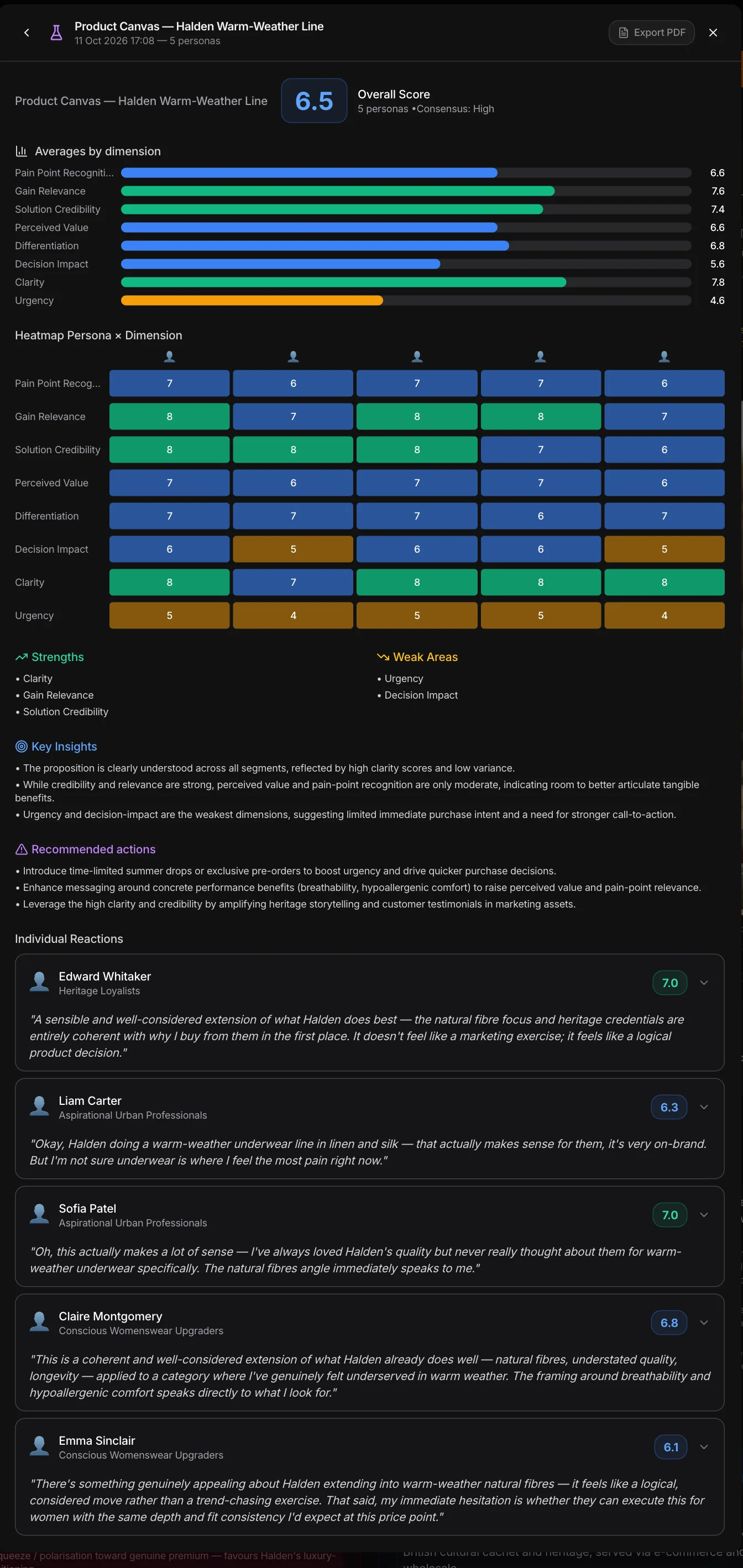
Tests vary in strength and cost: customer conversations, surveys, prototypes, test pages, A/B tests, pilot sales. Start with the fastest to weed out weak ideas, and move up in strength only for the ones that hold. Simulations with synthetic users can serve as a pre-test, to prepare questions and discard the most fragile assumptions — they don’t replace testing with real customers.
5. Learn and decide
Every test ends in a decision: continue, change course, stop. Recording what you learned — and why you decided as you did — keeps you from repeating the same mistakes.
The most common mistakes
- Testing what you already know. A test should try to disprove, not to confirm.
- Criteria set after the fact. Every result becomes a success.
- Leading questions. “Wouldn’t it be convenient to be able to…?” always gets a yes.
- Jumping straight to the most expensive test. A pilot launch to check an assumption an interview would have disproved.
- Mistaking interest for purchase. Saying “I like it” costs nothing; paying doesn’t.