What they do well
- React to a stimulus. A concept, a message, a page, a price: they tell you what they understand, what convinces them, what holds them back.
- Surface objections. Often ones the team hadn’t thought of.
- Compare alternatives. Two messages, three concepts, in front of the same profiles.
- Prepare the real research. They help you write better questions for customer interviews.
What they can’t do
- Predict the numbers. They can’t tell you how many people will buy, or at what price, with any certainty.
- Replace a representative sample. When you need a measurement that holds up, you need real people.
- Surprise you beyond the data. They know what the data they are built on contains, plus what the model knows in general.
How to use them well
1. Build them on real data
A synthetic user is only as good as the data it comes from: analyzed segments, reviews, conversations, CRM customers. Characters dreamed up from scratch produce the answers the team expects.
2. Know what they rest on
Every profile should say which data it comes from and what is missing. A profile built on little data should be read with more caution.
3. Ask neutral questions
Leading questions work on simulated people too: “don’t you think it would be convenient…?” gets a yes. Ask what they would do, not whether they like it.
4. Show the real stimulus
An image, a PDF, a page, a website: reacting to something concrete tells you far more than reacting to a description.
5. Put people up against each other
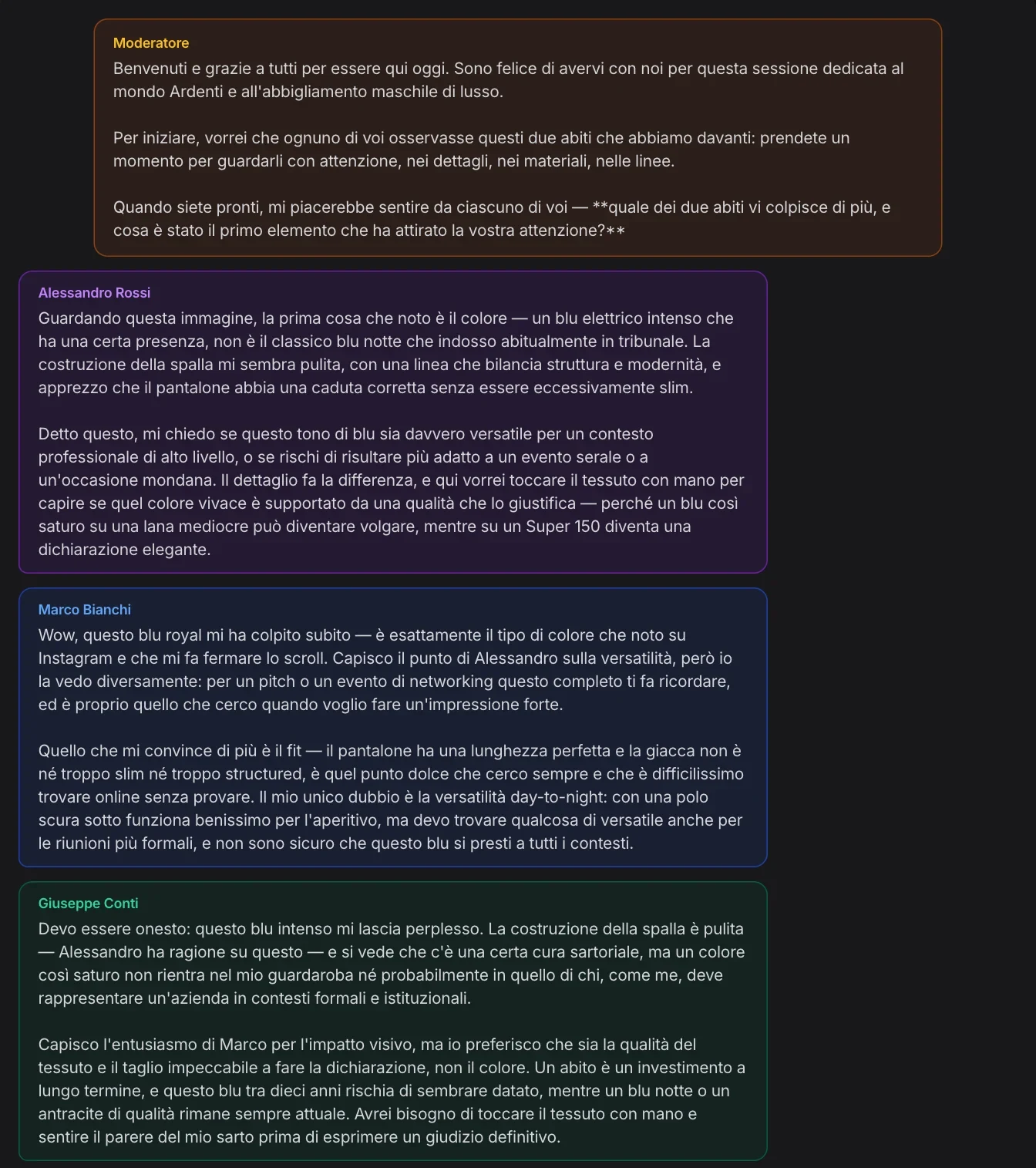
In a focus group, positions contradict each other and shift: tensions emerge that a one-on-one interview doesn’t reveal.
6. Check against the market
Whatever holds up in front of synthetic users must then be tested with real customers, against a criterion decided in advance.