
MAPS Intelligence
Resources/Practical Guides
Practical Guides · 8 min read

Hospitality: reputation, the competitive set and the seasons to fill

For hotels, restaurants and venues: how to read your real competitive set, your reviews, the mix of direct and intermediated bookings, and the occasions worth owning.

Updated October 6, 2026 · MAPS editorial team
In brief

In hospitality — hotels, restaurants, venues — the business lives on occupancy and reputation. The market is read through the real competitive set (same destination or catchment area, same tier, plus the customer’s alternatives), reviews, the mix of direct and intermediated bookings, and the seasons or nights that need filling.

Not just hotels

A hotel, a restaurant and a nightlife venue share the same logic — capacity to sell, a reputation to protect — but not the same metrics or timelines. For a hotel, what counts is occupancy rate, average daily rate and revenue per available room; for a restaurant, covers and average check; for a venue, attendance per night and the mix of admissions, bar and events. For a venue, the “booking window” is often the same evening.

How to read the market, in five steps

1. The real competitive set

Properties in the same destination or catchment area, in the same tier, plus the customer’s alternatives: a vacation rental instead of the hotel, a pub instead of the restaurant, another destination.

2. Reputation

Review scores and volume, the themes that get praised and the ones that get criticized — yours and your competitors’. In hospitality, reviews are often the number-one conversion driver.

3. Direct and intermediated

How much comes from booking platforms and how much comes direct, and what the commissions cost. Shifting even part of your bookings to direct changes your margins.

4. Guests, occasions and origins

Who comes, for what occasion — business, vacation, dinner, an event — and from where: the source market for a destination, the local catchment for a venue.

5. The seasons to fill

Slow periods, local events, local partnerships, ancillary revenue. Where you can grow without cutting the price.

The most common mistakes

  • A competitive set that’s too narrow. The customer’s alternatives aren’t only properties just like yours.
  • Reading reviews only as a score. What matters is the themes, and how they change over time.
  • Depending on intermediaries without measuring what they cost.
  • Applying hotel metrics to a venue. The timelines and the levers are different.
How MAPS does it

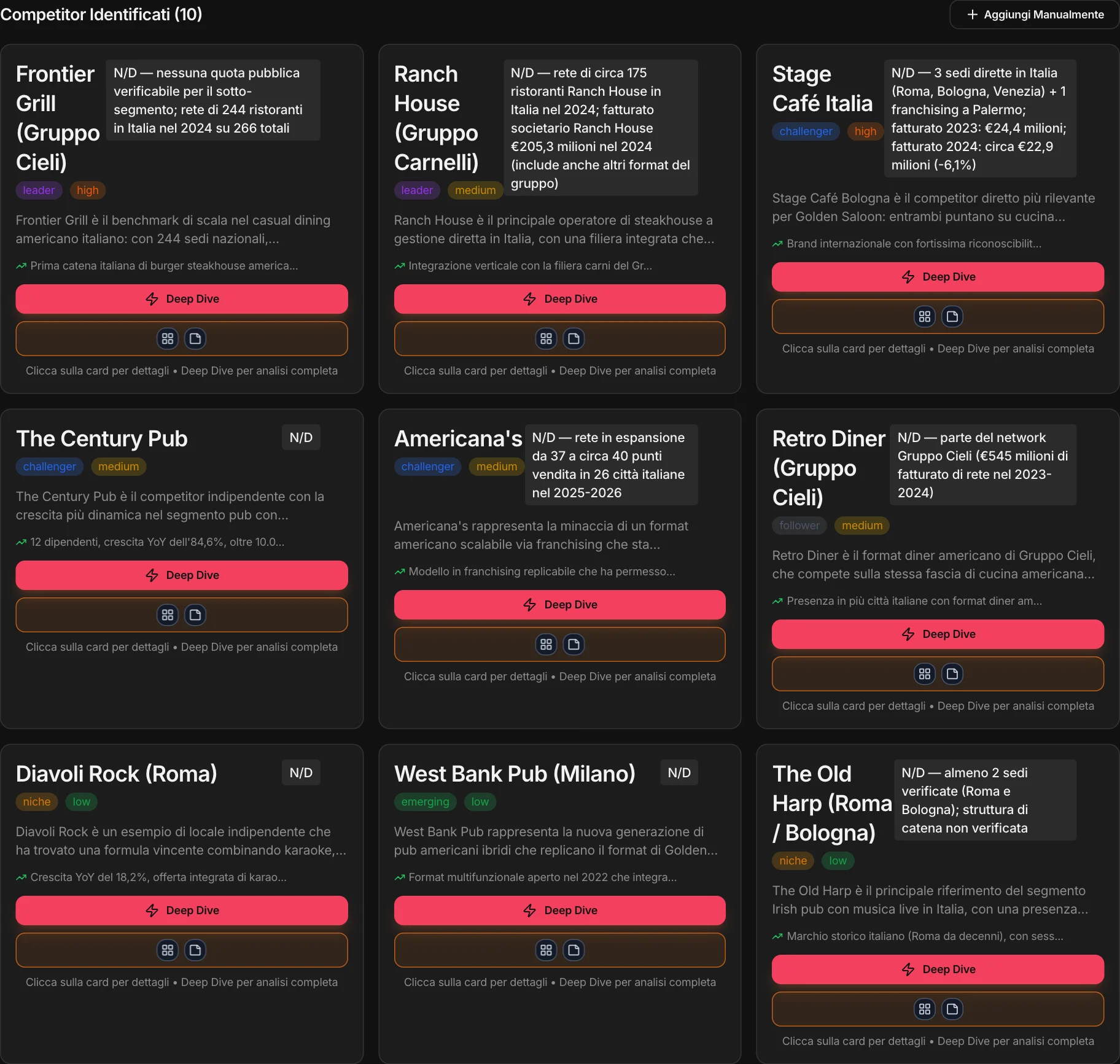
With the Hospitality industry profile, MAPS builds the competitive set by occasion and destination, including substitutes in different formats; a competitor deep dive focuses on reputation — what customers praise and what they complain about; go-to-market looks at the channels revenue comes from, direct and intermediated; guests are read by occasion and origin. The Analyze tools reason about revenue management, intermediated share and the seasons to fill, and across several countries they compare seasonality and calendars. KPIs that aren’t public are marked N/A.

The competitive set of an American-food and karaoke venue in MAPS: chains, independent venues and new entrants (fictional names)

Frequently asked questions

Does it work for restaurants and venues, or only hotels?

For all of them: the Hospitality profile reads the metrics, channels and timelines specific to each type of business — lodging, food service, nightlife and entertainment.

Does MAPS connect to booking platforms?

No: it reads public sources, reviews included. Your own booking data can be uploaded as files.

Does it know competitors’ occupancy?

Only if it’s public. Unavailable numbers are marked N/A.

What is a competitive set?

The properties a customer actually compares you with: same destination or catchment area, same tier, and the alternatives for the same occasion.

Written by the MAPS editorial team with the help of AI, checked and reviewed by the team.

Related articles
Practical Guides·8 min di lettura

Retail: reading the catchment area, competing banners and store customers

For retailers: how to read a market made of stores, assortment and perceived price, and why your competitors are the other banners in your catchment area.

Read →
Methodology·9 min di lettura

Social Listening: how to listen to the market and turn it into insight

Don’t count mentions: understand what the market is saying, in which language, on which platforms. How to set up your searches, read themes and sentiment, and put what you find to use.

Read →
Strategic Tools·10 min di lettura

Customer Journey Map: how to build it channel by channel

Stages, touchpoints, emotions and critical moments of the buying journey: why a journey per channel is worth more than a generic one, and how to use it to decide where to act.

Read →