The everyday questions
- Where is the category heading, and what are competitors doing?
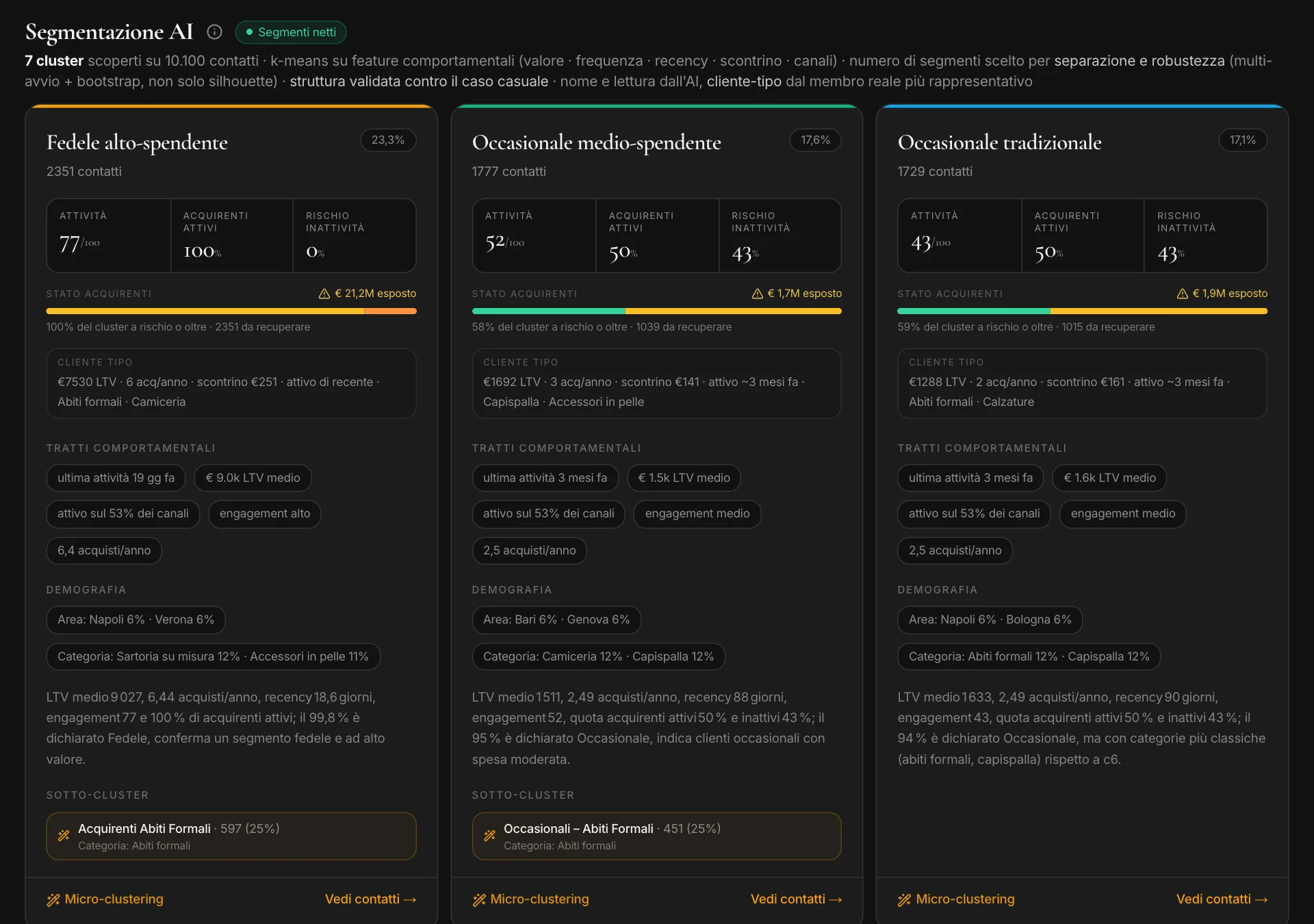
- Who are our customers really, and which ones are we losing?
- Is our ad spend bringing in customers, or just clicks?
- Of the ideas on the table, which one is worth investing in?
- Why did we decide the way we did last year?
A five-step method
1. A market picture that stays current
Competitors, channels, consumers, communication and conversations, with sources and dates. Category news read on a regular schedule, and the picture regenerated when the market shifts: the difference between two readings is often the most useful information you have.
2. The data you already have
Customers in your CRM, ad spend, the research you’ve bought over the years. Set next to the market, they tell you things they can’t tell you on their own: which customer groups are worth the most, which are at risk, which spend brings in real customers.
3. The options, side by side
For every important decision, at least two paths, compared on the same criteria: demand, brand fit, cost, risk.
4. Test before you spend
Concepts, messages, offers: put in front of simulated people built on the market’s segments or on your real customer groups, so weak ideas get dropped while it’s still cheap. Then, for the ideas that hold up, tests with real customers.
5. The decision, with its reasoning
What was decided, on what evidence, and what was ruled out. That’s what makes a choice defensible in front of leadership — and what saves you from having the same arguments all over again.
The most common mistakes
- Building the market picture once a year. By the time the decision comes, it’s already out of date.
- Customer data and market data living in two separate worlds. You lose the cross-reading.
- Measuring clicks instead of customers. Cost per click doesn’t tell you cost per customer.
- Decisions with no memory. The reasons walk out the door with the people.