What it’s for
- Product development — which gaps to close first.
- Communication — which advantages to lean on, because they’re real and hard to copy.
- Pricing — whether they justify a premium, or you’re at parity and price has to stay with the market.
- Sales — the basis for a battlecard to handle objections.
How to build it
1. Pick the right competitors
The ones the customer actually compares you with, not the most famous ones. Two to four are enough to read the matrix.
2. Pick features from the customer’s side
Group them by category. Include the ones where you’re weak: a matrix of strengths only won’t help you decide anything. The features competitors list on their own websites are a good starting point.
3. Score on a scale, with the reason
A 1-to-5 scale is enough. Next to each score, the reason: a score with no rationale can’t be discussed or corrected.
4. Read the three zones
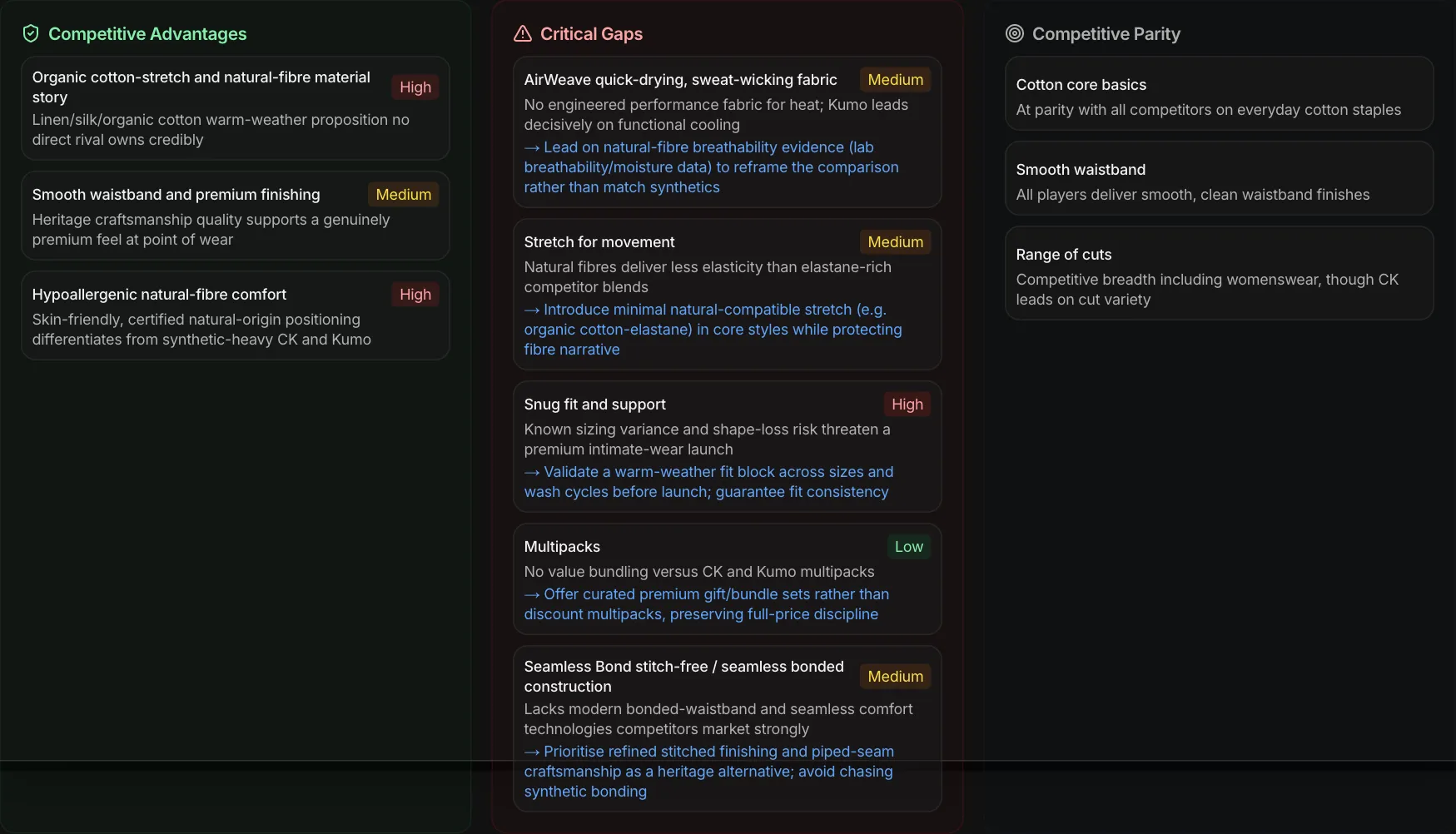
Advantages: you’re ahead on features that matter. Gaps: you’re behind, and the severity has to be assessed — a gap on an essential feature weighs more than ten on nice-to-haves. Parity: you don’t win there, you avoid losing.
5. Priorities come out of it
What to close, what to defend, what to communicate. If the matrix doesn’t change any decision, it was too generic.
The most common mistakes
- Features chosen to win. The matrix becomes promotional material, not analysis.
- Yes/no instead of a score. Two products can have the same feature done very differently.
- All features weigh the same. Gaps and advantages have to be read by their importance to the customer.
- Stale competitor data. Features change: the matrix needs updating.