
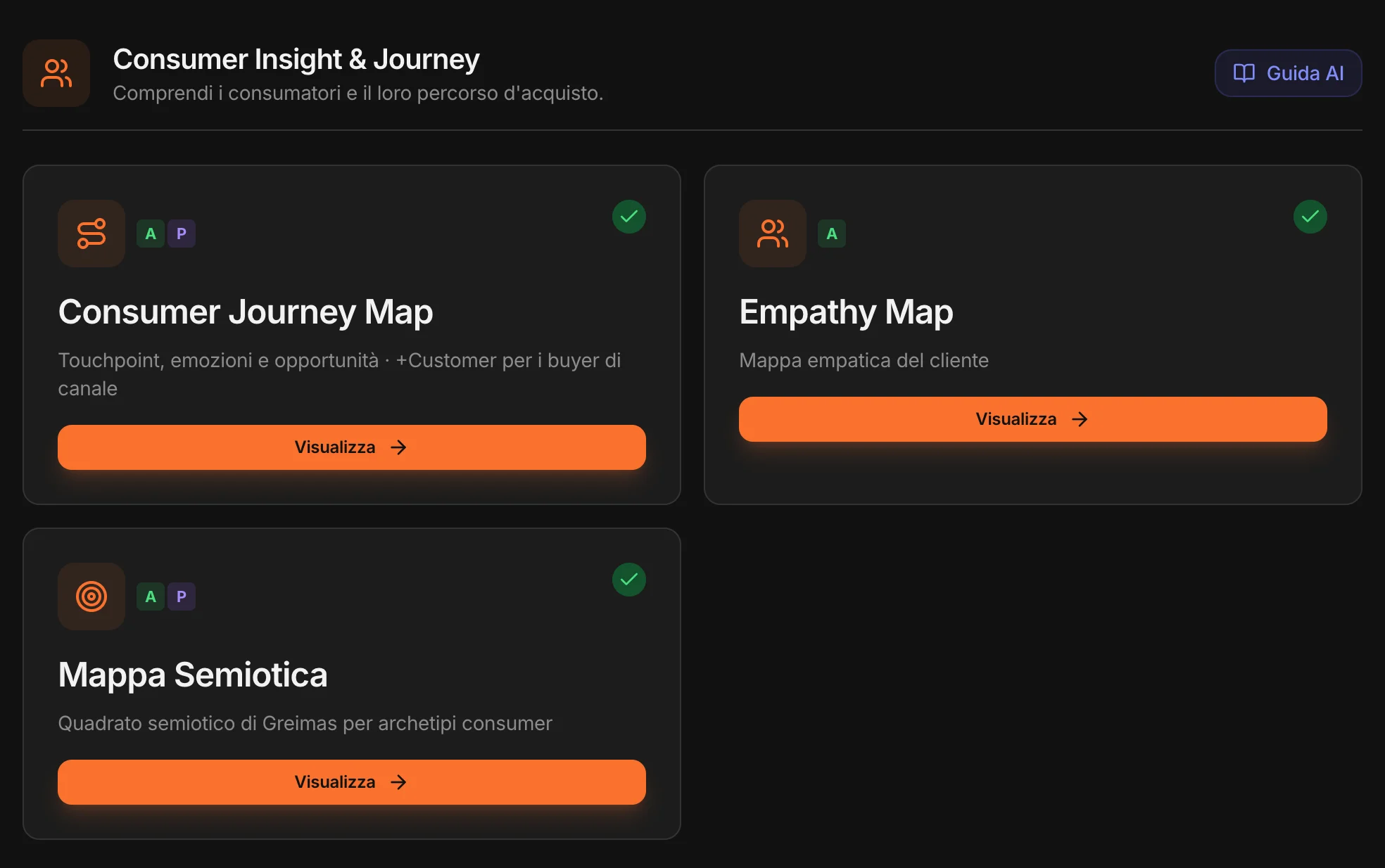
Three tools.
Three questions.
In B2B the category becomes “Customers, Decision-makers & Journey”: the business customer’s journey, the decision-maker’s map.
Not one journey.
One for each channel.
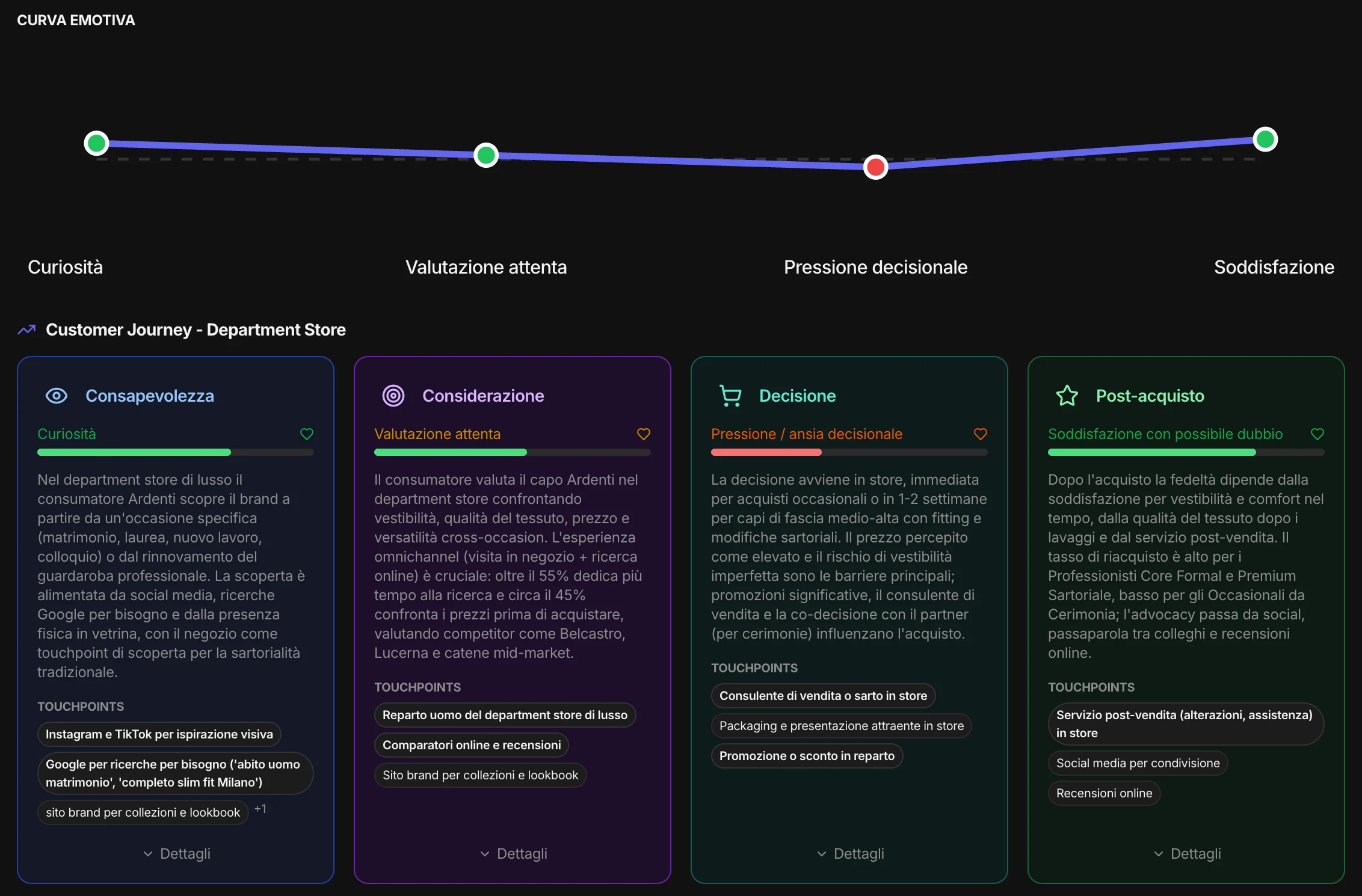
Someone who buys in a department store doesn’t follow the same path as someone who buys in a multi-brand store or online. MAPS starts from the channels Consumer Focus has analyzed and builds the journey for each one — or a synthesis of all of them.
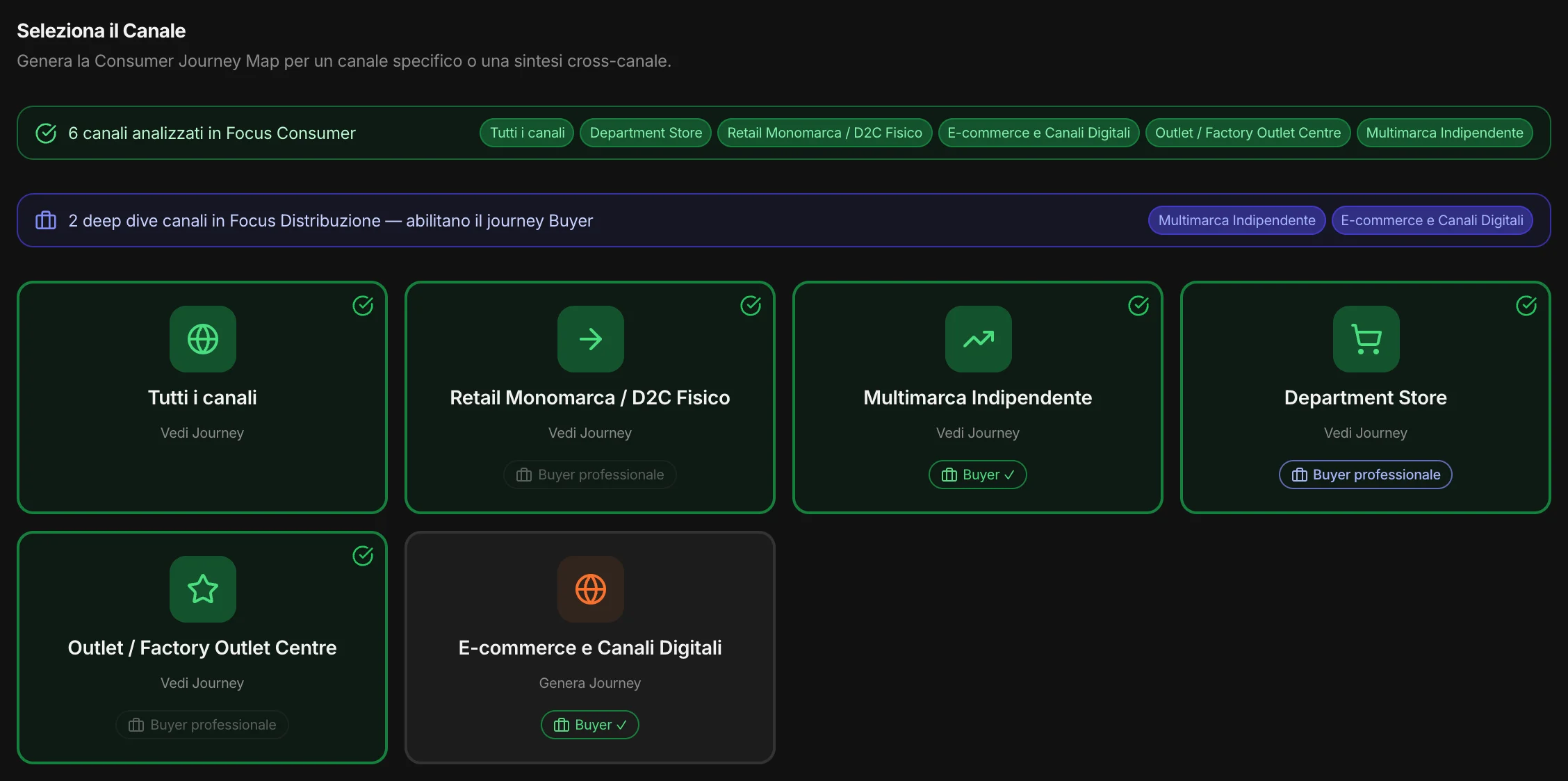
Same channel, two journeys.
When you sell through a retailer, before the end customer there’s the person who decides to put you in the store. The buyer has a different journey — scouting, the sample collection, the terms, the order, the reorder — and different moments of tension. MAPS builds it from the channel analysis in Distribution Focus.
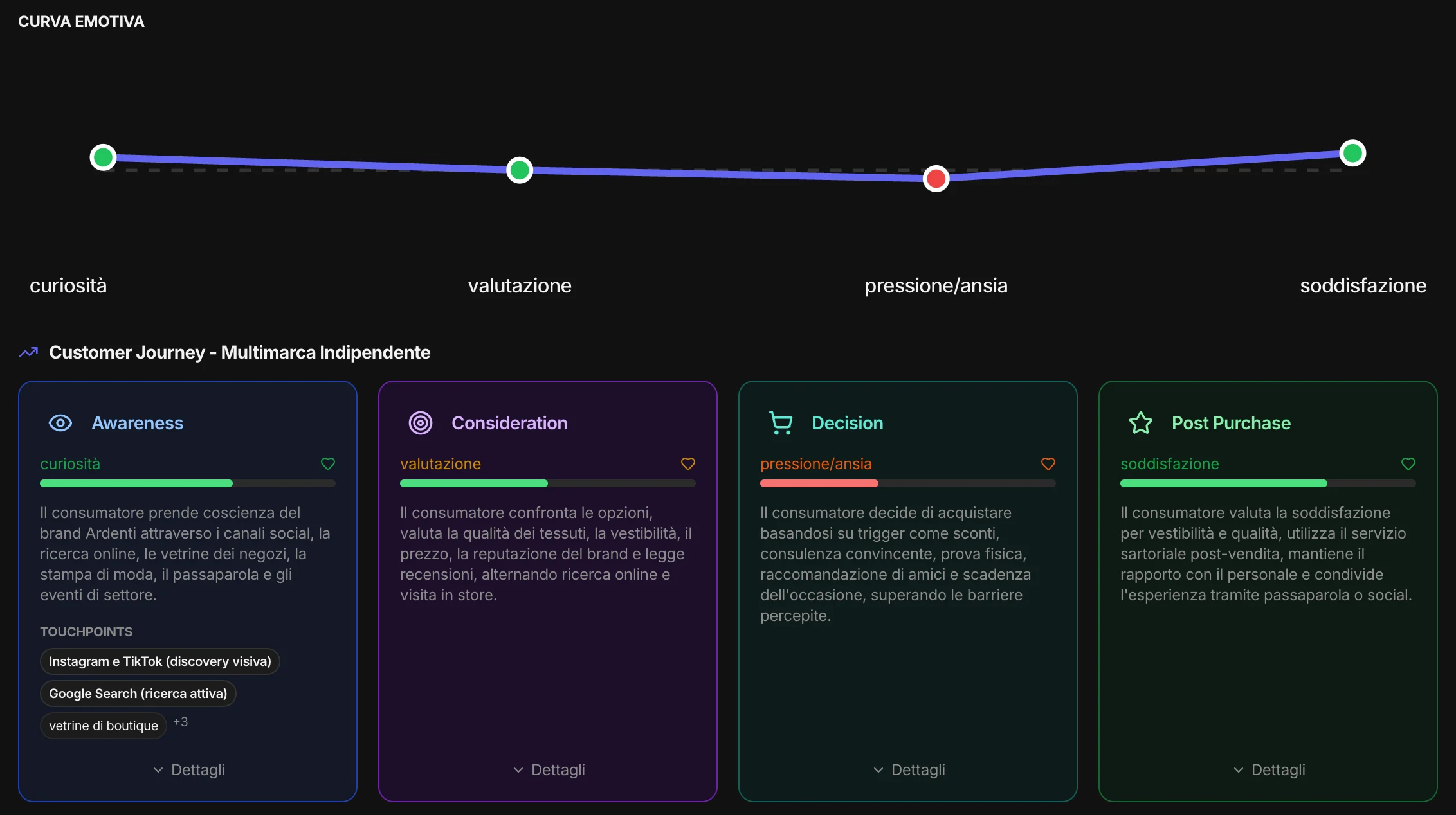
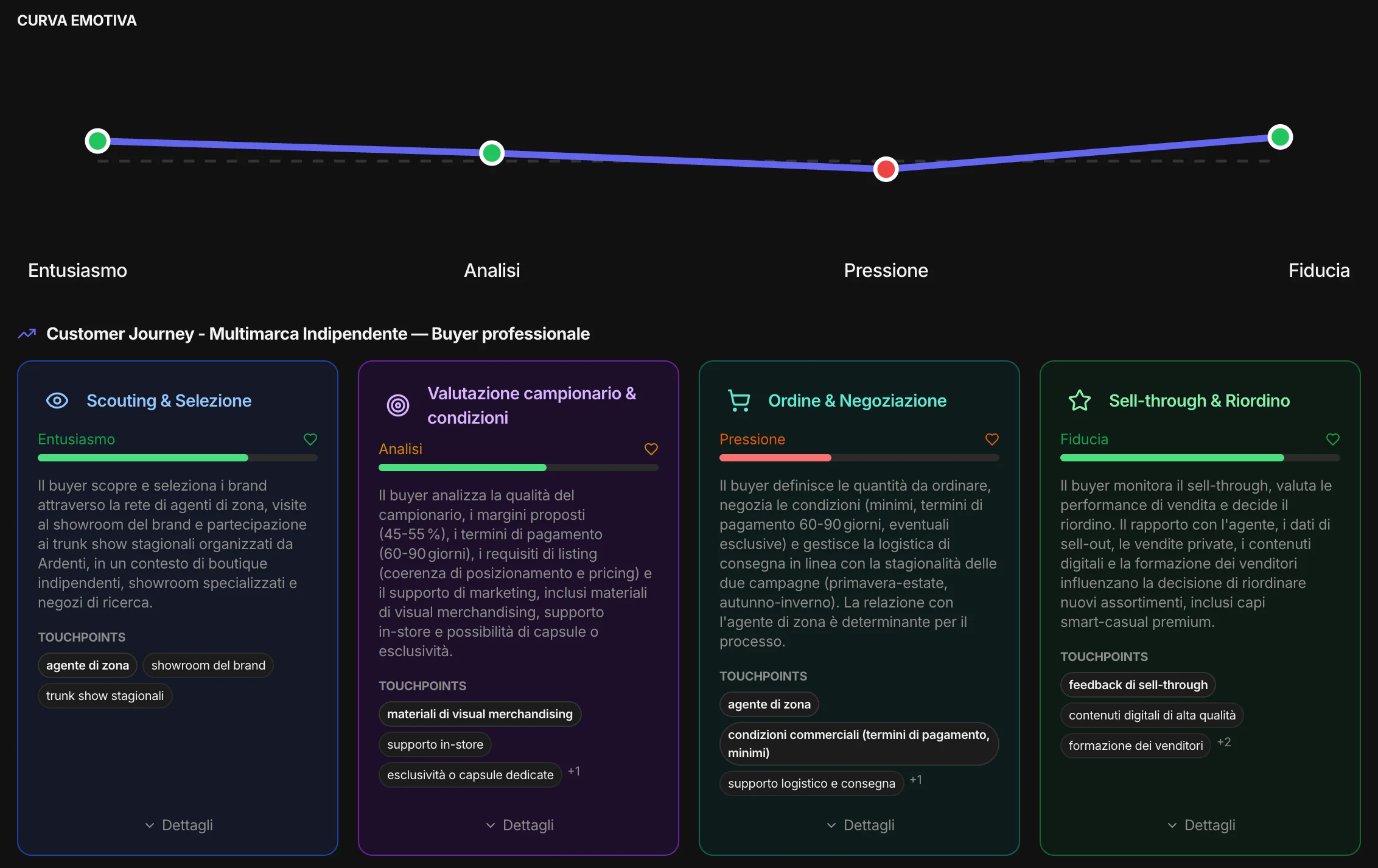
Another channel, another story.
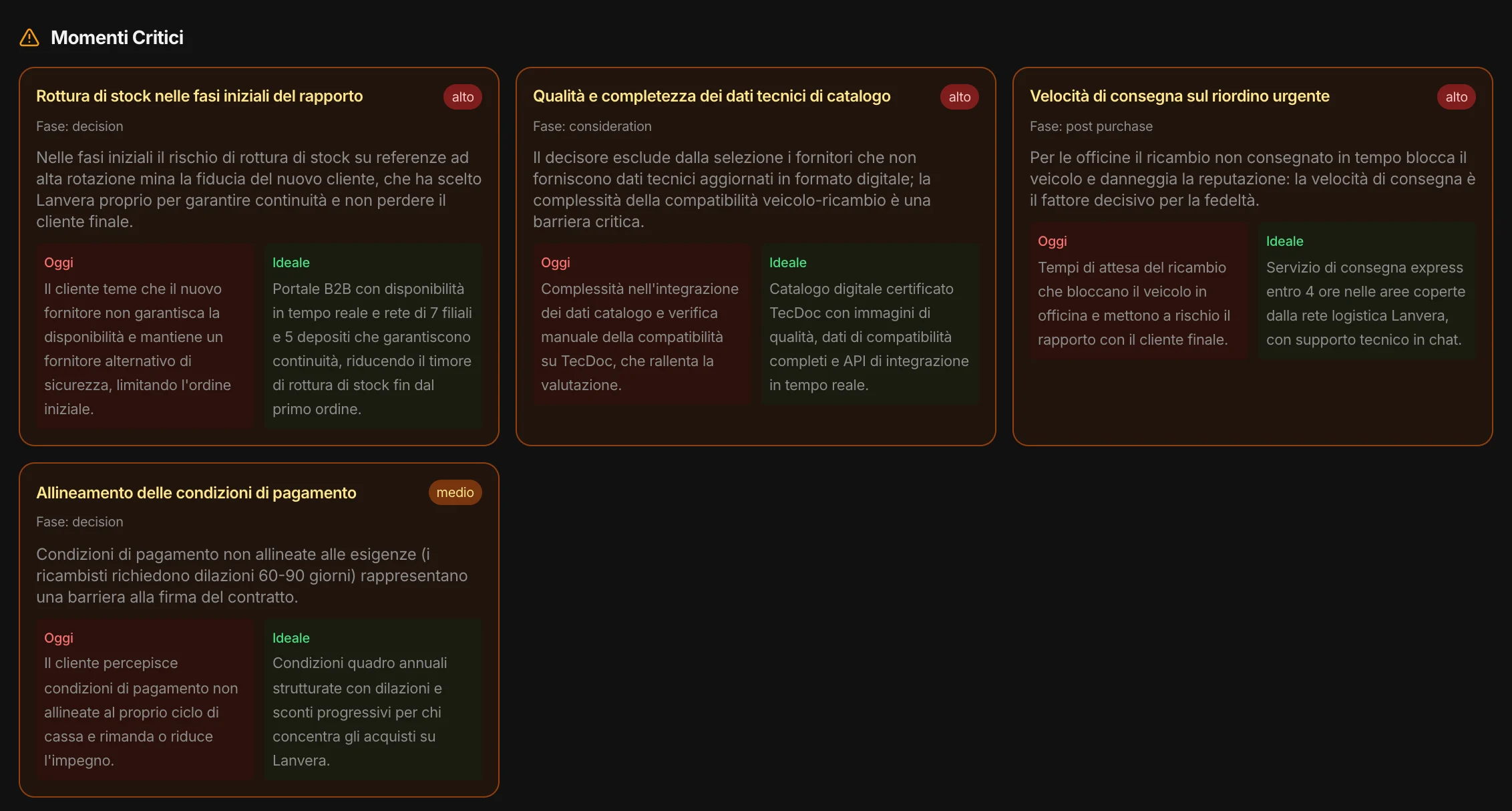
In the department store, the customer worries about fit without a proper fitting, and about the price for something worn only occasionally. For each channel: the emotional curve, the touchpoints of each stage, the critical moments.
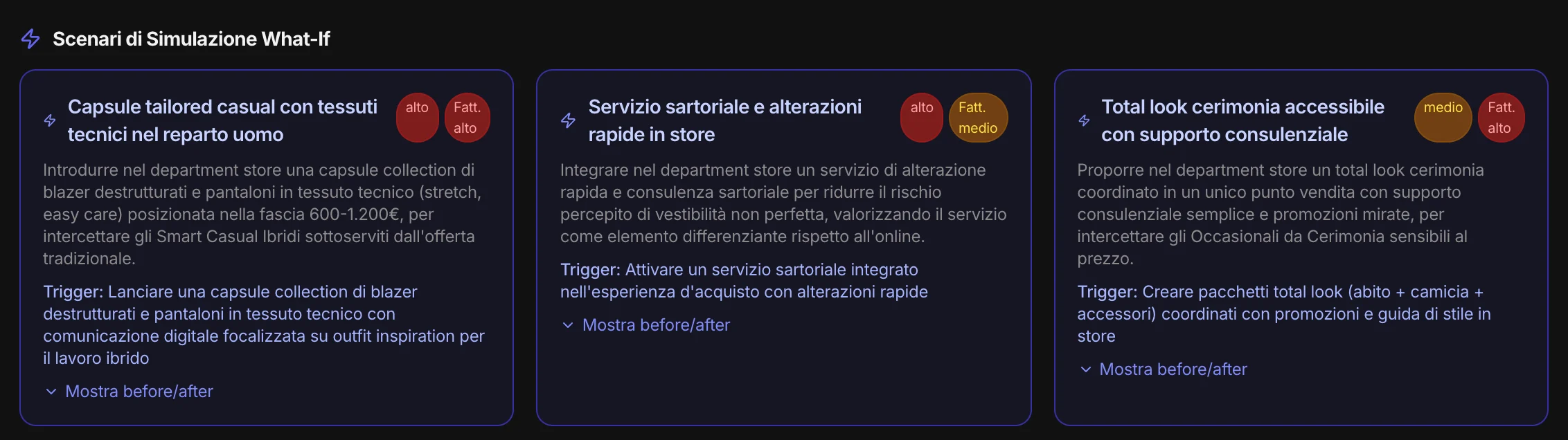
What if we changed something?
“What-if” scenarios: a possible move, the before and after on the journey, the expected result.
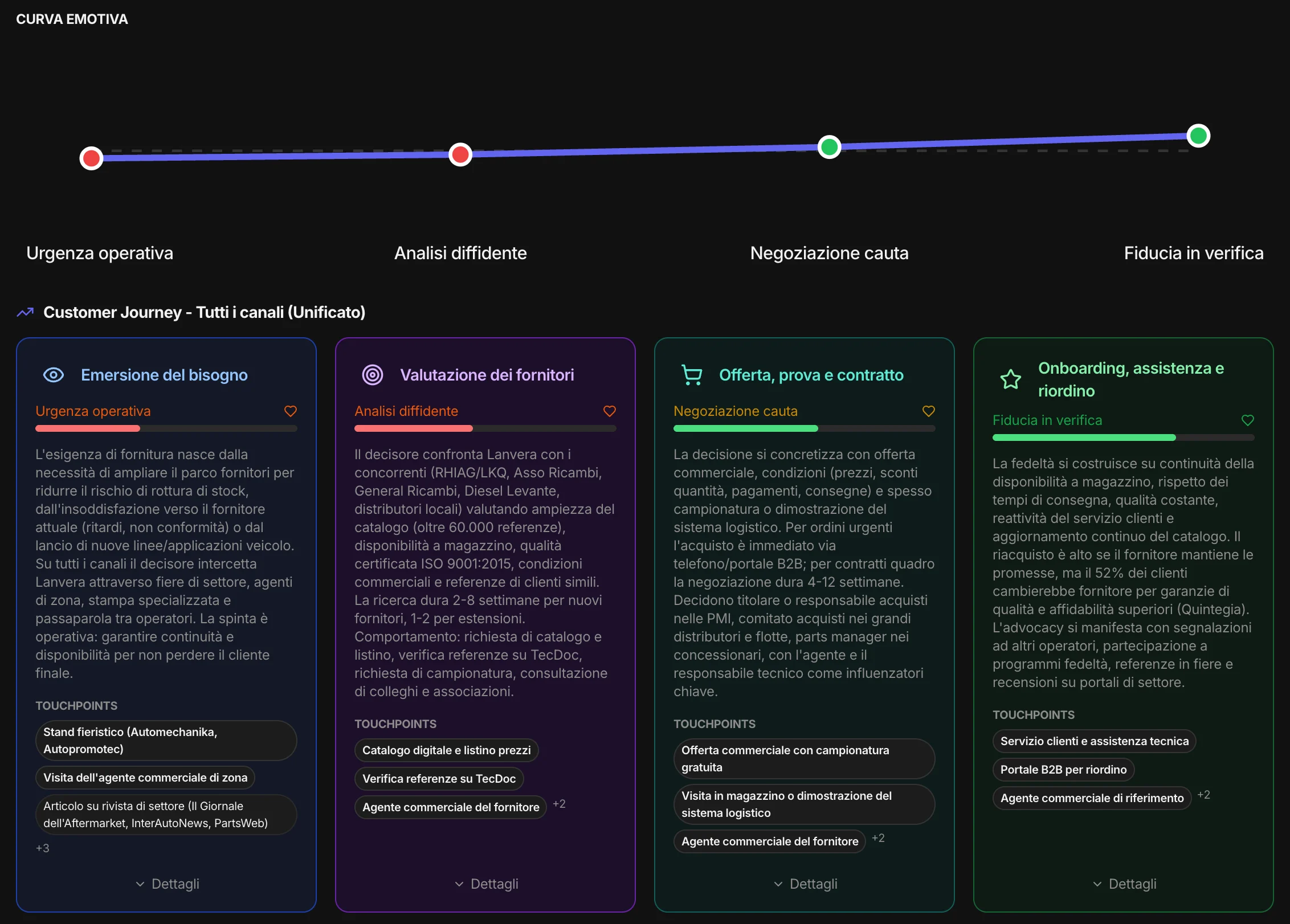
In B2B, the customer is a business.
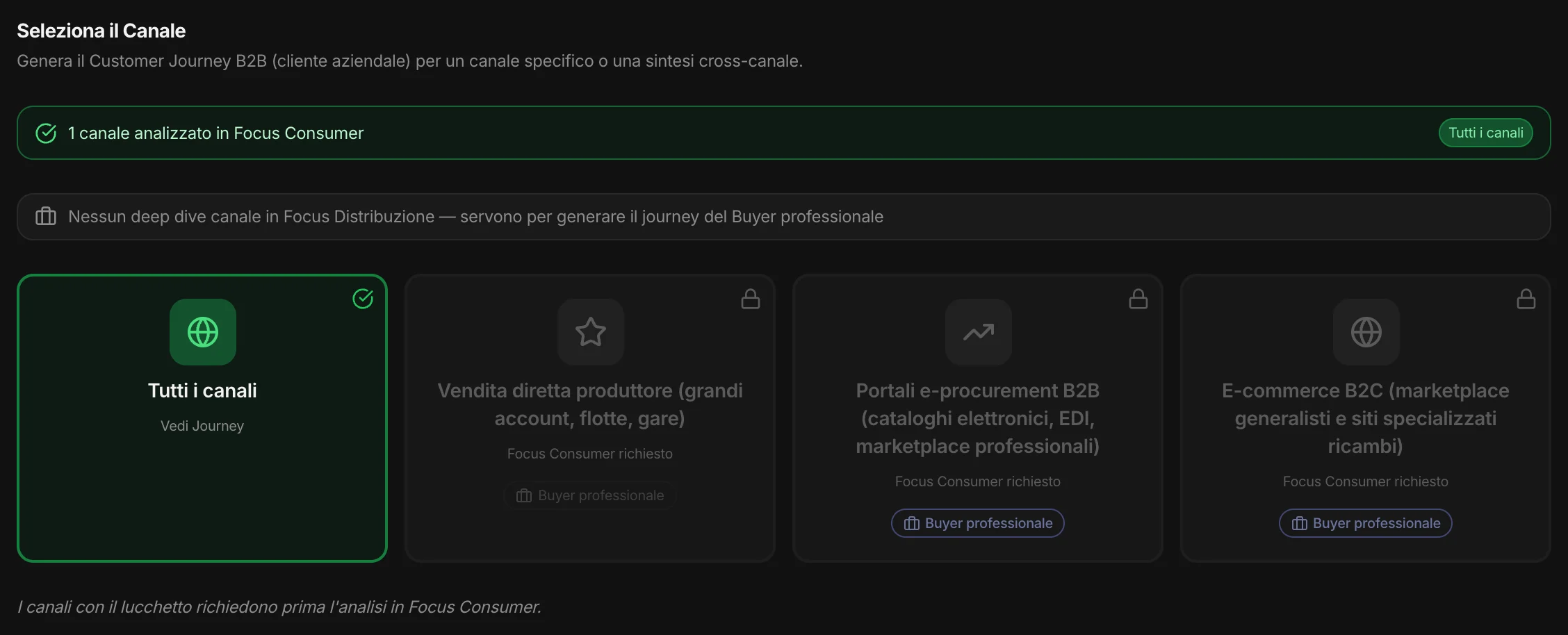
The journey becomes a supply journey: from the need that arises in the repair shop to evaluating suppliers, to the quote and the trial, to support and reorder. Here too channel by channel — direct sales, e-procurement portals, marketplaces —, and here too with the buyer where there’s an intermediary. Locked channels unlock once you’ve analyzed them in the Focus first.
Inside the head
of the buyer.
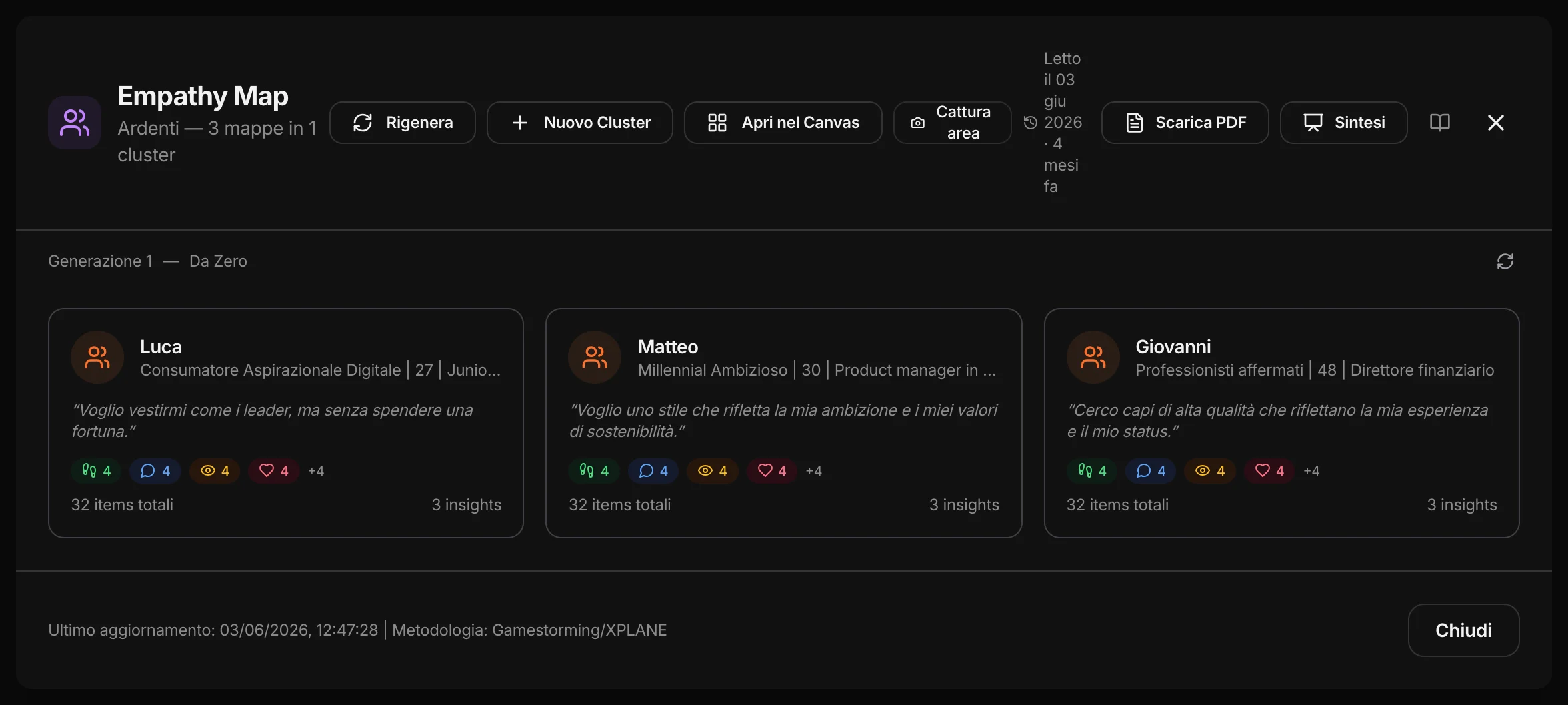
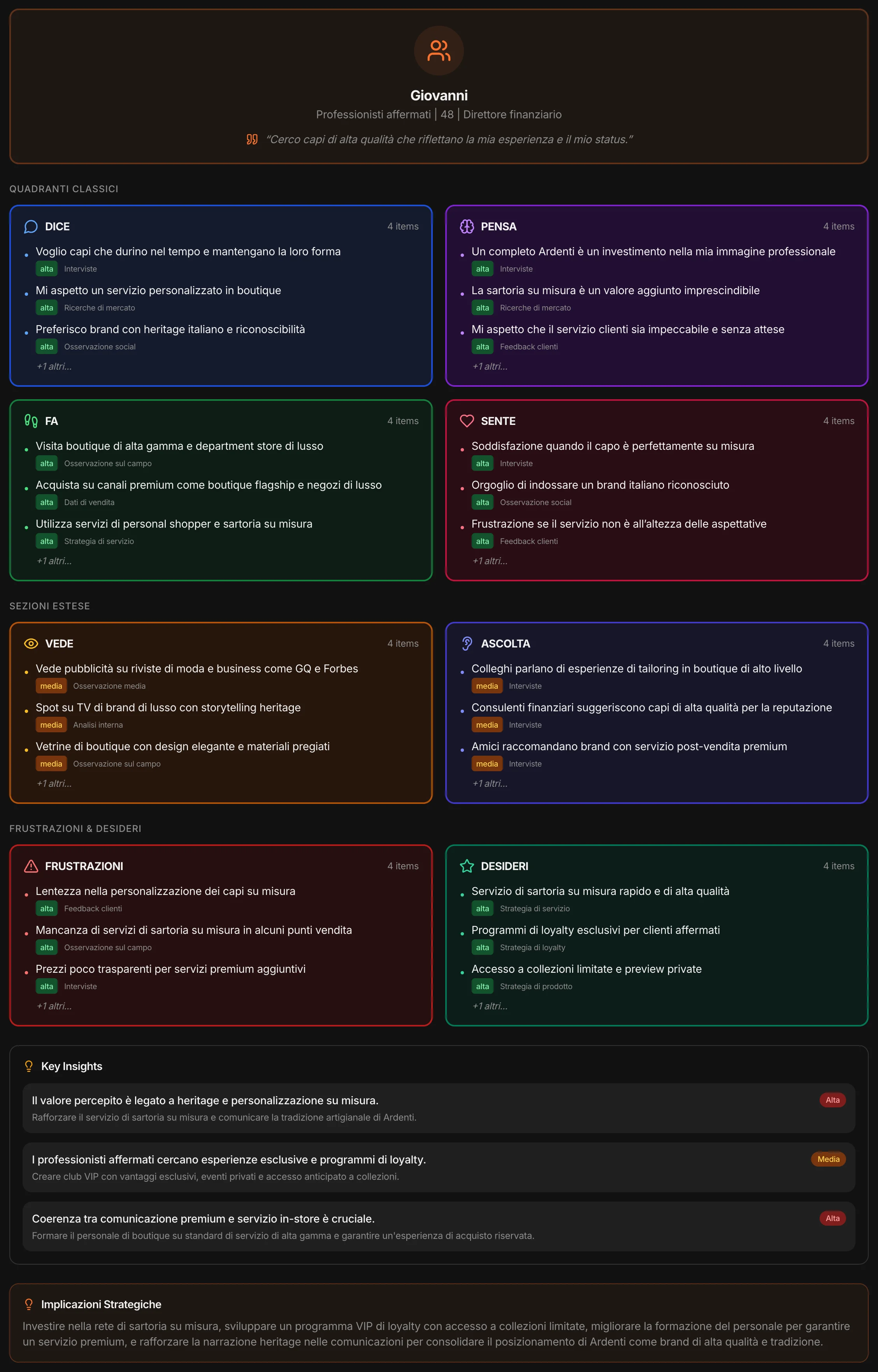
For each profile: what they say, think, do, feel, see and hear, what frustrates them and what they want — each item with how solid it is. Then the insights and the strategic implications. It isn’t a survey: it’s the reasoning a designer would do, built on what the project knows. Start from the project’s personas — up to six — or from scratch; in B2B, the map is the business decision-maker’s.
The deep codes
of the category.
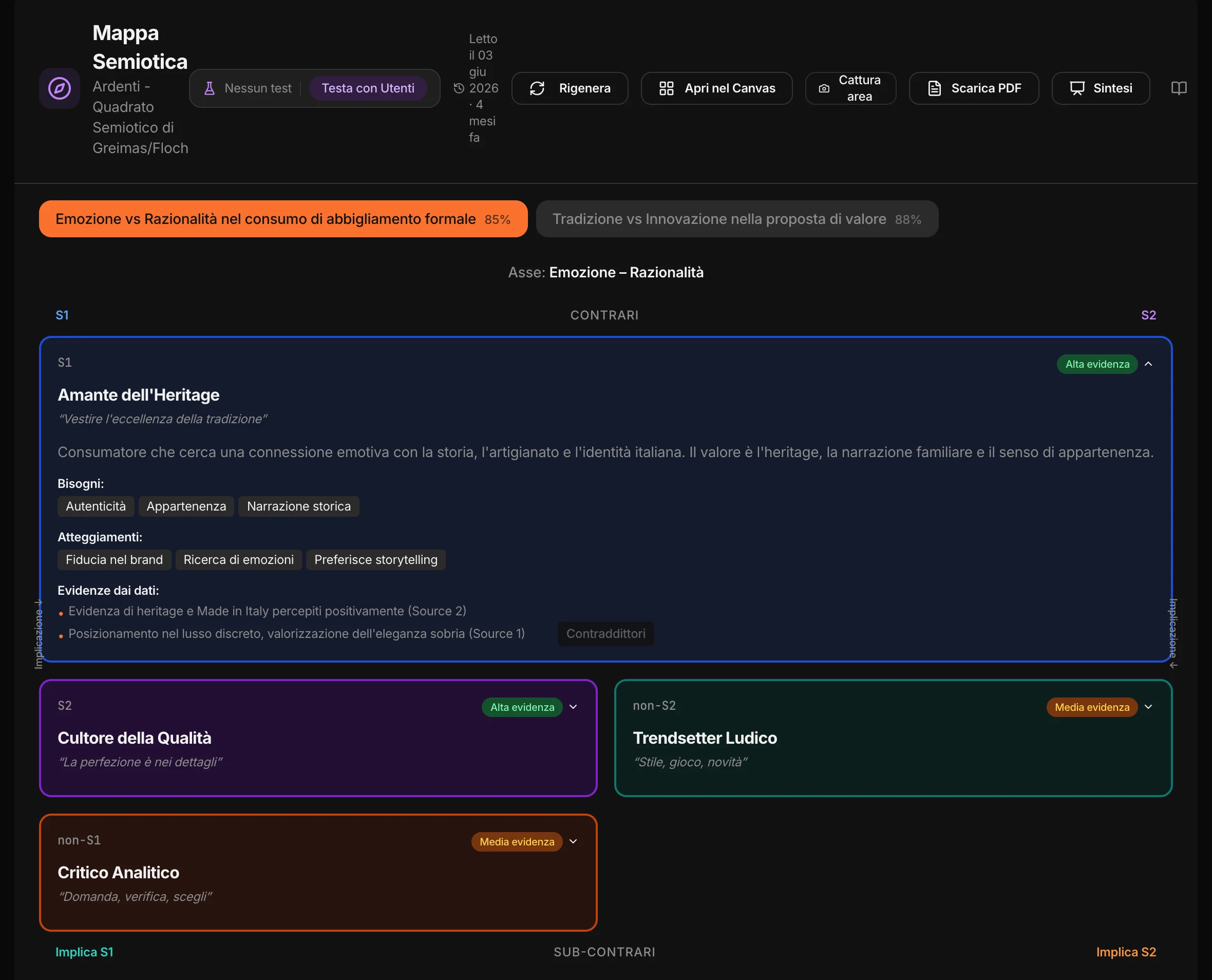
Greimas’s semiotic square, applied to marketing by Floch: the tool semioticians use to read a category. It starts from an underlying tension — emotion or reason, tradition or innovation — and derives four different ways of valuing what you buy. Four attitudes, four audiences, four ways of speaking.
How to read it.
An axis sets two opposing values against each other (S1 and S2). Negating them produces the other two corners (non-S1 and non-S2). Among the four, the relationships: who is contrary to whom, who contradicts whom, who can coexist, who leads to whom.
MAPS doesn’t use textbook axes: it builds two squares with different axes, derived from the project’s data, and tells you how relevant each axis is to the category.
The four attitudes
For each: the motto, the needs, the attitudes, and the evidence from the data — with how solid it is.
The relationships
Contraries, contradictories, sub-contraries, implications: how a customer moves from one corner to another.
Where the brand stands
Which corner it’s in today, which ones it leaves uncovered, and the opportunities.
Who is where
The project’s personas mapped to the corners, on both squares.
What to do
The recommendations, with their priority and the corner they aim to hold.
Emotion or reason, in formalwear.
On one side the heritage lover, who buys a story; on the other the quality connoisseur, who buys a fabric. Negating them, the trendsetter who plays with style and the critic who checks everything. The second square sets tradition against innovation.
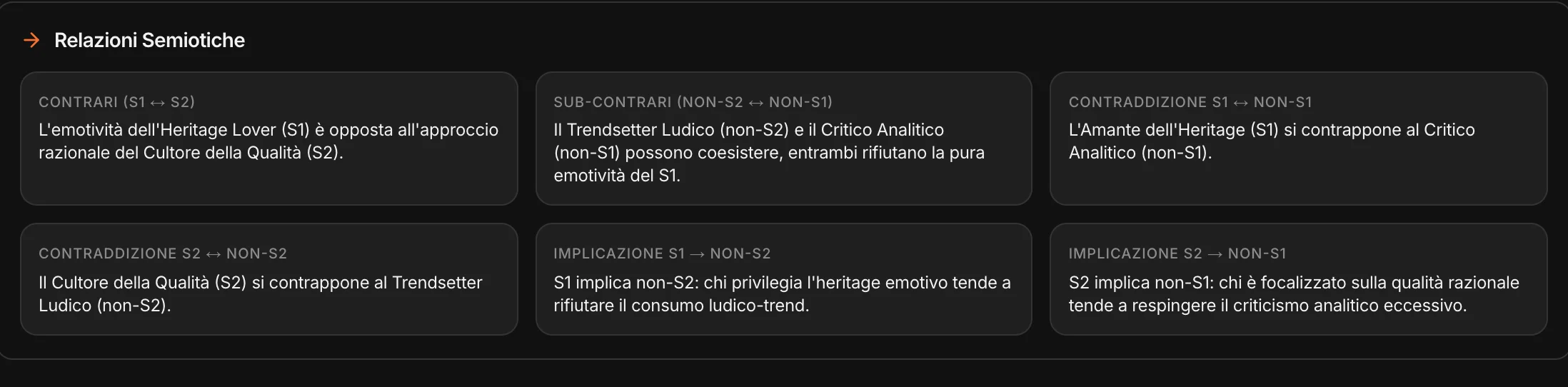
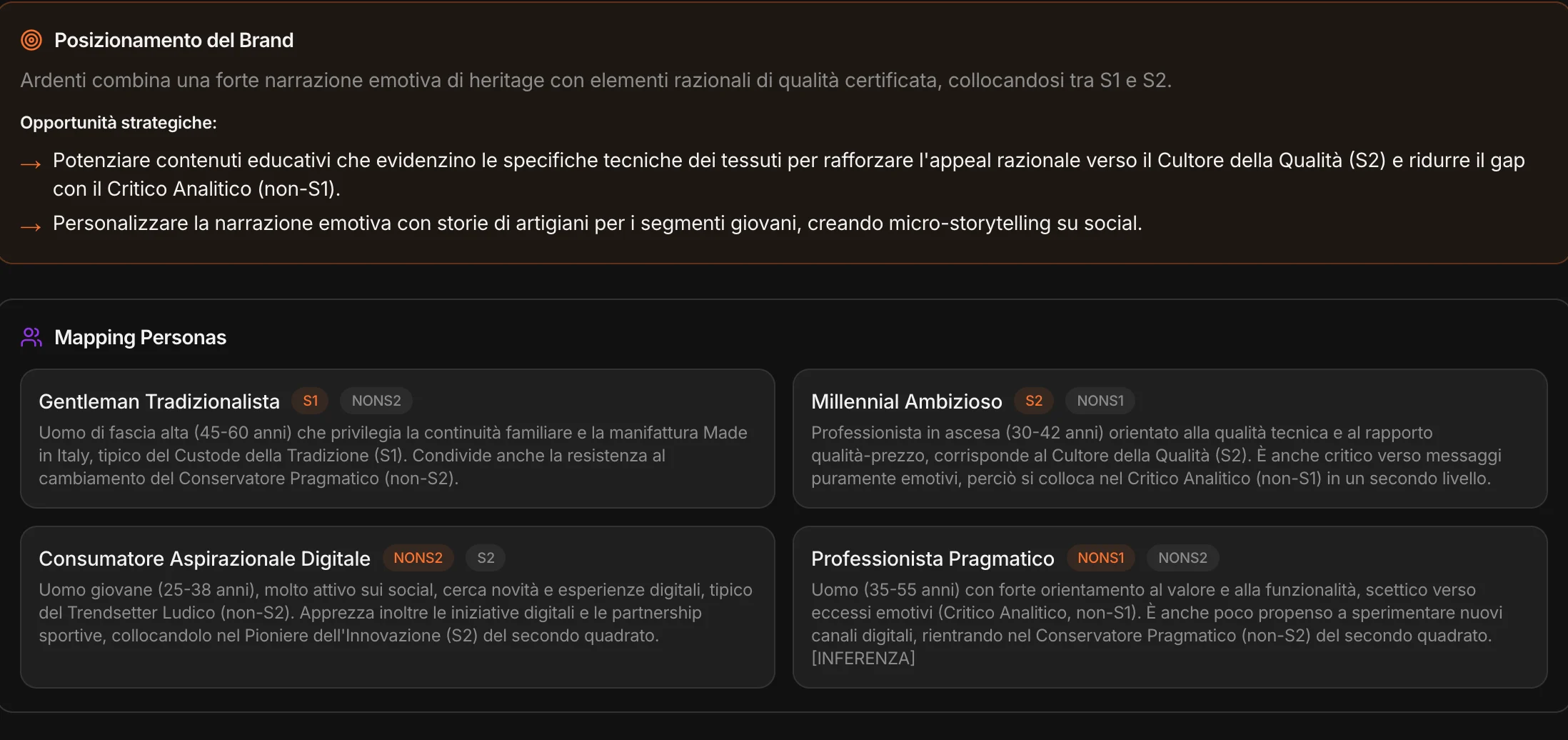
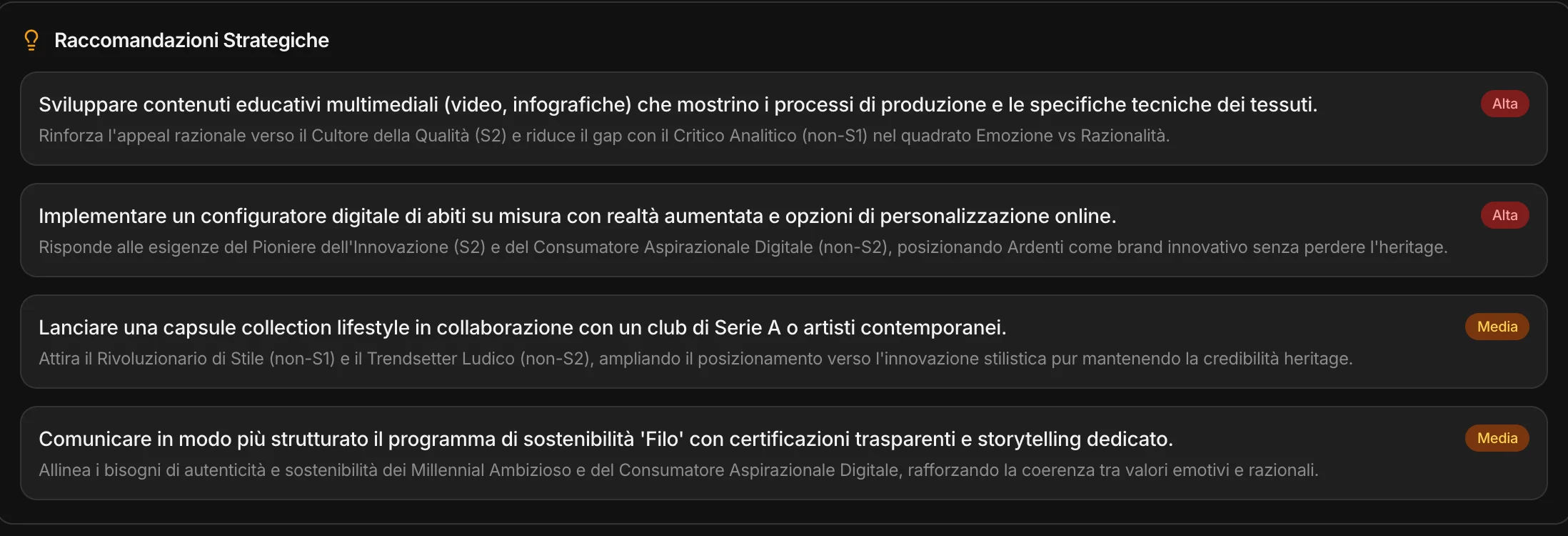
Why a repair shop chooses a supplier.
In B2B the corners are decision-makers’ attitudes. The first axis is the logic used to choose a supplier: on one side the shop-floor operator — “the right part, right now, or the vehicle stays off the road” —, on the other the specialist who picks whoever masters the subject; negating them, the convenience explorer and the cost-driven negotiator. The second axis is the relationship with digital and the purchasing channel.
And positioning becomes concrete: which corner the manufacturer already holds, which one it could take with the assets it has but doesn’t communicate, where it’s exposed to price, private labels and marketplaces.
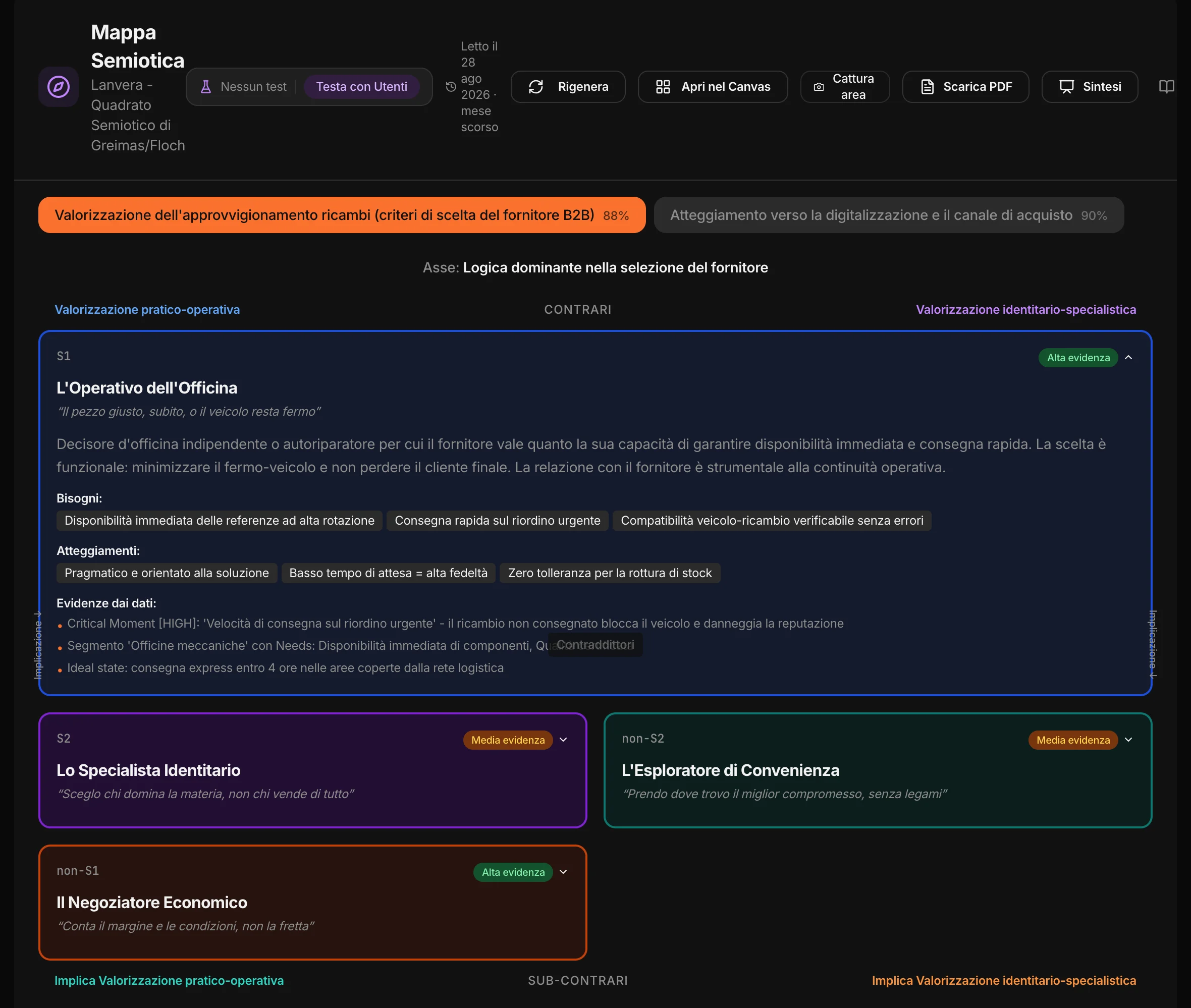
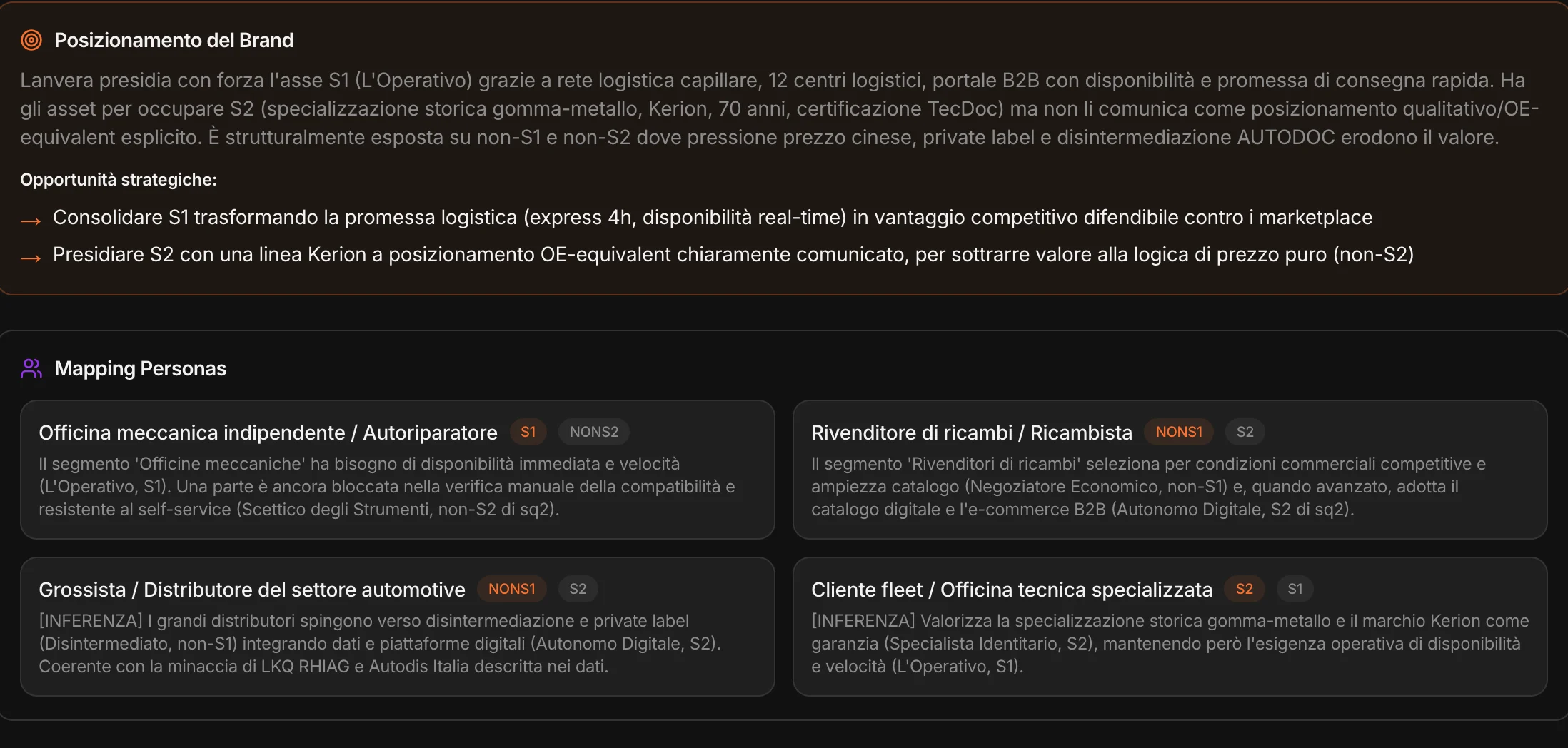
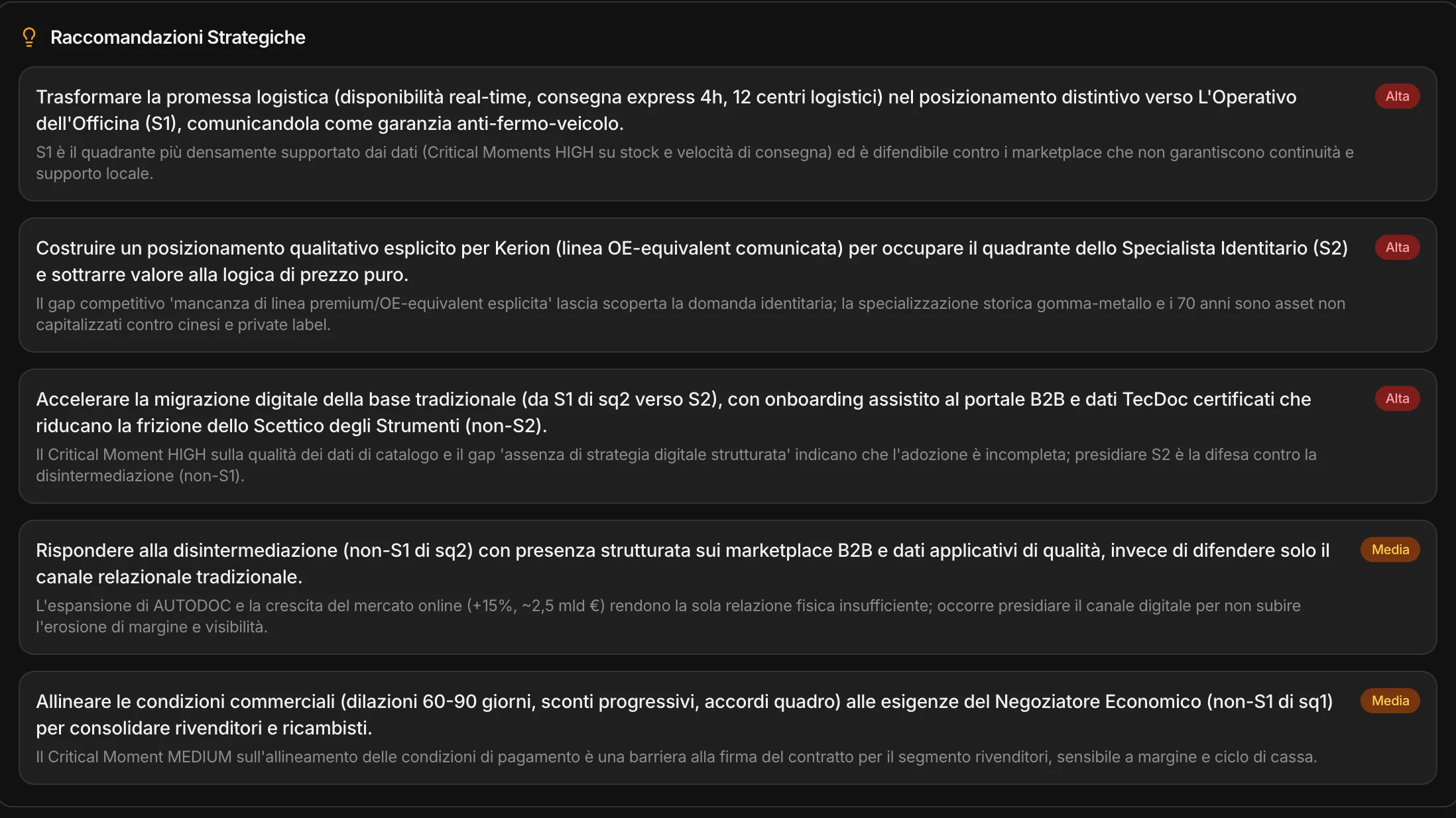
Brand names are fictional; the industry’s distributors and marketplaces are the real ones.
From the journey
to the people to interview.
Test with Users
Journeys and the semiotic map can be tested with the project’s synthetic users: do they recognize themselves in that journey?
Nothing gets lost
Every regenerated journey leaves the previous version in the history, with its date.
It feeds the rest
It goes into the project’s memory: the chat, positioning and campaigns start from here too.
It leaves the project
On the Canvas to work on with the team, as a PDF, as a summary to present.