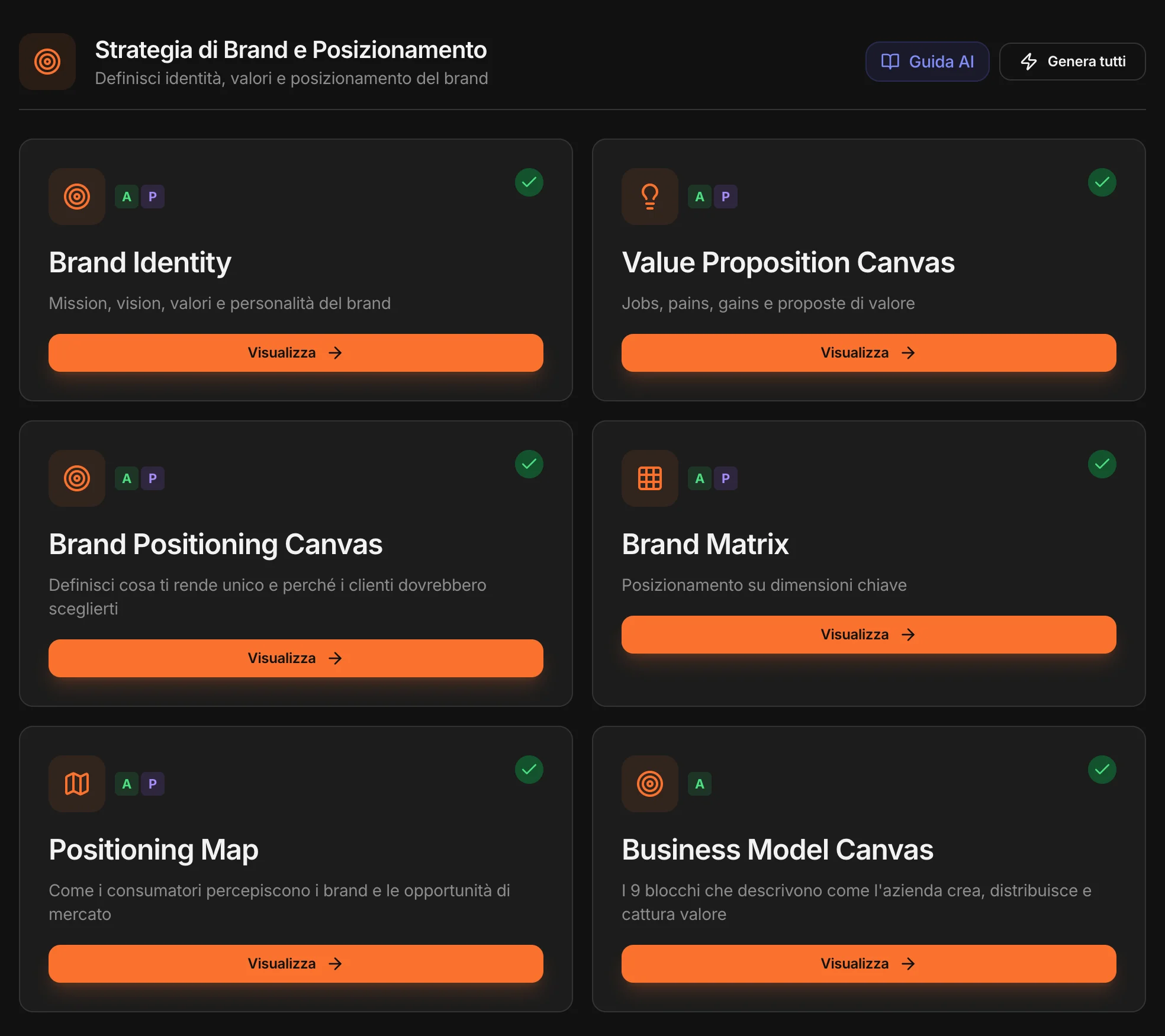
Six tools.
Six questions.
Up to here, MAPS takes a snapshot.
Here it lets you try different paths.
The market tools describe how things are. These start from how things are and ask you: what if? What if we moved upmarket, spoke to a younger audience, changed the way we make money. Each path becomes a complete scenario, to compare with the others and to test with people.
Snapshot
The current situation, with the source of every element.
Explore
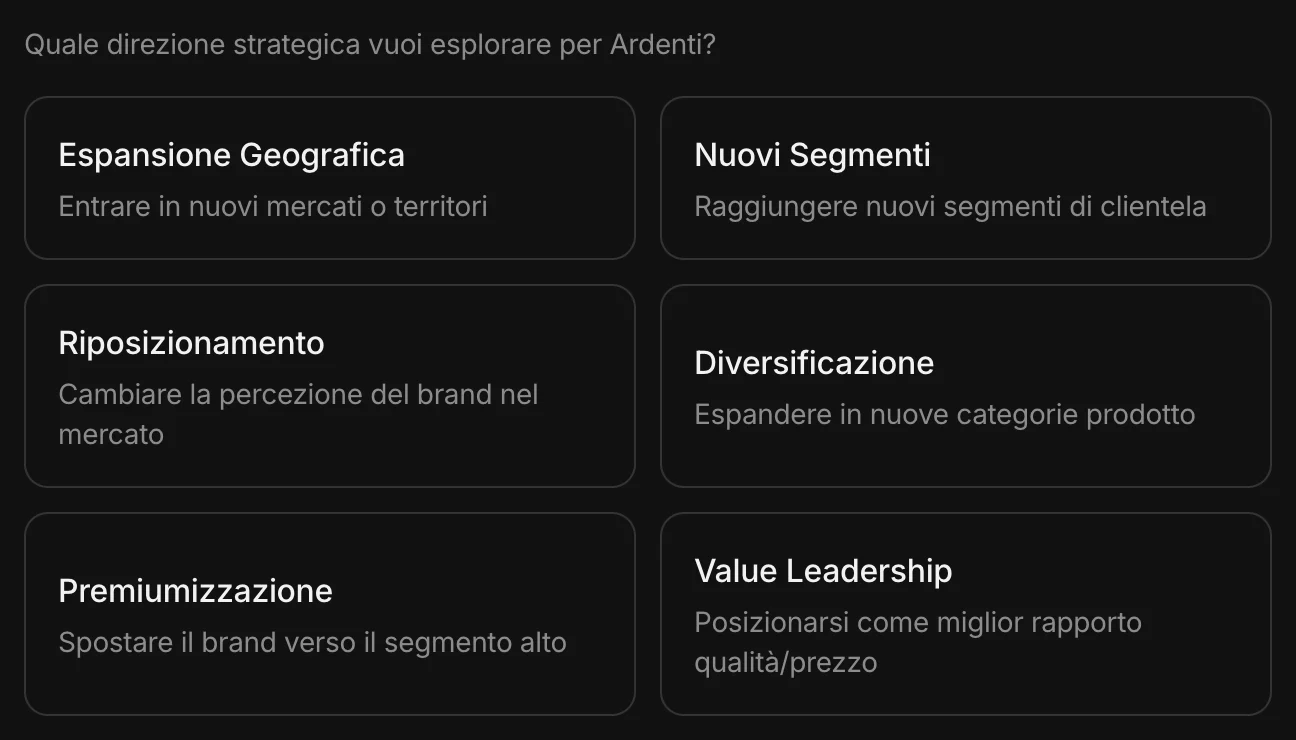
Three scenarios — conservative, moderate, transformative — or the direction you choose.
Build
A scenario of your own, step by step: direction, audience, priorities, tone.
Test
With the project’s synthetic users: how they react to the new positioning, the new proposition.
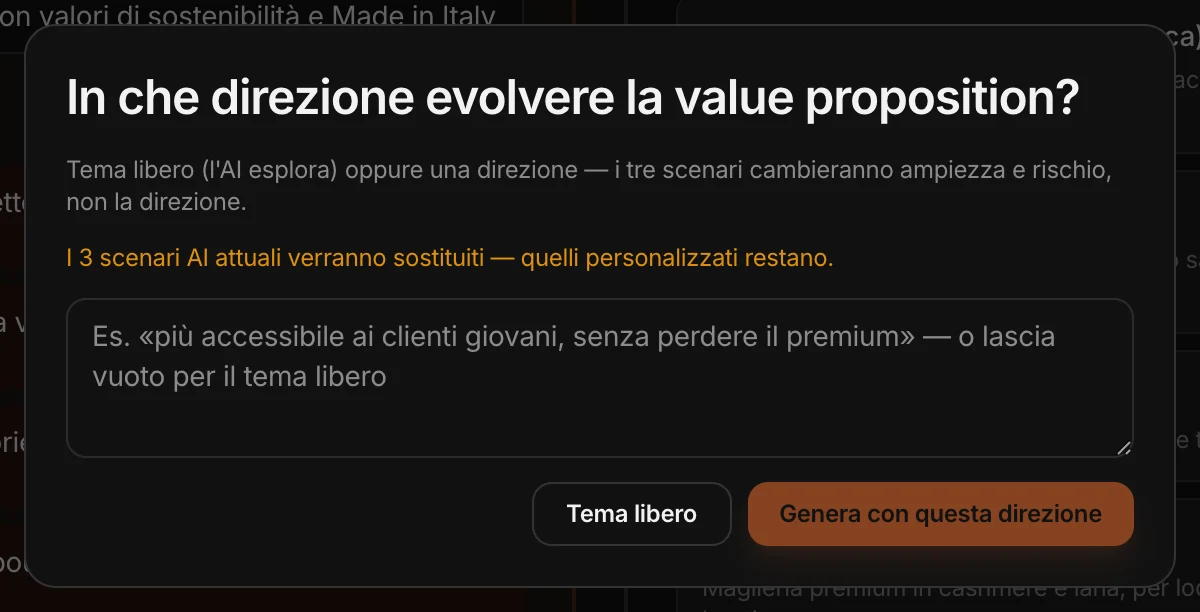
“The three scenarios will change scope and risk, not direction.”
You decide the direction — or you let MAPS explore. The scenarios tell you how far you can push, and at what risk.
Who you are today.
And who you could become.
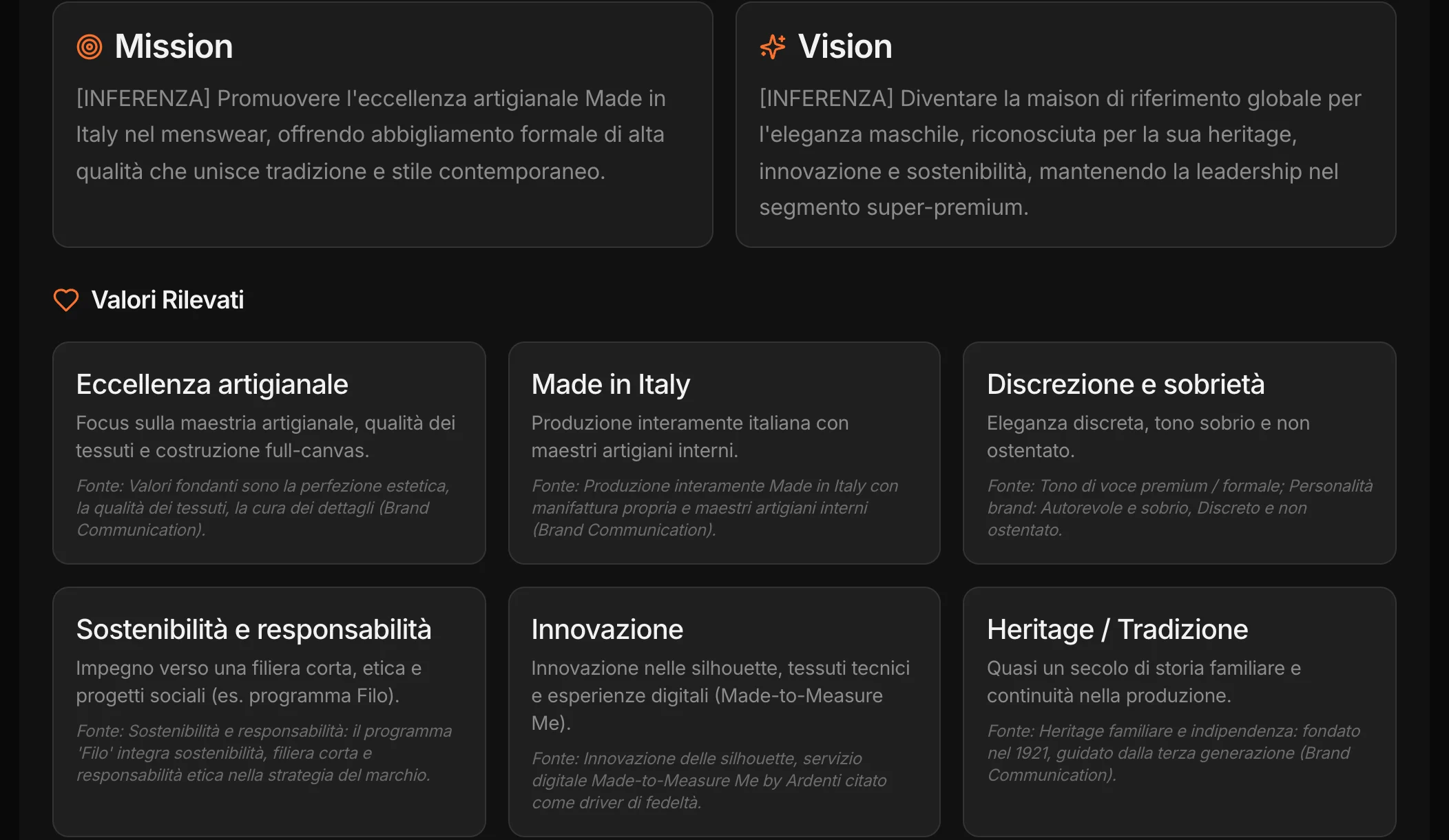
Mission, vision, values, personality and tone of voice, archetypes. Every value carries the source MAPS drew it from; what is inferred is flagged as such.
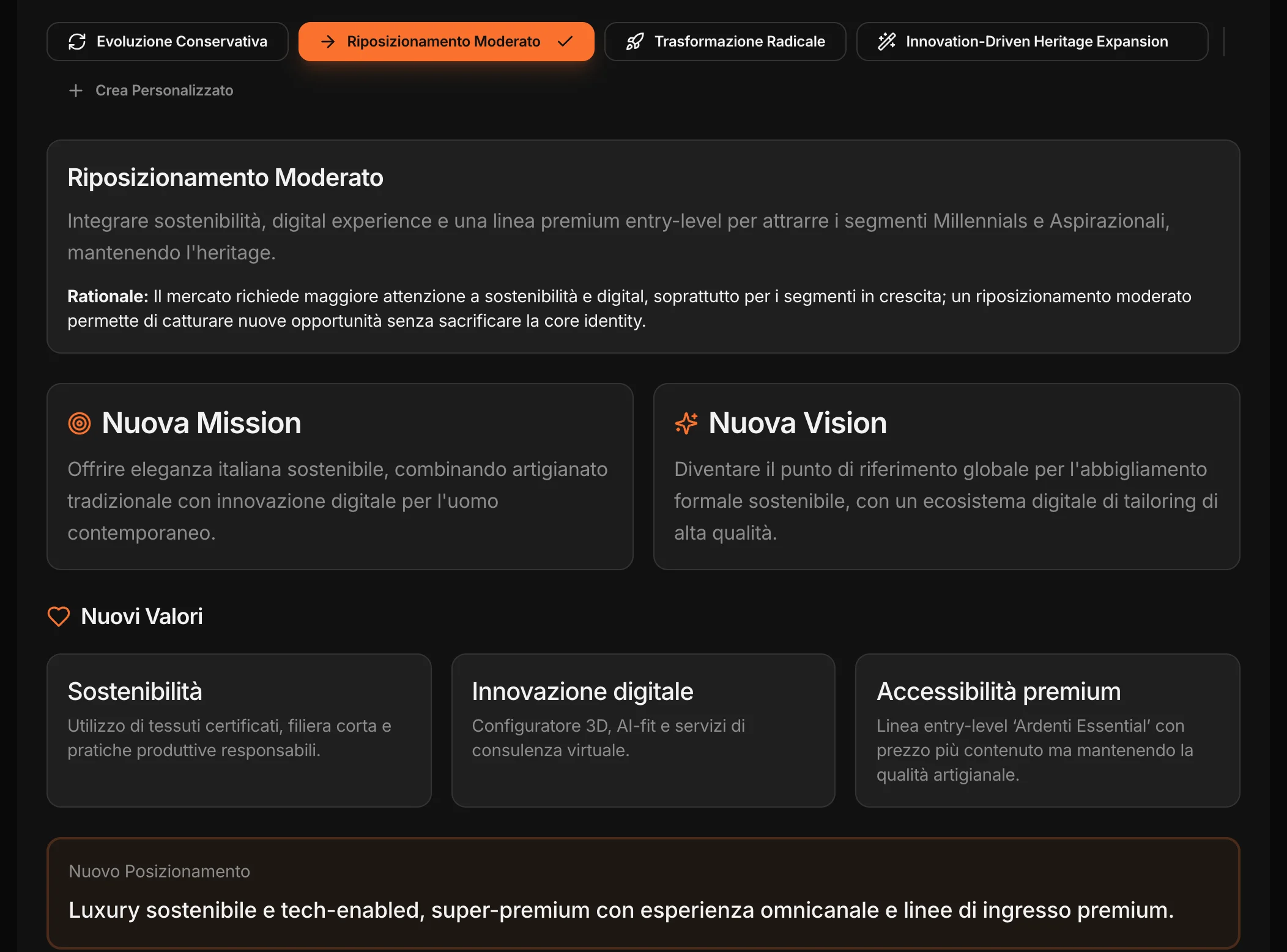
Three evolution scenarios.
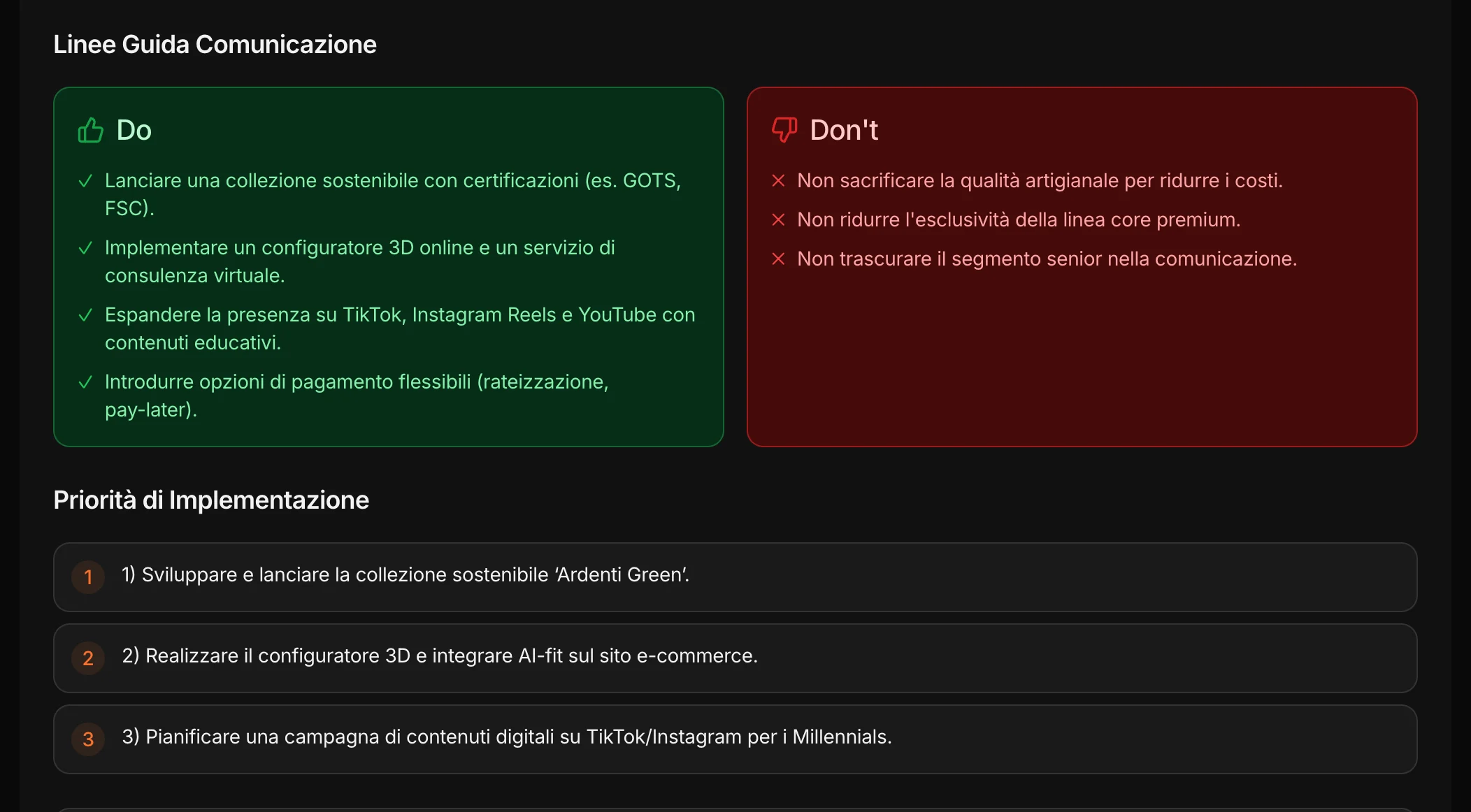
From the most cautious to the most radical, with the recommended one: for each, the new mission and vision, the new values, the new positioning, what to do and what to avoid in communication, the priorities.
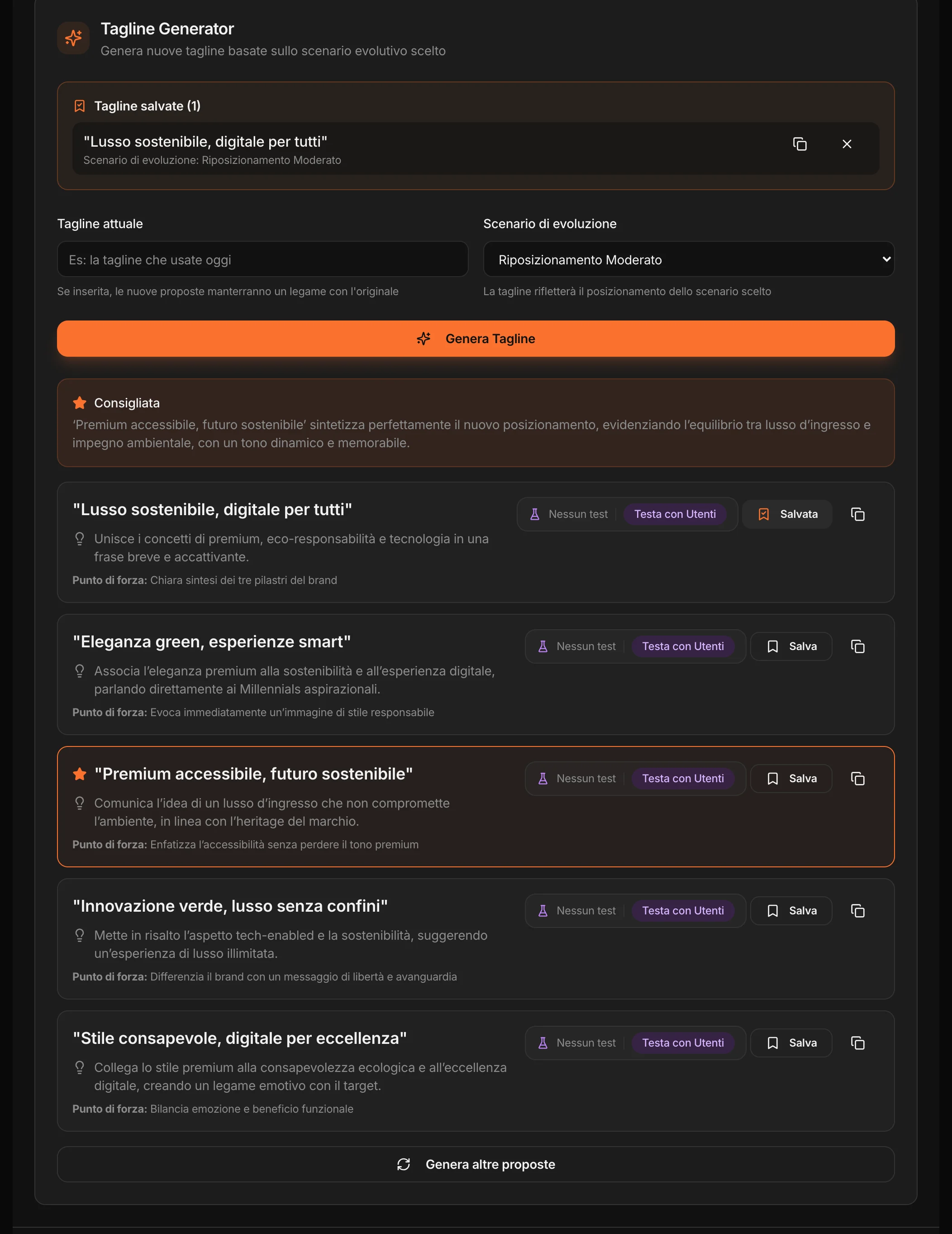
From the scenario, the tagline.
Pick the scenario, and if you like the tagline you use today: MAPS proposes five taglines that express its positioning, each with its reasoning and its strength, and tells you which one it recommends.
The ones that convince you, you save: they stay in the project, with the scenario they came from, even when you regenerate the analysis. And each one can be tested with the synthetic users.
What you solve,
for the people who buy.
On one side the customer — the jobs they want done, what holds them back, what they’re looking for —, on the other what you offer. At the top, the verdict on the fit between the two; below, the gaps to close.
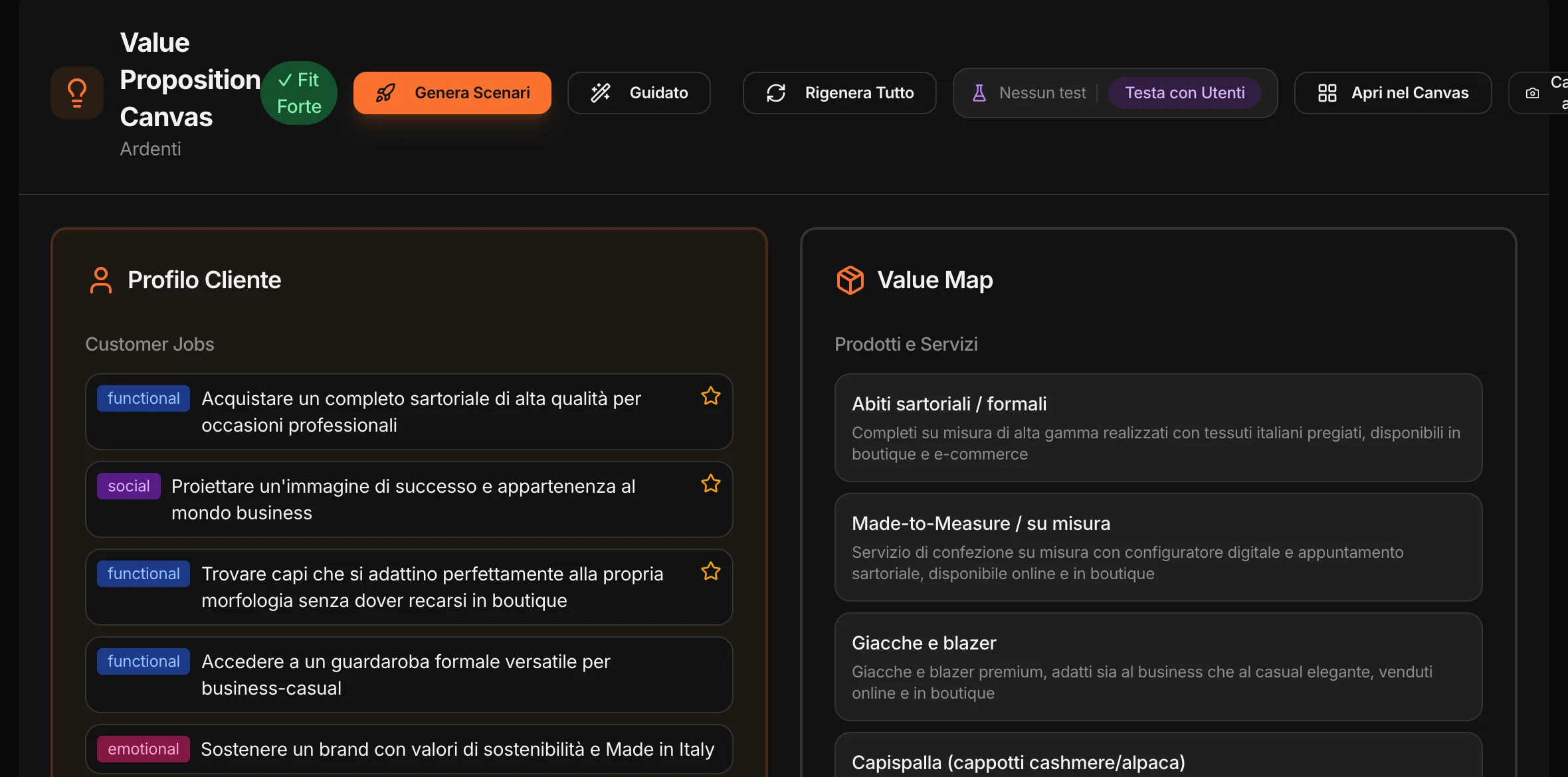
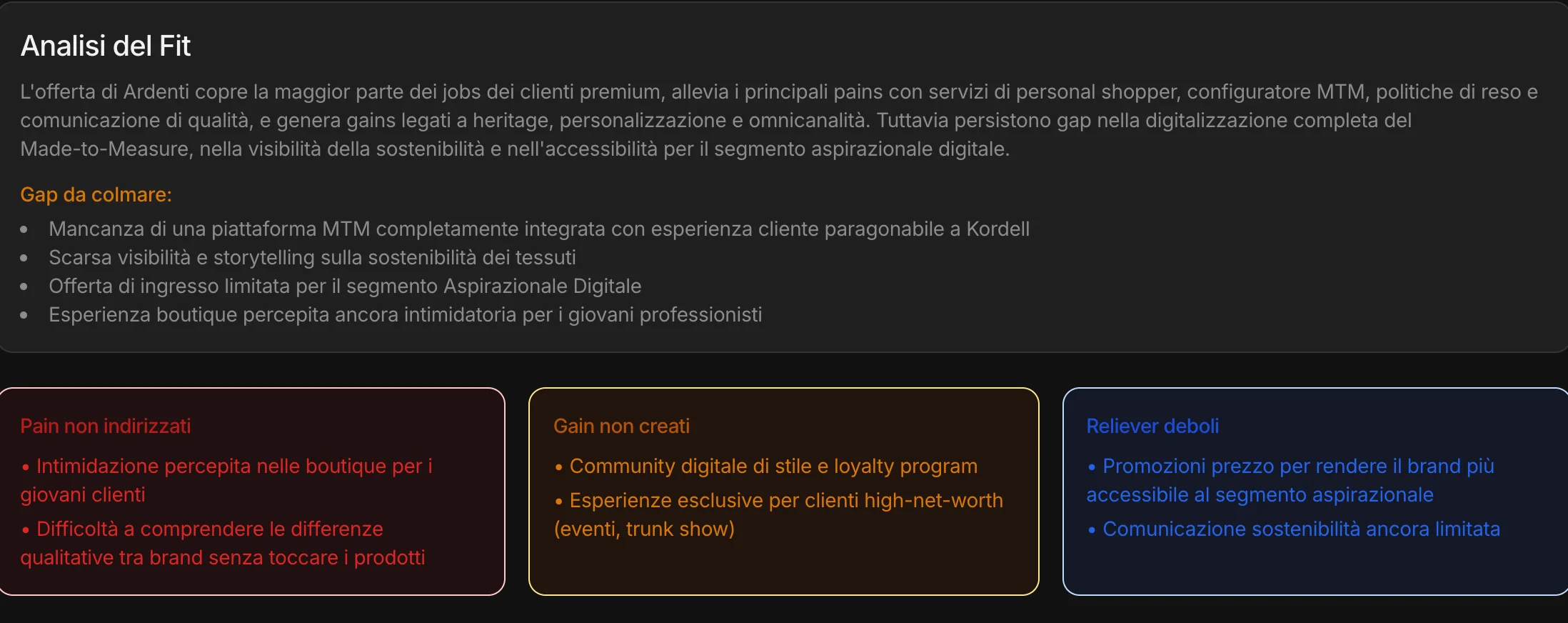
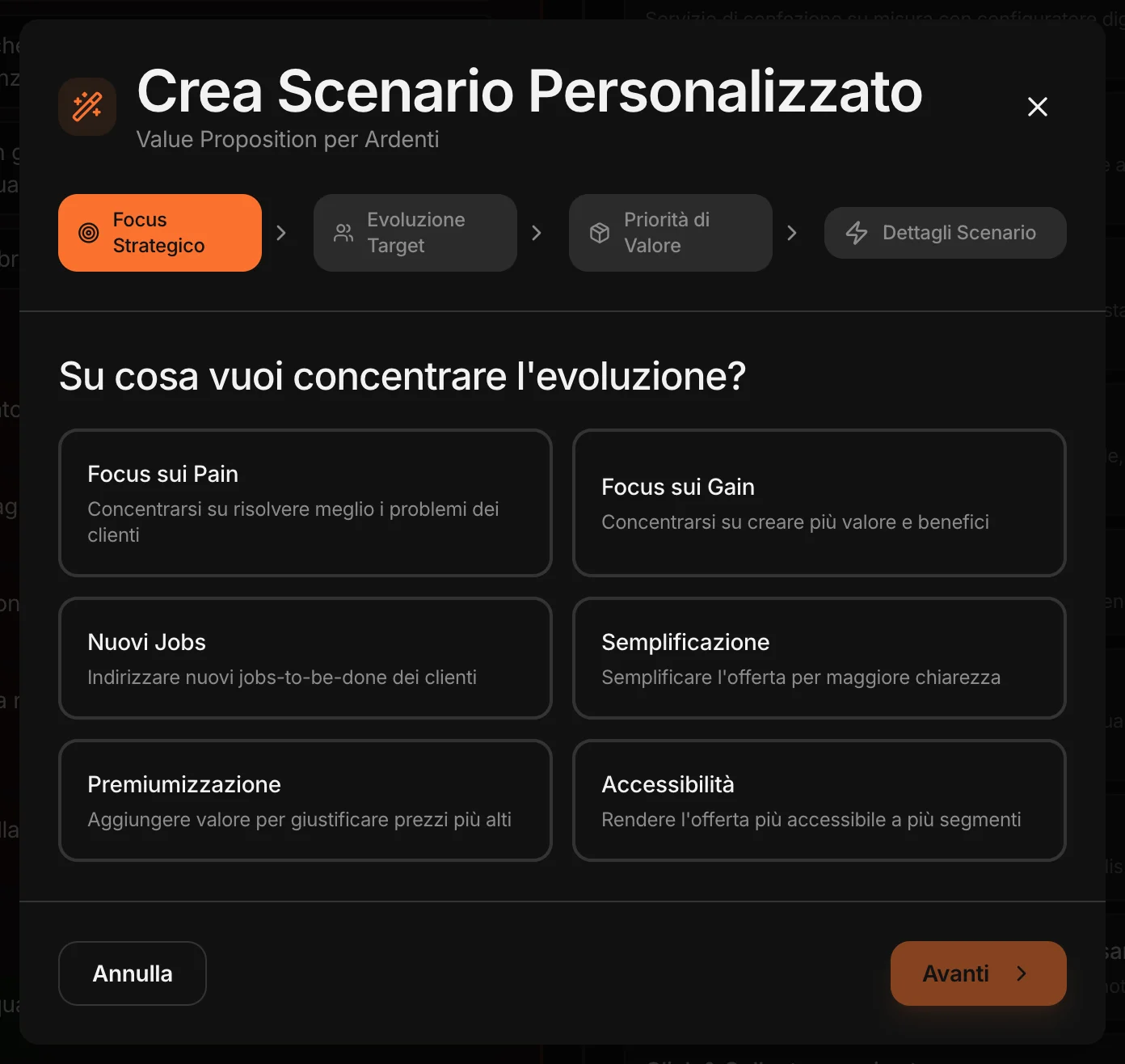
An example: “digital made-to-measure”.
The direction given to MAPS: made-to-measure tailoring available online, without losing the boutique experience. Out come three scenarios, from the most cautious to the most ambitious; MAPS recommends the middle one and explains why. Each scenario says what to add, what to change, which problem each new element solves.
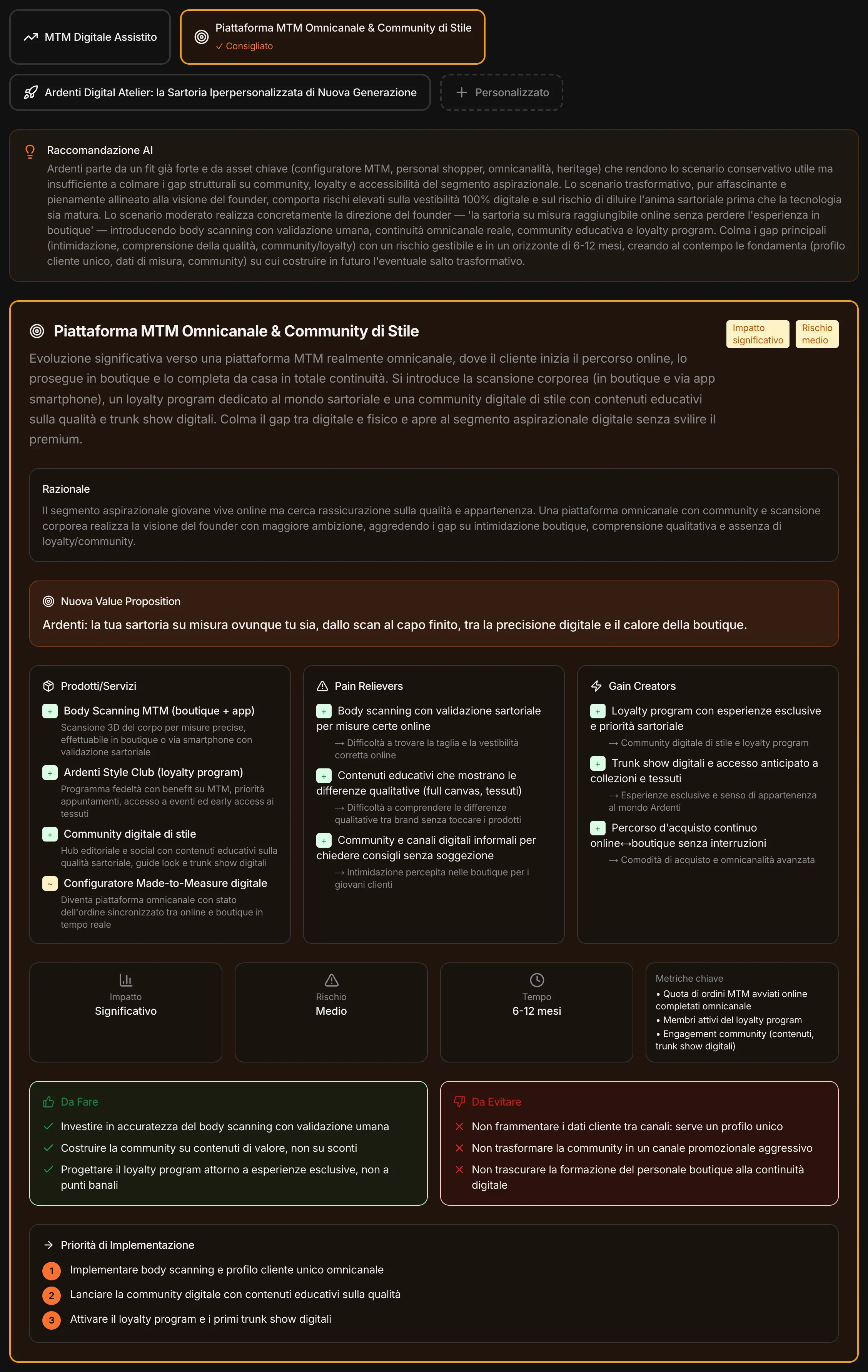
Fictional names.
Why you,
and not them.
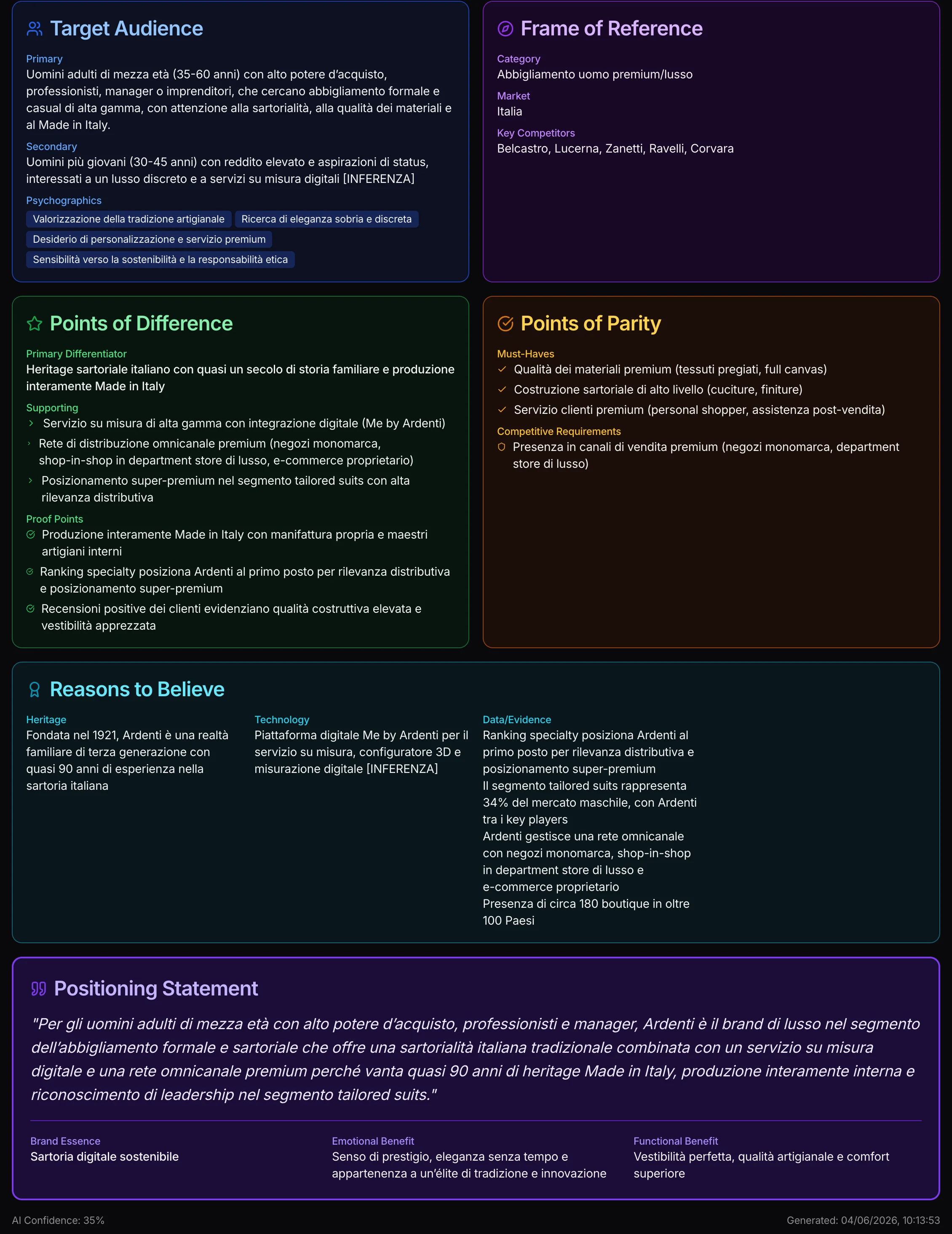
The audience, the frame of reference, what sets you apart and what you need to stay in the game, the reasons to believe. And in the end, the sentence that holds it all together: the positioning statement.
How they see you,
and how you really are.
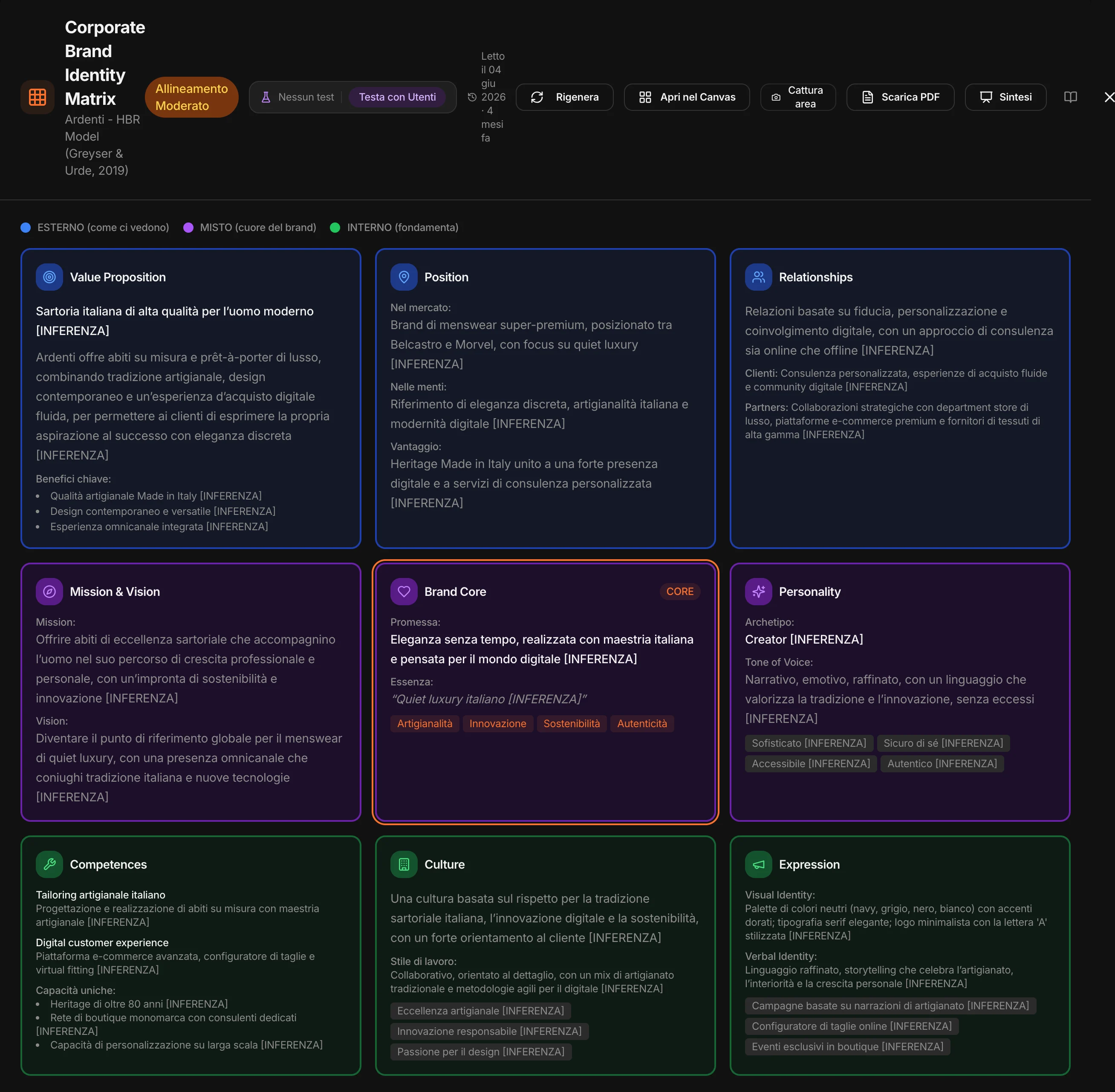
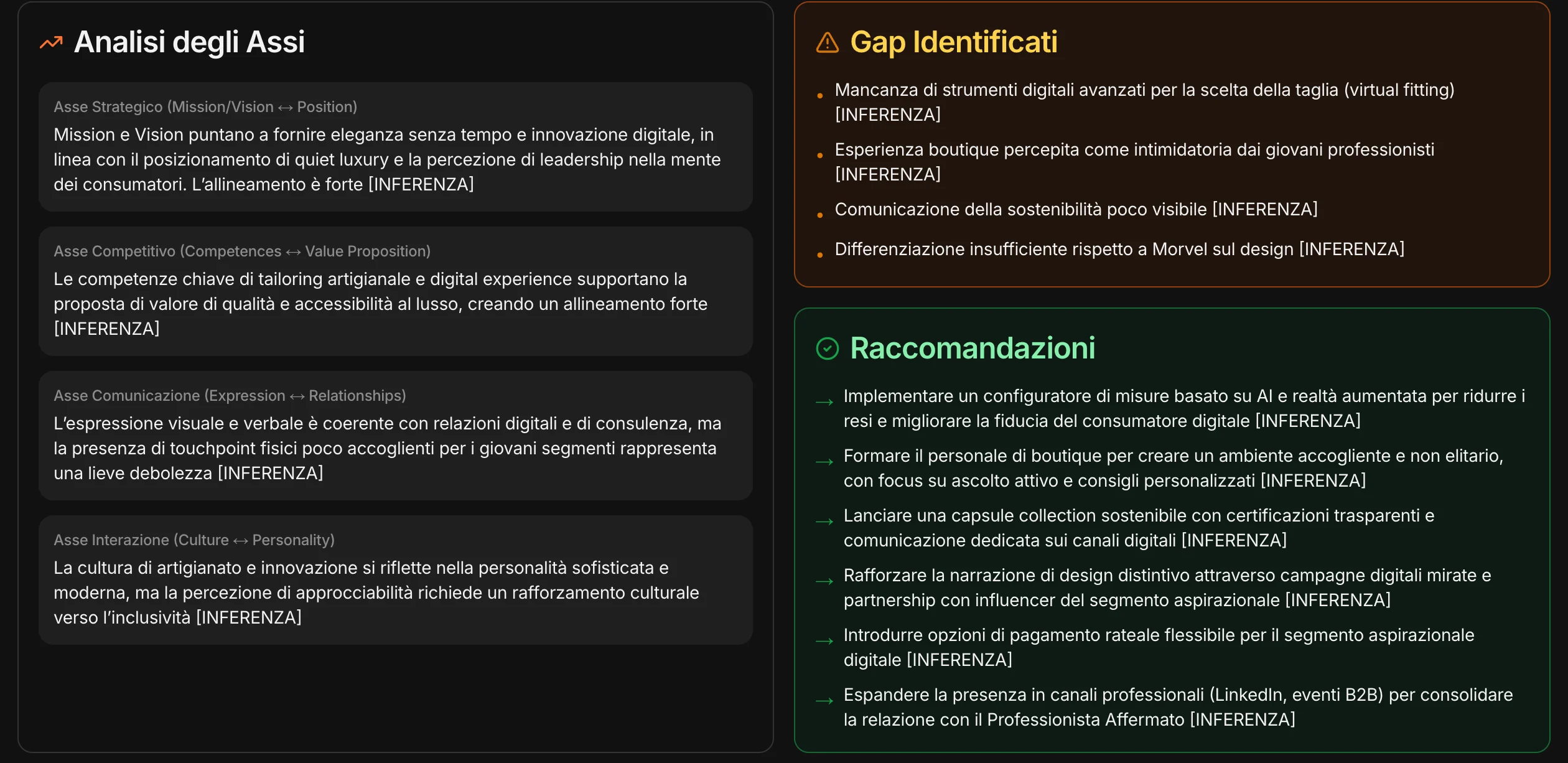
The Harvard Business Review brand identity matrix: nine elements, from what the market sees to what lives inside the company, with the brand core at the center. MAPS judges how aligned they are, and where they aren’t.
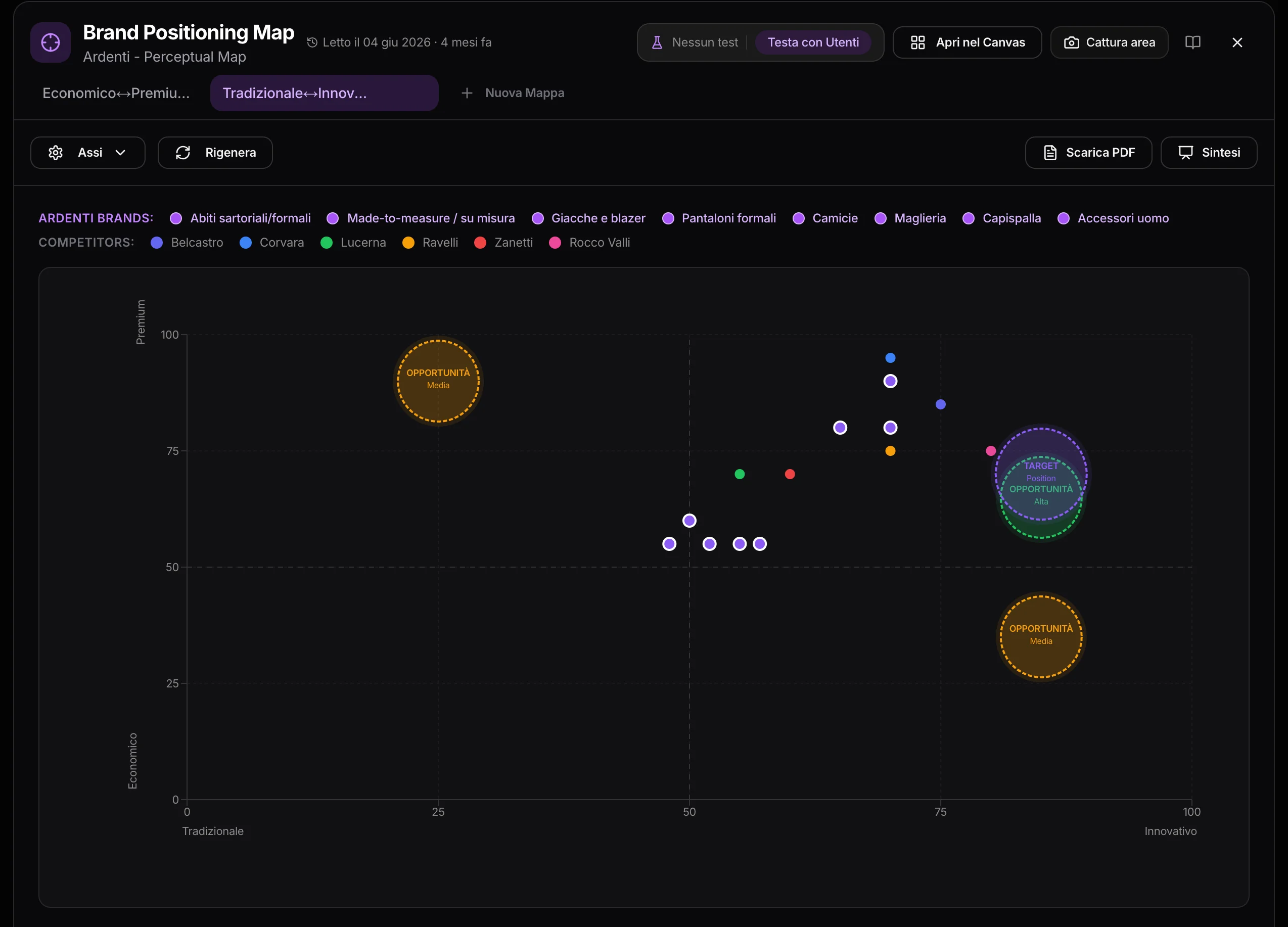
Where you are on the map.
And where there’s room.
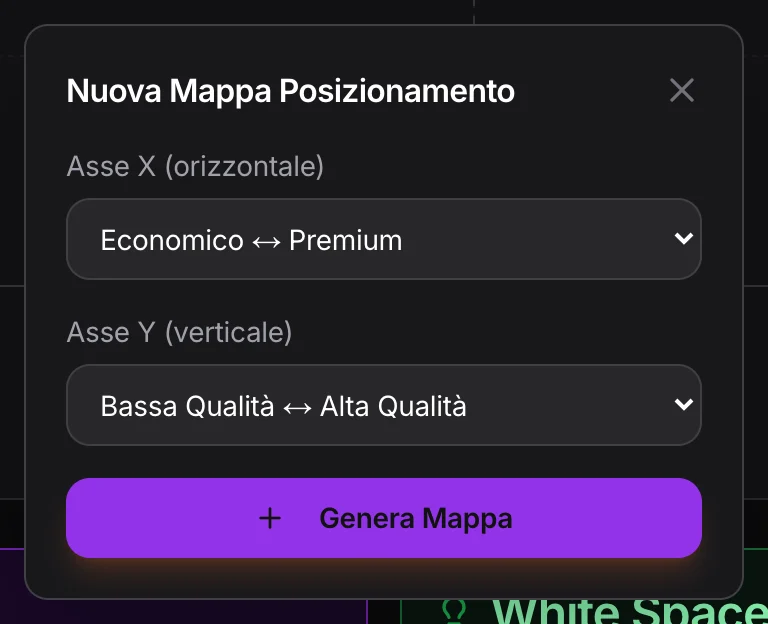
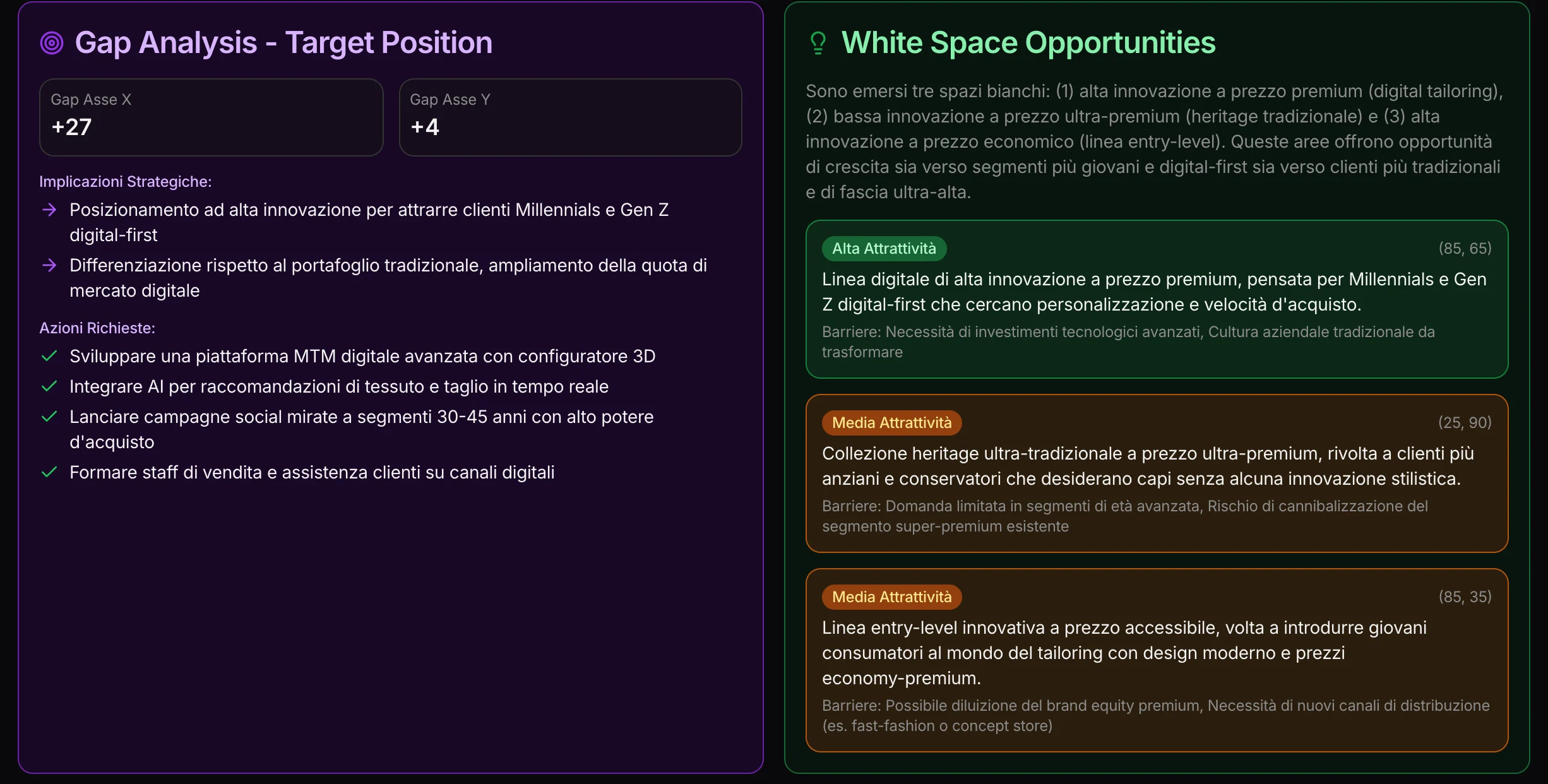
The brand and its competitors on two axes, the target position and the white spaces. Below, how far the target is and what it takes to get there; for each open space, how attractive it is and what makes it hard.
How you create value.
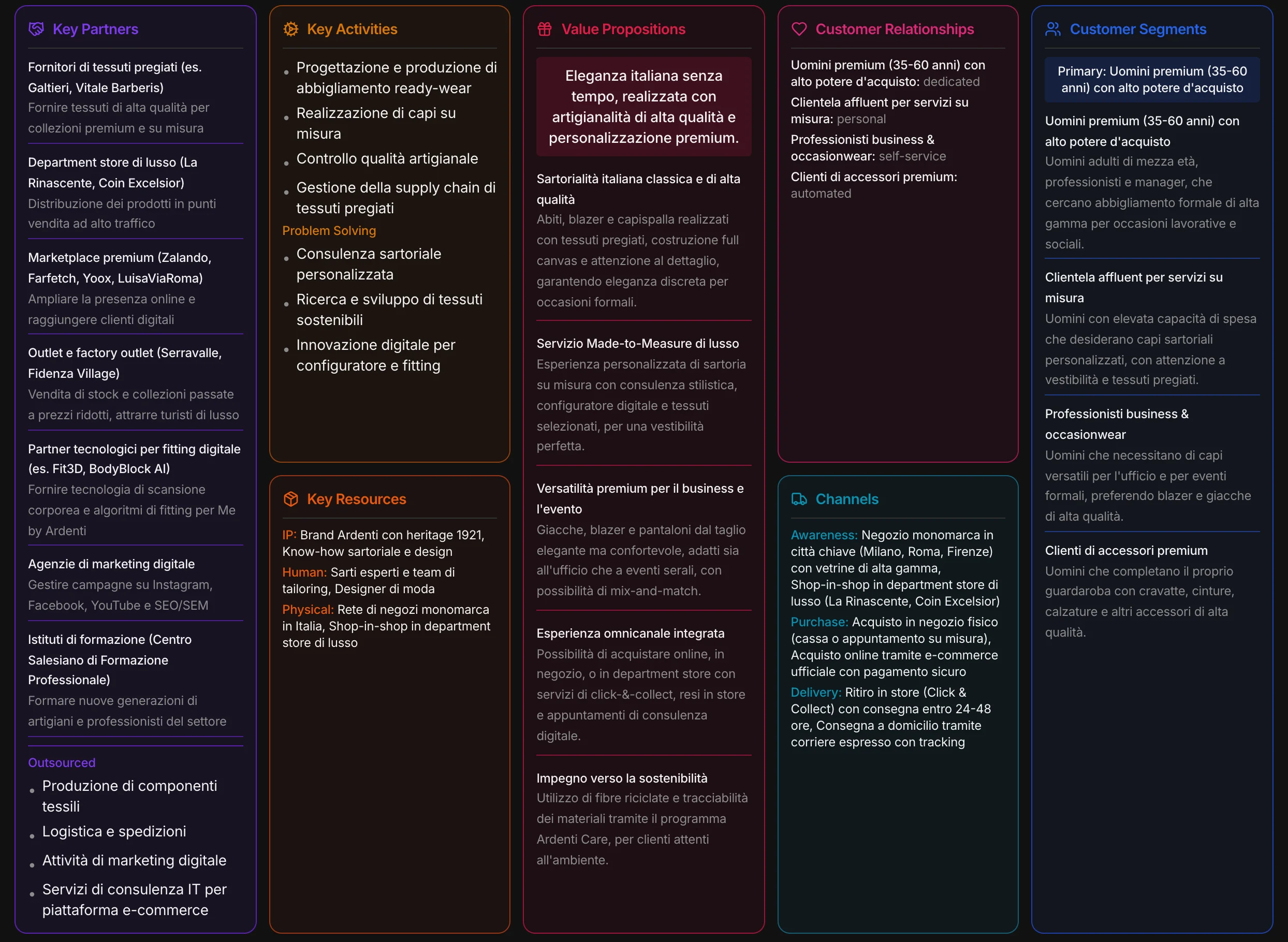
And how you could.
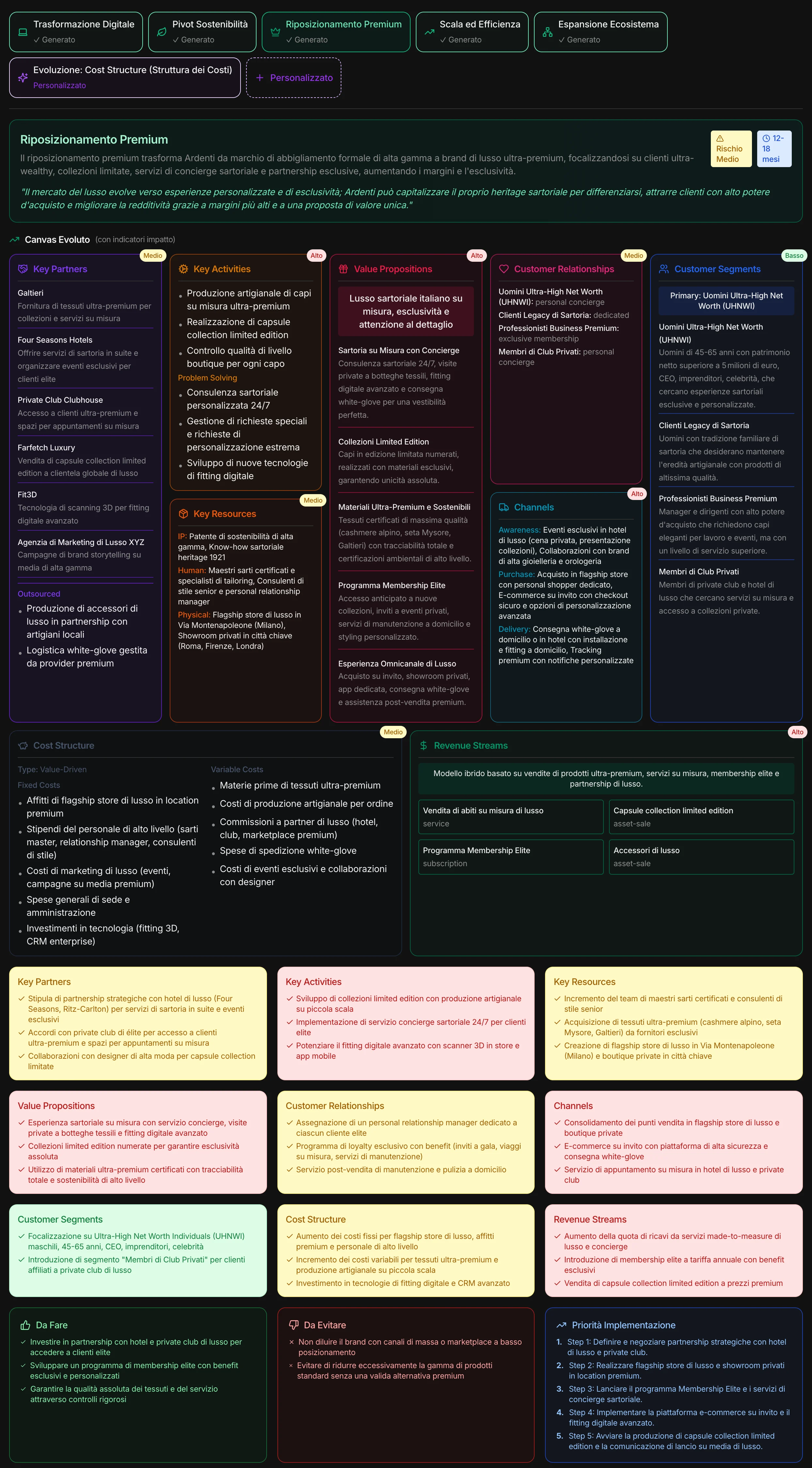
The nine blocks of the business model — partners, activities, resources, proposition, relationships, channels, customers, costs, revenue — with MAPS’s confidence level. Then the evolution scenarios: the model redone for a different path, block by block, with the impact on each.
Generated in one go.
And tested with people.
Generate all
The six tools are generated together, one after the other, while you do something else.
Test with Users
Identity, proposition, positioning, matrix and map can be tested with the project’s synthetic users. The tests stay in the history.
Nothing gets lost
Every regeneration archives the previous version, with its date. The scenarios you created stay in the project.
It leaves the project
To the Canvas to work on it with the team, as a PDF, in a summary to present.