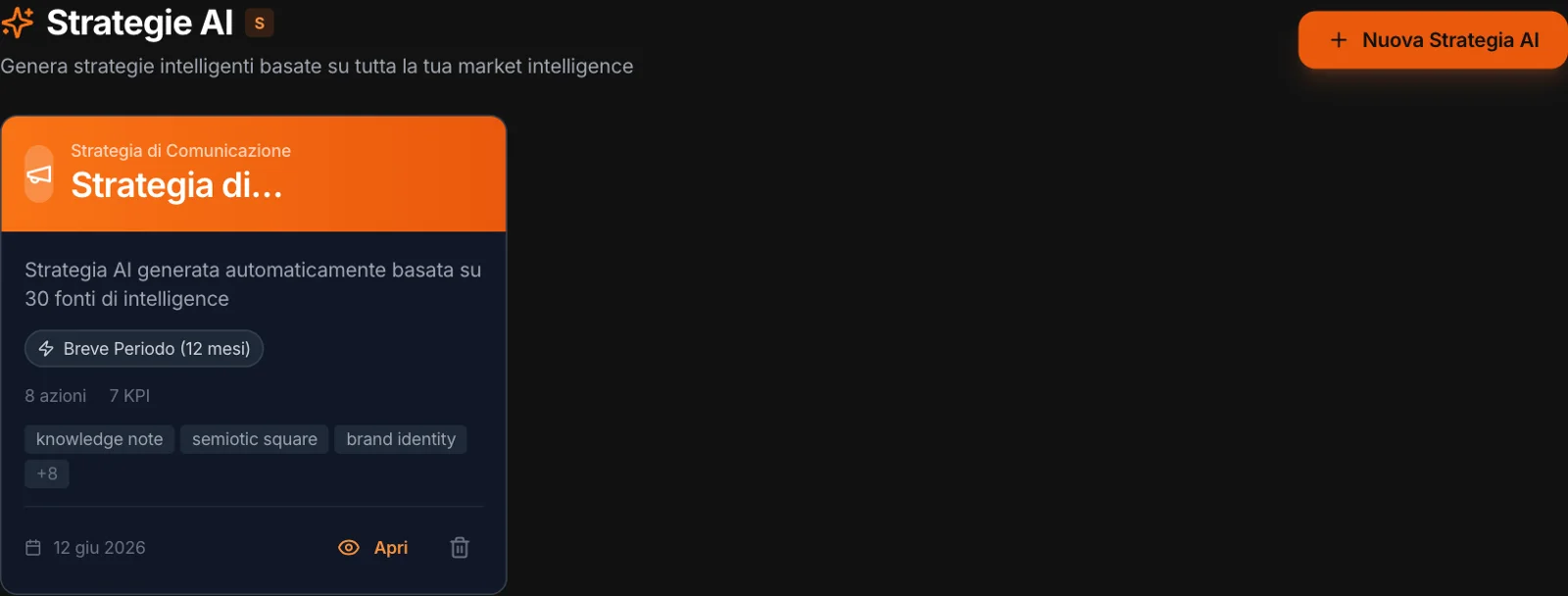
Six steps,
all yours to steer.
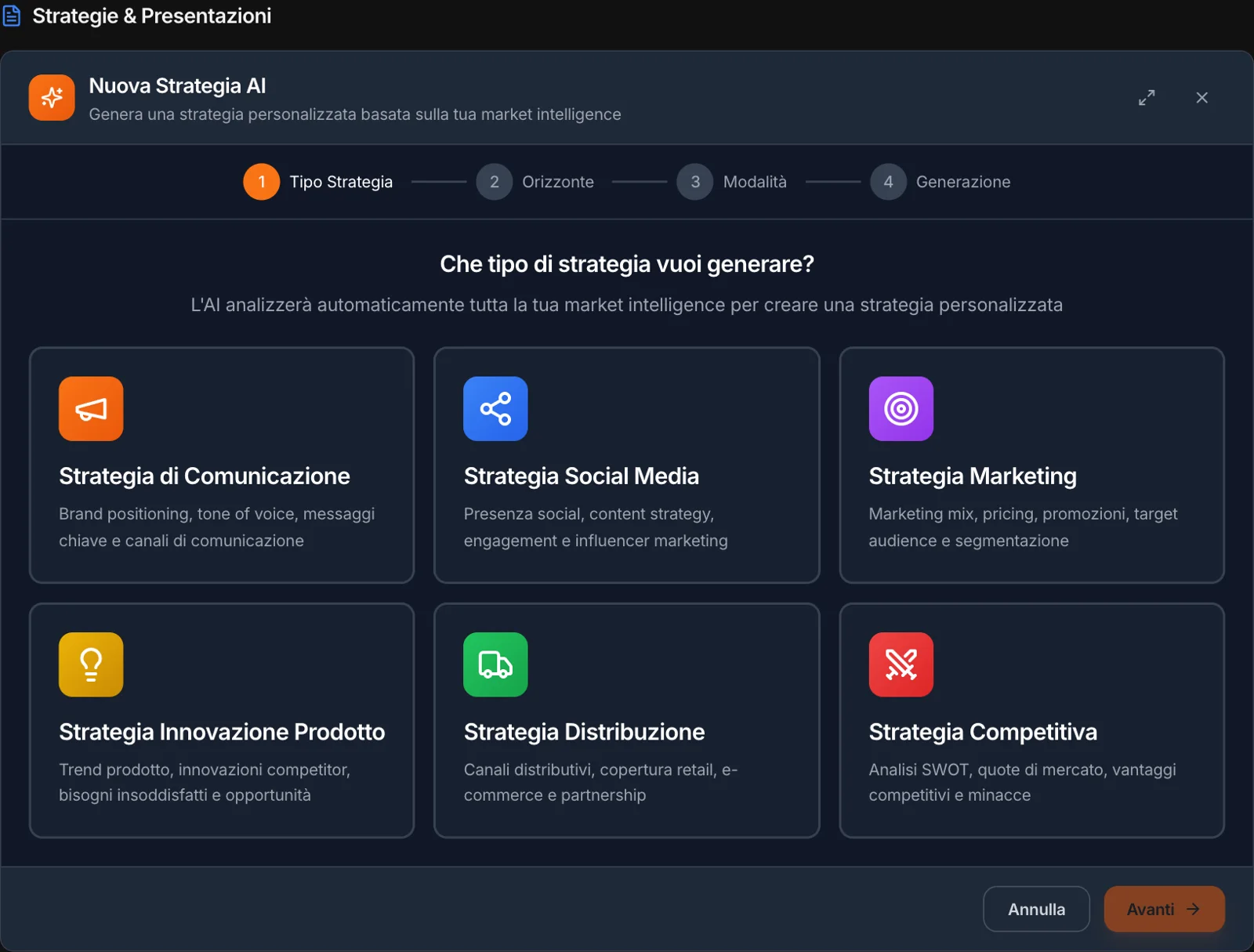
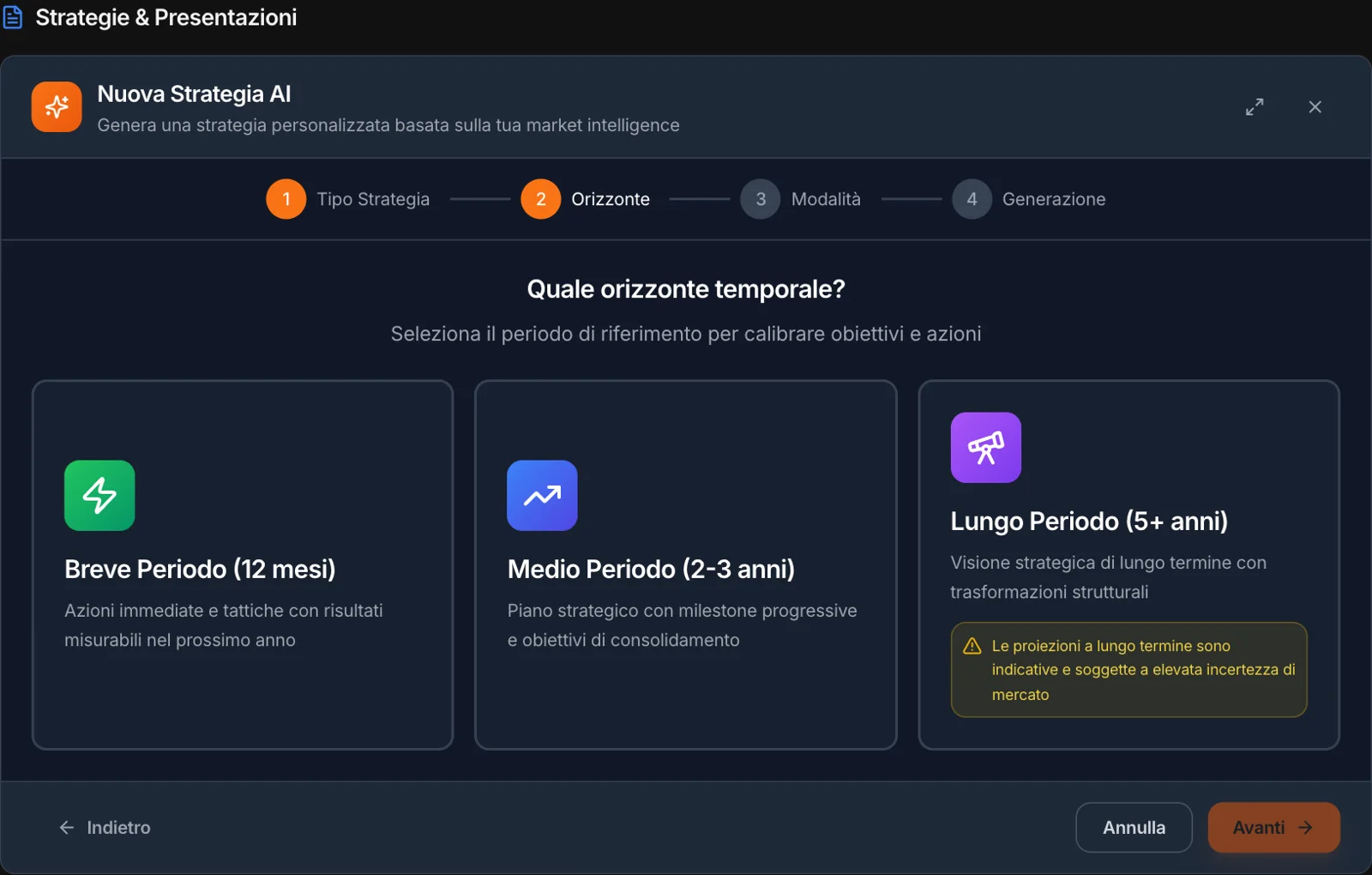
Choose the strategy you want and the time horizon; then decide whether to let the AI do it or guide it.
Let it run,
or set the course.
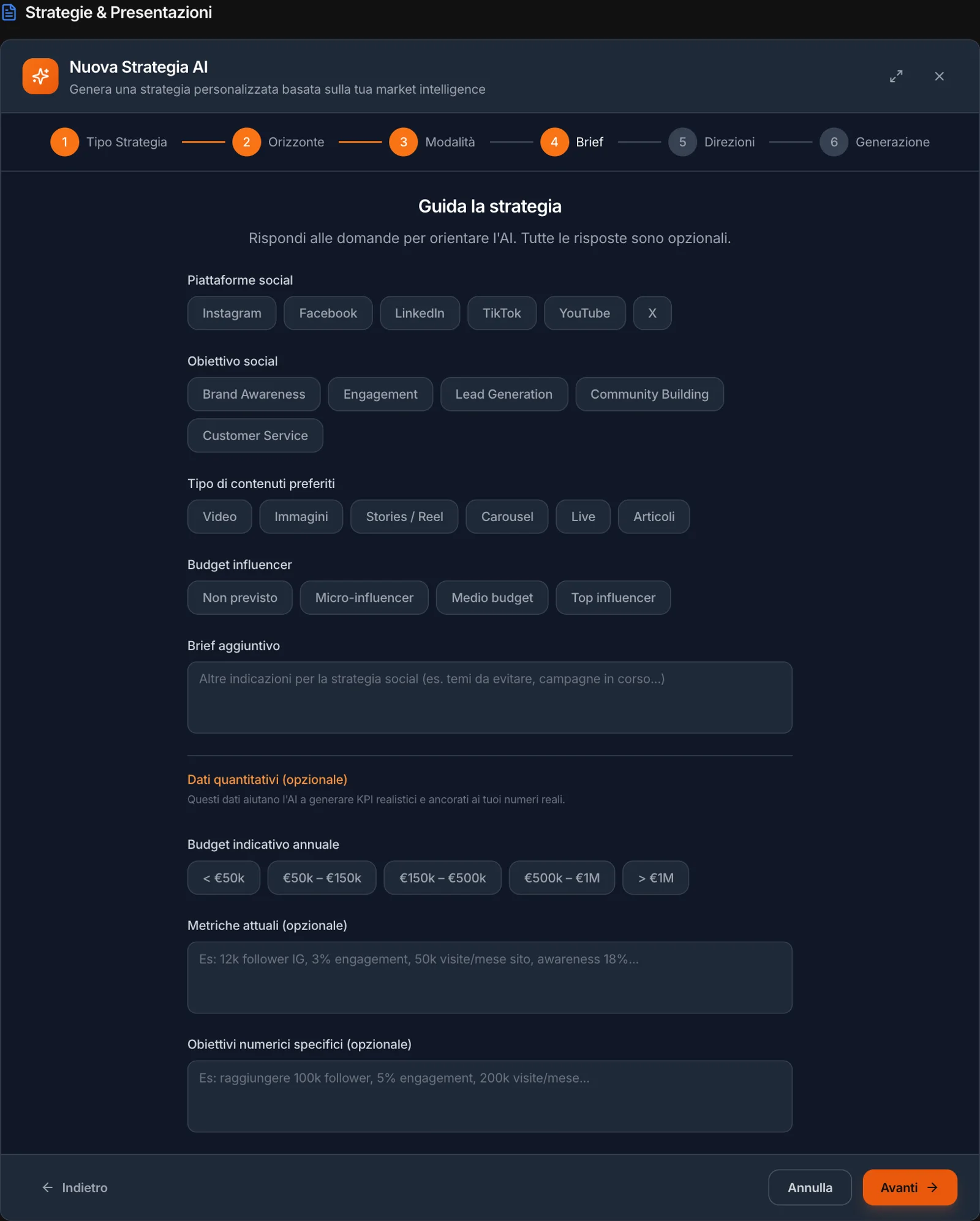
With Full AI the strategy comes from all of the project’s market intelligence. In guided mode you answer a few questions — all optional — and the AI takes your priorities into account: for a social strategy, the platforms and the objective; for all of them, the indicative budget, today’s metrics, the numbers you want to reach.
Choose where to start.
From hundreds of ideas.
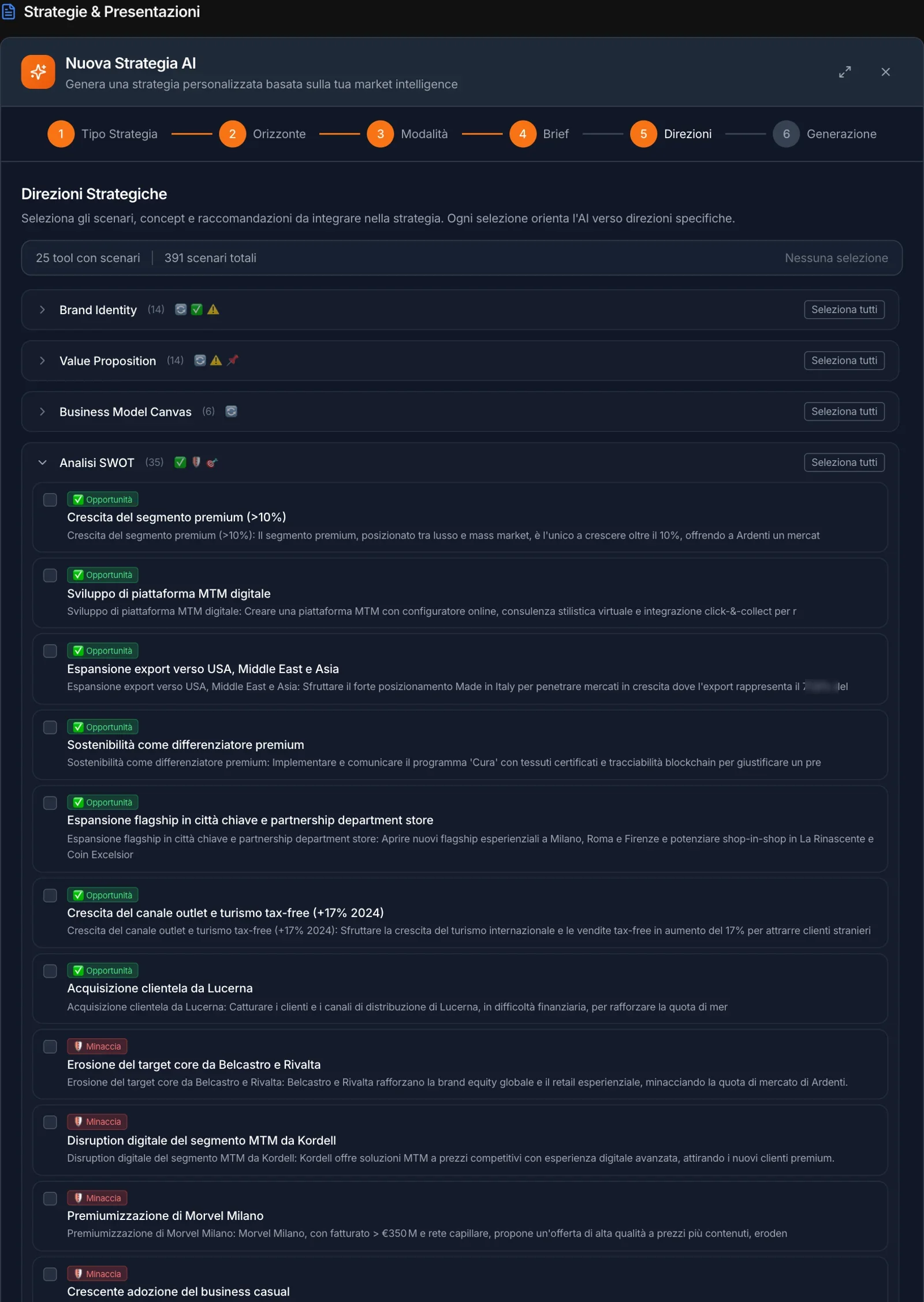
Every Analyze tool leaves behind scenarios, concepts and recommendations: the SWOT opportunities, the value proposition directions, the brand identity suggestions. Here you find them all — in the example, 391 scenarios from 25 tools — and choose the ones to build on. Each selection steers the strategy in a specific direction.
A document,
not a list of ideas.
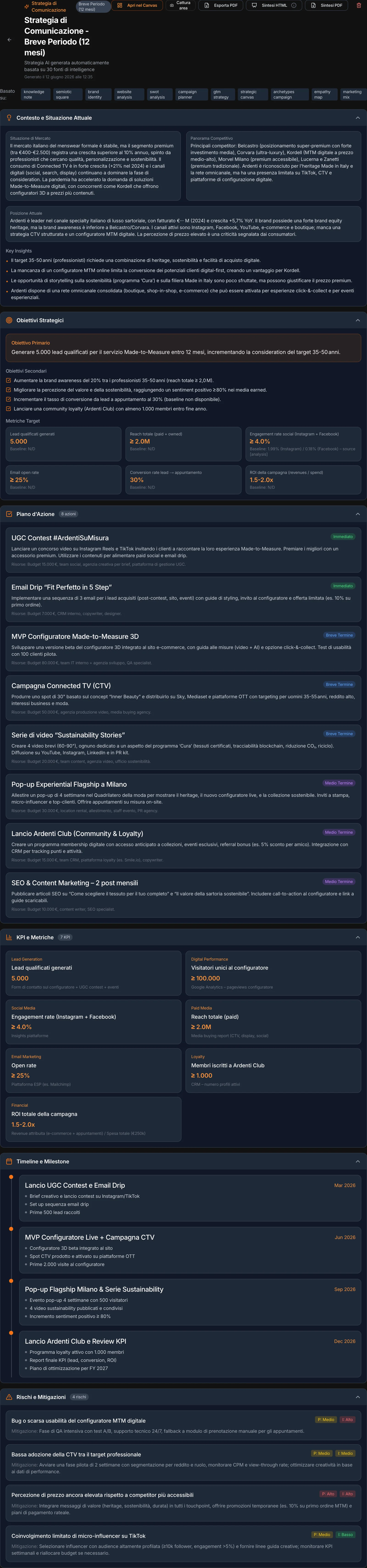
The context — market, competitors, brand position, insights — the primary objective and the secondary ones, the target metrics with their baseline when there is one (and “N/A” when there isn’t), an action plan with timing and resources, the KPIs and how to measure them, the timeline, the risks with mitigation. At the top, the project sources it is based on.
Presentation
“HTML Summary” and “PDF Summary”: the strategy becomes a deck to present.
The full document, for those who need to read it.
Canvas
“Open in Canvas”: the strategy next to the rest of the work, to discuss it.